Like
Share
멍실장
폭염 차내 방치 응급 — 차내폭염 열사병 대처법

If You Left Your Dog in a Hot Car — Heatstroke Emergency Signs and Immediate Response

ImmunitySymptomsMeongsiljang Veterinary Advisory Board

Even a brief moment left in a car during summer can cause your pet to collapse. We’ve outlined how to assess the urgency of heatstroke from car cabin heat and the emergency steps to take within five minutes.

What Kind of Emergency Is Neglecting In-Car Heatstroke?
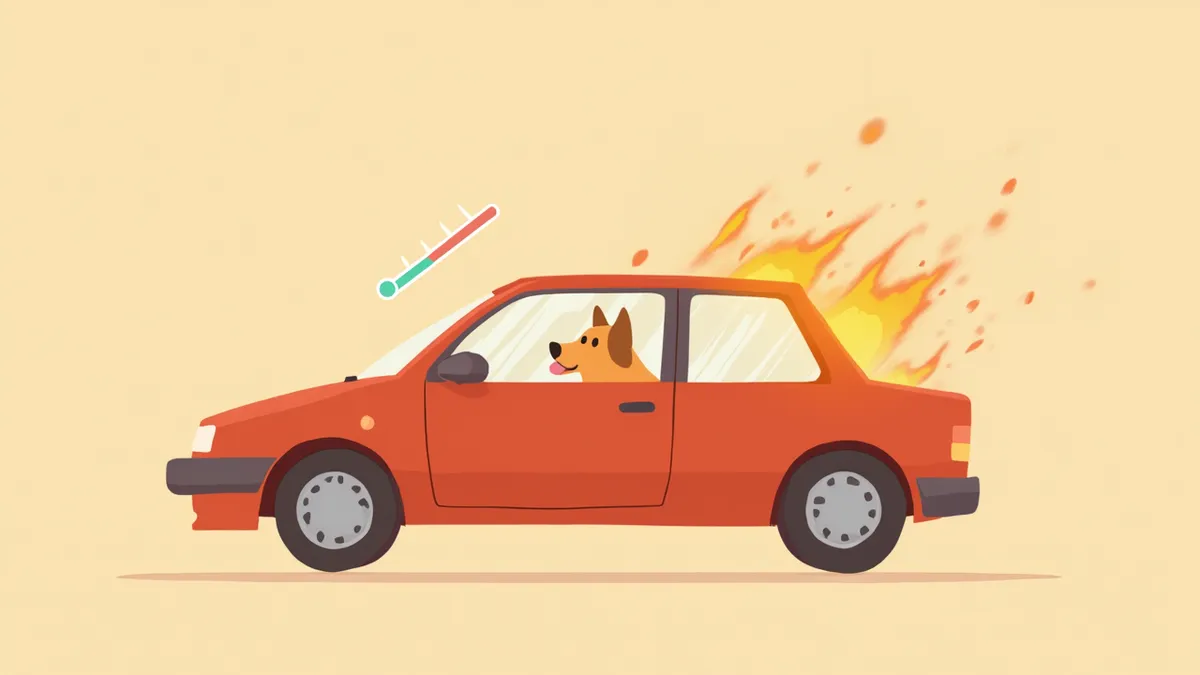
A panting puppy in a hot car
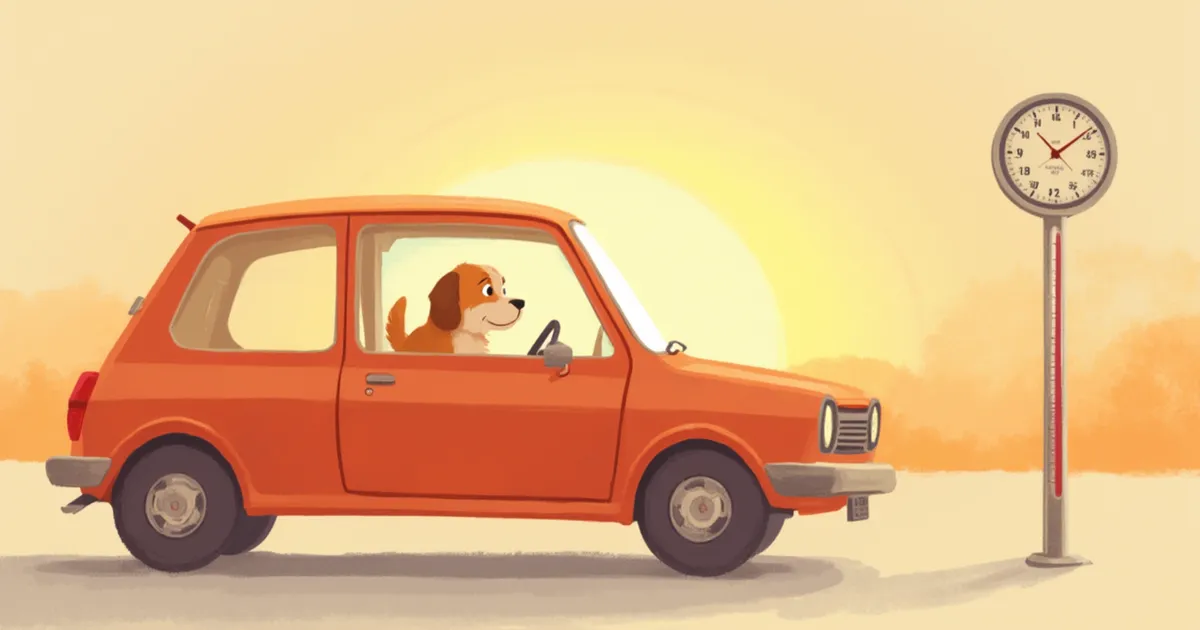
Heatstroke in a car occurs when a pet’s body temperature rises rapidly inside a closed vehicle during summer, creating a medical emergency. The longer the animal is left inside, the greater the danger, so immediate action is crucial. According to veterinary critical care textbooks, even on a day when the outside temperature is only 24°C (75°F), the interior of a sunlit, sealed car can exceed 48°C (120°F) in less than 20 minutes. Higher outdoor temperatures accelerate this rise, and once the heat builds up, it does not easily dissipate in the confined, poorly ventilated space. If your pet begins panting heavily and drooling excessively, their body temperature may already have reached a dangerous level. Immediately remove them from the vehicle, move them to a shaded area, and contact a veterinarian right away.

At a Glance: In-Car Temperature Rise Speed

Check how quickly the temperature inside a car rises depending on the outside temperature. Even cracking the windows open won’t be enough to prevent the heat from building up.

Outside Temperature vs. In-Car Temperature (Hourly)

ItemAfter 10 minutesAfter 30 minutesAfter 60 minutes
22°C outside33°C44°C48°C
27°C outside38°C48°C52°C
32°C outside43°C52°C56°C

According to the veterinary critical care textbook (Small Animal Critical Care Medicine), even on a day when it is about 24°C outside, a sealed vehicle in direct sunlight can exceed 48°C inside within 20 minutes. Cracking a window open does little to prevent the rise.

Danger Signal Checklist
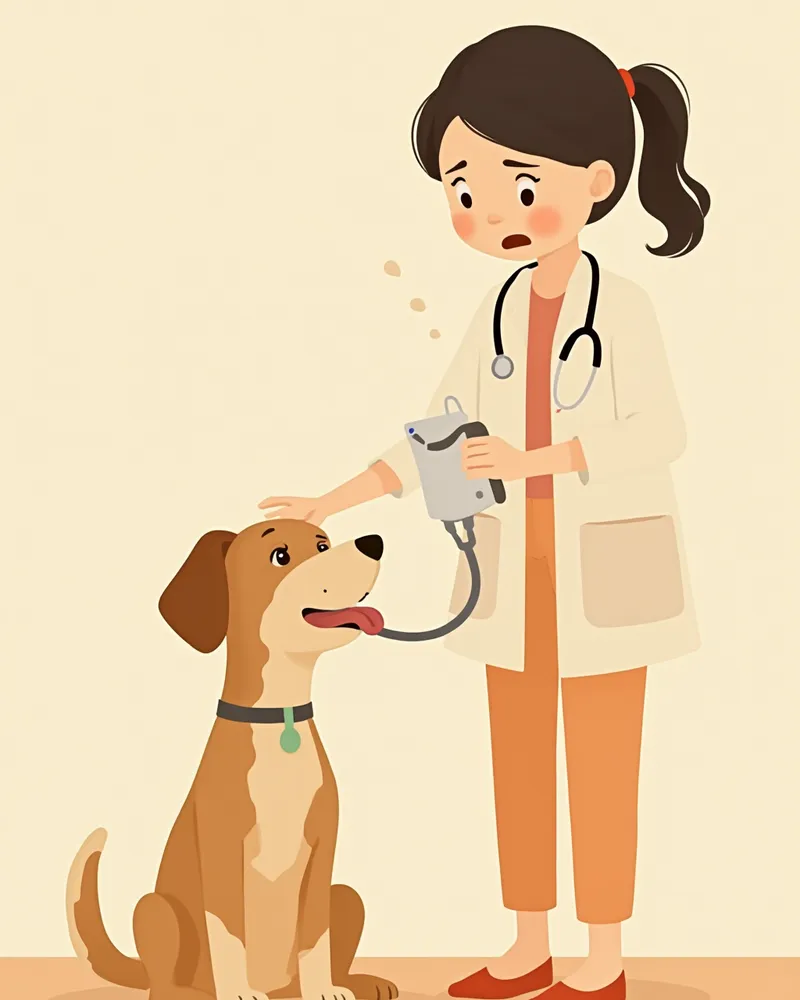
If you notice any of the following symptoms, immediate action is required. - Labored panting: Breathing that is faster and shallower than usual, with gums and tongue appearing bright red or brick-red due to congestion - Excessive drooling: Thick, stringy saliva - Unsteady stance: Staggering or collapsing - Vomiting or diarrhea: Especially dangerous if blood is present - Changes in gum color: Bright brick-red (congested) or pale - Decreased consciousness: Sluggish response when called by name Do not delay by thinking "they'll be fine for now" if you see even one of these warning signs.
A pet owner checking their dog's gum and tongue color

When to Go to the Vet Immediately

If your pet becomes disoriented or starts having seizures, head straight to the emergency clinic. You should also go to the vet immediately if their body temperature exceeds 40.5°C, if they vomit or have diarrhea with blood, or if their gums turn pale or gray. Heatstroke cannot be treated with antipyretics; veterinary critical care textbooks emphasize the need for active cooling and fluid therapy. During transport, turn on the air conditioning strongly and wrap their armpits and groin with lukewarm wet towels.

Why Does the Inside of a Car Get So Hot So Quickly?

Vehicles act like greenhouses, allowing sunlight to pass through the windows while trapping heat inside. According to veterinary emergency and critical care textbooks, dogs and cats dissipate body heat through radiation and convection via their skin, as well as evaporation through panting. Because they have very few sweat glands and cannot cool themselves through sweating like humans do, and because both temperature and humidity rise rapidly in a sealed car—severely reducing the efficiency of radiative, convective, and evaporative cooling—their body temperature can quickly reach dangerous levels. This risk is especially high for brachycephalic breeds like Pugs and Bulldogs, whose facial structure limits effective panting, and for overweight, elderly, or heart-diseased pets, whose body temperatures rise even faster.

Emergency Cooling Steps to Take Within 5 Minutes

Here’s a summary of steps you can take in the car before heading to the clinic: - Step 1: Immediately move your pet to a shaded area with air conditioning. - Step 2: Apply cool or lukewarm water to the armpits, groin, and paw pads, and place ice packs on areas where major blood vessels pass through. - Step 3: Use a fan or hand-held fan to promote evaporative cooling. - Step 4: Stop cooling once the body temperature drops to 39.4°C (103°F) to prevent rebound hypothermia (overcooling). - Step 5: Always proceed to the clinic—even if your pet appears to have recovered, internal organ damage may still be present. Veterinary critical care textbooks note that no specific cooling method has been proven superior to others, so the most important thing is to cool your pet quickly and then transport them to the clinic without delay.
A pet owner cooling their dog with a wet towel in the shade

Cats Hide Their Symptoms More

Feline emergency medicine textbooks note that cats instinctively seek out cool, hidden spots when overheating, which can cause early signs of heatstroke to go unnoticed. If your cat is panting with its mouth open or sticking its tongue out and gasping, it has already reached a critical stage. Even briefly leaving a cat in a carrier inside a car can be dangerous, so it’s best to avoid taking them out altogether. Additionally, there have been cases of cats entering dryers or washing machines, so always keep those doors closed during the summer months.

Prevention Rules to Prevent Recurrence

- Never leave your dog in the car, even for a moment: Do not leave your dog in the car, even if you are just running into the store for five minutes. - Opening the windows is not enough: Studies show that the temperature inside the car rises almost as much as it would with the windows closed. - Prepare ice packs and cooling mats: Place them under the carrier when traveling. - Always carry water: Provide opportunities for your dog to drink every 30 minutes. - Adjust walk times: Walk your dog before 7 AM or after 8 PM. - Be cautious with brachycephalic and senior dogs: Avoid going outside unless you are in an air-conditioned vehicle. For more information, please refer to the Dog Heatstroke First Aid Guide.
A dog resting in the cool shade, with a cooling mat and water bowl nearby.

Reviewed by a veterinarian

Dr. Tony — Punnawat Phongkittirak

Dr. Tony — Punnawat Phongkittirak

Veterinarian

A veterinarian who majored in veterinary medicine at Khon Kaen University, Thailand, and completed the IVSA program at North Carolina State University in the United States. Drawing on clinical experience at animal hospitals, he works in the pet healthcare field and is dedicated to building a digital care environment that connects pet parents with veterinarians.

Frequently Asked Questions

Wouldn’t it be fine to just leave the window slightly open?
Unfortunately, it’s hardly effective. According to veterinary critical care medicine textbooks, even on days when the outside temperature is around 24°C, a closed car exposed to sunlight can exceed 48°C internally in less than 20 minutes. Simply cracking the windows isn’t enough to counteract the rapid heating of the car body by sunlight, making it difficult to prevent the internal temperature from rising.
Even if my pet seems fine on the outside, do I still need to take them to the vet?
Yes, it is absolutely essential to visit the clinic. Veterinary critical care textbooks explain that multiple organ damages, such as kidney injury, disseminated intravascular coagulation (a blood clotting disorder), and liver damage, can manifest with a delay even if the pet appears to be doing well initially. Therefore, early blood tests and fluid therapy are crucial, even if no symptoms are apparent.
Won’t soaking in ice water cool them down faster?
While cold water itself isn’t dangerous, we don’t recommend relying on just one cooling method. Veterinary critical care textbooks note that no single cooling technique has been proven superior to others. Instead, wet your pet’s body with cool or lukewarm water and promote air circulation, while applying ice packs to areas where major blood vessels run. Most importantly, once your pet’s body temperature drops to 39.4°C, stop cooling to prevent hypothermia and head straight to the vet.
Can cats get heatstroke if left in a car?
Yes, I’m coming. Although cats are often thought to be more heat-tolerant than dogs, they’re just as vulnerable in confined spaces like cars where there’s no escape. Since carriers can feel even hotter, it’s best to minimize car trips altogether.
Should I avoid giving fever reducers (such as Tylenol)?
Absolutely not. Heatstroke isn’t a “fever” caused by infection or inflammation—it’s “hyperthermia,” where the body temperature rises due to external heat. Fever reducers won’t help, and medications not approved for pets can cause liver and kidney damage.

Share

Related Guides

References

[1] Small Animal Critical Care Medicine, 3rd Ed — Heat Stroke and Hyperthermia

[2] Feline Emergency and Critical Care Medicine, 2nd Ed — Heatstroke chapter

[3] Advanced Monitoring for Small Animal Emergency and Critical Care, 2nd Ed — Thermoregulation

[4] McLaren C, Null J, Quinn J (2005). Heat stress from enclosed vehicles. Pediatrics 116(1): e109–e112

This information is based on veterinary literature and does not replace diagnosis or treatment. Please consult a veterinarian for specific health concerns.

Metapet Co., Ltd. | CEO: Park Sung-yong | Business Reg. No. 417-88-02562 | Seoul, South Korea | Customer Center

Dog Left in a Hot Car: Heatstroke Signs & Immediate Response | Meongsiljang