Like
Share
멍실장
강아지 탈모 원인과 대처법

Causes of Dog Hair Loss and How to Manage Them

Skin & CoatSymptomsMeongsiljang Veterinary Advisory Board

Dog hair loss can stem from a variety of causes, ranging from skin infections to hormonal disorders. We’ve compiled a guide based on veterinary textbooks, covering the causes and symptoms by type of hair loss, as well as criteria for when to visit the vet.

My Dog Is Losing Hair—What Should I Do?
An illustration of a puppy having its skin condition checked.
There are many causes of hair loss in dogs, including skin infections, self-inflicted alopecia, hormonal imbalances, and follicular dysplasia. Unlike normal shedding, if you notice circular patches of hair loss or redness in the affected areas, it may indicate pathological alopecia. The cause of hair loss in dogs can vary depending on the pattern of shedding. The first step in diagnosis is to determine whether the hair loss is localized to one area, occurring in multiple spots simultaneously, or symmetrical on both sides of the body. While most cases are not life-threatening, timely treatment may be crucial depending on the underlying cause.

Three Types of Hair Loss: Check the Pattern First

According to veterinary dermatology textbooks, dog hair loss can be broadly categorized into three types based on the pattern of shedding.
TypeCharacteristicsMain Causes
Localized AlopeciaCircular hair loss in a single areaDemodex mites, dermatophytosis (ringworm), scar tissue from injuries
Multifocal AlopeciaHair loss occurring simultaneously in multiple areasBacterial folliculitis (Staphylococcus), dermatophytosis, generalized demodicosis
Symmetrical AlopeciaHair loss in corresponding areas on both sides of the bodyHypothyroidism, hyperadrenocorticism (Cushing's disease)
Taking photos of the affected areas can greatly assist your veterinarian in identifying the underlying cause during your visit.

Suspect Hair Loss If You Notice These Symptoms
The following signs indicate pathological hair loss rather than normal shedding:
Circular bald patches: Hair falls out in coin-shaped patches in one or multiple areas, which often suggests a mite infestation or fungal skin infection.
Skin changes in bald areas: Redness or scabs in the affected area may indicate a bacterial infection or an allergic reaction.
Excessive scratching or licking: This can lead to self-induced hair loss due to itching, often caused by various skin conditions that trigger pruritus.
Symmetrical hair loss: If hair loss occurs symmetrically on both sides of the body, such as the flanks or belly, without itching, it may suggest a hormonal disorder.
Skin color changes: Darkening or thickening of the skin can be a sign of chronic inflammation or long-term hormonal imbalance.
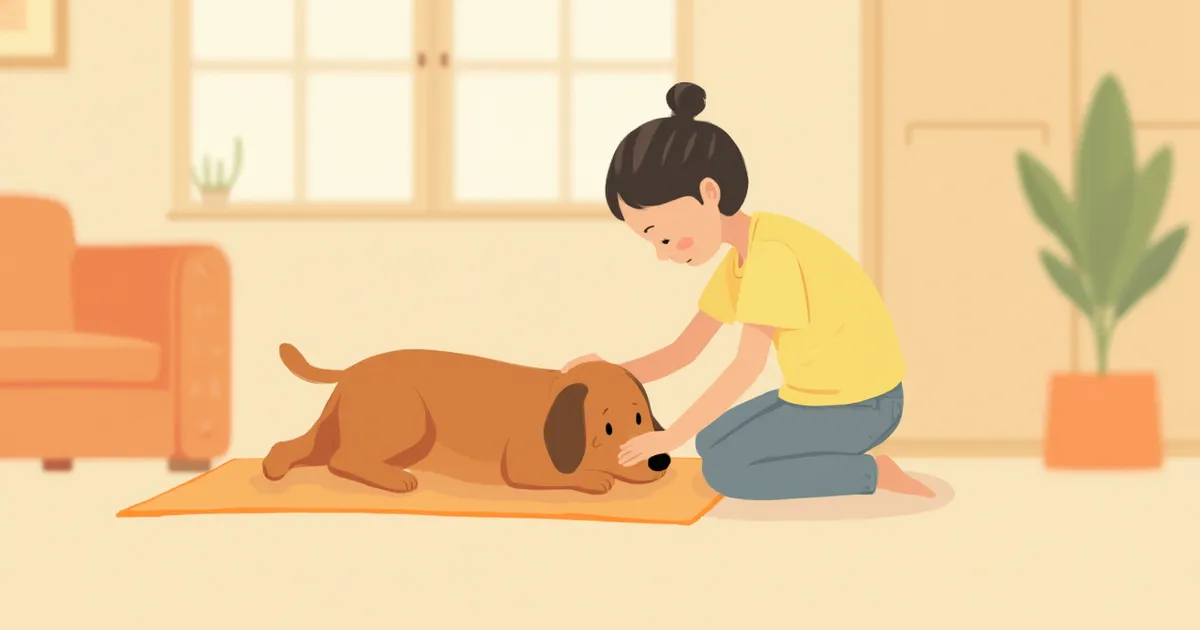
Illustration of a dog and its owner checking for skin symptoms

Visit the Vet Immediately in These Cases

If your pet is experiencing rapid, widespread hair loss, oozing or foul-smelling skin, or severe itching accompanied by biting at the skin, please visit a veterinary clinic immediately. Deep bacterial infections can complicate treatment. In particular, generalized demodicosis in young puppies is associated with weakened immunity, making prompt treatment essential.

When Skin Infection Is the Cause

According to veterinary dermatology textbooks, demodicosis and bacterial folliculitis should always be the first conditions to rule out when differentiating the causes of hair loss.
Demodex mites: These are parasites that normally reside on a dog’s skin. When the immune system is compromised, they can overpopulate and cause hair loss. This condition is most common in young dogs and often starts around the muzzle or on the paws.
Dermatophytes: This type of hair loss is caused by a fungal infection. It typically presents as circular patches of hair loss with scaling. Because it can be transmitted to humans, early treatment is essential.
Bacterial folliculitis: This occurs when bacteria infect the hair follicles, leading to hair loss accompanied by small pustules. It often develops secondarily to underlying conditions such as allergies or demodicosis.

When a Hormonal Disorder Is the Cause

If your pet is experiencing hair loss that is symmetrical on both sides of the body without itching, it is likely due to a hormonal disorder.
Hypothyroidism: This is a relatively common hormonal condition in dogs. Symptoms can be varied and subtle, often accompanied by hair loss and other systemic signs. A key characteristic is symmetrical hair loss on both sides of the body.
Hyperadrenocorticism (Cushing's Disease): This condition occurs when the adrenal glands produce excessive amounts of stress hormones. The overproduction of glucocorticoids leads to distinctive skin changes and hair loss, along with various systemic symptoms.
Both conditions frequently present with a range of systemic symptoms. If your pet is experiencing hair loss alongside other systemic signs, consult your veterinarian for detailed hormonal testing.
Illustration of a dog getting a blood test at a veterinary clinic

Hair Loss Due to Allergies

Environmental allergies (atopy): This condition involves hypersensitivity to environmental allergens such as house dust mites and pollen. Pets experience intense itching, leading to repetitive scratching or licking of specific areas, which results in hair loss. The paws, armpits, and areas around the ears are particularly prone to hair loss.
Food allergies: Itching and hair loss occur due to an adverse reaction to specific dietary ingredients. This is an immune-mediated reaction triggered by specific food antigens. To identify the causative antigen, it is important to conduct a dietary elimination trial under the guidance of a veterinarian.
According to veterinary dermatology textbooks, even while administering anti-itch medications to allergic patients, underlying infections such as demodex mites or bacterial infections may persist, making regular check-ups essential.

Certain Breeds Are More Prone to Hair Loss

Certain breeds are genetically predisposed to hair loss. Northern and plush-coated breeds, such as Spitz-type dogs and Standard Poodles, are known to be susceptible to Alopecia X, a non-pruritic, symmetrical hair loss condition linked to hormonal factors. Breeds with diluted coat colors, such as Doberman Pinschers, may develop color dilution alopecia, where hair loss occurs specifically in the diluted-colored areas. Yorkshire Terriers are known to be prone to pattern baldness, characterized by hair loss and darkening of the skin (melanoderma) on the outer ears (pinnae) and the bridge of the nose; secondary skin infections should also be monitored. If you own one of these breeds, please check your pet’s skin condition more frequently.

Preventing Hair Loss and Maintaining Skin Health
Regular Brushing: Brushing is the easiest way to promote blood circulation and detect skin abnormalities early. Brush your pet thoroughly two to three times a week.
Balanced Nutrition: Omega-3 and omega-6 fatty acids help maintain a healthy skin barrier. Feed your pet food that meets the standards of the Association of American Feed Control Officials (AAFCO).
Appropriate Bathing Frequency: Bathing too frequently can damage the skin’s protective barrier. Bathe your pet every two to four weeks using a shampoo specifically formulated for pets.
Stress Management: Stress from environmental changes or separation anxiety can also cause hair loss.
Regular Check-ups: Skin diseases are easier to treat when detected early. If you notice any changes in your pet’s skin condition, take photos and show them to your veterinarian.
An illustration of a healthy puppy enjoying a brushing session

Reviewed by a veterinarian

Dr. Tony — Punnawat Phongkittirak

Dr. Tony — Punnawat Phongkittirak

Veterinarian

A veterinarian who majored in veterinary medicine at Khon Kaen University, Thailand, and completed the IVSA program at North Carolina State University in the United States. Drawing on clinical experience at animal hospitals, he works in the pet healthcare field and is dedicated to building a digital care environment that connects pet parents with veterinarians.

Frequently Asked Questions

How can you tell the difference between hair loss and normal shedding in dogs?
Normal shedding occurs evenly across the body, typically in spring and fall, whereas pathological hair loss often presents as circular bald patches or is accompanied by skin changes such as redness, flaking, or crusting. If the hair loss is severe enough to expose the skin, please visit a veterinary clinic.
Can I use human shampoo on my dog for hair loss?
No, it's not recommended. Dogs and humans have different skin pH levels, so products designed for people can actually irritate your dog's skin. Always use products specifically formulated for pets.
My puppy is losing hair around its eyes. Is this normal?
Hair loss around the muzzle or on the paws of young puppies is a classic early sign of a mite infection. In most cases, the condition resolves on its own as the puppy's immune system matures, but if the affected area spreads, a veterinary visit is necessary.
Can dog hair loss be transmitted to humans?
It depends on the cause. Demodex mites are not contagious to humans, but dermatophyte (fungal) infections can be transmitted to people. If you notice circular hair loss and scaling, seek a prompt diagnosis and pay close attention to hygiene.
Can I apply the ointment to the bald spots?
Applying ointments without veterinary guidance can complicate diagnosis. In particular, steroid-containing ointments can worsen demodicosis, so always use them only with a veterinarian’s prescription.

Share

Related Guides

References

[1] 100 Top Consultations in Small Animal General Practice — Chapter 33: The Dog that is Losing Hair

[2] BSAVA Manual of Canine and Feline Dermatology, 4th Ed — Non-pruritic Canine Symmetrical Alopecia

[3] The Veterinary Workbook of Small Animal Clinical Cases — Case 48: Alopecia Differential Diagnosis

This information is based on veterinary literature and does not replace diagnosis or treatment. Please consult a veterinarian for specific health concerns.

Metapet Co., Ltd. | CEO: Park Sung-yong | Business Reg. No. 417-88-02562 | Seoul, South Korea | Customer Center

Dog Hair Loss: Causes by Type and How to Manage It | Meongsiljang