Like
Share
멍실장
강아지 절뚝거림 — 앞다리·뒷다리 원인별 의심 질환 가이드

Dog Limping — A Guide to Suspected Conditions by Front and Hind Leg Causes

JointSymptomsMeongsiljang Veterinary Advisory Board

When a dog limps, the suspected condition varies depending on which leg is affected. Here’s a breakdown of the differences in causes between front and hind legs, along with warning signs that require an immediate vet visit.

What Is Dog Limping? Which Leg Is Affected Is the Most Important Clue
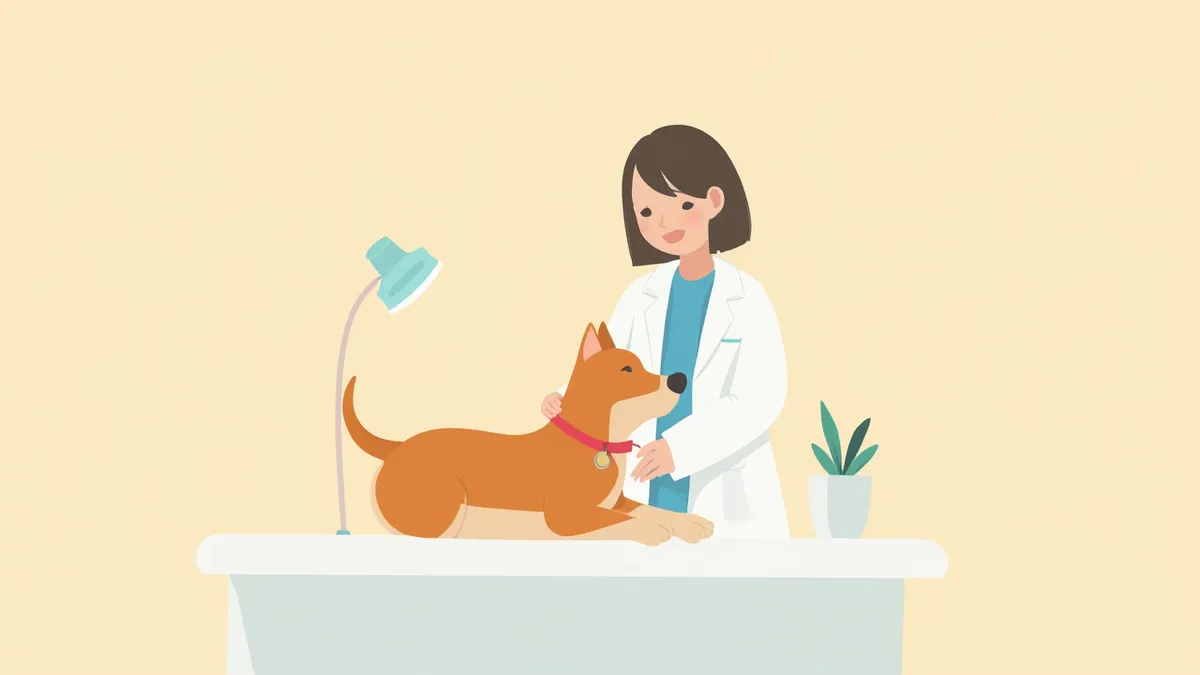
A veterinarian examining a puppy's leg.
Limping in dogs is a gait abnormality caused by pain, structural abnormalities, or nerve issues in one leg, preventing the dog from bearing weight normally. Which leg is limping is the first clue to identifying the cause. Front legs are more commonly affected by elbow dysplasia, arthritis, and musculoskeletal injuries, while hind legs often suffer from patellar luxation, cruciate ligament tears, and hip dysplasia. If the limp persists for more than 24 hours or if the dog is completely holding the leg up, a visit to an orthopedic specialist is necessary.

Limping Severity Levels — Check Which Stage Your Dog Is In First

Limping can range from mild, where your pet puts only partial weight on the affected leg while walking, to severe, where they completely lift the leg and bear no weight at all. The more severe the limp, the greater the likelihood of significant pain or structural abnormalities, which often cannot be resolved with pain medication alone. Assessing the severity of your pet’s limp beforehand can help you determine the right time to visit the clinic. In particular, if your pet is unable to bear weight on the leg and the condition persists for more than 24 hours, a thorough diagnostic evaluation is necessary.

Criteria for Judging Limping Severity Levels

ItemGait appearanceRecommended response
Grade 1Barely noticeable when walking, only slightly when running fastObserve for 2–3 days + halve walk amount
Grade 2Slight limp when walking, clear when runningGeneral checkup within a week
Grade 3Clear limp when walking, bears some weightOrthopedic exam within 48 hours
Grade 4Barely bears weight, frequently lifts the legExam within 24 hours, imaging needed
Grade 5Keeps the leg fully lifted, cries out when touchedImmediate emergency care

The grades are the criteria used for gait assessment during a veterinary examination. They are reference values for owners' self-assessment.

Front Leg Limping — Checklist of Suspected Conditions
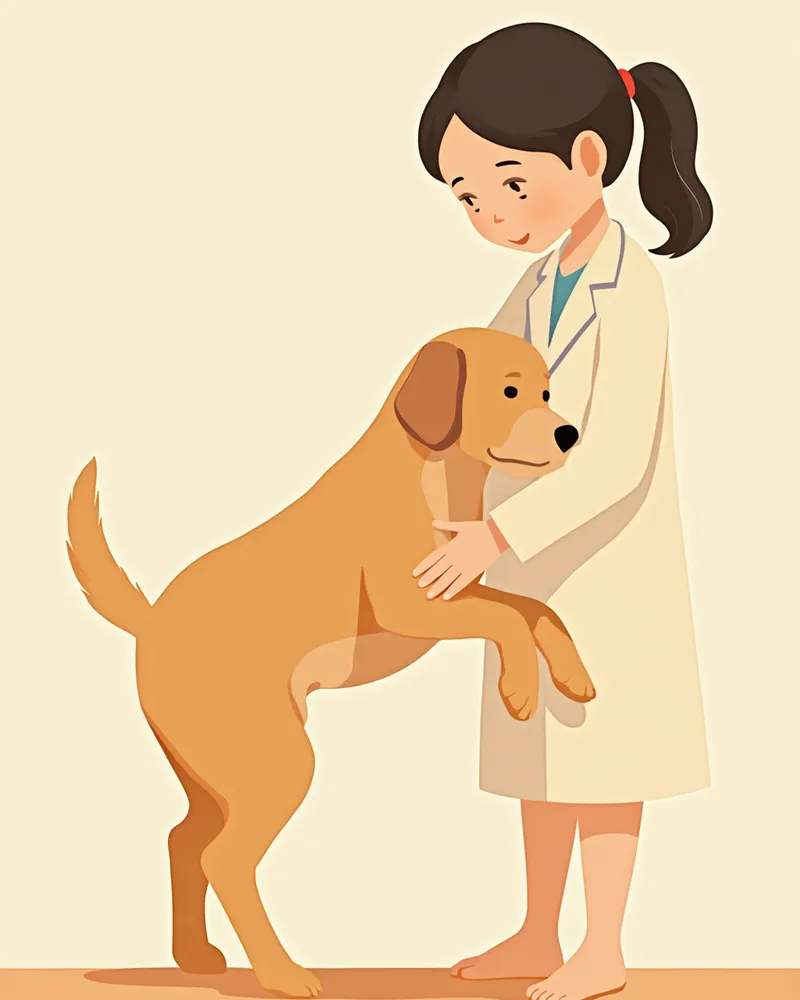
The front legs bear a significant portion of the body weight during walking, making joint, cartilage, and muscle issues more apparent. If you notice any of the following signs, consider the possibility of the corresponding condition: - Elbow dysplasia: Lameness in the front legs of young, growing dogs (especially large breeds), worsening after exercise — if left untreated, it can progress to osteoarthritis. - Osteoarthritis: Stiffness upon waking in the morning and initial lameness at the start of walks in senior dogs. - Front paw pad injuries: Sudden lameness accompanied by bleeding on the paw pads or foreign objects (such as thorns). - Biceps tendonitis and other shoulder soft tissue issues: If pain in the shoulder area is suspected, a thorough examination is necessary. - Osteosarcoma (in senior dogs): Swelling in one front leg with gradual worsening, sometimes leading to sudden non-weight-bearing lameness.
A veterinarian palpating a puppy’s front elbow

Hind Leg Limping — Checklist of Suspected Conditions

Limping in the hind legs is most commonly caused by issues with the patella, cruciate ligaments, or hip joints. Since the prevalent conditions differ between small and large breeds, it’s important to consider the dog’s breed as well. - Patellar luxation: Common in small breeds; sudden lifting of one hind leg, hopping on three legs, then returning to normal after a short time. - Cruciate ligament rupture: Sudden non-weight-bearing lameness after jumping, often accompanied by knee swelling. - Hip dysplasia: Seen in large and senior dogs; difficulty standing up, often affecting both hind legs. - Legg-Calvé-Perthes disease: Occurs in young small-breed dogs; gradual onset of hind leg lameness. - Lumbar disc disease: Lameness combined with pain when touching the back, and unsteady gait.

Go to the Emergency Room Immediately in These Cases

If your pet cries out when you touch its leg or keeps it completely off the ground for more than 24 hours, it’s likely more than a simple sprain. Suspect a fracture, complete ligament rupture, immune-mediated polyarthritis, disc herniation, or a tumor if you notice swelling or deformity after an injury, if both hind legs suddenly give out and collapse, or if limping is accompanied by fever, loss of appetite, or lethargy. In these cases, seek emergency care at a 24-hour veterinary hospital or an orthopedic clinic immediately.

How Is Diagnosis Conducted by Cause?
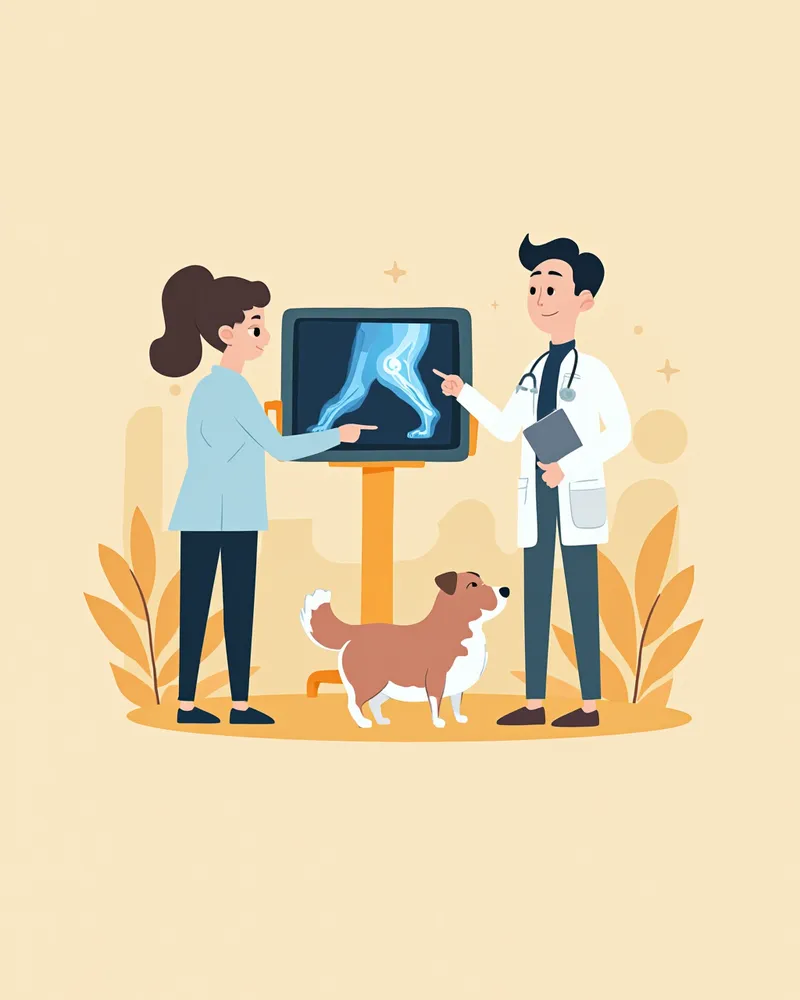
At the clinic, we follow a step-by-step approach: gait assessment, physical palpation, and then imaging. We first use our hands to pinpoint which leg and joint are causing pain, then take X-rays to examine the bones and joint spaces. If a cruciate ligament tear is suspected, we perform a cranial drawer test; for patellar luxation, we assess the severity through a Grade 1–4 classification. For a detailed evaluation of soft tissues, we may proceed to CT, MRI, or arthroscopy. If immune-mediated arthritis is suspected, joint fluid analysis is also required.
A veterinarian examining an X-ray of a dog's leg

Five Things to Check When Observing at Home

Writing down the following details before your vet visit can significantly speed up the diagnosis: - Onset: Sudden vs. gradual (sudden onset may indicate trauma or ligament rupture) - Affected limb: Take a video of your pet walking to show the vet - Aggravating factors: After exercise, in the morning, or on cold days (arthritis often worsens in the cold) - Associated symptoms: Swelling, fever, or changes in appetite - Breed-specific conditions: Poodles and Maltese are prone to patellar issues, while Golden Retrievers are prone to hip and cruciate ligament problems

What You Must Never Do When Your Dog Is Limping

Human pain relievers like Tylenol and ibuprofen can cause kidney failure and gastrointestinal bleeding in dogs, so never give them to your pet without veterinary guidance. Additionally, forcing a limping leg to straighten or massaging it can worsen ligament or muscle injuries. Until a diagnosis is made, reduce walks by 30–50% and prevent jumping or climbing stairs on slippery floors. Pain medication should only be administered under a veterinarian’s prescription.

Points for Preventing Recurrence and Management
Once joint issues develop, they are highly prone to recurrence, requiring lifelong management. - Weight Management: Obesity increases the burden on the patella and hip joints, so maintaining an ideal body weight is essential. - Slip Prevention: Use mats or rugs in living areas to prevent slipping and minimize impact on the joints. - Low-Intensity, Consistent Exercise: A 20- to 30-minute walk on flat ground is safer than jumping or running. - Joint Supplements: Consult your veterinarian to determine the efficacy and necessity of supplements such as glucosamine, chondroitin, and omega-3 fatty acids. - Regular Check-ups: For pets aged seven years and older, we recommend orthopedic examinations every six months.
A puppy walking on a non-slip mat

Reviewed by a veterinarian

Dr. Tony — Punnawat Phongkittirak

Dr. Tony — Punnawat Phongkittirak

Veterinarian

A veterinarian who majored in veterinary medicine at Khon Kaen University, Thailand, and completed the IVSA program at North Carolina State University in the United States. Drawing on clinical experience at animal hospitals, he works in the pet healthcare field and is dedicated to building a digital care environment that connects pet parents with veterinarians.

Frequently Asked Questions

My puppy limped for a short while but is now fine. Should I still take him to the vet?
If your pet limps lightly just once and then seems fine, try reducing their walking time for 2-3 days and observe them. However, if the limping returns within a week or the same symptoms recur, it could be a sign of patellar luxation or early cruciate ligament damage, and a veterinary visit is necessary.
I’m not sure which leg my pet is limping on. How can I check?
Use your smartphone to record your dog walking from the side and rear, then play the video back in slow motion. The front leg on the opposite side of the head-bobbing motion is the painful one. For hindlimb lameness, look for exaggerated vertical movement of the hip on the affected side or a shortened stride.
My dog started limping during our walk—could there be a thorn stuck in its paw?
Yes, that’s a common cause. First, shine a flashlight on the paw pads and between the toes to check for foreign objects, wounds, or swelling. If the limping persists after removing any foreign object, it could be a joint issue.
My senior dog limps stiffly every morning. Could it be arthritis?
These are classic signs of osteoarthritis. If your pet shows stiffness when first getting up in the morning or after resting, which then eases with movement, there’s a high likelihood of osteoarthritis. Diagnosis is made through X-rays and pain assessment, and it’s best to develop a long-term management plan.
Does patellar luxation require surgery?
Grades 1–2 can be slowed with weight management, muscle-strengthening exercises, and environmental modifications. Grades 3–4 involve rapid progression of pain and arthritis, so surgery is recommended. Please consult a veterinary orthopedic specialist for an evaluation to determine the best course of action.

Share

Related Guides

References

[1] Clinical Medicine of the Dog and Cat, 4th Edition — Chapter 15: Musculoskeletal Disorders

[2] Notes on Canine Internal Medicine, 4th Edition — Lameness and Joint Pain

[3] The Veterinary Workbook of Small Animal Clinical Cases — Case 44: Forelimb Lameness

[4] The Dog Care Handbook — Lameness Evaluation in Dogs

This information is based on veterinary literature and does not replace diagnosis or treatment. Please consult a veterinarian for specific health concerns.

Metapet Co., Ltd. | CEO: Park Sung-yong | Business Reg. No. 417-88-02562 | Seoul, South Korea | Customer Center

Dog Limping: Front vs. Hind Leg Causes & What to Do | Meongsiljang