Like
Share
멍실장
강아지 가려움증 원인과 대처

Causes and Management of Itching in Dogs

Skin & CoatSymptomsMeongsiljang Veterinary Advisory Board

I’ve compiled the main causes of itching in dogs, criteria for assessing urgency, and proper management strategies based on veterinary textbooks.

Why Does Itching Occur in Dogs and How Should It Be Managed?

A puppy scratching its neck with its hind legs in the living room.
Itching in dogs is a symptom that causes them to repeatedly scratch or lick their skin, often due to allergies, parasites, or bacterial and fungal infections. Rather than simply trying to stop the scratching, it’s much more important to understand why the itching is occurring. When a dog scratches, licks, or rubs its body against the floor, these are among the most common signs of a skin issue. According to veterinary dermatology textbooks, itching is a sensation influenced by multiple pathways, including inflammation and immune responses. The causes can generally be categorized into allergies, parasites, and bacterial or fungal infections. Since treatment varies depending on the cause, an accurate diagnosis is essential.

Assessing Urgency by Itching Severity

The urgency of itching depends on its severity. Please use the guidelines below to assess your pet’s condition.
SeverityKey SymptomsRecommended Action
MildOccasional scratching with no visible skin changesMonitor for 1–2 weeks, then visit the clinic
ModerateScratching multiple times a day, accompanied by redness and dandruffVisit the clinic within 1 week
SeverePersistent scratching, resulting in hair loss, bleeding, or foul odorSeek immediate veterinary care

Signs That Indicate Itching

Excessive scratching: Your pet repeatedly scratches a specific area with their front or hind paws. If they focus on scratching behind the ears, under the armpits, or in the groin, it may indicate an allergy.
Licking or chewing with the mouth: They intensely lick their paw pads or belly. The saliva can sometimes cause the fur to turn reddish.
Rubbing against the floor: They rub their face or rear end against carpets or the floor.
Hair loss and redness: Hair falls out around the scratched areas, and the skin becomes red. If the hair loss is severe, you may also want to check out Causes of Dog Hair Loss and How to Handle Them.
Skin odor: If there is a bacterial or fungal infection, a distinct smell may be present.
A puppy lying on a blanket and licking its front paws

When to Seek Immediate Veterinary Care

If you notice any of the following symptoms, take your pet to a veterinary clinic immediately: - Skin that is macerated and weeping exudate - Bleeding from scratched areas that does not stop - Sudden facial swelling or hives - Itching accompanied by vomiting or diarrhea Sudden facial swelling or generalized hives may indicate an acute allergic reaction, requiring prompt emergency treatment.

Cause 1: Allergies — The Most Common Reason

The most common cause of itching in dogs is allergies.
Atopic dermatitis: This condition arises from reactions to environmental allergens such as house dust mites and pollen. Symptoms typically first appear between 6 months and 3 years of age, and there is a strong genetic predisposition. A key characteristic is that symptom severity fluctuates with the seasons. You can learn more about the causes and management of canine atopy in our Dog Atopy Causes and Management Guide.
Food allergies: These can occur at any age. Dogs may exhibit hypersensitivity to specific proteins, and the offending ingredient is identified through an elimination diet trial conducted under veterinary supervision.
Flea allergy: This is a hypersensitivity reaction to proteins in flea saliva. Even a small number of fleas—so few that they may not be directly visible on the animal—can cause severe itching.

Cause 2: Bacterial, Fungal, and Parasitic Infections
In addition to allergies, microbial and parasitic infections can also cause itching.
Bacterial infection (pyoderma): When the skin barrier is compromised, bacteria can overgrow, leading to itching and pustules. This condition is often seen alongside atopic dermatitis.
Fungal infection: An overgrowth of yeast (Malassezia) can cause intense itching and an unpleasant odor, commonly affecting the ears and between the toes. You can find more detailed information in our Guide to Fungal Dermatitis.
External parasites: Fleas, ticks, and mites can directly cause itching. According to veterinary dermatology textbooks, it is essential to first check for parasitic infections when examining an itchy dog.
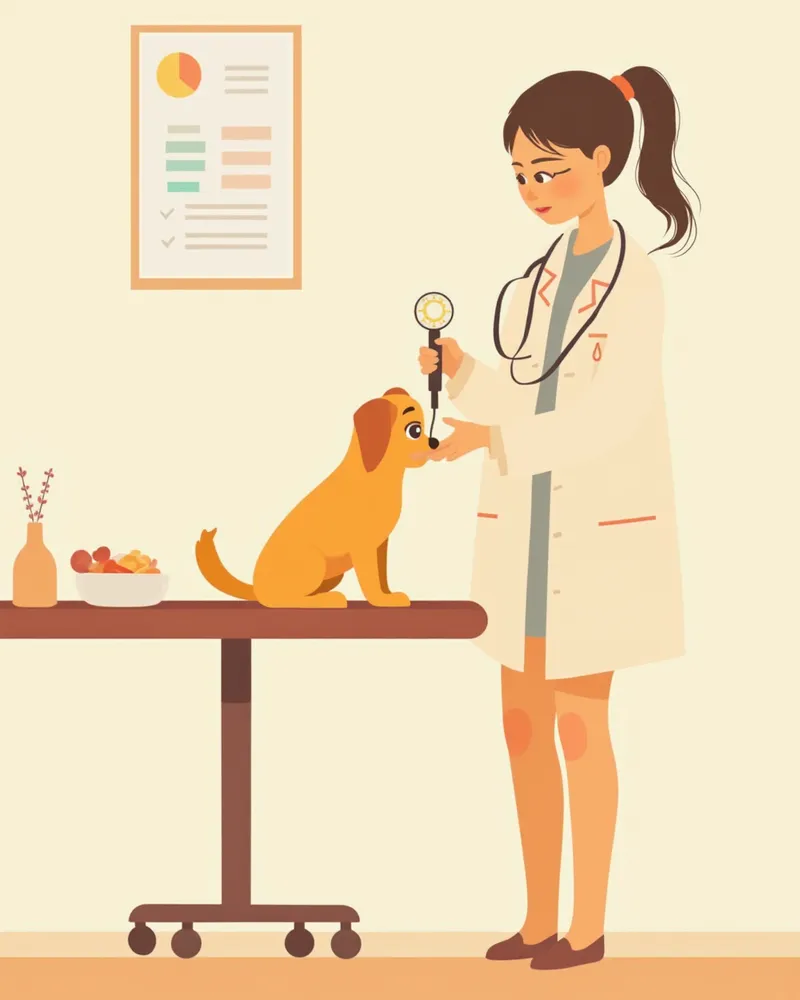
A veterinarian examining a dog's skin at the animal hospital.

Diagnosis and Treatment Methods

Treatment varies significantly depending on the underlying cause. Using medication without a veterinarian’s diagnosis can worsen symptoms.
Diagnosis: We identify the cause through skin tests, culture tests, and allergy testing. You can find detailed information on the process in our Dog Allergy Test Guide.
Allergies: Your veterinarian will prescribe anti-itch medication tailored to your dog’s weight and symptoms. Atopic dermatitis requires long-term management.
Infections: Bacterial infections are treated with antibiotics, while fungal infections require antifungal medications. Medicated shampoos are often used alongside these treatments.
Parasites: Treatment involves administering deworming medication and disinfecting the environment.
The most important step is addressing the root cause, rather than just relieving the itching itself.

Certain Breeds Require Extra Attention

According to veterinary dermatology textbooks, atopic dermatitis is a hereditary condition, making certain breeds more susceptible to skin allergies. Breeds such as the English Bulldog, Golden Retriever, Labrador Retriever, Cocker Spaniel, West Highland White Terrier, and Pug tend to have higher incidence rates of atopic dermatitis. However, breed-specific predispositions can vary depending on geographic region and population. If you own one of these breeds, it’s best to visit the clinic promptly when itching symptoms first appear. Early diagnosis is key to long-term management.

Home Care and Prevention

Regular bathing: Bathe your dog once every 1–2 weeks using a low-irritant shampoo recommended by your veterinarian. Bathing too frequently can actually damage the skin barrier.
Environmental management: Wash bedding frequently and ensure good ventilation to reduce dust mites.
Skin moisturization: During dry seasons, using a moisturizer specifically formulated for dogs can help maintain the skin barrier.
Preventive medication: Administer flea and tick preventatives monthly without missing any doses. You can find seasonal care tips in the Flea and Tick Prevention Guide.
Nutritional management: A diet containing omega-3 fatty acids can help support skin health.
A caregiver gently bathing a puppy

Reviewed by a veterinarian

Dr. Tony — Punnawat Phongkittirak

Dr. Tony — Punnawat Phongkittirak

Veterinarian

A veterinarian who majored in veterinary medicine at Khon Kaen University, Thailand, and completed the IVSA program at North Carolina State University in the United States. Drawing on clinical experience at animal hospitals, he works in the pet healthcare field and is dedicated to building a digital care environment that connects pet parents with veterinarians.

Frequently Asked Questions

Why does my dog scratch so much more at night?
At night, when activity levels drop, pets tend to focus more on their itching, making scratching behavior more noticeable. Additionally, sleeping on bedding with high levels of dust mites can worsen allergic reactions. Wash bedding frequently, and if symptoms persist, please visit your veterinarian.
Can I apply human skin medication to my dog?
Absolutely not. Human ointments may contain ingredients that are toxic to dogs. In particular, applying steroid creams without veterinary guidance can worsen infections or cause unexpected side effects, so always consult your veterinarian for a proper prescription.
My pet is itchy. Is it okay to bathe them frequently?
Bathing your pet too frequently can strip away the skin’s natural oils, which may actually worsen itching. Use a medicated shampoo recommended by your veterinarian, but limit baths to once every one to two weeks.
Can a dog’s itching be completely cured?
It depends on the underlying cause. If the issue is due to parasites or a bacterial infection, it can be completely cured with treatment. However, in cases where genetic factors play a major role, such as atopic dermatitis, the goal is long-term management rather than a cure. With consistent care, your pet can live comfortably without significant disruption to daily life.
Can changing my pet’s diet help relieve itching?
If food allergies are the cause, this approach can be effective. However, since it’s difficult to determine the culprit on your own, it’s best to consult with your veterinarian and conduct a proper elimination diet trial for an adequate period. During the trial, you should feed only prescription hypoallergenic food or a novel protein source that your pet has never eaten before.

Share

Related Guides

References

[1] Nuttall T, Harvey RG, McKeever PJ. BSAVA Manual of Canine and Feline Dermatology, 4th Edition. BSAVA, 2023.

[2] Hill P. The itchy dog. In: 100 Top Consultations in Small Animal General Practice. Wiley-Blackwell, 2011.

[3] Favrot C et al. A prospective study on the clinical features of chronic canine atopic dermatitis and its diagnosis. Veterinary Dermatology, 2010; 21(1): 23-31.

This information is based on veterinary literature and does not replace diagnosis or treatment. Please consult a veterinarian for specific health concerns.

Metapet Co., Ltd. | CEO: Park Sung-yong | Business Reg. No. 417-88-02562 | Seoul, South Korea | Customer Center

Itching in Dogs: Causes & How to Respond | Meongsiljang