Like
Share
멍실장
고양이 복수 원인과 단계별 대처법, 병원 가야 할 신호 총정리

If Your Cat Develops Ascites — Causes and When to Visit the Vet

DigestiveSymptomsMeongsiljang Veterinary Advisory Board

Feline ascites is a sign of serious underlying conditions such as FIP, liver disease, or heart disease. We’ve outlined the diagnostic methods and treatment approaches for each cause, as well as the warning signs that require an immediate visit to an emergency veterinary clinic.

What Is Feline Ascites? Check Urgency First
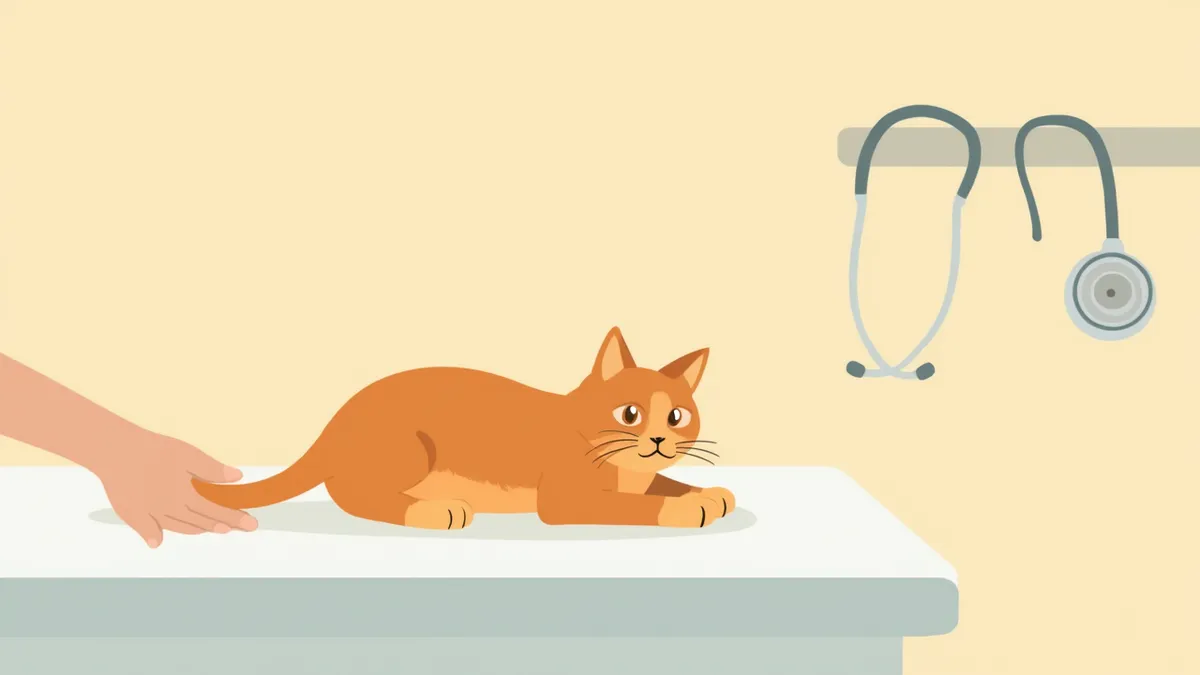
A veterinarian gently palpating a cat’s abdomen.
Feline ascites is a condition in which abnormal fluid accumulates in the abdominal cavity, causing the belly to become noticeably swollen. Ascites itself is not a disease, but rather a sign of an underlying serious condition. The most critical step is to identify the cause quickly. The most likely culprits are FIP (feline infectious peritonitis), liver disease, heart disease, or kidney failure, and early diagnosis is key to determining the prognosis. If your cat’s belly appears swollen, do not attempt to diagnose the issue yourself; instead, visit a veterinary clinic immediately.

Symptom-Based Urgency Assessment Table

ItemMain SymptomsRecommended Response
Observation StageBelly appears slightly swollen, slight decrease in appetiteBook an animal clinic appointment within 1–2 days
Caution StageBelly clearly distended, reduced energy, weight changeVisit animal clinic the same day
Emergency StageDifficulty breathing, pale gums, complete loss of appetiteImmediate 24-hour emergency animal clinic

Symptoms can worsen rapidly. Even in the observation stage, do not rely on self-judgment.

Checklist of Major Symptoms of Feline Ascites

Abdominal distension: The belly appears swollen on both sides, and a gentle press reveals a fluid, sloshing sensation.
Weight gain with muscle loss: Although the scale shows an increase, the spine and ribs become more prominent.
Difficulty breathing: If pleural effusion (fluid accumulation in the chest cavity) develops, breathing becomes labored.
Decreased appetite: Your pet may turn away from treats they usually enjoy.
Lethargy: They may avoid jumping and spend significantly more time lying down.
A pet owner examining a cat with a distended abdomen

Signs Requiring Immediate Visit to a 24-Hour Emergency Veterinary Clinic

If you notice any of the following symptoms, seek emergency veterinary care immediately: • Pale or bluish gums and lips • Rapid, open-mouthed breathing or abdominal breathing • A sudden, severe distension of the abdomen that feels hard like a rock • Complete refusal to eat and inability to stand If ascites spreads to the chest cavity, it can become life-threatening within hours.

Five Major Causes of Feline Ascites
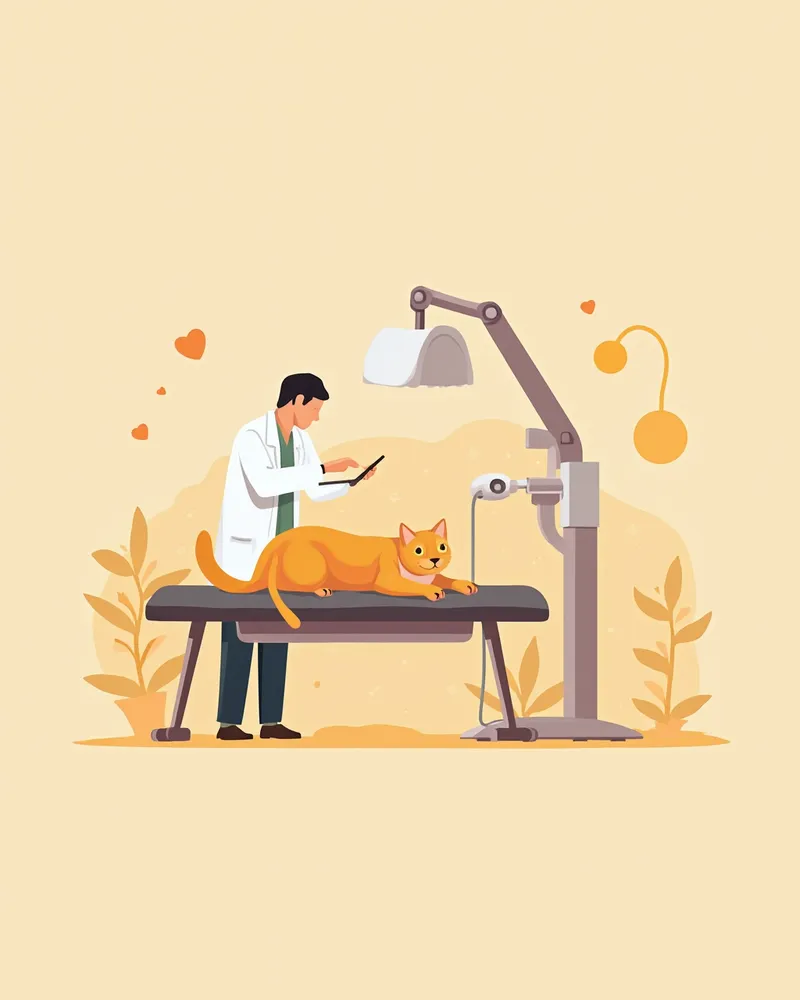
Feline Infectious Peritonitis (FIP): A mutation of the coronavirus causes inflammatory fluid to accumulate in the abdominal cavity. Ascites is the most common sign in wet FIP.
Liver Disease (Liver Failure): When the liver fails to synthesize enough protein, fluid leaks out of the blood vessels.
Heart Disease (Right-Sided Heart Failure): Reduced heart function increases pressure in the abdominal veins, causing fluid to pool.
Kidney Failure (Hypoalbuminemia): The kidneys fail to filter proteins properly, leading to low plasma osmotic pressure.
Tumors (e.g., Lymphoma): Tumors within the abdominal cavity can block lymphatic flow, causing fluid accumulation.
A veterinarian performing an abdominal ultrasound on a cat

Diagnostic Methods Performed at the Veterinary Clinic

If ascites is suspected, the clinic will proceed with the following tests step by step.
Abdominal ultrasound: To check the location and amount of fluid, as well as any abnormalities in the organs.
Abdominal paracentesis: A small amount of fluid from the abdominal cavity is drawn out to analyze its color, protein concentration, and cells, helping to narrow down the cause.
Blood tests: To comprehensively evaluate protein levels, liver function, indicators of kidney failure, and whether anemia is present.
Chest X-ray: To check if pleural effusion is also present.
Based on the combined test results, the underlying cause—whether it’s FIP, a heart issue, or a liver problem—can be determined.

Treatment Approaches by Cause

FIP: Recent reports indicate that antiviral treatments (such as GS-441524 and remdesivir derivatives) have led to improvement or even complete resolution of ascites in some cases. Consistent administration over a prescribed period under veterinary supervision is essential.
Liver Disease: Treatment involves dietary management, hepatoprotective agents, and addressing the underlying cause.
Heart Disease: Diuretics and cardiac medications are used to manage fluid accumulation and support heart function simultaneously.
Kidney Failure: Fluid therapy and dietary protein management help restore osmotic balance.
Abdominal Fluid Drainage (Paracentesis): In cases of severe respiratory distress, temporary drainage of fluid provides relief. However, without treating the underlying cause, the fluid is likely to reaccumulate.
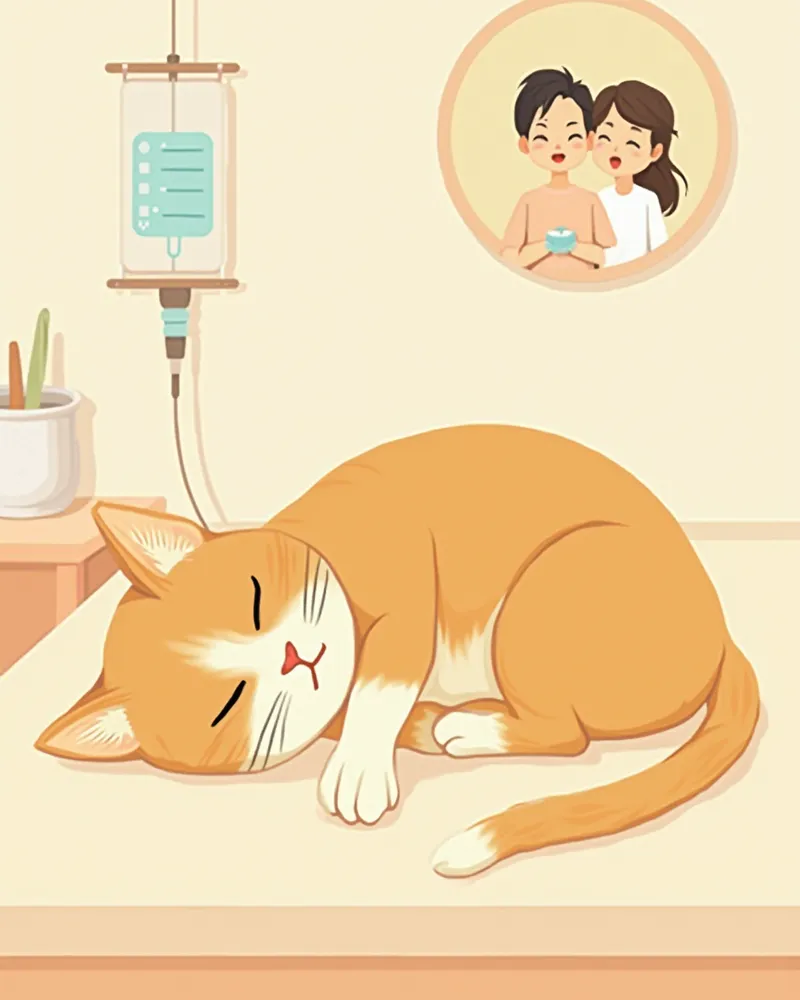
A cat resting after treatment

Wet FIP — What Owners Must Know

FIP was once considered untreatable, but antiviral therapies are now showing successful cures. Because treatment is costly and long-term, early diagnosis can significantly reduce both financial and medical burdens. If you have multiple cats, they may have been exposed to the same coronavirus, so it’s important to monitor the health of all your pets.

Home Care and Early Detection Tips

Ascites never occurs without an underlying disease. While complete prevention is difficult, early detection is certainly possible.
Regular health checkups: Have blood tests and ultrasounds performed once every six to twelve months to monitor the health of the liver, heart, and kidneys.
Weekly weight logs: Weighing your pet at the same time each week helps you spot subtle changes quickly.
Multi-cat litter box hygiene: Since the virus that causes FIP spreads through feces, clean the litter box frequently.
Stress management: Reducing stress is essential for maintaining a strong immune system.

Reviewed by a veterinarian

Dr. Tony — Punnawat Phongkittirak

Dr. Tony — Punnawat Phongkittirak

Veterinarian

A veterinarian who majored in veterinary medicine at Khon Kaen University, Thailand, and completed the IVSA program at North Carolina State University in the United States. Drawing on clinical experience at animal hospitals, he works in the pet healthcare field and is dedicated to building a digital care environment that connects pet parents with veterinarians.

Frequently Asked Questions

My cat’s belly is swollen—could it be ascites?
Abdominal distension can be caused by ascites, obesity, intestinal gas, abdominal tumors, or pregnancy. If you feel a fluid wave when gently pressing the abdomen, ascites is likely, but an ultrasound is necessary for a definitive diagnosis.
Can I drain the fluid at home?
Absolutely not. Abdominal paracentesis is a medical procedure that carries risks of infection and bleeding. It must be performed by a veterinarian in a sterile environment.
Can ascites resolve if it’s not FIP?
It depends on the underlying cause. Ascites caused by heart disease or hypoalbuminemia can improve with proper management of the underlying condition. In contrast, ascites resulting from cirrhosis or end-stage renal failure may be difficult to resolve completely.
We drained the fluid from the abdomen once, but it has accumulated again. What should we do?
Recurrent ascites is a sign that the underlying disease is still progressing. Rather than simply repeating drainage, you should discuss a treatment plan targeting the root cause with your veterinarian.
Are there any foods that should be avoided for cats with ascites?
It depends on the underlying cause. If liver disease is the cause, a protein-controlled diet may be recommended; if heart disease is the cause, a low-sodium diet may be advised. Following your veterinarian’s dietary prescription is the safest approach.

Share

Related Guides

References

[1] Pedersen NC et al., Efficacy and safety of the nucleoside analog GS-441524 for treatment of cats with naturally occurring feline infectious peritonitis, Journal of Feline Medicine and Surgery, 2019

[2] Little S., The Cat: Clinical Medicine and Management, 2nd Edition, Elsevier Saunders, 2012

[3] Ettinger SJ, Feldman EC, Côté E., Textbook of Veterinary Internal Medicine, 8th Edition, Elsevier, 2017

[4] Felten S and Hartmann K, Diagnosis of Feline Infectious Peritonitis: A Review of the Current Literature, Viruses, 2019

This information is based on veterinary literature and does not replace diagnosis or treatment. Please consult a veterinarian for specific health concerns.

Metapet Co., Ltd. | Seoul, South Korea | © 2024 Metapet Co., Ltd. All rights reserved.