Like
Share
멍실장
강아지 아토피 원인과 관리법

Causes and Management of Canine Atopic Dermatitis

Skin & CoatSymptomsMeongsiljang Veterinary Advisory Board

We’ve outlined the main causes and symptoms of atopic dermatitis in dogs, along with treatment options based on veterinary textbooks and daily care tips.

For Canine Atopy, Management Is Key Rather Than a Cure

Illustration of a Golden Retriever puppy scratching its ear
The key to managing canine atopy is consistent care rather than seeking a cure. Atopic dermatitis is a chronic condition in which the skin overreacts to environmental allergens. Common triggers include house dust mites, pollen, and mold, and the condition is more prevalent in breeds with a genetic predisposition. Recurrent itching and redness are typical symptoms, but with appropriate treatment and environmental management, dogs can lead a normal daily life.

How to Classify the Severity of Atopic Dermatitis

The management approach for canine atopic dermatitis varies depending on the severity of symptoms. Please refer to the table below to assess your dog’s condition.
StageKey SymptomsManagement Approach
MildOccasional scratching, slight skin rednessMoisturizing care + environmental improvement
ModerateFrequent scratching, skin redness and scalingMedication + concurrent environmental management
SeverePersistent scratching, secondary infections, hair lossAggressive medication + regular check-ups

Suspect Atopic Dermatitis If These Symptoms Repeat

If your pet experiences two or more of the following symptoms repeatedly, it may be a sign of atopic dermatitis.
Scratching face and ears: Repeatedly scratching or rubbing around the eyes, mouth, and inside the ears.
Licking paws: Continuously licking the front or hind paws, causing redness between the toes.
Redness in armpits and belly: The skin in the armpits, belly, and groin becomes red and rough.
Recurring ear infections: Frequent recurrence of otitis externa, often accompanied by an unpleasant odor from the ears.
Skin scaling and hair loss: Accumulation of scales and hair loss in specific areas.
Seasonal worsening: Symptoms tend to worsen in spring and summer, then improve in winter.
Illustration of a dog with marked atopic symptom areas

Visit the Vet Immediately If a Secondary Infection Occurs

When atopic dermatitis weakens the skin barrier, secondary bacterial or yeast infections can develop. If you notice a foul odor from the skin, greasy exudate, or a sudden worsening of skin lesions such as papules, pustules, or crusts, suspect a secondary infection. In such cases, treatment for the infection must be administered alongside atopic dermatitis therapy, so please visit your veterinarian promptly.

Why Does Canine Atopic Dermatitis Occur?

The causes of atopic dermatitis in dogs can be broadly categorized into genetic and environmental factors.
Genetic factors: Certain breeds are predisposed to having a naturally weaker skin barrier. If one or both parent dogs have atopy, their offspring are at a higher risk of developing the condition.
Environmental allergens: Allergens such as house dust mites, pollen, grass, and mold spores can penetrate the skin and trigger an hypersensitive immune response.
Seasonal influences: If pollen or grass is the trigger, symptoms tend to worsen in spring and summer. If house dust mites are the cause, symptoms may persist year-round.

What Medication Treatment Options Are Available?

According to veterinary dermatology textbooks, there are several medication options for treating atopic dermatitis in dogs. Your veterinarian will select the most appropriate treatment based on the severity of symptoms and your dog’s overall health.
Cyclosporine: This medication modulates the immune response to effectively reduce itching and inflammation. Once symptoms stabilize, the dosing frequency can be adjusted to every 2–4 days.
Oclacitinib: This drug provides rapid relief from itching. It is widely used for long-term management due to its good tolerability, but regular blood tests are recommended to monitor your dog’s health.
Lokivetmab: This injectable medication specifically blocks the particular substance that triggers itching. It is effective for managing chronic atopic dermatitis, with dosing intervals determined by your veterinarian’s guidance.
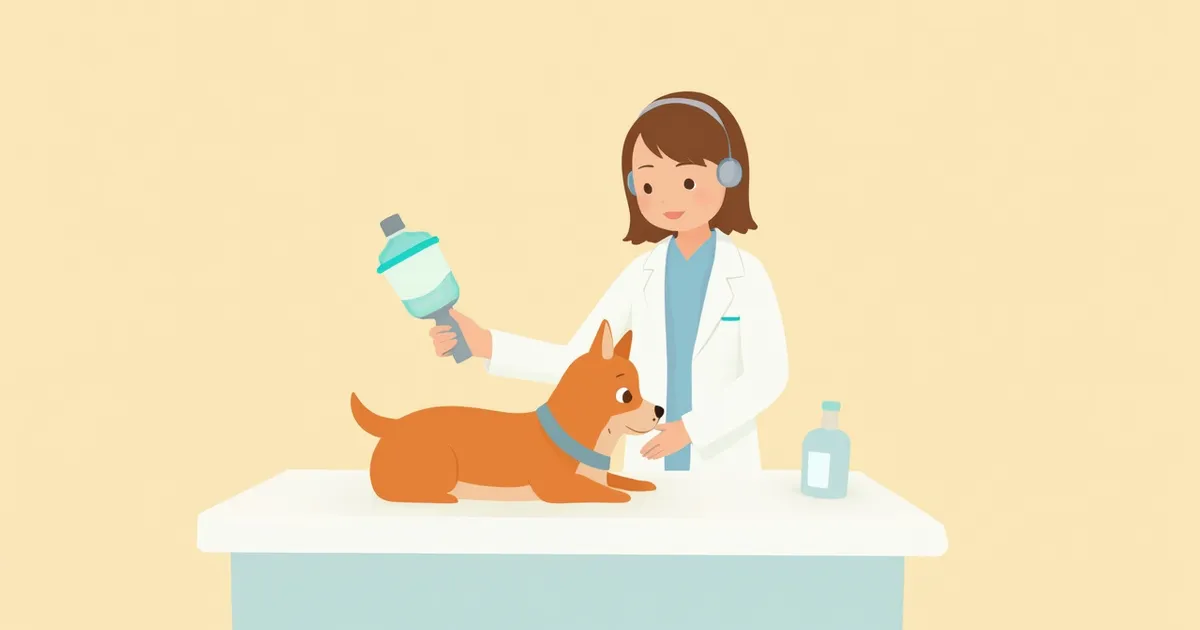
Illustration of a dog with a veterinarian and treatment option icons

Immunotherapy: A Treatment That Addresses the Root Cause

Allergen-specific immunotherapy is a treatment that addresses the root cause of atopy. After identifying the trigger through allergy testing, small amounts of the allergen are administered via injection to help your pet’s body gradually build tolerance. According to veterinary dermatology textbooks, approximately 70% of allergic patients show improvement with immunotherapy. It typically takes 3 to 6 months to see results, though some pets may require up to 12 months. A key benefit is the potential to reduce long-term medication use. Please consult your veterinarian to determine if this treatment is suitable for your pet.

Be Especially Cautious With These Breeds for Atopic Dermatitis

According to veterinary dermatology textbooks, certain breeds have a higher incidence of atopic dermatitis. These include Golden Retrievers, Labrador Retrievers, West Highland White Terriers, Bulldogs, Cocker Spaniels, Pugs, Shar-Peis, Yorkshire Terriers, and Boxers. If you own one of these breeds, it’s important to regularly monitor your pet’s skin condition and seek veterinary evaluation promptly if itching recurs.

How to Manage Atopic Dermatitis in Daily Life

Managing atopic dermatitis at home is just as important as medication.
Moisturizing: Use dog-specific moisturizers or shampoos containing ceramides to strengthen the skin barrier.
Environmental control: Wash bedding frequently and run an air purifier to reduce indoor allergens. Wiping your dog’s paws and belly with a damp cloth after walks can also help.
Dietary support: While foods or supplements containing omega-3 and omega-6 fatty acids have limited efficacy when used alone, they can be used as an adjunct for mild atopic dermatitis or in combination with other treatments.
Regular check-ups: Visit your veterinarian regularly to monitor changes in skin condition and detect secondary infections early.
An illustration of a puppy receiving skin care in a clean home.

Reviewed by a veterinarian

Dr. Tony — Punnawat Phongkittirak

Dr. Tony — Punnawat Phongkittirak

Veterinarian

A veterinarian who majored in veterinary medicine at Khon Kaen University, Thailand, and completed the IVSA program at North Carolina State University in the United States. Drawing on clinical experience at animal hospitals, he works in the pet healthcare field and is dedicated to building a digital care environment that connects pet parents with veterinarians.

Frequently Asked Questions

Can doggy atopy be cured?
Atopic dermatitis is a chronic condition, so a complete cure is difficult. However, symptoms can be effectively controlled by combining appropriate medication with environmental management. Consistent care is the key.
How can you tell the difference between atopic dermatitis and food allergies?
Food allergies can cause symptoms year-round, regardless of the season, and may be accompanied by gastrointestinal issues such as vomiting or diarrhea. To accurately distinguish food allergies from other conditions, a veterinary elimination diet trial is necessary.
How is an atopy diagnosis made?
The veterinarian will comprehensively evaluate the symptom patterns, affected areas, and medical history. After ruling out other skin conditions, a diagnosis will be made, and allergy testing may be performed to identify the causative allergens.
Is it safe to use steroids for a long time?
Steroids are effective for short-term relief of itching, but long-term use carries the risk of side effects. Veterinary dermatology textbooks do not recommend them as the first-line treatment for chronic atopic dermatitis. Please consult your veterinarian to explore other long-term treatment options.
Is there a specific type of dog food that’s good for atopic dermatitis?
There is no single food that acts as a cure-all for atopic dermatitis. Diets or supplements rich in omega-3 and omega-6 fatty acids have limited efficacy when used alone, but they can be helpful as a supportive measure for mild cases or in conjunction with other treatments. If a food allergy is also present, a veterinarian-prescribed therapeutic diet may be necessary.

Share

Related Guides

References

[1] BSAVA Manual of Canine and Feline Dermatology, 4th Edition — Chapter 11: Canine Atopic Dermatitis

[2] BSAVA Manual of Canine and Feline Dermatology, 4th Edition — Chapter 26: Malassezia Dermatitis

[3] The Dog Care Handbook: Things I Wish My Vet Had Told Me — Atopic Skin Disease

[4] Aberg L et al. (2017) Allergen-specific immunotherapy in Malassezia-hypersensitive atopic dogs

This information is based on veterinary literature and does not replace diagnosis or treatment. Please consult a veterinarian for specific health concerns.

Metapet Co., Ltd. | CEO: Park Sung-yong | Business Reg. No. 417-88-02562 | Seoul, South Korea | Customer Center

Canine Atopic Dermatitis: Causes, Symptoms, and Care | Meongsiljang