
Top 7 Low-Shedding Cat Breeds
We’ve compiled a comparison of seven cat breeds that shed very little, backed by veterinary evidence. Take a look at each breed’s characteristics, care tips, and allergy precautions at a glance.
Do Truly Non-Shedding Cats Exist?
The True Meaning of "Hypoallergenic Cats
Be Sure to Check Before Adopting
If anyone in your household has allergies, be sure to schedule a trial visit before adopting. Even within the same breed, individual cats vary in the amount of allergenic proteins they produce. The most reliable approach is to spend at least 30 minutes with the cat at the breeder’s or shelter’s facility and observe any allergic reactions.
No. 1–3: Nearly Hairless Breeds
No. 4–5: Breeds with Short, Dense Coats
No. 6–7: Light, Low-Shedding Single-Coat Breeds
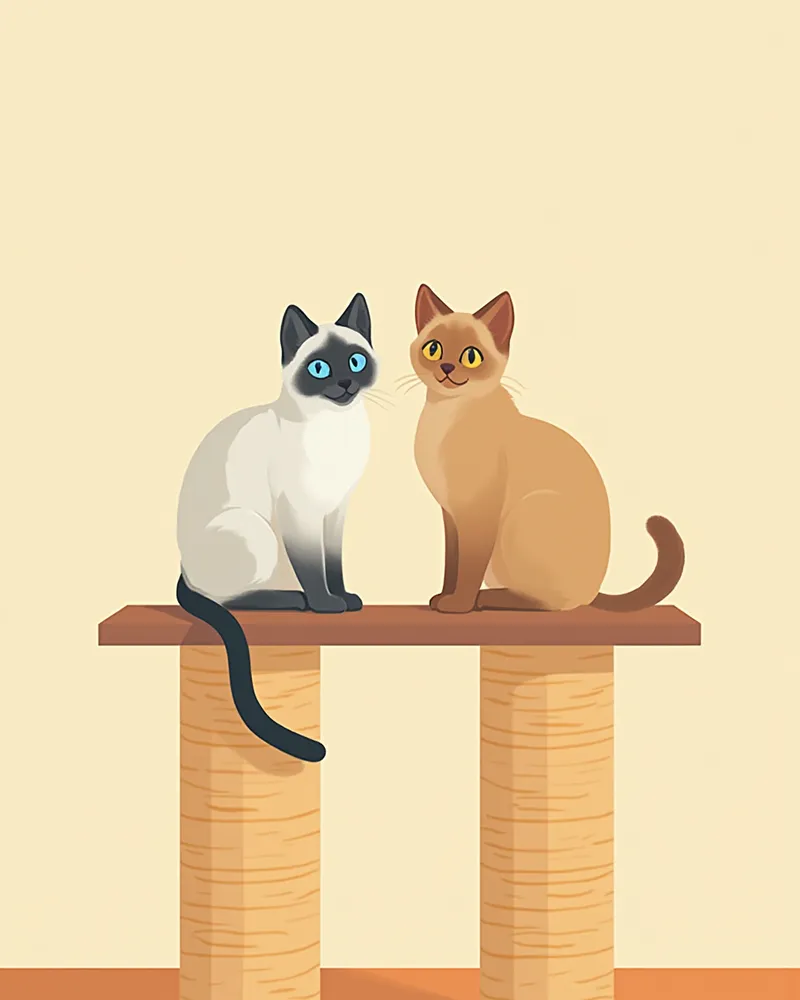
Comparison of the 7 Breeds at a Glance
| Item | Sphynx | Devon Rex | Cornish Rex | Russian Blue | Bengal | Siamese | Burmese |
|---|---|---|---|---|---|---|---|
| Coat Type | Nearly hairless | Short curly | Undercoat only | Dense double coat | Short single coat | Short single coat | Short single coat |
| Shedding | ★☆☆☆☆ | ★☆☆☆☆ | ★☆☆☆☆ | ★★☆☆☆ | ★★☆☆☆ | ★★☆☆☆ | ★★☆☆☆ |
| Brushing | Not needed | Once/week | Once/week | 1-2 times/week | Once/week | Once/week | Once/week |
| Bathing | 1-2 times/week | Once/month | Once/month | As needed | As needed | As needed | As needed |
| Special Care | Skin oil management/bathing essential | Watch for sensitive skin | None | None | None | None | None |
Individual variation may occur. Please use for reference.
Low-Shedding Cats Still Require Care
Always Consider Individual Variation
Even within the same breed, individual pets can vary significantly in shedding intensity and allergenicity. Factors such as overall health, stress levels, and diet can all influence coat condition. In cats, abnormal shedding may not be normal seasonal molting but could indicate underlying issues like external parasites, bacterial or fungal (dermatophyte) infections, allergic dermatitis, or self-trauma from excessive grooming. If you notice skin redness, excessive hair loss, or patchy bald spots, these could be signs of a pathological skin condition, so please consult your veterinarian for a proper diagnosis.
Reviewed by a veterinarian

Dr. Tony — Punnawat Phongkittirak
VeterinarianA veterinarian who majored in veterinary medicine at Khon Kaen University, Thailand, and completed the IVSA program at North Carolina State University in the United States. Drawing on clinical experience at animal hospitals, he works in the pet healthcare field and is dedicated to building a digital care environment that connects pet parents with veterinarians.
Reviewed 2026-04-18
Frequently Asked Questions
Do Sphynx cats really have no fur at all?
Can I still get a cat if I have allergies, even with hypoallergenic breeds?
Do cats that don't shed still need to be brushed?
Does the amount of shedding vary depending on the season?
Do kittens shed less hair from an early age?
Share
Related Guides

Top 5 Medicated Dog Shampoos — For Pyoderma and Bacterial Infections

Veterinarian-Recommended Top 5 Medicated Shampoos for Canine Yeast Dermatitis — Relieves Itching and Greasiness
Top 5 Medicated Cat Shampoos Recommended by Veterinarians — Fungal Dermatitis and Fungal Care
Puppy Growling at Food Bowl — Top 7 Solutions for Food-Resource Guarding Aggression
7 Best Management Strategies for Excessive Dog Barking Recommended by Veterinarians and How to Choose

7 Best Management Strategies for Dog-on-Dog Aggression Recommended by Veterinarians and How to Choose
Safe with Kids and Dogs — 7 Best Rules for Preventing Dog Bites in Children

Dogs That Chew When Left Alone — 7 Management Strategies for Separation-Related Destructive Behavior and How to Choose

The Best Ways to Manage Compulsive Licking and Chewing in Dogs and How to Choose the Right Approach
The Best Evidence-Based Management Strategies for Canine Cognitive Dysfunction in Senior Dogs and Selection Criteria
References
[1] Jackson HA, Marsella R (eds), BSAVA Manual of Canine and Feline Dermatology, 4th Ed, BSAVA, 2021
[2] Bonnet B et al., An update on molecular cat allergens: Fel d 1 and what else?, Allergy Asthma Clin Immunol 14:10, 2018
[3] Older CE et al., The feline cutaneous and oral microbiota are influenced by breed and environment, PLoS One 14, e0220463, 2019