
Like
Share
멍실장
강아지 신장 낭종 자주 묻는 질문 Q&A — 보호자가 꼭 알아야 할 핵심

What Are Kidney Cysts in Dogs? — Risks, Symptoms, and Management

KidneyQ&AMeongsiljang Veterinary Advisory Board

Kidney cysts in dogs are usually asymptomatic, but early detection allows for effective management. We’ve compiled the essential information every pet owner should know in a Q&A format.

What Are Kidney Cysts in Dogs?

Diagram of cyst structures within a dog's kidneys
Kidney cysts in dogs are fluid-filled sacs that develop within the kidneys, appearing as round, dark (anechoic) structures on ultrasound. Most are non-cancerous; some may be congenital, as seen in polycystic kidney disease, while solitary cysts are often discovered incidentally during other examinations. Because they are frequently asymptomatic, early detection can be challenging. However, if the cysts multiply or cause the kidneys to enlarge, they may lead to impaired kidney function. Ultrasound is the most accurate method for diagnosing kidney cysts, allowing for precise assessment of their size, number, and location. Nevertheless, a normal ultrasound does not completely rule out kidney disease, making regular health check-ups essential. If multiple cysts are detected, it is advisable to monitor the condition closely with your veterinarian, keeping polycystic kidney disease in mind. Consistent monitoring is necessary to maintain kidney function for as long as possible.

Why Do Kidney Cysts Develop in Dogs?

The exact cause of kidney cysts in dogs is not yet fully understood. However, it is well established that genetic factors play a role in certain forms, such as polycystic kidney disease. In some breeds, including Persian cats, Cairn Terriers, and West Highland White Terriers, cysts have been reported to appear at a young age. In these cases, diagnosis is confirmed through a combination of genetic testing and ultrasound examinations. In contrast, solitary cysts are often discovered incidentally during other examinations, as they typically present no specific symptoms. Kidney diseases are broadly categorized into congenital and acquired conditions, and kidney cysts can be understood within this framework. While most cysts remain asymptomatic and stable for long periods, they can impair kidney function if they progress, making regular check-ups essential for early detection.
Diagram of the main causes of kidney cysts in dogs

What Are the Main Symptoms of Kidney Cysts?

Most kidney cysts in dogs are asymptomatic. Solitary cysts are often discovered incidentally, and there may be no noticeable signs in the early stages of kidney disease. However, if the cyst progresses and affects kidney function, you may observe the following signs commonly associated with chronic kidney disease: increased thirst and urination, dehydration, decreased appetite, lethargy, and vomiting. Because symptoms typically indicate that kidney function is already compromised, early detection is key to effective management.
Dogs showing symptoms caused by kidney cysts

When to Visit the Vet Immediately

If your dog suddenly loses its appetite, experiences repeated vomiting, or stops urinating altogether, these could be signs of a rapid decline in kidney function. In such cases, don’t delay—consult your veterinarian immediately. This is especially urgent if multiple cysts are detected or if the kidneys have enlarged significantly, as these conditions can severely impair kidney function and require prompt veterinary care.

How Are Kidney Cysts Diagnosed?
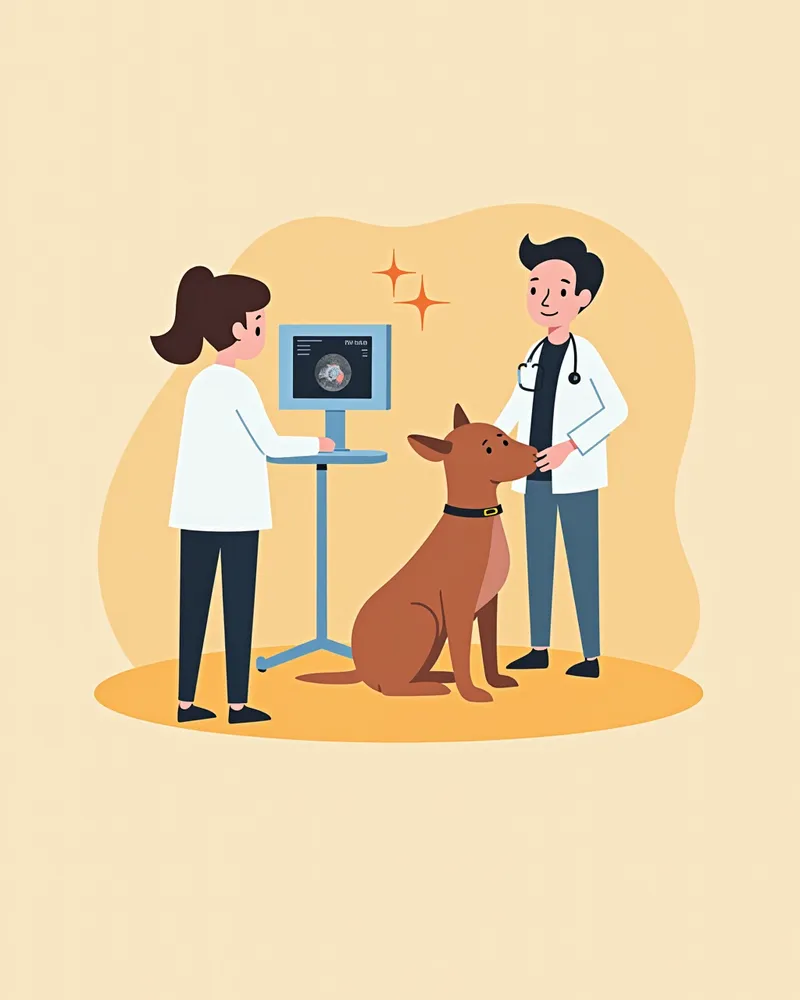
Ultrasound is the most accurate way to diagnose kidney cysts in dogs. On an ultrasound, cysts appear as round, dark (anechoic) areas, allowing for a relatively precise assessment of their size, number, and location. This imaging also helps distinguish whether there is a single cyst, multiple cysts spread throughout the kidneys (polycystic kidney disease), or fluid accumulation around the kidneys. While standard blood and urine tests cannot detect the cysts themselves, they are important for evaluating kidney function, such as measuring blood creatinine levels. However, a normal ultrasound does not completely rule out kidney disease. If multiple cysts are found, veterinarians consider the potential impact on kidney function and may recommend monitoring or additional tests based on the characteristics of the cysts.
Ultrasound examination of a dog with kidney cysts

Stage-Specific Characteristics and Management of Kidney Cysts

ItemCyst statusSymptomsManagement approach
MildSingle, small cystAsymptomaticMaintain regular ultrasound examinations
ModerateMultiple cysts or gradually enlargingPossible changes such as polydipsia/polyuriaPeriodically check kidney function with blood and urine tests
SevereAccompanied by kidney enlargement and functional declineDecreased appetite, vomiting, fatigueConsult a veterinarian and establish a management plan

Cyst management is not based on a fixed absolute size threshold but is directed by considering the number of cysts together with kidney function status. The extent of progression is judged comprehensively by the veterinarian.

How Are Kidney Cysts Treated?

There is no specific treatment to eliminate kidney cysts in dogs. If the cysts are small and asymptomatic, regular monitoring without additional treatment is often sufficient. However, if the cysts progress and affect kidney function, the focus of treatment shifts from removing the cysts to supporting kidney function and managing symptoms. For example, medications may be used to lower blood pressure if it is high, reduce vomiting if present, stimulate red blood cell production in cases of anemia, or decrease protein loss in urine if excessive. Dietary management is also an important aspect. The treatment approach depends on kidney function values and the overall condition, with consistent monitoring being key to management. Always consult your veterinarian for specific prescriptions.
Post-operative recovery scene of a puppy after kidney cyst surgery

Daily Care Tips

Managing kidney cysts in dogs centers on regular check-ups and healthy daily habits. Implementing the following care strategies can help maintain kidney function.
Ensure adequate water intake: Dogs with kidney disease are prone to dehydration, so always provide fresh water and encourage frequent drinking.
Consider a renal prescription diet: A kidney-specific diet, formulated with adjusted levels of protein, phosphorus, and sodium, can help reduce the burden on the kidneys. Consult your veterinarian to select the appropriate food.
Regular check-ups: Periodically monitor the cysts and kidney function through ultrasounds, blood tests, and urinalysis.
Moderate activity: Avoid strenuous exercise while maintaining appropriate daily walks.
Minimize stress: Maintain a quiet and stable environment.
Daily tips for managing kidney cysts in dogs

Points to Watch Out For

If your dog suddenly loses its appetite or experiences repeated vomiting, it could be a sign of a rapid decline in kidney function. In such cases, you should seek veterinary care immediately. Additionally, if multiple cysts are detected or if the condition progresses to the point of affecting kidney function, the management approach may need to be adjusted. Therefore, it’s important to maintain regular communication with your veterinarian.

Reviewed by a veterinarian

Dr. Tony — Punnawat Phongkittirak

Dr. Tony — Punnawat Phongkittirak

Veterinarian

A veterinarian who majored in veterinary medicine at Khon Kaen University, Thailand, and completed the IVSA program at North Carolina State University in the United States. Drawing on clinical experience at animal hospitals, he works in the pet healthcare field and is dedicated to building a digital care environment that connects pet parents with veterinarians.

Frequently Asked Questions

Are kidney cysts in dogs cancerous?
No. Most kidney cysts are benign, non-cancerous lesions that are distinct from tumors. However, if the cysts multiply or grow large enough to enlarge the kidney, they can impair kidney function.
Are kidney cysts hereditary?
Some forms, such as polycystic kidney disease, have a genetic predisposition and are more commonly reported in certain breeds like Persian cats, Cairn Terriers, and West Highland White Terriers. In these cases, diagnosis is confirmed by combining genetic testing with ultrasound examination. In contrast, solitary cysts are often discovered incidentally.
Is an ultrasound really necessary?
Yes, it's difficult to detect cysts during a routine checkup, and ultrasound is the most accurate diagnostic method. However, even if the ultrasound results are normal, kidney disease cannot be completely ruled out, so regular checkups are important.
How should I adjust my pet’s meals?
A renal prescription diet, formulated with adjusted levels of protein, phosphorus, and sodium to reduce the burden on the kidneys, can be helpful. Encourage your pet to drink plenty of water. For safety, use food recommended by your veterinarian.
What should I do if the cyst grows larger?
If cysts multiply or progress to the point of affecting kidney function, consult your veterinarian to establish a treatment and management plan that supports kidney health. Early intervention can help preserve kidney function for longer.

Share

Related Guides

References

[1] Plumb's Veterinary Drug Handbook, 9th Edition, 2022

[2] The Cat, Clinical Medicine and Management, 2nd Edition, 2021

[3] Small Animal Internal Medicine, 5th Edition, 2020

This information is based on veterinary literature and does not replace diagnosis or treatment. Please consult a veterinarian for specific health concerns.

Metapet Co., Ltd. | CEO: Park Sung-yong | Business Reg. No. 417-88-02562 | Seoul, South Korea | Customer Center

What Are Dog Kidney Cysts? Symptoms, Risks, and Management | Meongsiljang