Like
Share
멍실장
강아지 신장 기능 혈액검사(BUN·Cr·SDMA) 자주 묻는 질문 Q&A — 보호자가 꼭 알아야 할 핵심

Frequently Asked Questions (Q&A) on Dog Kidney Function Blood Tests (BUN, Cr, SDMA) — Key Points Every Pet Owner Should Know

KidneyQ&AMeongsiljang Veterinary Advisory Board

Blood tests for kidney function (BUN, Cr, SDMA) are essential tools for detecting early kidney damage in dogs. Here’s a summary of the key questions and answers every pet owner should know.

What Are Dog Kidney Function Blood Tests (BUN, Cr, SDMA)?

A veterinarian drawing a blood sample from a puppy
Blood tests for kidney function in dogs—specifically BUN, creatinine, and SDMA—are essential for evaluating how well the kidneys are filtering waste products. BUN (Blood Urea Nitrogen) measures urea, a waste product from protein metabolism, which can rise when kidney function declines. However, levels can also be influenced by dehydration or a high-protein diet. Creatinine (Cr) is a byproduct of muscle metabolism that reflects the kidneys’ glomerular filtration capacity. Note that dogs with low muscle mass may show deceptively low creatinine levels even if their kidney function is impaired. SDMA (Symmetric Dimethylarginine) is a substance produced during protein breakdown and primarily excreted by the kidneys. It is a sensitive marker that often rises before BUN and creatinine, accurately reflecting a decline in glomerular filtration rate (GFR). Interpreting these three markers together allows for a more accurate assessment of early kidney damage. It is important to review these results with your veterinarian rather than relying on them in isolation.

What Is the Key to Interpreting Test Results?
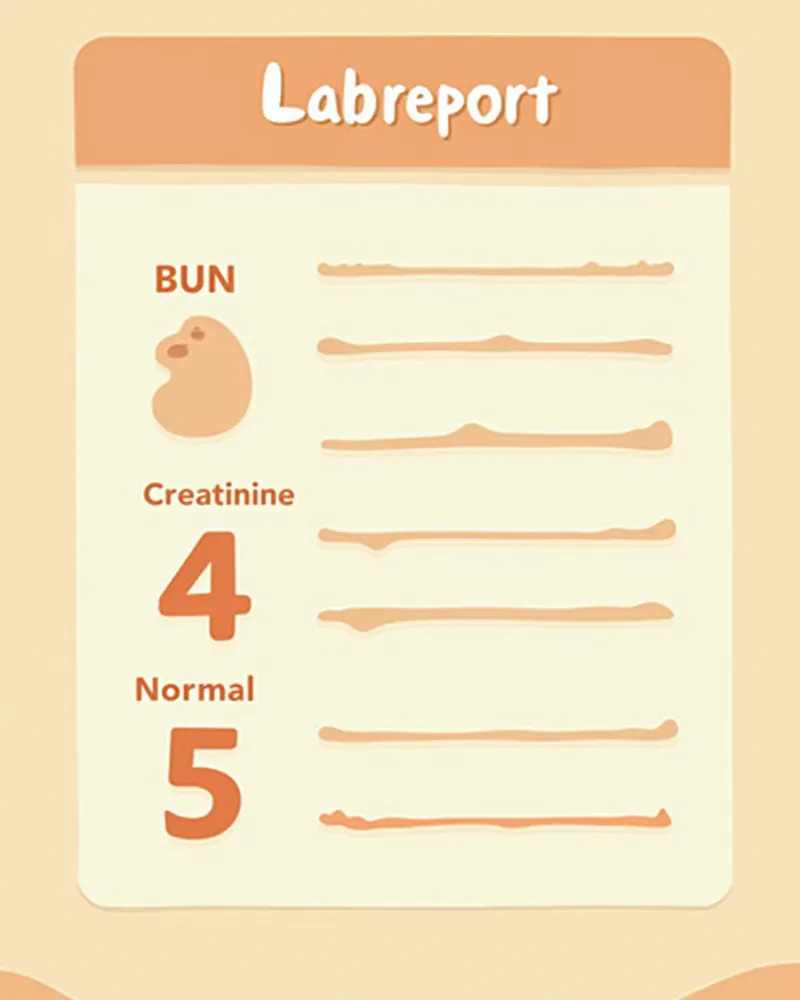
BUN reflects the concentration of urea, a waste product generated from protein metabolism. - Elevated BUN: Levels can rise due to prerenal factors such as dehydration, or from high protein loads like a high-protein diet or gastrointestinal bleeding. Therefore, an elevated BUN does not necessarily indicate impaired kidney function alone. - Elevated Creatinine (Cr): This suggests reduced glomerular filtration rate (GFR) but is also influenced by muscle mass and hydration status. In animals with low muscle mass, creatinine levels may appear normal even if kidney function is compromised. SDMA is a sensitive marker for early kidney injury, indicating that kidney function (GFR) may be impaired even when BUN and creatinine levels are within normal ranges. It is essential to interpret all three values together. Relying on a single marker can lead to misinterpretation, so please consult your veterinarian. A comprehensive evaluation is necessary for an accurate diagnosis.
Blood test results showing BUN, Cr, and SDMA levels

Why Is SDMA Important?

SDMA levels tend to rise earlier than BUN and creatinine (Cr), even when those markers are still within the normal range. As a sensitive indicator for detecting early kidney damage, SDMA has been reported to increase sooner than creatinine in both dogs and cats. Because it is less influenced by factors such as muscle mass, it is considered a more reliable marker than creatinine or urea. This is particularly helpful for the early detection of kidney disease in senior dogs. Since SDMA accurately reflects a decline in glomerular filtration rate (GFR), it serves as key data when veterinarians recommend early intervention. Including SDMA in routine check-ups supports better health management, as early detection significantly improves treatment outcomes and care effectiveness.
An illustration visualizing the process of SDMA being filtered by the kidneys.

Comparison Table of BUN, Cr, and SDMA Tests

ItemBUNCrSDMA
Test purposeProtein metabolism waste productMuscle metabolism waste productEarly kidney injury marker
Detection timingRises relatively lateRises relatively lateRises earlier than BUN/Cr
CharacteristicsAffected by dehydration and high-protein dietAffected by muscle massLess affected by other factors, sensitive to GFR decline

SDMA is a marker that reflects declining kidney function earlier than creatinine.

What to Do If Test Results Are Elevated?

If BUN, creatinine, or SDMA levels are elevated, consult your veterinarian immediately. Dehydration, high-protein diets, and gastrointestinal bleeding can also raise BUN and creatinine levels, so it is essential to identify the underlying cause accurately. Elevated SDMA indicates a decline in glomerular filtration rate (GFR). However, this can occur not only with primary kidney disease but also with pre-renal conditions like dehydration, post-renal issues such as urinary tract obstruction, and other systemic diseases. Therefore, your veterinarian may recommend additional tests, such as urinalysis and ultrasound, to pinpoint the cause. Close monitoring of any changes in symptoms is crucial, as an immediate veterinary visit may be necessary. Early intervention significantly impacts treatment outcomes.
A puppy waiting to visit the vet clinic

Signs That Require an Immediate Veterinary Visit

If your pet is suddenly drinking much more water, producing larger amounts of urine, yet still appears thirsty, or if they have lost their appetite and seem weak, please visit a veterinarian immediately. These could be early signs of declining kidney function.

How Should the Regular Check-up Schedule Be Determined?

For dogs over one year old, we recommend check-ups every six months. For senior dogs (7 years and older), exams every six months are ideal. Even healthy dogs should be checked at least once a year. Regular check-ups are essential for early disease detection. Veterinarians adjust the frequency based on individual health status, breed, and medical history. The exam schedule should be flexibly tailored to the dog’s life stage and health condition. Early detection greatly helps maintain quality of life.
A calendar to keep track of your puppy’s health check-up schedule

Precautions Before the Test

- Fasting before the test: Avoid feeding your pet for 8 hours before the test. Water is allowed. This is important for ensuring accurate test results. - Timing: It’s best to schedule the test in the morning. Afternoon tests may be affected by your pet’s natural circadian rhythm. - Activity management: Reduce physical activity and minimize stress starting the day before the test. Sudden exercise or tension can affect kidney function readings. - Consult your veterinarian: If fasting is difficult or you have special circumstances, discuss them with your vet in advance. - Maintain comfort: On the day of the test, keep your pet in their usual, relaxed state. All these preparations help in detecting early kidney damage.
A puppy resting before the examination

Reviewed by a veterinarian

Dr. Tony — Punnawat Phongkittirak

Dr. Tony — Punnawat Phongkittirak

Veterinarian

A veterinarian who majored in veterinary medicine at Khon Kaen University, Thailand, and completed the IVSA program at North Carolina State University in the United States. Drawing on clinical experience at animal hospitals, he works in the pet healthcare field and is dedicated to building a digital care environment that connects pet parents with veterinarians.

Frequently Asked Questions

Why is a blood test for kidney function important in dogs?
The kidneys are vital organs responsible for filtering waste from the body. Early detection significantly improves treatment outcomes, and kidney disease is especially common in senior dogs.
What does it mean if SDMA is high while BUN and creatinine are within normal range?
In this case, kidney function may already be slightly impaired. Your veterinarian may recommend additional tests. Early management is important.
Does a high test result always mean I need to visit the clinic?
Yes, it's essential to consult with a veterinarian. There could be other underlying causes such as dehydration or heart failure. Additional tests may be necessary for an accurate diagnosis.
How often should senior dogs have check-ups?
For dogs over one year old, we recommend check-ups every six months. Regular monitoring is necessary because the risk of kidney disease increases.
Do I need to fast my pet before the test?
Yes, fasting for about 8 hours before the test is necessary. Water is allowed. The veterinarian will provide precise instructions.

Share

Related Guides

References

[1] Plumb's Veterinary Drug Handbook, 9th Edition, 2022

[2] The Cat, Clinical Medicine and Management, 2nd Edition, 2021

[3] Small Animal Critical Care Medicine, 3rd Edition, 2020

This information is based on veterinary literature and does not replace diagnosis or treatment. Please consult a veterinarian for specific health concerns.

Metapet Co., Ltd. | CEO: Park Sung-yong | Business Reg. No. 417-88-02562 | Seoul, South Korea | Customer Center

Dog Kidney Blood Tests (BUN, Cr, SDMA): Top 5 FAQs Answered | Meongsiljang