
The Meaning of Cat Hunting Behavior and How to Satisfy It
I’ll explain the meaning behind your cat’s hunting behaviors—like carrying toys in their mouth or raising their claws—and share ways to healthily satisfy the instincts of indoor cats.
What Is Cat Hunting Behavior?
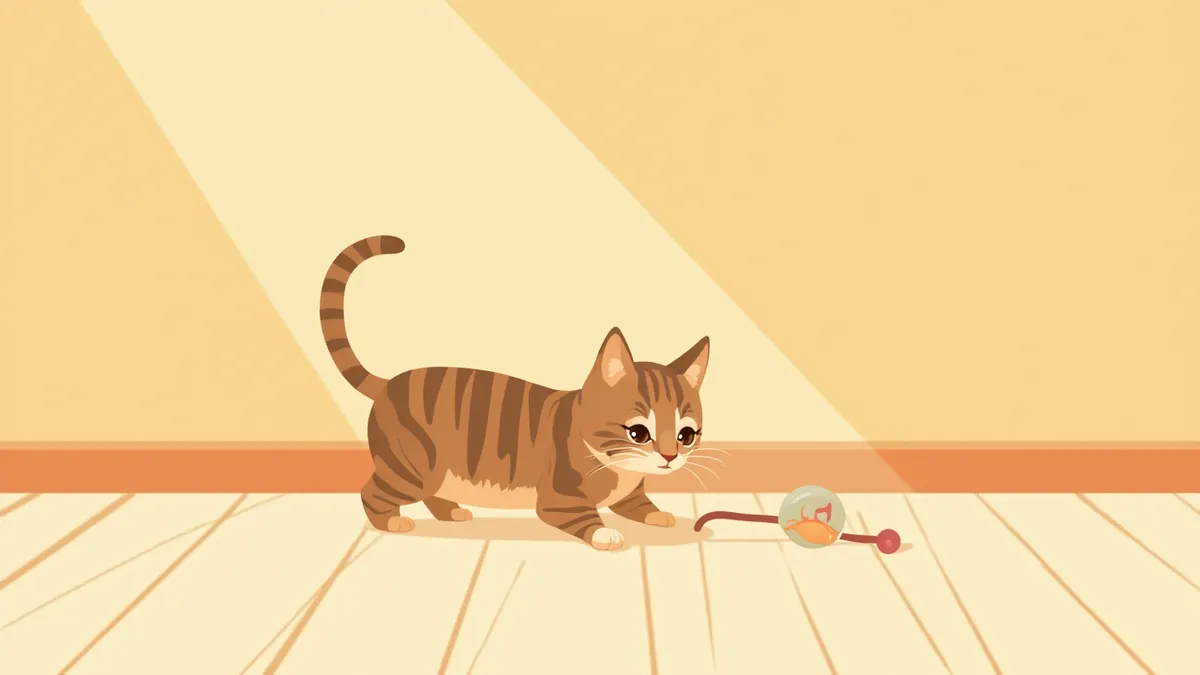
Why Do Cats Hunt?
The 5 Stages of Hunting Behavior
| Stage | Behavior | How to Recreate with Play |
|---|---|---|
| 1. Search | Scanning the surroundings to locate prey | Hide a toy and encourage them to find it |
| 2. Stalk | Lowering the body and approaching quietly | Move a feather wand slowly |
| 3. Focus | Fixating gaze, wiggling the hindquarters | Pause the toy briefly to build tension |
| 4. Pounce | Jumping and grabbing with the paws | Suddenly change the toy’s direction |
| 5. Catch & Kill | Biting, shaking, and kicking | Finish with a kicker toy |
Why Play Is Essential for Indoor Cats
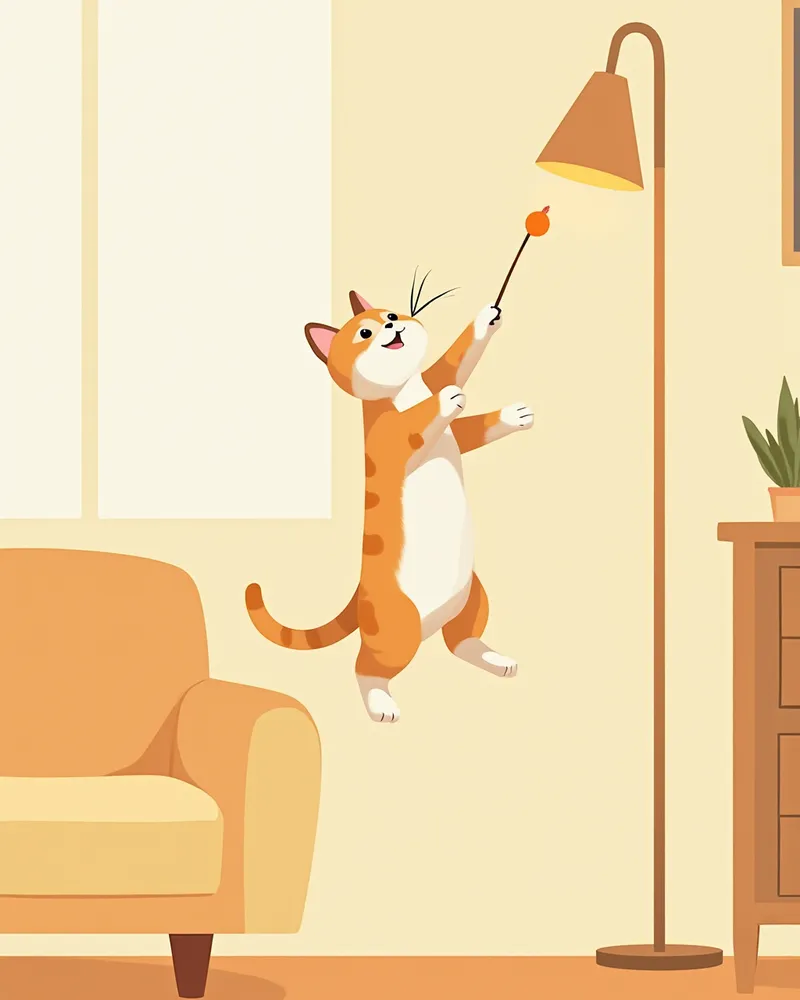
Play Methods to Avoid
Playing with your cat using your hands or feet can teach them that human body parts are prey, which may lead to biting habits that persist into adulthood. Using a laser pointer alone can cause frustration because the cat never gets to complete the hunt. Always end laser play by having the cat pounce on a physical toy. Toys that move too quickly or for too long can actually cause overexcitement or anxiety.
Play Techniques to Satisfy Hunting Instincts
Is It Normal for My Cat to Enter “Hunting Mode” Every Night?
Recommended Play Tools for Indoor Enrichment
Comparison of Toys for Satisfying Hunting Instincts
| Item | Wand toy | Kicker toy | Food puzzle |
|---|---|---|---|
| Stage reproduced | Stalking & pouncing | Biting & kicking | Foraging & handling |
| Guardian involvement | Required | Optional | Not needed |
| Solo play | False | True | True |
| Recommended age | All ages | Active adult cats | All cats |
Rather than relying on just one, rotating two or three types is most effective.
When to Consult a Veterinarian
If your pet suddenly loses its hunting instinct and shows no interest in toys, or conversely, becomes aggressive enough to attack you or other pets, it may not be a simple behavioral issue. Underlying medical conditions such as pain, hyperthyroidism, or cognitive dysfunction could be the cause, or it could be abnormal aggression stemming from a lack of socialization or chronic stress. If these behavioral changes persist or worsen, please don’t delay—schedule an appointment with a veterinary behaviorist.
Reviewed by a veterinarian

Dr. Tony — Punnawat Phongkittirak
VeterinarianA veterinarian who majored in veterinary medicine at Khon Kaen University, Thailand, and completed the IVSA program at North Carolina State University in the United States. Drawing on clinical experience at animal hospitals, he works in the pet healthcare field and is dedicated to building a digital care environment that connects pet parents with veterinarians.
Reviewed 2026-04-23
Frequently Asked Questions
My cat carries a toy around while crying. Why is it doing that?
Even when full, they still want to play hunting games. Should I be worried about obesity?
Why isn’t using just a laser pointer enough?
Do older cats still need hunting play?
If I have two pets, can I skip playing with them?
Share
Related Guides
7 Behavioral Enrichment Strategies for Mental Stimulation Recommended by Veterinarians
Top 5 Calming Supplements for Dogs and Cats in 2026
L-Theanine Effects and Calming Support
Canine Hyperglycemia FAQ — Key Information Every Pet Owner Should Know
Dog Hypercalcemia FAQ — Key Information Every Owner Must Know
Complete Guide to Monitoring Your Dog’s Blood Glucose Curve — From Methods to Interpreting Values
What Is Canine Diabetic Ketoacidosis? — Emergency Warning Signs You Must Not Miss
How to Choose Dog Food for Diabetes — What Is the Correct Feeding Method?
What is canine diabetes insipidus? — Why is my dog drinking too much water?
Why Do Diabetic Complications Occur in Dogs? — How to Recognize Signs of Neuropathy and Cataracts
References
[1] Little SE, The Cat: Clinical Medicine and Management, 2nd Edition, Chapter on Feline Behavior
[2] Rodan I, Heath S, A Professional's Guide to Feline Behaviour: Understanding, Improving and Resolving Problems
[3] AAFP 2024 Indoor/Outdoor Lifestyle Position Statement, Journal of Feline Medicine and Surgery, 26(2), 2024