

What Does Kneading Mean in Cats? Why Do They Do It?
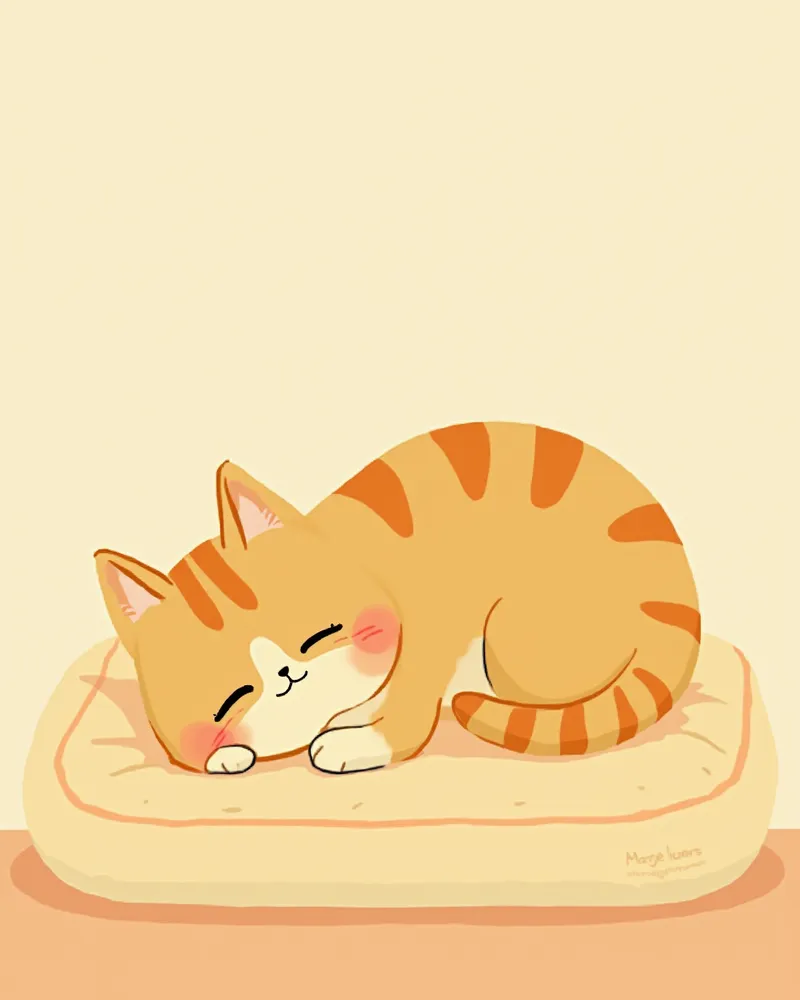
Kittens’ kneading behavior, often called “making biscuits,” stems from their instinctual nursing motions in kittenhood and serves as a way to express affection and seek comfort. Here’s a breakdown of what it means in different contexts, along with important points to keep in mind.
What Is Kneading?

5 Reasons Why Cats Knead
Interpreting the Meaning of Kneading in Different Contexts
| Item | Meaning | Accompanying signals |
|---|---|---|
| On the guardian's lap | Expressing affection & trust | Purring, eyes half-closed |
| On a blanket or cushion | Expressing comfort & contentment | Circling the spot, yawning |
| Beside another cat | Closeness & security | Mutual grooming, tail up |
| A new space | Exploring & adapting to the environment | Sniffing, face rubbing |
| Just before falling asleep | Expressing a content, relaxed state | Slow blinking, curling up |
Kneading itself is normal behavior. Looking at the accompanying signals together reveals its meaning more accurately.
Why Do Adult Cats Continue to Knead?

When to Look Closer Instead of Ignoring It
While kneading is usually normal behavior, you should consider potential health or stress-related issues if you notice any of the following signs alongside it: - Repeatedly pressing on a specific area and continuously licking or biting that spot → Possible pain or skin condition - A dull gaze and mechanical, repetitive motion while staying in one place → Possible cognitive decline or neurological disorder - Decreased appetite, urinary abnormalities, or changes in vocalization occurring together → Possible internal medical condition - Growling or snapping when you approach → Signs of pain or anxiety If these changes persist for more than 24 hours, we recommend visiting an animal hospital for a check-up.
Is It Normal to Drool While Kneading?
How to Handle Scratches from Claws
These Behaviors Are Not Kneading
It’s easy to mistake similar behaviors for kneading, but doing so can cause you to miss the underlying issue. - Repeatedly lifting and trembling with one paw → Possible paw pad injury or joint pain - Pressing the head against a wall (head pressing) → Neurological emergency - Whole-body stiffness resembling a seizure → Possible brain disorder - Aggressive scratching accompanied by howling → Pain or severe stress Head pressing and seizures, in particular, are signs that require immediate veterinary attention.
Reviewed by a veterinarian

Dr. Tony — Punnawat Phongkittirak
VeterinarianA veterinarian who majored in veterinary medicine at Khon Kaen University, Thailand, and completed the IVSA program at North Carolina State University in the United States. Drawing on clinical experience at animal hospitals, he works in the pet healthcare field and is dedicated to building a digital care environment that connects pet parents with veterinarians.
Reviewed 2026-04-23
Frequently Asked Questions
Do male cats knead too?
My cat has never kneaded. Is that a problem?
Is my dog kneading too much? Could it be a sign of stress?
Is it okay if my cat kneads while sucking on the blanket?
When should you stop pressing on your pet’s abdomen and take them to the vet?
Share
Related Guides

7 Behavioral Enrichment Strategies for Mental Stimulation Recommended by Veterinarians

Top 5 Calming Supplements for Dogs and Cats in 2026

L-Theanine Effects and Calming Support
Dog Neurogenic Bladder FAQ — Key Information for Pet Owners

Frequently Asked Questions About the Relationship Between High Blood Pressure and Proteinuria in Dogs — Key Points for Pet Owners

Dog Hematuria FAQ — Key Information Every Pet Owner Should Know

Dog Cystine Urolithiasis FAQ — Key Information for Pet Owners
Dog Bladder Ultrasound Exam FAQ — Key Information Every Pet Owner Should Know

Frequently Asked Questions About Bladder Nerve Stimulation Therapy for Dogs — Key Information Every Pet Owner Should Know
Dog Bladder Diverticulum FAQ — Key Information Every Pet Owner Should Know
References
[1] Bradshaw JWS, Cat Behaviour: The Predatory and Social Behaviour of Domestic and Wild Felids, 2nd Ed, CABI, 2012
[2] Turner DC, Bateson P, The Domestic Cat: The Biology of its Behaviour, 3rd Ed, Cambridge University Press, 2014
[3] Rodan I, Heath S, Feline Behavioral Health and Welfare, Elsevier, 2016