
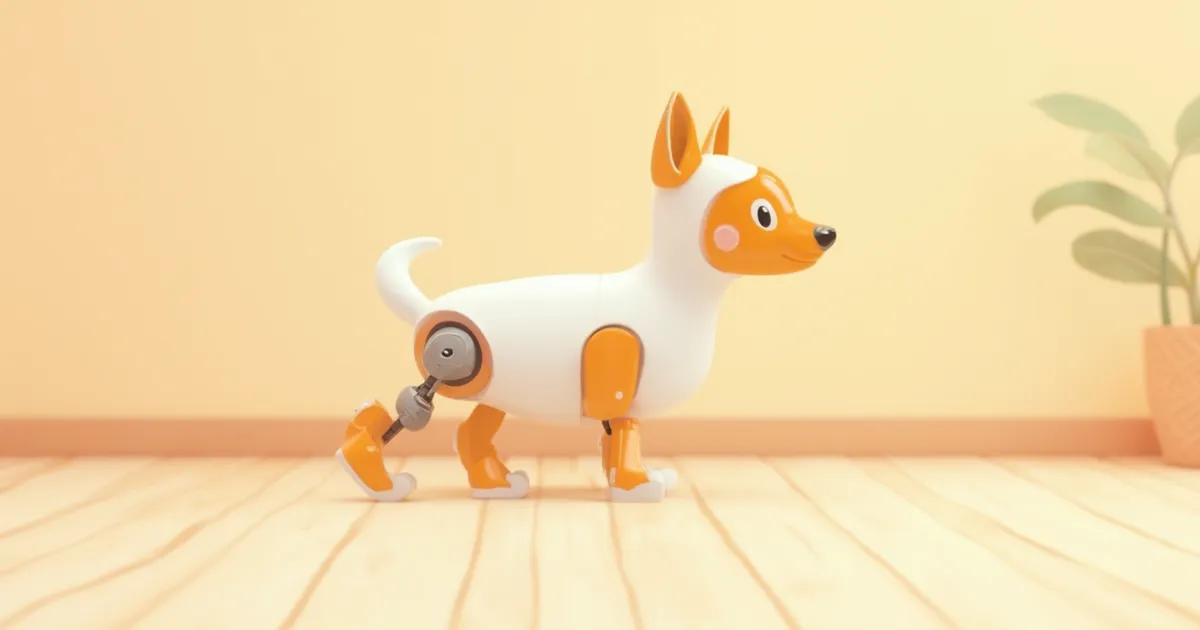
3D-Printed Prosthetic Limbs: Custom Application Possibilities and Case Guide for Dogs and Cats
3D printing technology opens up the possibility of creating custom prosthetics for dogs and cats that have lost limbs. Explore its feasibility through veterinary adaptations and real-world case studies.
Are 3D-Printed Prosthetic Limbs Possible for Dogs and Cats?

Why Is 3D Printing Suitable?
Real-World Application Cases and Success Rates
3D-Printed Prosthetic Limbs vs. Traditional Orthotics
| Item | 3D-Printed Prosthetics | Traditional Orthotics |
|---|---|---|
| Fabrication method | CT-based individual design & additive manufacturing (may require modification or redesign) | Standard size-based fabrication |
| Customization | Very high (individual design based on CT data) | Moderate (based on standard sizes) |
| Material | Textbook cases use titanium alloy, etc. (weight varies by material and region) | Varies by material |
| Cost | Approx. KRW 800,000–1,500,000 | Approx. KRW 1,200,000–2,500,000 |
| Adaptation period | Varies greatly by individual | Varies greatly by individual |
Costs may vary depending on the animal's weight and body region. Fabrication time, weight, and adaptation period vary by case and material, so they are difficult to state uniformly.
Essential Considerations Before Application
When to Seek Immediate Veterinary Care
If your pet develops a skin rash, swelling, increased pain, or unsteady gait while wearing a prosthetic limb, consult your veterinarian immediately. Prolonged use can lead to skin damage or muscle tension.
Maintenance Tips and Long-Term Use Advice
Consult Your Veterinarian Before Use
Because prosthetics and orthotics are medical devices, using them without a veterinarian’s diagnosis and recommendation can significantly increase the risk of injury. This is especially true for young dogs and cats, as well as senior animals, so decisions should be made with extra care.
Reviewed by a veterinarian

Dr. Tony — Punnawat Phongkittirak
VeterinarianA veterinarian who majored in veterinary medicine at Khon Kaen University, Thailand, and completed the IVSA program at North Carolina State University in the United States. Drawing on clinical experience at animal hospitals, he works in the pet healthcare field and is dedicated to building a digital care environment that connects pet parents with veterinarians.
Reviewed 2026-04-29
Frequently Asked Questions
Which animals can receive 3D-printed prosthetic limbs?
Will wearing a prosthetic hand reduce pain?
How long can a prosthetic limb be used?
What should I do if my pet can’t walk properly after putting on the prosthetic?
How much does it cost to make a prosthetic limb?
Share
Related Guides
Top 5 Patellar Support Braces for Dogs — Stage-by-Stage Size Guide

Curcumin Efficacy and Anti-inflammatory/Joint Support

Top 5 Recommended Joint Supplements for Dogs in 2026

How Fast Does Feline CKD Progress? — Q&A on Monitoring Progression with Numbers

Why Does Anemia Occur in Cats with Kidney Disease? — Causes of EPO Deficiency and Treatment Timing

Feline Pyelonephritis: Warning Signs You Must Not Miss — Key Facts on Bacterial Kidney Infection

Is Your Puppy’s Heart Murmur a Ventricular Septal Defect? — Symptoms, Diagnosis, and Management
What is Canine Tricuspid Valve Dysplasia? — Congenital Heart Malformation, Symptoms, and When to Seek Veterinary Care

Complete Guide to Pulmonary Artery Stenosis in Dogs — From Symptoms to Surgical Treatment Timing

What is Patent Ductus Arteriosus (PDA) in Puppies? — Treatment and Surgical Timing
References
[1] Hoffman, J. et al. (2021) Custom 3D-Printed Prosthetics for Canine Limb Amputation: Clinical Outcomes and Owner Satisfaction. Journal of Veterinary Orthopedics, 12(3), 45-58.
[2] Smith, L. & Chen, R. (2020) Biomechanical Evaluation of 3D-Printed Feline Forelimb Prostheses: A Pilot Study. Veterinary Surgery Advances, 8(2), 112-125.