Like
Share
멍실장
강아지 신장이형성 증상과 원인, 진단·치료와 관리 포인트 총정리

If Your Young Puppy Has Weak Kidneys — Causes of Renal Dysplasia and Lifelong Management Points

KidneyDiseasesMeongsiljang Veterinary Advisory Board

Canine renal dysplasia is a congenital condition in which kidney tissue fails to develop normally before birth. Early detection, along with management through prescription diets and medications, can help slow disease progression.

What Is Canine Renal Dysplasia?
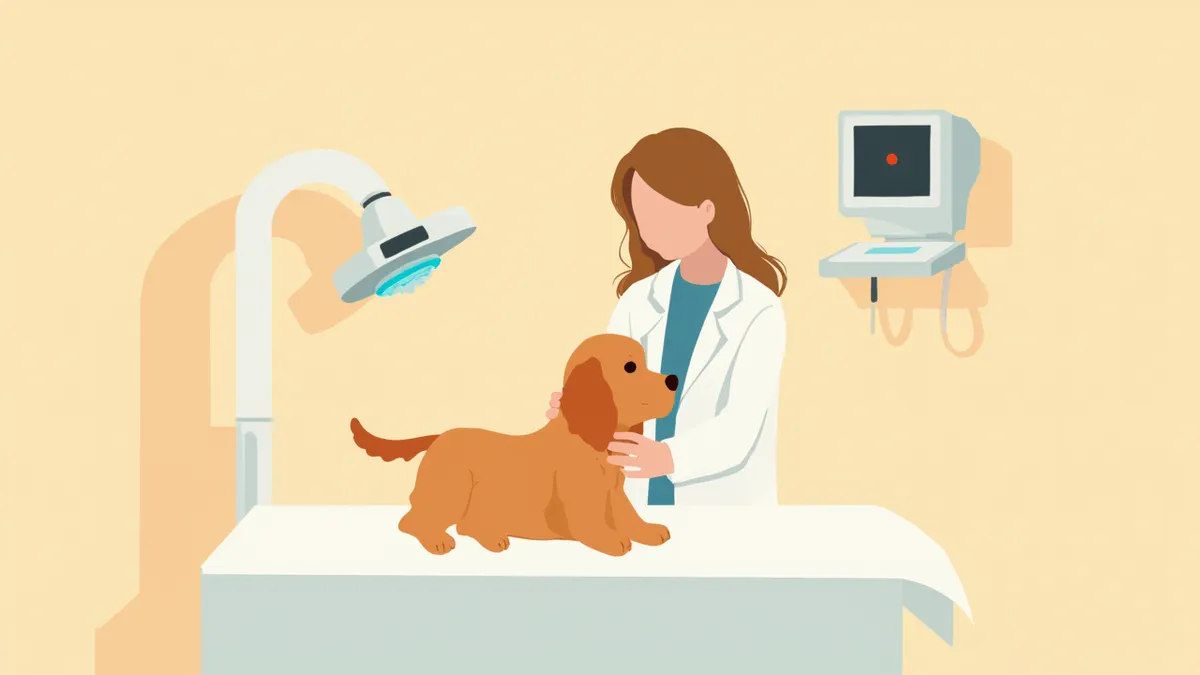
A young puppy undergoing a health checkup at the veterinary clinic
Renal dysplasia in dogs is a congenital condition in which kidney tissue fails to develop normally from birth, resulting in permanent impairment of kidney function. It is classified as a form of familial (hereditary) nephropathy, making early detection and consistent management essential. Even in relatively young dogs, kidney function can gradually decline, potentially progressing to chronic kidney disease (CKD). It is important to note that normal blood test results do not completely rule out kidney disease. Therefore, if you notice your dog drinking significantly more water than usual (polydipsia and polyuria), growing more slowly than peers, or experiencing unexplained weight loss, do not delay—schedule a kidney function test promptly.

Causes and Pathogenesis of Renal Dysplasia

Canine renal dysplasia is a condition in which kidney tissue fails to differentiate properly during development, and genetic (familial) factors play a significant role.
Hereditary (Familial Nephropathy): Renal dysplasia falls under the broader category of "familial nephropathy." This category includes renal dysplasia, renal cortical hypoplasia, juvenile renal disease, and hereditary nephropathy, and it has been reported genetically in certain breeds and bloodlines. In cases of hereditary nephropathy, proteinuria may appear as an early sign, often accompanied by abnormalities in the glomerular basement membrane (GBM) collagen.
Developmental and Acquired Factors: Disruption of kidney development during the fetal period can lead to improper differentiation of tubules and glomeruli, resulting in impaired function after birth. However, the contribution of individual causes such as infections or toxic substances varies by case, and some aspects remain unproven; therefore, a veterinarian’s assessment is necessary to determine the exact cause.

Key Symptom Checklist

If your pet shows several of these symptoms at once, please seek a veterinary check-up promptly.
Polydipsia and polyuria: Drinking abnormally large amounts of water and producing significantly increased urine volume. This is a sign that the kidneys' ability to concentrate urine has declined.
Growth retardation: Height and weight gain are noticeably slower than those of peers.
Weight loss and muscle wasting: Rapid weight loss with visibly reduced muscle mass.
Vomiting and anorexia: Nausea occurs due to the buildup of waste products in the blood (uremia).
Lethargy: Decreased activity levels and easy fatigability.
Dull, dry coat: Dehydration and poor nutrition cause the fur to become rough and lackluster.
A lethargic and underweight puppy

Seek Immediate Veterinary Care If These Symptoms Appear

Seizures, sudden loss of consciousness, refusal to eat for more than 48 hours, severe vomiting or diarrhea preventing even water intake, and extreme weakness making it impossible to stand are all signs of acute kidney failure. Seek immediate care at a 24-hour veterinary clinic.

Diagnostic Methods for Renal Dysplasia

Blood tests: We check kidney function markers (BUN, creatinine, and SDMA). If these values are high in a young dog, we strongly suspect kidney disease.
Urinalysis: Low urine specific gravity (dilute urine) combined with proteinuria suggests impaired kidney filtration function.
Ultrasound: This allows us to examine the size, shape, and internal structure of the kidneys for abnormalities. In cases of renal dysplasia, the kidneys are often small with irregular surfaces.
Kidney biopsy: This is the most accurate method for a definitive diagnosis. Microscopic examination of the tissue reveals immature tubule and glomerular structures.

Treatment — Focused on Slowing Progression and Alleviating Symptoms

There is no cure for renal dysplasia. The goal of treatment is to slow the decline in kidney function and maintain your pet’s quality of life.
Renal prescription diet: Feeding a prescription diet restricted in phosphorus and protein helps reduce the burden on the kidneys.
Enhanced hydration: Ensuring adequate water intake is essential. Try incorporating wet food and using a circulating water fountain.
Blood pressure and proteinuria management: If high blood pressure or proteinuria is present, your veterinarian will prescribe medication dosed according to your pet’s body weight.
Phosphate binders: These medications reduce the absorption of phosphorus from food, helping to slow the progression of kidney damage.
Regular monitoring: Blood and urine tests every three months are used to monitor the rate of disease progression.
A pet owner consulting with a veterinarian about a kidney prescription diet

Management Points You Can Do at Home

Place water bowls in multiple locations: Adequate hydration is crucial for dogs with kidney disease. Try placing water bowls throughout your home or using a circulating water fountain.
Strictly adhere to prescription diets: Treats can also impact kidney function. Do not change your dog’s food or treats without your veterinarian’s approval.
Keep a weight and appetite log: Weighing your dog weekly and recording changes in food intake will be very helpful during veterinary visits.
Avoid stress and excessive exercise: A stable environment and gentle walks are ideal. Strenuous exercise can place additional strain on the kidneys.
Maintain oral hygiene: As uremia progresses, bad breath and oral ulcers may develop, so please brush your dog’s teeth regularly.
A pet owner placing water bowls around the house for their dog

Breeds Prone to Renal Dysplasia — A Must-Read for Owners

Familial nephropathies, including renal dysplasia, have been genetically documented in certain breeds and bloodlines. Therefore, if there is a suspected family history, it is crucial to monitor your puppy’s kidney health more closely. Even if blood test results fall within the normal range, kidney disease cannot be entirely ruled out; thus, during the first comprehensive health checkup in puppyhood, be sure to evaluate kidney markers (BUN and creatinine) alongside urine specific gravity (concentrating ability). Additionally, it is important to verify the renal medical history of the parents and littermates with the breeder before acquiring the puppy.

Reviewed by a veterinarian

Dr. Tony — Punnawat Phongkittirak

Dr. Tony — Punnawat Phongkittirak

Veterinarian

A veterinarian who majored in veterinary medicine at Khon Kaen University, Thailand, and completed the IVSA program at North Carolina State University in the United States. Drawing on clinical experience at animal hospitals, he works in the pet healthcare field and is dedicated to building a digital care environment that connects pet parents with veterinarians.

Frequently Asked Questions

Can a dog’s renal dysplasia be completely cured?
Currently, there is no cure. However, with early detection and proper management through prescription diets, medication, and regular check-ups, we can slow the decline of kidney function and maintain your pet's quality of life. Since the progression rate varies significantly from individual to individual, consistent monitoring is crucial to quickly detect any changes.
At what age is renal hypoplasia typically diagnosed?
Renal dysplasia is often detected in young puppies through symptoms such as impaired kidney function, excessive thirst and urination, or stunted growth. However, since normal kidney values alone may not rule out the condition, we recommend early screening of kidney markers and urine specific gravity for breeds with a known family history or reported familial kidney disease, even if no symptoms are present.
Are there any foods that should be avoided for puppies with renal dysplasia?
It is best to avoid foods high in phosphorus (such as cheese, bones, and fish offal), those with excessively high protein levels, and those high in sodium (like salty treats and human food). In particular, managing phosphorus intake is a crucial aspect of kidney care. Please always consult your veterinarian before feeding your pet any food other than prescribed renal diet.
Is renal dysplasia contagious to other dogs?
No, it is not contagious. Renal dysplasia is a hereditary (familial) condition. While littermates from the same parents may share the same genetic predisposition, it is not an infectious disease that spreads through the environment.
What is the difference between renal dysplasia and chronic kidney disease?
Chronic kidney disease (CKD) is a condition in which the kidneys gradually deteriorate due to various factors such as aging, infections, or toxicity, and it primarily affects older dogs. In contrast, renal dysplasia is a congenital disorder characterized by abnormal development of kidney tissue from birth, typically appearing in younger dogs, with immature tubular and glomerular structures confirmed through kidney tissue examination.

Share

Related Guides

References

[1] Picut CA, Lewis RM. Microscopic features of canine renal dysplasia. Vet Pathol. 1987;24(2):156-163.

[2] Hoppe A, Karlstam E. Renal dysplasia in boxers and Finnish harriers. J Small Anim Pract. 2000;41(9):422-426.

[3] DiBartola SP. Familial renal disease in dogs and cats. Vet Clin North Am Small Anim Pract. 1990;20(4):1093-1110.

[4] Langston CE, Eatroff AE. Chronic Kidney Disease. In: Silverstein DC, Hopper K, eds. Small Animal Critical Care Medicine. 3rd ed. Elsevier; 2023.

[5] DiBartola SP, Westropp JL. Diseases of the kidney and ureter. In: Little SE, ed. The Cat: Clinical Medicine and Management. 2nd ed. Elsevier Saunders; 2012.

This information is based on veterinary literature and does not replace diagnosis or treatment. Please consult a veterinarian for specific health concerns.

Metapet Co., Ltd. | CEO: Park Sung-yong | Business Reg. No. 417-88-02562 | Seoul, South Korea | Customer Center

Renal Dysplasia in Young Dogs: Causes & Lifelong Care | Meongsiljang