
Like
Share
멍실장
강아지 IRIS 병기 분류 증상과 원인, 진단·치료와 관리 포인트 총정리

Complete Guide to Canine Chronic Kidney Disease IRIS Stages 1–4: Symptoms and Treatment Strategies by Stage

KidneyDiseasesMeongsiljang Veterinary Advisory Board

The IRIS staging system for dogs is a standard for evaluating the progression of chronic kidney disease, making early detection and tailored management crucial. Here’s a summary of the characteristics and management strategies for each stage.

The IRIS Staging System Is the Standard for Assessing the Progression of Chronic Kidney Disease in Dogs

A veterinarian performing a blood test on a puppy, with a staging classification chart visible in the background.
The IRIS staging system is a standardized framework used to assess the progression of chronic kidney disease (CKD) in dogs. The International Renal Interest Society (IRIS) classifies canine CKD into four stages, from Stage 1 to Stage 4, with each stage reflecting a different degree of kidney function loss and requiring tailored treatment strategies. Staging is primarily based on blood creatinine (and SDMA) concentrations measured repeatedly while the patient is stable and well-hydrated. - Blood creatinine levels: This is the primary indicator of kidney filtration function and serves as the main criterion for staging. Higher levels indicate more advanced disease. - Proteinuria and blood pressure: The presence of protein in the urine and hypertension are secondary criteria used to further subdivide stages. Stage 1 indicates evidence of kidney disease without changes in kidney function, while Stage 4 represents the most severe and advanced form of the disease. Regular check-ups are essential for senior dogs and vulnerable breeds to ensure early detection.

The Main Causes of Chronic Kidney Disease in Dogs Include Age, Genetics, Infection, and Toxic Substances
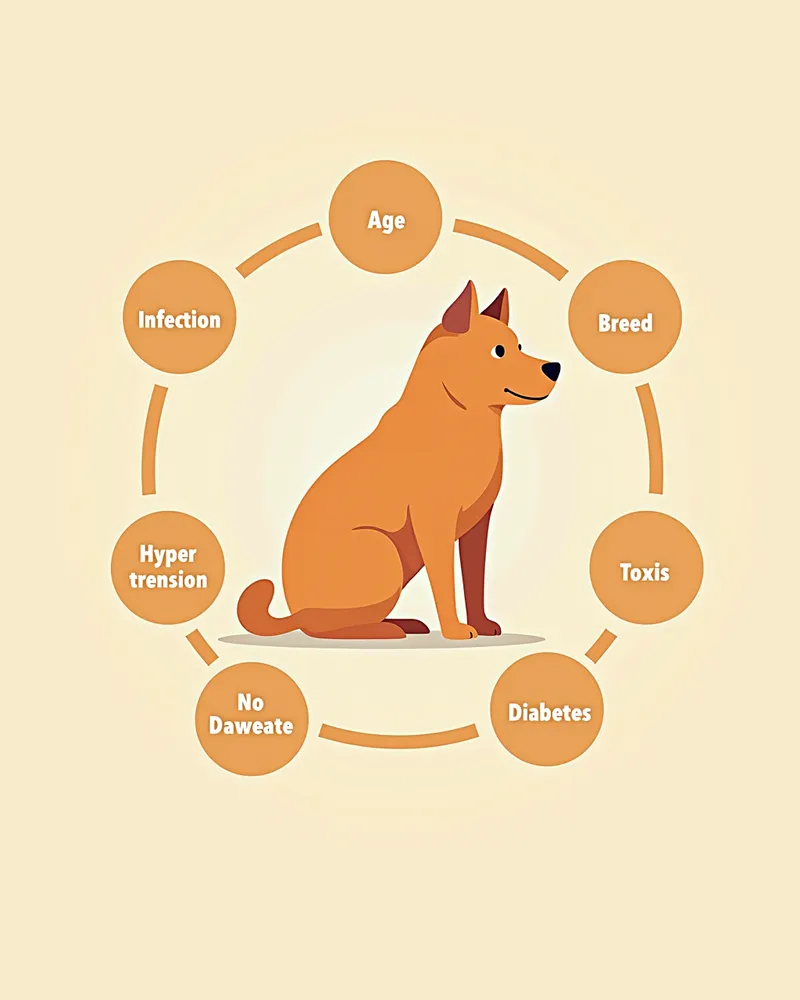
The causes of chronic kidney disease in dogs are varied, resulting from the cumulative damage to kidney tissues (glomeruli, blood vessels, tubules, and interstitium) caused by various conditions. Congenital and hereditary kidney diseases can also occur in young dogs, meaning certain breeds may have a higher risk of developing the condition due to genetic predispositions. - Infections: Kidney infections, such as pyelonephritis, can cause direct damage to the kidneys. In fact, pyelonephritis has been identified in a significant number of cases classified as chronic kidney disease. - Nephrotoxic drugs and toxic substances: Medications or toxic substances that are harmful to the kidneys can lead to kidney damage. - Hypertension: Hypertension often accompanies chronic kidney disease, and long-term elevated blood pressure is linked to kidney damage. It is important to identify the underlying causes early to establish effective prevention and management strategies.
A diagram explaining the causes of chronic kidney disease in dogs

Key Symptoms by IRIS Stage Vary Depending on the Stage of Disease Progression

Symptoms vary by IRIS stage depending on the degree of kidney function decline. In stages 1 and 2, blood creatinine levels are often within the normal range, so most pets show no symptoms and the condition is detected only through testing. As the disease progresses, signs such as decreased appetite, dehydration, lethargy, and weight loss may appear. In chronic kidney disease, lethargy, dehydration, and reduced appetite due to non-regenerative anemia are commonly observed. From stage 3 onward, symptoms become more pronounced, requiring close attention from pet owners. Stage 4, the most advanced stage, represents a severe and progressed condition that demands immediate management. Regular health check-ups are essential for early diagnosis.
A series of illustrations showing symptom changes by IRIS stage

Symptoms Requiring Immediate Veterinary Care

If your dog experiences severe vomiting, lethargy, dehydration, loss of appetite, or a sudden decline in condition, seek veterinary care immediately. These symptoms may indicate a rapid deterioration of kidney function. In advanced stages, severe uremia and dehydration can be life-threatening, making prompt treatment essential. The longer you wait, the lower the chances of recovery, so it is crucial to get your dog evaluated without delay.

IRIS Staging Is Accurately Diagnosed Through Blood and Urine Tests

The IRIS staging system is based on blood and urine tests. A basic diagnostic workup typically includes a complete blood count (CBC), serum biochemistry panel, and urinalysis. - Serum creatinine level: This is the most commonly used blood marker in clinical practice to assess kidney function, with higher levels indicating more advanced disease. However, it is important to note that creatinine levels may not rise significantly until the glomerular filtration rate (GFR) has dropped considerably. - Urine protein-to-creatinine ratio (UPC): This measures the amount of protein leaking into the urine to help determine the specific disease stage. Stage 1 is identified by test results alone without changes in kidney function, while Stage 4 represents the most severe and advanced phase. Regular check-ups enable early detection and intervention. Ongoing monitoring in partnership with your veterinarian is essential.
A veterinarian performing blood and urine tests.

Treatment Is Tailored by Stage, with Dietary Management as the Core

Treatment requires a tailored approach depending on the disease stage. In stages 1 and 2, we reduce the burden on the kidneys by controlling protein and phosphorus intake through a renal diet (prescription food). Phosphorus levels may also be managed with dietary restrictions combined with intestinal phosphate binders. In stages 3 and 4, medications are used to manage complications such as hypertension, anemia, dehydration, metabolic acidosis, and electrolyte imbalances like hypokalemia and hyperphosphatemia, while dietary management is intensified. Stage 4, the most advanced stage, involves severe clinical signs that may require aggressive fluid and nutritional support. Dietary management is a cornerstone of treatment, so it’s essential to work with your veterinarian to create a personalized plan. Consistent, long-term care plays a vital role in slowing the progression of the disease.
A dog eating kidney-friendly food, consulting with a veterinarian

At-Home Care Focuses on Diet, Hydration, and Medication Management

At-home care centers on diet, hydration, and medication management. Consistently feed a specialized diet and provide frequent access to water to prevent dehydration. Administer medications at the correct times and dosages, ensuring no doses are missed. Regularly consult with your veterinarian and keep records of weight changes, appetite, and bowel movements. Your consistent care plays a decisive role in slowing the progression of the disease. It is important to establish a long-term management plan.
A puppy drinking water, with a medication schedule posted on the wall.

Breed-Specific Precautions and Prevention of Recurrence

Certain breeds may be more susceptible to chronic kidney disease due to genetic or congenital predispositions. Regular check-ups are essential for senior dogs. Since chronic kidney disease is often progressive, consistent management after diagnosis can help slow its progression. It’s important to work with your veterinarian to develop a long-term care plan.

Reviewed by a veterinarian

Dr. Tony — Punnawat Phongkittirak

Dr. Tony — Punnawat Phongkittirak

Veterinarian

A veterinarian who majored in veterinary medicine at Khon Kaen University, Thailand, and completed the IVSA program at North Carolina State University in the United States. Drawing on clinical experience at animal hospitals, he works in the pet healthcare field and is dedicated to building a digital care environment that connects pet parents with veterinarians.

Frequently Asked Questions

Why is the IRIS staging classification important?
Because treatment approaches and prognosis vary depending on the disease stage, early classification is crucial. Early management can help preserve kidney function for longer.
My dog is in stage 1 of the disease. Is that okay?
Stage 1 may show no symptoms, but early detection is key. Regular check-ups and dietary management can help prevent the disease from progressing.
Why is a special diet essential?
Specialized diets help reduce the burden on the kidneys by controlling the levels of protein and phosphorus. Consistent feeding is essential for these benefits to take effect.
How long should my pet take the medication?
Please administer the medication consistently as directed by your veterinarian. Stopping treatment can cause the condition to worsen. Regular check-ups are essential to properly manage the disease.
What can I do at home before going to the vet?
Offer fresh water frequently, feed the prescribed special diet consistently, and keep a record of any changes in symptoms. Having this information ready before your vet visit will be helpful.

Comparison of Characteristics and Management Points by IRIS Stage

ItemCreatinine levelProteinuriaMain symptomsKey management points
Stage 1Normal range (<1.4 mg/dL)Substaged by presence of proteinuriaNo symptomsRegular checkups, dietary management
Stage 2Slightly elevated (1.4–2.8 mg/dL)Substaged by presence of proteinuriaUsually no symptomsDietary management, hydration management
Stage 3Moderately elevated (2.9–5.0 mg/dL)Substaged by presence of proteinuriaReduced appetite, dehydrationDietary management, medication
Stage 4High (>5.0 mg/dL)Substaged by presence of proteinuriaLethargy, dehydration, weight lossMedication, fluid and nutritional supplementation

IRIS canine chronic kidney disease is classified into stages 1–4; decide the management strategy for each stage after consulting your veterinarian.

Share

Related Guides

References

[1] IRIS Chronic Kidney Disease Guidelines, International Renal Interest Society, 2023

[2] Feldman, B.F., Nelson, R.W. (2022). Textbook of Veterinary Internal Medicine, 9th ed. Elsevier.

[3] Kirk, C.W., et al. (2021). Chronic Kidney Disease in Dogs: Diagnosis and Management. Journal of Veterinary Internal Medicine, 35(4), 1234–1245.

This information is based on veterinary literature and does not replace diagnosis or treatment. Please consult a veterinarian for specific health concerns.

Metapet Co., Ltd. | CEO: Park Sung-yong | Business Reg. No. 417-88-02562 | Seoul, South Korea | Customer Center

Canine CKD IRIS Stages 1–4: Symptoms & Treatment by Stage | Meongsiljang