Like
Share
멍실장
고양이 다낭신질환 증상과 원인, 진단·치료와 관리 포인트 총정리

If Your Cat Develops Kidney Cysts — Symptoms, Causes, and Management of Polycystic Kidney Disease

KidneyDiseasesMeongsiljang Veterinary Advisory Board

Feline polycystic kidney disease (PKD) is a genetic condition characterized by the development of cysts within the kidneys. Our veterinary advisory board has compiled a comprehensive guide covering symptoms, diagnosis, treatment, and home care for at-risk breeds such as Persians and Exotic Shorthairs.

What Is Polycystic Kidney Disease in Cats?

Persian cats are at higher risk for polycystic kidney disease.
Polycystic Kidney Disease (PKD) in cats is a hereditary condition in which multiple fluid-filled cysts develop within the kidneys, gradually displacing and destroying healthy kidney tissue, ultimately leading to chronic kidney disease (CKD). Early detection is key. Persian cats often appear normal as kittens, but as they mature, their kidneys may enlarge and symptoms of chronic kidney disease may emerge. The age at which PKD is first detected varies among individuals, so diagnosis can occur at any age. Therefore, for at-risk breeds such as Persians and Persian-related breeds, it’s important to perform genetic testing and regular check-ups starting from a young age.

Why Does It Occur? — Causes and Pathogenesis

Polycystic kidney disease (PKD) is an autosomal dominant genetic disorder caused by mutations in the PKD1 gene. If just one parent carries the mutated gene, there is approximately a 50% chance it will be passed on to their offspring.
Genetic cause: The exact mechanism behind cyst formation has not yet been fully elucidated. However, it is believed that the gene mutation triggers apoptosis (cell death) in renal parenchymal cells, and cystic epithelial cells proliferate at these sites, leading to the development of multiple cysts.
Cyst growth: Cysts vary in size and form in multiple locations throughout the renal parenchyma, progressively displacing healthy kidney tissue.
At-risk breeds: PKD is particularly common in Persian cats, with up to 40% known to be carriers. Other Persian-derived breeds, such as Exotic Shorthairs and Himalayans, are also considered at risk.

What Symptoms Appear? — Checklist

Cysts often cause no symptoms until they grow quite large. If you notice any of the following signs, your pet’s kidney function may already be significantly impaired, so please seek veterinary care promptly.
Weight loss: Unexplained, gradual weight loss.
Decreased appetite: Increasingly leaving food uneaten or refusing to eat.
Polydipsia and polyuria: Drinking excessive amounts of water and producing larger volumes of urine.
Vomiting and lethargy: Frequent vomiting or appearing listless throughout the day.
Abdominal distension: Enlarged kidneys may be palpable when touching the abdomen.
Halitosis (uremic breath): An ammonia-like odor emanating from the mouth.
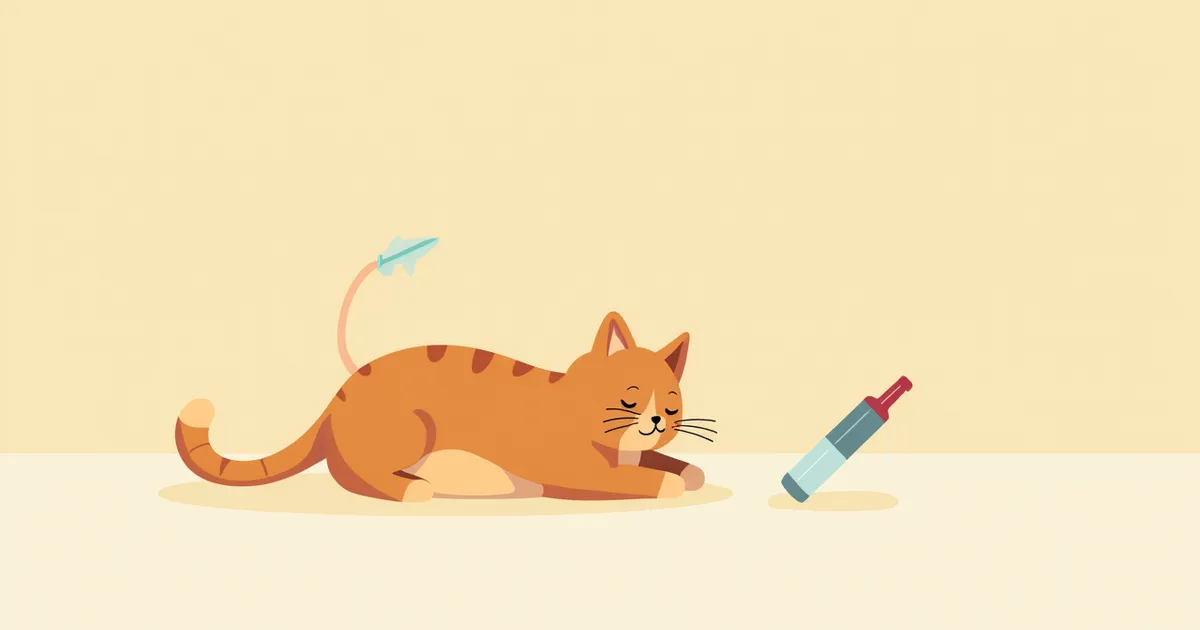
Symptoms of Polycystic Kidney Disease — A Cat Lying Down Lethargically

If These Symptoms Occur, Go to an Emergency Veterinary Clinic Immediately

If your pet hasn’t eaten anything for more than 24 hours, has persistent vomiting, or shows signs of seizures, convulsions, or decreased consciousness, take them to an emergency veterinary clinic immediately. Severe uremia can quickly become life-threatening.

How Is It Diagnosed?

Polycystic kidney disease is diagnosed using a combination of tests.
Abdominal ultrasound: This is the most fundamental test. In Persian cats, ultrasounds performed at 16 weeks of age have a sensitivity of approximately 75% and a specificity of 100%, while sensitivity increases to about 91% by 36 weeks of age. This method allows direct visualization of the number, size, and location of cysts. Cysts associated with PKD are characterized by multiple cysts of varying sizes scattered throughout the entire renal parenchyma.
Genetic testing (DNA test): This test checks for mutations in the PKD1 gene using blood or oral swab samples. It provides accurate results even at a young age when cysts are too small to be detected by ultrasound.
Blood tests: These assess the degree of kidney function impairment by measuring creatinine, blood urea nitrogen (BUN), and SDMA levels.
Urinalysis: This evaluates the kidney’s concentrating ability by analyzing proteinuria and urine specific gravity.

Treatment — Step-by-Step Management Strategy
There is currently no treatment that can eliminate the cyst itself. Management focuses on slowing cyst growth and preserving kidney function for as long as possible.
Renal prescription diet: Switch to a prescription diet low in phosphorus. This is the most critical step in reducing the burden on the kidneys.
Subcutaneous fluid therapy: Administer fluids periodically to help with hydration and the excretion of uremic toxins. You may also be trained to administer these fluids at home.
Phosphate binders and antihypertensive medications: Medication is started if blood phosphorus levels are high or if high blood pressure is present.
Regular monitoring: Repeat blood and urine tests every 3 to 6 months to track changes in kidney function.
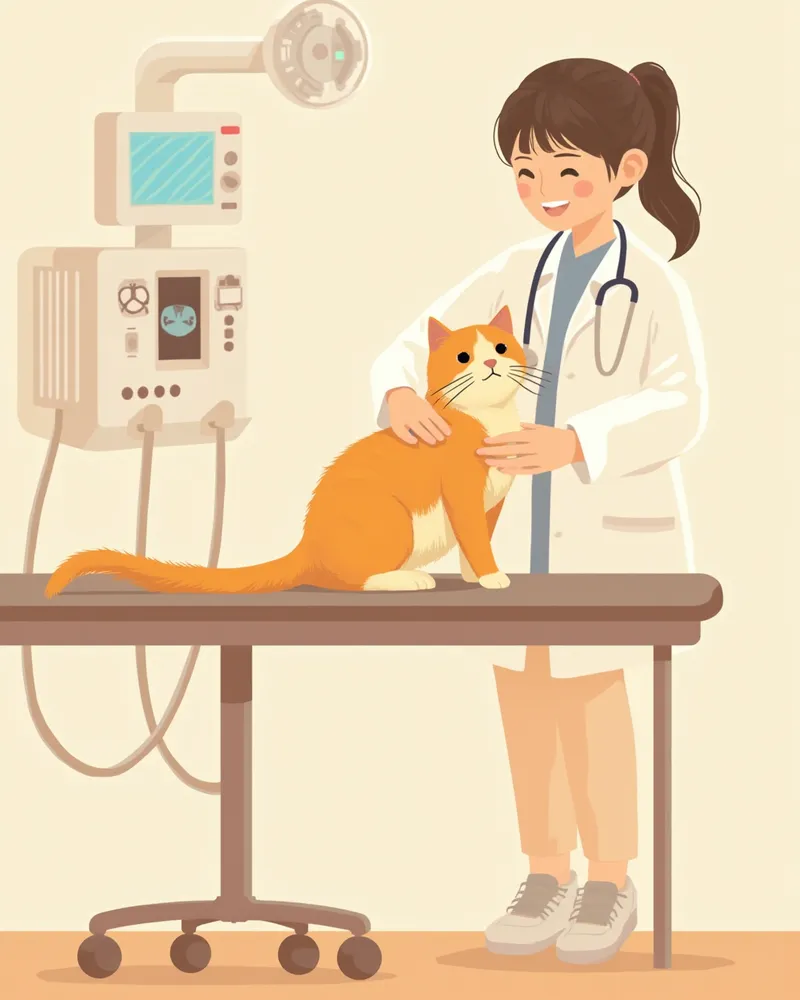
An abdominal ultrasound is being performed on a cat at the veterinary clinic.

Home Care Points You Can Do at Home

Alongside veterinary treatment, home care plays a vital role in maintaining kidney function.
Increase water intake: We recommend wet food or jelly-style prescription diets over dry kibble. Placing water fountains in multiple locations can also encourage your cat to drink more.
Strict adherence to prescription diet: Treats, regular food, and human foods can place additional strain on the kidneys. Any foods outside of the prescribed diet should only be introduced after consulting with your veterinarian.
Minimize stress: Environmental changes and noise can be particularly burdensome for cats with kidney disease. Please maintain a stable and consistent routine.
Monitor weight: Both underweight and overweight conditions can impact kidney health, so it’s important to keep regular records of your cat’s weight.
Cats and adequate hydration — a cat drinking water from a fountain

If You Are an Owner of an At-Risk Breed, Be Sure to Check This

If you own a Persian, Exotic Shorthair, or Himalayan cat, we recommend having them undergo either a genetic test or an ultrasound between 6 months and 1 year of age. Even if your cat shows no symptoms, cysts may already be present, and earlier detection helps preserve kidney function for longer. If you plan to breed your cat, genetic testing is essential.

Reviewed by a veterinarian

Dr. Tony — Punnawat Phongkittirak

Dr. Tony — Punnawat Phongkittirak

Veterinarian

A veterinarian who majored in veterinary medicine at Khon Kaen University, Thailand, and completed the IVSA program at North Carolina State University in the United States. Drawing on clinical experience at animal hospitals, he works in the pet healthcare field and is dedicated to building a digital care environment that connects pet parents with veterinarians.

Frequently Asked Questions

Can polycystic kidney disease be cured?
Currently, there is no treatment that can completely eliminate the cysts. Instead, we focus on managing symptoms while preserving kidney function as much as possible. With early detection and consistent care, your pet can maintain a good quality of life for a long time.
When is the best time to have a genetic test done?
For at-risk breeds, we recommend testing between 6 months and 1 year of age. The test is simple and can be performed using a blood sample or an oral swab. It accurately detects the PKD1 gene mutation, even in young cats when ultrasound may not yet reveal the condition.
How long can a cat with polycystic kidney disease live?
It varies from pet to pet. With early detection and consistent management through prescription diets and fluid therapy, many pets can live stably for several years after diagnosis. On the other hand, if the condition is discovered after symptoms have worsened, the prognosis may not be favorable.
If only one parent cat tests positive for PKD, will the kittens definitely inherit it?
Not necessarily. Since it’s an autosomal dominant trait, there’s about a 50% chance of passing it on from an affected parent. To know for sure, each puppy should undergo its own genetic test.
Can I feed my pet a natural diet instead of the prescribed therapeutic food?
We do not recommend feeding cats with kidney disease a natural diet, as it requires precise control of phosphorus, sodium, and protein levels. Switching to a prescription diet without consulting your veterinarian or a veterinary nutritionist can lead to a rapid decline in kidney function.

Share

Related Guides

References

[1] Lyons LA, Biller DS, Erdman CA, et al. Feline polycystic kidney disease mutation identified in PKD1. J Am Soc Nephrol. 2004;15(10):2548-2555.

[2] Bonazzi M, Volta A, Gnudi G, et al. Comparison between ultrasound and genetic testing for the early diagnosis of polycystic kidney disease in Persian and Exotic Shorthair cats. J Feline Med Surg. 2009;11(6):430-434.

[3] Little S (ed). The Cat: Clinical Medicine and Management, 2nd Ed. St. Louis: Elsevier Saunders, 2012.

[4] Ettinger SJ, Feldman EC, Côté E (eds). Textbook of Veterinary Internal Medicine, 8th Ed. St. Louis: Elsevier, 2017.

This information is based on veterinary literature and does not replace diagnosis or treatment. Please consult a veterinarian for specific health concerns.

Metapet Co., Ltd. | CEO: Park Sung-yong | Business Reg. No. 417-88-02562 | Seoul, South Korea | Customer Center

Feline Polycystic Kidney Disease: Symptoms, Causes & Care | Meongsiljang