Like
Share
멍실장
고양이 빈혈과 CKD(EPO 결핍) 증상과 원인, 진단·치료와 관리 포인트 총정리

A Complete Guide to Feline Anemia and CKD (EPO Deficiency): Symptoms, Causes, Diagnosis, Treatment, and Management

KidneyDiseasesMeongsiljang Veterinary Advisory Board

Anemia in cats with chronic kidney disease (CKD) occurs due to decreased production of erythropoietin (EPO), leading to symptoms such as fatigue, reduced appetite, and pale gums. Early diagnosis and proper management are essential.

What Are Feline Anemia and CKD (EPO Deficiency)?

An image explaining the main symptoms of feline anemia and CKD (EPO deficiency)
Anemia and chronic kidney disease (CKD) are closely linked in cats. The kidneys produce erythropoietin (EPO), a hormone that regulates red blood cell production, so declining kidney function can impair red blood cell formation. However, unlike in dogs or humans, EPO plays a relatively minor role in feline anemia; thus, even with renal failure, EPO levels often remain normal or only slightly decreased. Feline anemia results from multiple contributing factors, including uremic suppression of red blood cell production, shortened red blood cell lifespan, and functional iron deficiency. Anemia reduces oxygen-carrying capacity, which can lead to lethargy and pale mucous membranes. Anemia is more common in cats with advanced CKD (particularly IRIS stages 3–4) and is also a factor associated with disease progression. Therefore, it is essential to consistently monitor for anemia alongside CKD management, enabling early detection and correction.

What Are the Main Causes of Anemia?

There are many potential causes of feline anemia, including hemorrhage, immune-mediated hemolysis, viral, bacterial, or protozoal infections, tumors, oxidative damage (such as from toxins), and chronic diseases like chronic kidney disease (CKD). Immune-mediated hemolytic anemia is less common in cats than in dogs, and when it does occur, it is often secondary to viral diseases, infections, or medications such as antithyroid drugs. CKD leads to a gradual anemia due to decreased red blood cell production; anemia is identified in approximately 30% of cats with CKD and is particularly prevalent in IRIS stages 3 and 4. However, because erythropoietin (EPO) deficiency plays a relatively minor role in feline anemia, it is important to evaluate a complete blood count (CBC), reticulocyte count, and kidney function tests (creatinine and BUN) together rather than relying solely on EPO levels when anemia is suspected. Accurate diagnosis of the underlying cause is the starting point for appropriate treatment.
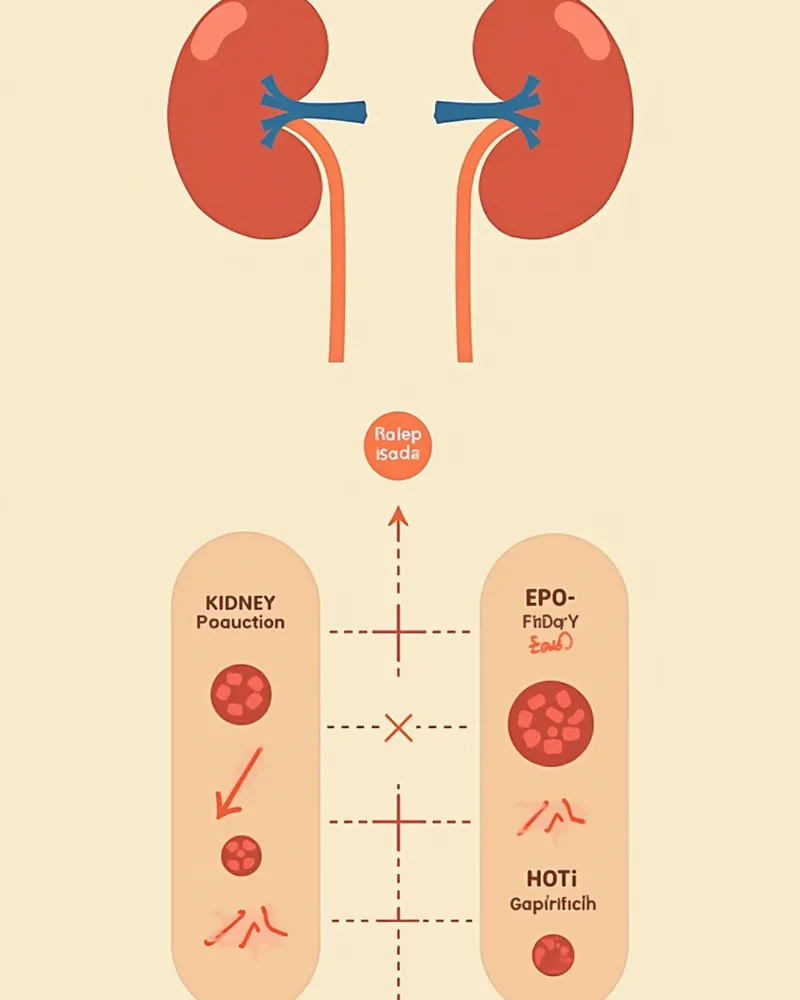
An image explaining the process of kidney function and EPO production in cats

What Are the Main Symptoms and Signs?

Common signs of anemia in cats include lethargy, depression, weakness, exercise intolerance (tiring easily), and decreased appetite. Pale mucous membranes, such as those in the gums, are also a hallmark finding on physical examination. When anemia develops gradually, the body’s compensatory mechanisms may mask symptoms until the condition becomes moderate to severe. Conversely, with acute onset, even mild anemia can cause pronounced clinical signs. In severe cases, symptoms may progress to rapid breathing, inability to stand, fainting, seizures, or coma. Subtle signs that owners might overlook, such as pica (abnormal appetite) or sudden lethargy, can also occur. If these symptoms persist, consult your veterinarian immediately. Keep in mind that the severity of symptoms depends on both the degree and the rate of progression of the anemia.
An image showing lethargy and fatigue, which are symptoms of anemia in cats.

Signs Requiring Immediate Veterinary Visit

Severe paleness, difficulty breathing or rapid breathing, sudden collapse or weakness, and signs like fainting or seizures indicate a medical emergency suggestive of severe anemia. In such cases, do not delay—contact your veterinarian immediately or visit a clinic right away. Severe anemia reduces the blood’s oxygen-carrying capacity and places significant strain on the heart, which can be life-threatening.

Diagnostic Tests for Accurate Diagnosis
To accurately diagnose anemia and chronic kidney disease (CKD), a complete blood count (CBC) and reticulocyte count are essential. These tests help determine whether hematocrit (or hemoglobin) levels are low and whether the bone marrow is responding appropriately by assessing regenerative status. At the same time, kidney function tests such as creatinine and BUN are performed to evaluate for concurrent CKD, along with monitoring phosphorus levels. If iron deficiency is suspected, iron indicators like serum ferritin and transferrin saturation (TSAT) can help distinguish between functional and absolute iron deficiency. If necessary, a bone marrow examination can directly assess red blood cell production. In cats, EPO levels often remain normal or only slightly decreased even in the presence of renal failure, making it difficult to determine the cause of anemia based on EPO measurement alone. Regular blood tests are key to promptly detecting changes and guiding both diagnosis and management.
An image explaining the blood test process for diagnosing anemia in cats

Treatment Methods and Step-by-Step Management
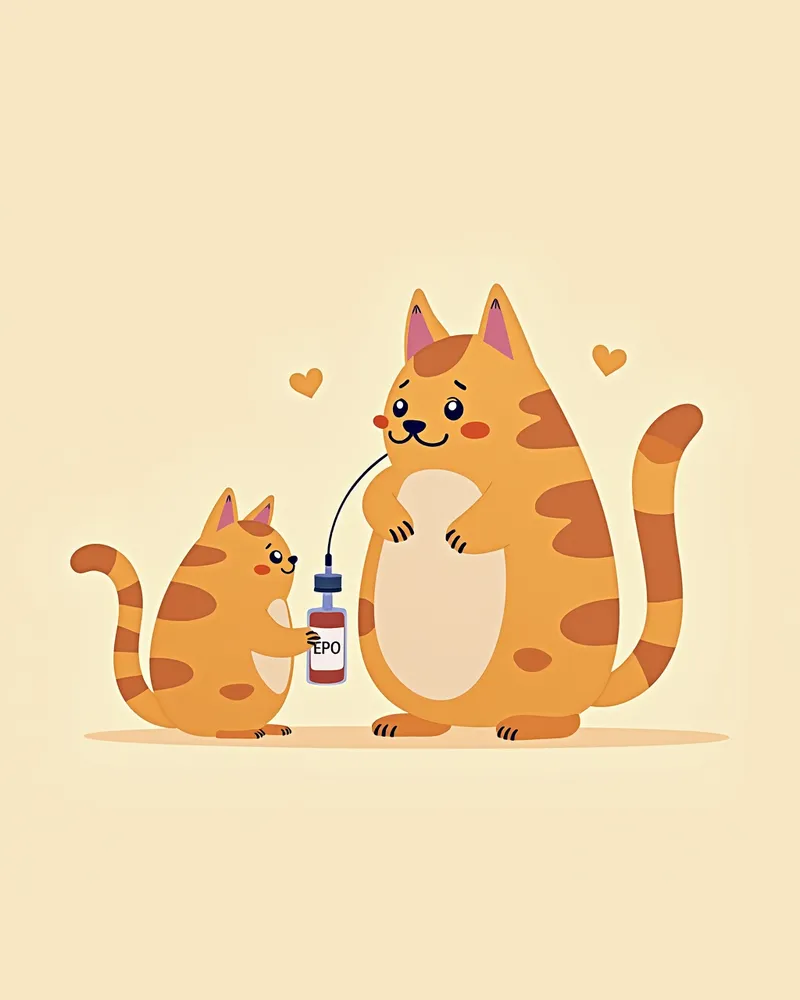
The cornerstone of treatment is managing chronic kidney disease (CKD), the underlying cause of anemia, while supporting the production of red blood cells. When the kidneys are unable to stimulate adequate red blood cell production, erythropoiesis-stimulating agents (ESAs) are used. Commonly used ESAs include recombinant human erythropoietin (epoetin alfa, which shares approximately 80% homology with feline EPO) and darbepoetin alfa, with darbepoetin alfa tending to provoke fewer immune responses. Epoetin alfa is typically administered at frequent initial doses until the packed cell volume (PCV) exceeds 25%, after which the dose is reduced to a maintenance level, with the veterinarian adjusting the dosage and frequency based on the PCV response. Because ESAs can cause hypertension, blood pressure must be monitored regularly. This treatment is combined with nutritional management, such as iron supplementation, and kidney-protective therapies like phosphate binders. In cases of severe anemia, blood transfusions may also be considered. Throughout treatment, regular blood tests are essential to monitor the response.
Image explaining EPO injections for treating feline anemia

Management Points at Home

- Dietary Management: Switch to a kidney-prescription diet recommended by your veterinarian. Diets low in phosphorus are particularly helpful for managing kidney health. - Hydration: Change the water frequently and consider using a flowing-water automatic fountain to encourage adequate fluid intake. - Activity Management: Avoid excessive exercise and provide a comfortable environment. - Regular Check-ups: Monitor for anemia and changes in kidney markers through regular blood tests. Since anemia is linked to the progression of chronic kidney disease (CKD), early detection and management are important. - Medication Management: Administer ESA (erythropoietin) injections or supplements exactly as directed by your veterinarian, and monitor blood pressure concurrently. - Emotional Comfort: Provide a quiet space where your pet can rest comfortably. All these factors play a significant role in managing both anemia and kidney health.
Image illustrating the home environment for managing feline anemia and chronic kidney disease (CKD)

Breed-Specific Precautions and Prevention of Recurrence

Normal ranges for blood indicators, such as red blood cell counts, can vary slightly depending on the breed, so test results should be interpreted in consideration of both the individual animal and its breed. Additionally, while using ESA (erythropoietin preparations), side effects such as high blood pressure, seizures, and, rarely, polycythemia or pure red cell aplasia, as well as discomfort at the injection site, may occur. Therefore, it is essential to administer the medication strictly under veterinary guidance and to monitor blood pressure regularly. Regular health check-ups are crucial to prevent recurrence and worsening of the condition.

Reviewed by a veterinarian

Dr. Tony — Punnawat Phongkittirak

Dr. Tony — Punnawat Phongkittirak

Veterinarian

A veterinarian who majored in veterinary medicine at Khon Kaen University, Thailand, and completed the IVSA program at North Carolina State University in the United States. Drawing on clinical experience at animal hospitals, he works in the pet healthcare field and is dedicated to building a digital care environment that connects pet parents with veterinarians.

Frequently Asked Questions

Can feline anemia be cured?
Anemia associated with chronic kidney disease (CKD) is best managed by addressing the underlying kidney condition. The goal is stable management rather than a complete cure. We can improve and maintain your pet’s condition through erythropoiesis-stimulating agents (ESAs), a renal prescription diet, and regular monitoring.
Are there any side effects of EPO injections?
In some cats, high blood pressure, seizures, and rarely polycythemia or pure red cell aplasia, as well as discomfort at the injection site, may occur. Therefore, your veterinarian will monitor blood pressure and overall condition before and after the injection. Please let us know immediately if you suspect any side effects.
Can anemia improve with dietary management alone?
Dietary management helps preserve kidney function, but in cases of severe anemia, medication such as erythropoiesis-stimulating agents (ESAs) may be necessary. The most effective approach combines dietary management, medication, and treatment of the underlying cause (chronic kidney disease).
If anemia develops, is an immediate visit to the veterinarian necessary?
If your pet shows severe paleness, difficulty breathing, collapse, fainting, or seizures, seek veterinary care immediately. For mild fatigue or decreased appetite, consult your veterinarian to determine the best course of action.
How often should EPO injections be administered?
Epoetin alfa is typically administered three times a week initially, then reduced to once or twice weekly for maintenance once the packed cell volume (PCV) reaches the target level (approximately 25% or higher). Darbepoetin alfa is given less frequently, such as every one to three weeks. Your veterinarian will adjust the dosage and frequency based on the PCV response.

Share

Related Guides

References

[1] Hosgood, G. et al. (2020) Canine and Feline Internal Medicine. 2nd ed. Elsevier.

[2] Kirk, R. W. et al. (2019) Current Veterinary Therapy: Small Animal Practice. 5th ed. Elsevier.

[3] Plumb's Veterinary Drug Handbook, 9th ed. (2022). Wiley-Blackwell.

This information is based on veterinary literature and does not replace diagnosis or treatment. Please consult a veterinarian for specific health concerns.

Metapet Co., Ltd. | CEO: Park Sung-yong | Business Reg. No. 417-88-02562 | Seoul, South Korea | Customer Center

Feline Anemia & CKD (EPO Deficiency): A Complete Guide | Meongsiljang