Like
Share
멍실장
강아지 뇌종양 증상과 원인, 진단·치료와 관리 포인트 총정리

If Your Dog Suddenly Has Seizures or Abnormal Behavior — Brain Tumor Symptoms and Treatment Timing

Oncology/CancerDiseasesMeongsiljang Veterinary Advisory Board

Dog brain tumors are malignant or benign growths that develop in the brain, commonly occurring in senior dogs and causing neurological symptoms. Early detection and appropriate treatment can significantly improve survival time.

Canine brain tumors are malignant or benign growths that develop within the brain, primarily affecting senior dogs.

An anatomical illustration showing the primary locations where brain tumors occur in dogs.
Canine brain tumors are malignant or benign growths that develop within the brain, primarily affecting middle-aged to senior dogs. The median age for dogs diagnosed with brain tumors is approximately 9 years (range: 4–13 years). Most canine brain tumors affect the forebrain. Early signs may include mild behavioral changes or lethargy, but symptoms progressively worsen to include seizures, vision loss, and loss of balance. - Tumor location and size: A tumor in a specific area of the brain can impair the functions controlled by that region. Neurological examination findings are typically asymmetric and may present as lesions in the forebrain, brainstem, or as multiple lesions. - Secondary (metastatic) tumors: Some tumors arise from metastasis from other body sites or direct invasion from adjacent tissues. Hemangiosarcoma, lymphoma, and mammary cancer are among the types that can metastasize to the brain. - Importance of early detection: If neurological symptoms are suspected, it is crucial to seek imaging diagnostics as soon as possible to confirm the diagnosis and establish an appropriate treatment plan.

The main causes of brain tumors vary by genetic predisposition, age, and breed.

The exact cause of brain tumors in dogs remains unclear. However, they are more commonly diagnosed in older dogs, and certain breeds appear to be predisposed. Primary brain tumors have been reported in Boxers, Doberman Pinschers, Golden Retrievers, Old English Sheepdogs, and Scottish Terriers, while Labrador Retrievers, Collies, Bulldogs, and Boston Terriers are also known to be at higher risk. - Breed predisposition: Although brain tumors are reported more frequently in specific breeds as mentioned above, the precise underlying mechanisms have not yet been proven. - Age: Brain tumors are primarily diagnosed in middle-aged to senior dogs, with a median age at diagnosis of approximately 9 years (range: 4–13 years). - Secondary (metastatic) tumors: Tumors from other parts of the body, such as hemangiosarcoma, lymphoma, and mammary cancer, can spread to the brain or directly invade it from adjacent tissues. In these cases, involvement of multiple organs may also be observed.
A Golden Retriever puppy sitting quietly

Main symptoms appear as neurological abnormalities, and early detection is important.

The main symptoms of brain tumors in dogs include:
Seizures: Sudden, repeated episodes of body tremors or loss of consciousness.
Vision impairment or blindness: Signs include frequent blinking or bumping into walls.
Behavioral changes: Lethargy, disorientation, and ignoring familiar people, including their owners.
Head tilting: Tilting the head to one side or losing balance.
Mobility issues: Unsteady gait or weakness in one leg.
If these symptoms persist, immediate veterinary attention is required.
A dog tilting its head, showing signs of vision problems

Symptoms Requiring Immediate Veterinary Visit

If your dog suddenly begins having repeated seizures or loses consciousness, seek veterinary care immediately. These symptoms may indicate advanced brain tumor progression or increased intracranial pressure. Additionally, a sudden decline in vision or severe difficulty walking constitutes an emergency situation.

MRI and CT Scans Are Essential for Accurate Diagnosis

To accurately diagnose a brain tumor in dogs, high-resolution imaging is essential in addition to a neurological examination. - MRI (Magnetic Resonance Imaging): MRI provides clear images of even the finest brain structures, making it the most effective tool for determining a tumor’s location and size. In approximately 70% of primary brain tumors, the tumor type (such as meningioma, glioma, or choroid plexus tumor) can be presumptively diagnosed based on MRI findings alone. - CT (Computed Tomography): CT scans are useful for evaluating bone structures and detecting hemorrhage. They are commonly used alongside MRI to assess suspected tumors. - Biopsy and Cerebrospinal Fluid Analysis: If needed to confirm the nature of the tumor, tissue samples are obtained via surgery or aspiration for analysis. - Importance of Imaging: When neurological abnormalities are suspected, accurate diagnosis through high-resolution imaging such as CT or MRI is key to determining the appropriate treatment plan.
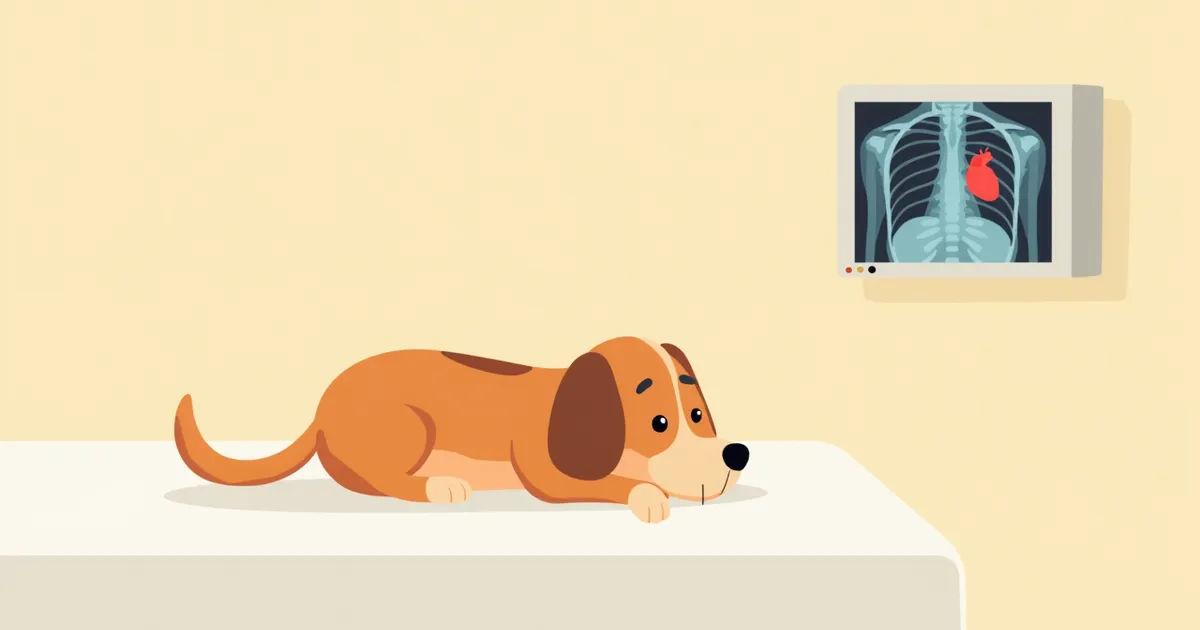
A puppy undergoing an MRI scan

Treatment Methods Are Determined Step-by-Step Based on Tumor Type and Location
Treatment for canine brain tumors typically involves surgery, radiation therapy, and chemotherapy.
Surgical resection: If the tumor’s location is accessible, complete or partial removal may be possible. This approach is particularly effective for benign tumors such as meningiomas.
Radiation therapy: When surgery is not feasible or if residual tumor remains, external beam radiation is used to shrink the tumor.
Chemotherapy: Depending on the tumor type, anti-cancer drugs are administered to inhibit disease progression.
The treatment plan is determined by considering the nature of the tumor and the dog’s overall health status.
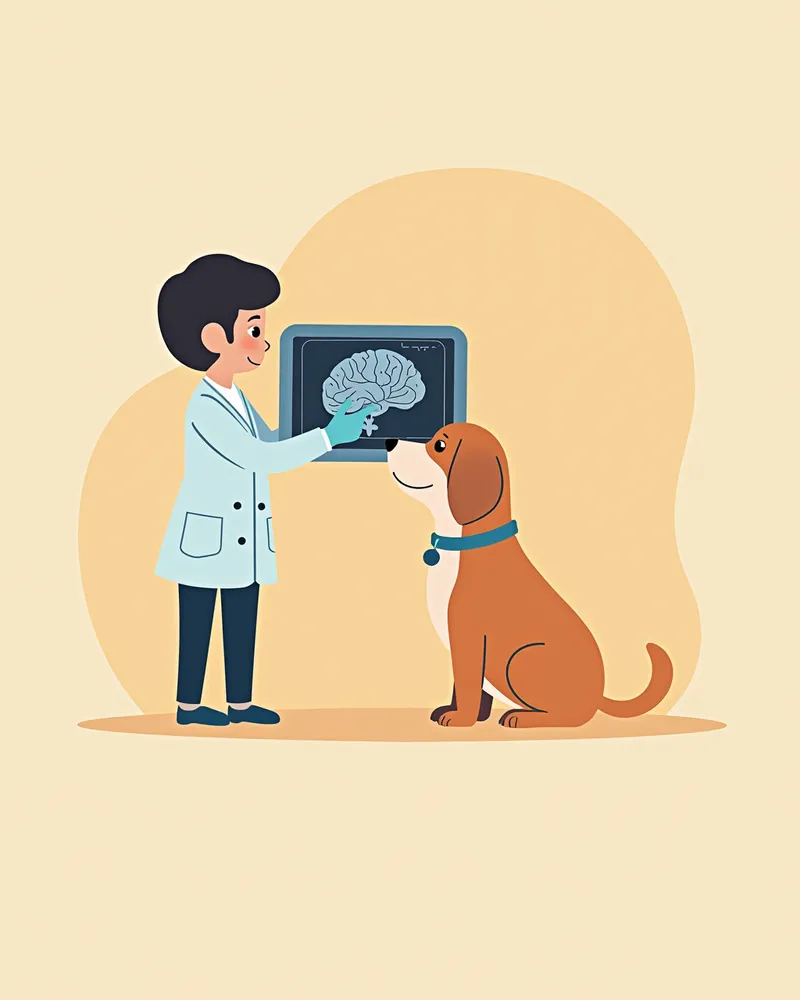
A veterinarian analyzing a puppy's brain imaging results.

Pain Management and Maintaining a Stable Environment Are Key to Home Care

Home care is crucial for dogs diagnosed with brain tumors.
Pain management: Administer the pain medication prescribed by your veterinarian exactly as directed.
A calm environment: Provide a quiet, low-stimulus space and restrict access to stairs or elevated areas.
Dietary management: Feed a nutritionally balanced diet and avoid overfeeding.
Regular monitoring: Keep a record of behavioral changes, seizure frequency, and appetite.
Exercise moderation: Avoid strenuous activity and limit walks to short, gentle outings.
These care measures help improve your dog’s quality of life.
A puppy resting comfortably in a calm, secure environment.

Certain Breeds Have a Higher Risk of Brain Tumors, So Caution Is Needed

Golden Retrievers, Labrador Retrievers, Boxers, Collies, Bulldogs, Boston Terriers, Doberman Pinschers, and Old English Sheepdogs are breeds known to be relatively frequently reported with brain tumors. Primary brain tumors are mainly diagnosed in middle-aged to senior dogs, with a median age at diagnosis of approximately 9 years (range 4–13 years). If neurological abnormalities are suspected, it is advisable to seek a veterinary examination as soon as possible.

Reviewed by a veterinarian

Dr. Tony — Punnawat Phongkittirak

Dr. Tony — Punnawat Phongkittirak

Veterinarian

A veterinarian who majored in veterinary medicine at Khon Kaen University, Thailand, and completed the IVSA program at North Carolina State University in the United States. Drawing on clinical experience at animal hospitals, he works in the pet healthcare field and is dedicated to building a digital care environment that connects pet parents with veterinarians.

Frequently Asked Questions

Can brain tumors in dogs be treated?
The prognosis depends on the type and location of the tumor. For resectable tumors such as meningiomas, surgery can yield favorable outcomes, and when surgery or radiation therapy is feasible, survival time can be extended. However, the prognosis for most other brain tumors remains guarded.
Are brain tumors hereditary?
While no specific genetic cause has been definitively proven, brain tumors are reported more frequently in certain breeds, such as Golden Retrievers, Boxers, and Doberman Pinschers. The exact underlying mechanism remains unknown.
How long is the life expectancy for a pet with a brain tumor?
The median survival time reported after brain tumor surgery is generally around 140 to 150 days, depending on the tumor type, while meningiomas have a longer reported median survival time of approximately 240 days. There is significant variation depending on the tumor type, treatment method, and the dog's condition.
If my dog has frequent seizures, could it be a brain tumor?
Seizures are a hallmark symptom of brain tumors, but they can also be caused by other conditions such as encephalitis (inflammation of the brain), hypoglycemia, or poisoning. To determine the exact cause, it is essential to seek a veterinary diagnosis immediately.
Can brain tumors be prevented?
There is currently no known definitive way to prevent this condition. However, if you notice neurological signs such as behavioral changes, seizures, or gait abnormalities in predisposed breeds or senior dogs, seeking veterinary evaluation as soon as possible can be helpful.

Share

Related Guides

References

[1] Clinical Medicine of the Dog and Cat, 4th Ed. (2023). Elsevier.

[2] Veterinary Surgical Oncology, 2nd Ed. (2021). Wiley-Blackwell.

[3] Plumb's Veterinary Drug Handbook, 9th Ed. (2022). Wiley.

This information is based on veterinary literature and does not replace diagnosis or treatment. Please consult a veterinarian for specific health concerns.

Metapet Co., Ltd. | CEO: Park Sung-yong | Business Reg. No. 417-88-02562 | Seoul, South Korea | Customer Center

Sudden Seizures or Odd Behavior in Dogs: Brain Tumor Signs & Timing | Meongsiljang