
Like
Share
멍실장
고양이 종양 CT·MRI 스테이징 증상과 원인, 진단·치료와 관리 포인트 총정리

Feline Tumor CT and MRI Staging: Symptoms, Causes, Diagnosis, Treatment, and Care Points

Oncology/CancerDiseasesMeongsiljang Veterinary Advisory Board

CT and MRI staging are essential for accurately determining the size, location, and metastatic spread of tumors in cats. This precise evaluation guides the development of an appropriate treatment plan.

What is CT and MRI Staging for Feline Tumors?
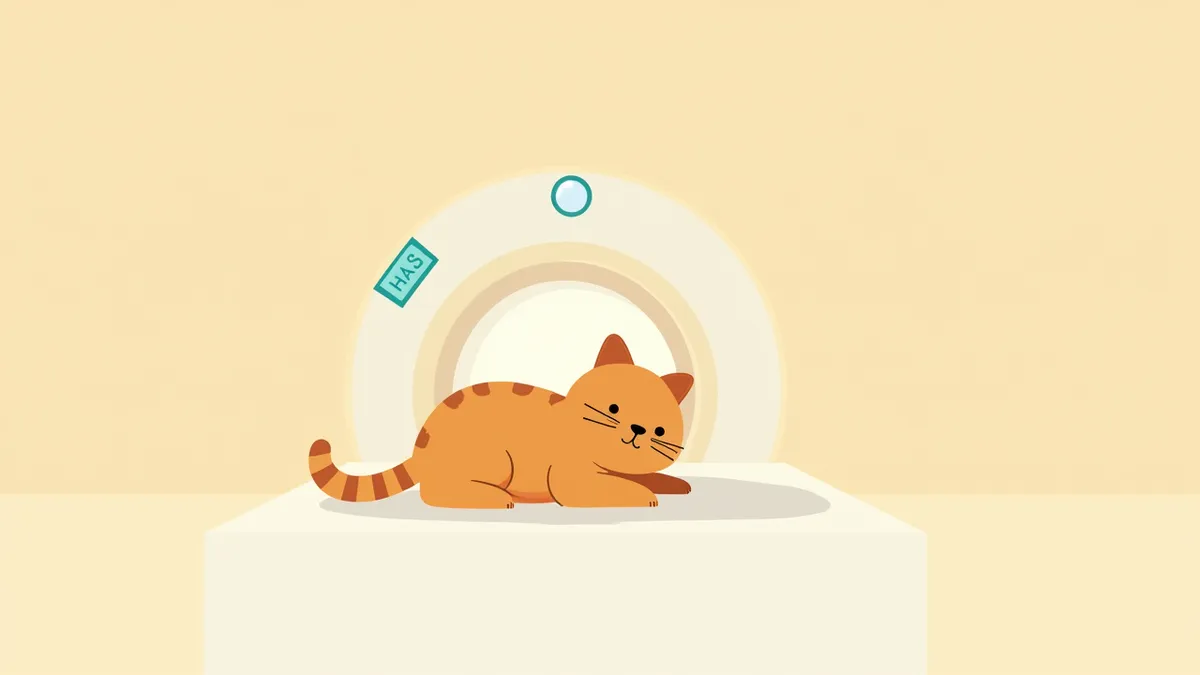
A cat undergoing a CT scan
CT and MRI staging for feline tumors is a diagnostic procedure used to evaluate tumor size, location, extent of invasion, and presence of metastasis. This examination is invaluable for developing preoperative surgical plans, radiation therapy protocols, and determining the overall treatment strategy.
CT Scan: Useful for detecting pulmonary metastasis or metastasis to the hilar region and lymph nodes, particularly when lung masses or metastatic spread are suspected.
MRI Imaging: Provides clearer visualization of tumors involving the central nervous system, such as the brain and spinal cord, making it ideal for precise localization and preoperative planning.
Staging: Classifies tumors by stage based on tumor size (T), regional lymph node involvement (N), and distant metastasis (M), similar to the World Health Organization (WHO) classification. The presence of distant metastasis indicates a poorer prognosis, often necessitating consideration of chemotherapy, and directly influences treatment choices.

Main Causes and Pathogenesis of Tumor Staging

Feline tumors can be associated with various factors, including breed predisposition and viral infections. Staging varies depending on the type of tumor and the extent of metastasis.
Breed predisposition: Certain breeds are predisposed to specific tumors. For example, Siamese cats have a relatively higher tendency to develop small intestinal tumors, such as lymphoma and adenocarcinoma.
Viral infection: Infection with FeLV (feline leukemia virus) is known to be associated with feline acute myeloid leukemia (AML).
Hormonal and reproductive status: Young female cats that are not spayed and experience repeated estrus cycles are more prone to developing mammary proliferative lesions.
Differences based on the affected organ: Depending on the organ invaded by the tumor, clinical signs such as anorexia and weight loss, disease progression, and staging results can vary.
How a tumor appears on an MRI scan of a cat’s brain

Main Symptoms in Tumor Staging

CT and MRI staging for feline tumors can enable early detection even before symptoms appear. However, certain signs may indicate that the disease has already progressed.
Weight loss: Cancer cells consume significant energy, leading to rapid weight loss.
Loss of appetite: Abdominal tumors or impaired organ function can cause a lack of interest in food.
Decreased activity: Fatigue and pain may cause your cat to remain in one place throughout the day.
Difficulty breathing: Tumors in the lungs or chest cavity can cause shortness of breath.
Neurological symptoms: Brain or spinal cord tumors can trigger seizures, loss of balance, and vision impairment.
A cat showing symptoms of weight loss and lethargy

Emergency Signs Requiring Immediate Veterinary Visit

If your cat suddenly experiences seizures, loss of consciousness, or difficulty breathing, you should go to the vet immediately. These could be signs of a brain tumor or acute internal bleeding.

Tumor Diagnostic Procedure via CT and MRI
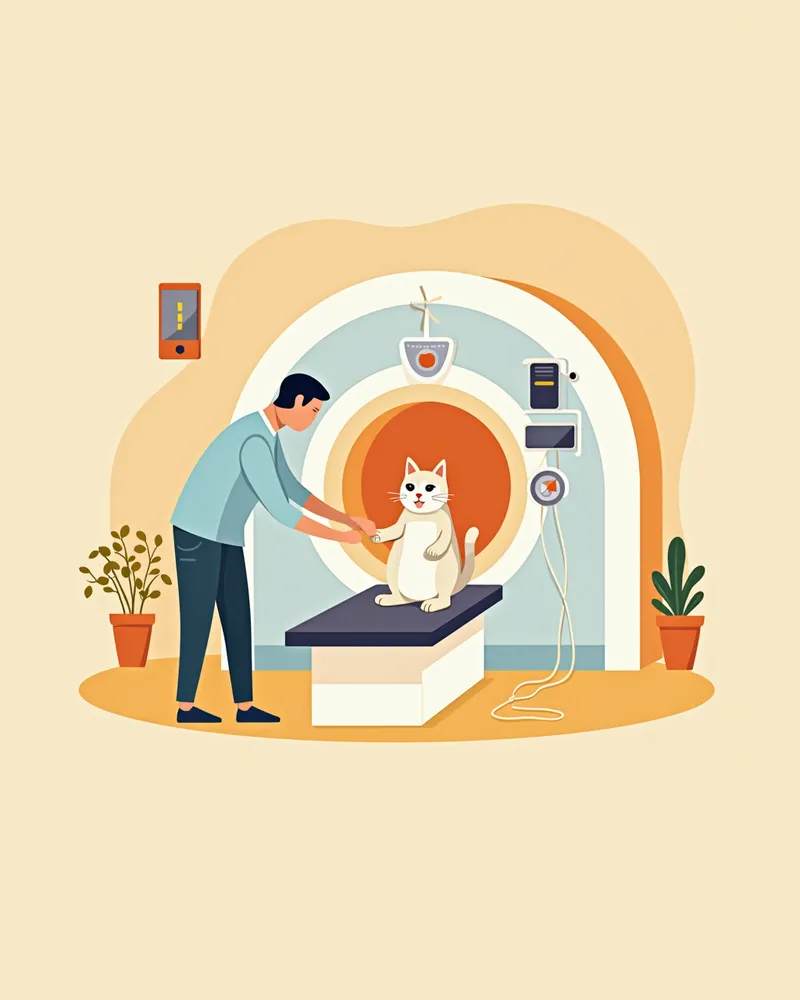
An accurate diagnosis of feline tumors requires a combination of CT and MRI scans. First, a CT scan is performed to assess the overall condition of the body, followed by an MRI for detailed imaging analysis.
CT Scan: A full-body scan checks for metastasis in the lungs, lymph nodes, liver, spleen, and other organs. The procedure takes approximately 15–20 minutes.
MRI Scan: This provides high-resolution images of tumors in the brain, spinal cord, and soft tissues. The procedure takes 30–60 minutes.
Anesthesia Required: Both procedures require anesthesia to keep the cat completely still. Your veterinarian will develop a safe anesthesia plan tailored to your pet.
A veterinarian preparing a cat for an MRI scan.

Treatment Methods Based on Tumor Staging

Treatment plans are tailored based on the tumor staging results. Early detection allows for surgical or radiation therapy.
Surgical treatment: If the tumor is localized, complete removal is possible. Preoperative CT or MRI scans are used to accurately determine its location and extent.
Radiation therapy: When surgery is not feasible, radiation is applied to the tumor site to reduce its size and alleviate symptoms.
Chemotherapy: If metastasis is suspected or the tumor is highly malignant, medication is used to suppress tumor cells.
Supportive care: Pain management, nutritional supplementation, and immune-boosting agents are administered concurrently.
A cat undergoing radiation therapy

Home Tumor Management and Care Points

Home care is crucial for cats undergoing tumor treatment. It’s important to create an environment that reduces stress and supports recovery.
Comfortable Environment: Provide a quiet and warm space. Prepare low-height feeding tables or beds for cats with limited mobility.
Diet Management: Offer small, frequent meals. Slightly warmed food may be easier for them to eat.
Medication Management: Administer medication at the prescribed times. Keep records to monitor compliance.
Regular Check-ups: Maintain regular appointments with your veterinarian to monitor treatment response.
A cat resting comfortably in its bed

Breed-Specific Precautions and Recurrence Prevention

Certain breeds are predisposed to specific types of tumors. For example, Siamese cats have a relatively higher tendency to develop small intestine tumors, such as lymphoma and adenocarcinoma. Even after treatment, it is advisable to regularly monitor for recurrence through imaging examinations.

Reviewed by a veterinarian

Dr. Tony — Punnawat Phongkittirak

Dr. Tony — Punnawat Phongkittirak

Veterinarian

A veterinarian who majored in veterinary medicine at Khon Kaen University, Thailand, and completed the IVSA program at North Carolina State University in the United States. Drawing on clinical experience at animal hospitals, he works in the pet healthcare field and is dedicated to building a digital care environment that connects pet parents with veterinarians.

Frequently Asked Questions

How long does a CT or MRI scan for a cat’s tumor take?
A CT scan takes about 15 to 20 minutes, while an MRI takes around 30 to 60 minutes. Since these procedures are performed under anesthesia, the exact duration may vary depending on your cat's condition.
Is anesthesia dangerous?
The veterinarian will assess your cat’s overall health and develop a safe anesthesia plan. The level of risk varies depending on your cat’s age and health status.
Does a tumor always require surgery once it’s discovered?
Surgery isn’t always necessary. We carefully evaluate the tumor’s location, size, whether it has spread, and your cat’s overall health before making a recommendation.
Is chemotherapy hard on cats?
Chemotherapy can cause some side effects, such as vomiting and loss of appetite, but most cats tolerate it well. Your veterinarian will adjust the medications to minimize these side effects.
How long is the survival period after tumor treatment?
The treatment approach varies depending on the type and stage of the tumor. Some pets can survive for years, while others can maintain a comfortable quality of life even after short-term treatment.

Share

Related Guides

References

[1] Clinical Medicine of the Dog and Cat, 4th Ed, Chapter 14: Disorders of the Nervous System and Muscle, 2023

[2] Advanced Monitoring for Small Animal Emergency and Critical Care, 2nd Ed, 2022

[3] Veterinary Radiology & Ultrasound, Volume 62, Issue 3, 2021: MRI findings in feline neoplasia

This information is based on veterinary literature and does not replace diagnosis or treatment. Please consult a veterinarian for specific health concerns.

Metapet Co., Ltd. | CEO: Park Sung-yong | Business Reg. No. 417-88-02562 | Seoul, South Korea | Customer Center

Feline Tumor CT & MRI Staging: Signs to Treatment Guide | Meongsiljang