Like
Share
멍실장
고양이 베타차단제 심장 증상과 원인, 진단·치료와 관리 포인트 총정리

Feline Beta-Blocker Heart Disease — From Mechanism of Action to Side Effects and Administration Precautions

HeartDiseasesMeongsiljang Veterinary Advisory Board

Feline beta-blocker heart disease is a cardiac condition caused by medications that affect heart function. Early detection and proper management are crucial.

What is Feline Beta-Blocker Heart Disease?
An image of a cat showing decreased cardiac contractility
The most common heart disease in cats is cardiomyopathy, a condition in which the structure or function of the heart muscle becomes abnormal. It can take several forms, such as hypertrophic cardiomyopathy (HCM), dilated cardiomyopathy (DCM), and restrictive cardiomyopathy (RCM), and in many cases the exact cause remains unknown. Heart medications like beta-blockers may be prescribed by a veterinarian to help control heart rate and rhythm, but it is difficult to conclude that the drugs themselves cause a separate heart disease. However, cats with cardiomyopathy require careful monitoring of medication dosages and their overall condition, with clinical signs typically related to congestive heart failure or arterial thromboembolism. Because symptoms can worsen and lead to respiratory distress or emergencies, regular check-ups and attentive care are essential while your cat is on medication.

Causes and Risk Factors

The causes of feline cardiomyopathy are highly varied, and in many cases, the exact cause remains unknown. Hypertrophic cardiomyopathy (HCM) is significantly influenced by genetic factors, with MYBPC3 gene mutations identified in breeds such as Maine Coons and Ragdolls. Additionally, systemic conditions like hypertension, hyperthyroidism, and acromegaly can contribute to myocardial changes. While cardiac medications such as beta-blockers may be used to treat these underlying conditions or manage arrhythmias, improper use for a cat’s specific condition can lead to adverse effects, making precise dosage adjustment crucial. Cats with underlying heart disease or other systemic illnesses require particularly careful management. Therefore, regular consultations with a veterinarian are essential while your cat is on medication.
Image of a cat taking beta-blockers

Main Symptoms and Signs

The early signs of feline heart disease can be subtle and easy to miss. However, as heart function declines, you may notice the following symptoms:
Lethargy and exercise intolerance: Your cat may move less and tire easily.
Difficulty breathing: Rapid breathing (tachypnea) or labored breathing are common signs of congestive heart failure.
Fainting or weakness: Sudden collapse or weakness may be associated with arrhythmias.
Hind limb paralysis or pain: In cases of arterial thromboembolism, the legs may feel cold and appear painful.
Decreased appetite: Your cat may eat less than usual.
If you notice any of these symptoms, consult your veterinarian immediately.
An image of a cat showing signs of respiratory distress

Situations Requiring Immediate Veterinary Visit

If your cat suddenly starts panting, collapses, or experiences sudden paralysis and coldness in its hind legs, you should take it to the vet immediately. This could be a life-threatening emergency such as congestive heart failure or arterial thromboembolism.

Accurate Diagnostic Methods
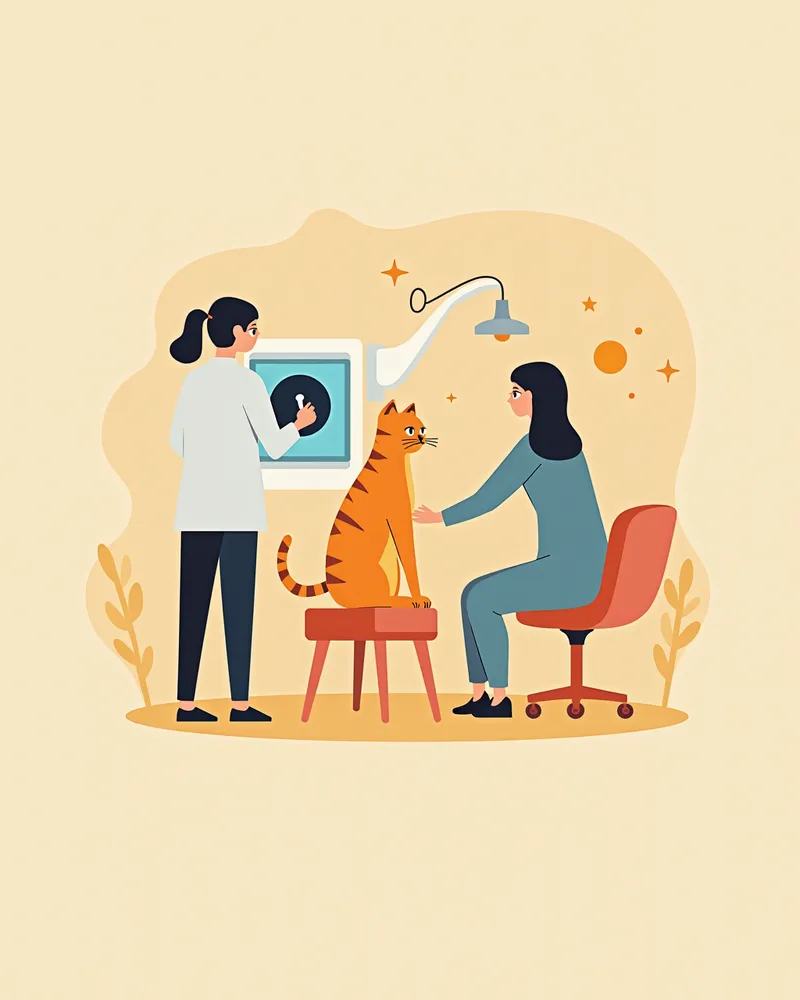
Feline heart disease is most accurately diagnosed through an echocardiogram (heart ultrasound). While echocardiography is the most sensitive non-invasive test for diagnosing hypertrophic cardiomyopathy (HCM) and differentiating it from other cardiac conditions, its effectiveness heavily depends on the operator’s expertise. It allows for precise evaluation of ventricular wall thickness, atrial size, and systolic and diastolic function. Chest radiographs and electrocardiograms (ECGs) are also performed to assess for heart failure or arrhythmias. Blood tests can check thyroid function (T4) in cats aged six years and older, measure blood pressure, and, if necessary, evaluate taurine levels or underlying causes such as acromegaly. Accurate diagnosis requires a combination of these tests and the professional judgment of a veterinarian. Early detection and precise differentiation are key to improving prognosis.
Image of a cat undergoing an echocardiogram

Treatment Methods and Stage-Specific Management
Treatment varies depending on the type and stage of your cat’s cardiomyopathy, with your veterinarian adjusting the plan based on weight and overall condition. The primary goals are to prevent sudden death from arrhythmias, congestive heart failure, and arterial thromboembolism.
Medication Management: Medications such as beta-blockers should be dosed according to your veterinarian’s instructions and never discontinued without professional guidance.
Managing Congestive Heart Failure: Diuretics like furosemide are used to remove excess fluid from the lungs.
Preventing Blood Clots: If there is a risk of thromboembolism, medications such as clopidogrel may be considered.
Supporting Heart Contraction: In specific cases where contractility is reduced (such as DCM or RCM), cardiac stimulants may be prescribed.
Regular Check-ups: Your cat’s heart should be monitored regularly based on their condition.
The prognosis and disease progression vary significantly depending on the individual cat’s status.
An image of a veterinarian developing a treatment plan

Home Care Points

Cats with heart disease benefit greatly from consistent home care, including daily monitoring and environmental adjustments.
Regular weight and respiratory rate checks: Keep a record of weight changes and resting respiratory rate.
Dietary management: Follow the heart-specific diet recommended by your veterinarian.
Activity moderation: Avoid excessive exercise and provide a comfortable environment.
Medication management: Administer medications exactly as prescribed by your veterinarian and do not stop them without professional guidance.
Stress reduction: Provide a quiet space and minimize external stimuli.
These care practices help stabilize symptoms and reduce the risk of complications.
An image of a cat resting in a comfortable environment

Breed-Specific Precautions and Recurrence Prevention

Particular care is needed when administering heart medications to breeds prone to hypertrophic cardiomyopathy, such as Maine Coons, Ragdolls, Persians, Burmese, and Siamese. If symptoms worsen while on medication, please visit the clinic immediately.

Reviewed by a veterinarian

Dr. Tony — Punnawat Phongkittirak

Dr. Tony — Punnawat Phongkittirak

Veterinarian

A veterinarian who majored in veterinary medicine at Khon Kaen University, Thailand, and completed the IVSA program at North Carolina State University in the United States. Drawing on clinical experience at animal hospitals, he works in the pet healthcare field and is dedicated to building a digital care environment that connects pet parents with veterinarians.

Frequently Asked Questions

My cat collapsed after taking a beta-blocker. Is this normal?
Cats with heart disease may collapse due to arrhythmias or heart failure. Immediate veterinary care is essential, and emergency treatment may be required.
Will heart function improve after stopping beta-blockers?
While the effects of medication can be reduced by stopping or adjusting the dosage, the underlying cardiomyopathy itself does not fully recover. Do not discontinue medication on your own; always consult your veterinarian to adjust the treatment plan.
Can beta-blockers make heart conditions worse?
If the product isn’t suitable for your pet’s condition, it may cause side effects. Cats with underlying heart disease should only use it after consulting their veterinarian and with careful consideration.
What symptoms should prompt a visit to the vet after administering this medication?
If your pet shows signs such as difficulty breathing, sudden collapse, hindlimb paralysis or coldness, and lethargy, seek veterinary care immediately.
How long does it take for heart function to recover?
The goal of managing cardiomyopathy is control rather than cure. Prognosis varies significantly depending on the type and stage of the disease, and some reports indicate that asymptomatic hypertrophic cardiomyopathy has a high five-year survival rate after diagnosis. Regular check-ups are essential.

Stage-by-Stage Comparison of Symptoms in Feline Beta-Blocker Heart Disease

ItemMildModerateSevere
EnergySlightly decreasedTires easilyUnable to move
Respiratory StatusNormalIncreased respiratory rate at restRespiratory distress/panting
AppetiteNormalSlightly decreasedEats almost nothing
Heart RhythmNormalArrhythmia possibleDistinct arrhythmia or fainting
Emergency StatusNoObservation neededImmediate hospital visit

If symptoms worsen, consult your veterinarian immediately.

Share

Related Guides
References

[1] Jaisser F, Farman N. (2016) Emerging roles of the mineralocorticoid receptor in pathology: toward new paradigms in clinical pharmacology. Pharmacol Rev, 68:49-75.

[2] Payne JR, Borgeat K, Brodbelt DC, et al. (2015) Risk factors associated with sudden death vs. congestive heart failure or arterial thromboembolism in cats with hypertrophic cardiomyopathy. J Vet Cardiol, 17(Suppl 1):S318-S328.

[3] Feline Emergency and Critical Care Medicine, 2nd Ed. (2023) Chapter on Beta-blocker use in feline cardiac patients.

This information is based on veterinary literature and does not replace diagnosis or treatment. Please consult a veterinarian for specific health concerns.

Metapet Co., Ltd. | CEO: Park Sung-yong | Business Reg. No. 417-88-02562 | Seoul, South Korea | Customer Center

Beta-Blockers for Feline Heart Disease: Action, Side Effects | Meongsiljang