
Munchkin Hereditary Disease Checklist
Munchkins are a breed prone to spinal and joint disorders due to the gene that gives them their short legs. We’ve compiled the seven major hereditary conditions owners should monitor, along with early warning signs to help catch them sooner.
What Breed Are Munchkins?
Top 5 Hereditary Conditions to Watch for in Munchkins
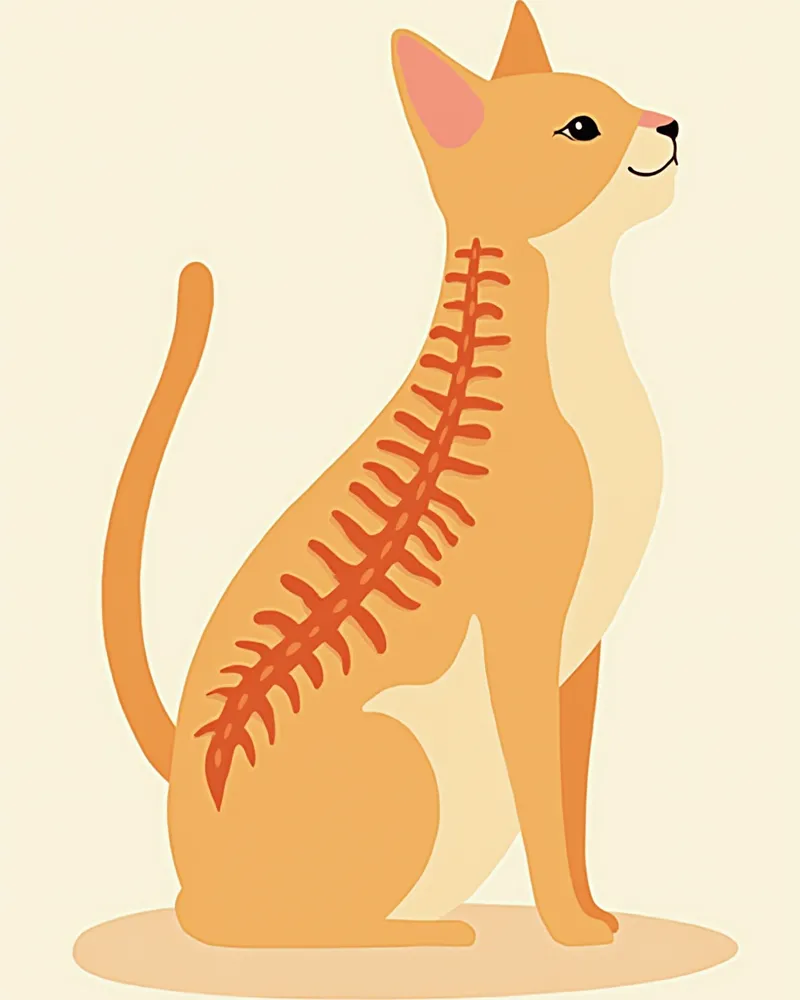
Lordosis — The Most Representative Munchkin Hereditary Condition
Seek Immediate Veterinary Care If You See These Signs
The following symptoms are emergency warning signs of hereditary spinal or heart conditions. If any of these persist for more than 24 hours or occur severely even once, seek immediate veterinary care. - Rapid breathing or panting with an open mouth - Sudden weakness in the hind legs, causing the pet to collapse or sit down abruptly - Sudden refusal to jump or climb stairs - A progressively worsening curvature of the back - Sudden loss of appetite and lethargy
Degenerative Joint Disease — The Hidden Burden of Short Legs
Comparison of Munchkin Hereditary Disease Testing Timelines
| Item | Recommended screening timing | Screening method |
|---|---|---|
| Lordosis | 3–6 months of age | X-ray |
| Degenerative arthritis | Annually from age 3 | Physical exam · X-ray |
| Hypertrophic cardiomyopathy | Annually after age 1 | Echocardiogram |
| Polycystic kidney disease | Once after 6 months of age | Abdominal ultrasound |
| Spondylosis | Annually after age 5 | X-ray |
Timing and frequency may be adjusted at the veterinarian's discretion
Key Points for Munchkin Health Management
Must-Check Items for Munchkin Adoption and Breeding
The Munchkin’s short-legged gene (M) is lethal in the homozygous state (MM), causing fetal death in the uterus. Therefore, breeding two Munchkins together is ethically discouraged. When adopting a kitten, request the parents’ spinal X-rays and PKD genetic test results. Since breed-specific genetic testing for HCM is limited, it’s best to confirm heart health through an echocardiogram. Additionally, because it’s difficult to accurately diagnose lordosis at a very young age, follow-up X-rays are necessary after adoption.
Reviewed by a veterinarian

Dr. Tony — Punnawat Phongkittirak
VeterinarianA veterinarian who majored in veterinary medicine at Khon Kaen University, Thailand, and completed the IVSA program at North Carolina State University in the United States. Drawing on clinical experience at animal hospitals, he works in the pet healthcare field and is dedicated to building a digital care environment that connects pet parents with veterinarians.
Reviewed 2026-04-30
Frequently Asked Questions
Do Munchkin cats have a shorter lifespan than regular cats?
Is it unusual for a Munchkin kitten to have difficulty jumping?
Can Munchkin cats undergo neutering surgery just like regular cats?
What kind of food should I feed my pet?
Can walking or going outside put strain on the spine?
Share
Related Guides
Primary vs. Secondary Veterinary Hospitals: A Comparison
5 Easy-to-Raise Cat Breeds for First-Time Owners — Grooming Difficulty Comparison
Top 7 Short-Legged Dog Breeds
Bengal Short-Hair and Rosette Grooming — From Shine Maintenance to Skin Health
Everything You Need to Know About Bengal Cat Health — Breed Characteristics, Nutrition, and Disease Management
Munchkin Regular Check-up Schedule — Age-Specific Checklist and Management of Common Diseases by Life Stage
Sphynx Regular Check-ups: Age-Specific Checklists and Management of Age-Related Common Diseases
Sphynx Genetic Conditions Checklist
Abyssinian Health Care Calendar — Age-Specific Checkups and Management of Common Diseases by Life Stage
Abyssinian PRA — The Complete Guide to Early Screening and Genetic Management to Prevent Blindness
References
[1] Susan Little (ed.), The Cat: Clinical Medicine and Management, 2nd Edition — Chapter on Feline Musculoskeletal Disorders
[2] Kranenburg HC, Meij BP, van Hofwegen EML, et al. Prevalence of spondylosis deformans in the feline spine, 2010
[3] Lyons LA, Feline Genetics and Inherited Diseases, Veterinary Clinics of North America: Small Animal Practice