

Bichon Regular Check-up and Lifelong Care Schedule Guide
Bichon Frises are prone to skin, joint, and eye conditions, making age-specific health screenings essential. Here’s a breakdown of the recommended check-up items and care tips for puppies, adult dogs, and seniors.
Why Regular Check-ups Are Key to Lifelong Care for Bichon Frises

Five Conditions Bichons Should Pay Special Attention To
Check-up Intervals by Age at a Glance

Bichon Regular Check-up Calendar by Age
| Item | Puppy (0–1 year) | Adult (1–7 years) | Senior (7 years and older) |
|---|---|---|---|
| Checkup Interval | Every 1–2 months | Once a year | Twice a year (every 6 months) |
| Basic Physical Exam | True | True | True |
| Vaccination | 5 initial vaccinations | Combination vaccine/rabies booster | Determined after immunity assessment |
| Heart Auscultation/X-ray | Once at 1 year | Once a year | Twice a year |
| Patella Exam | Once at 6 months | Once a year | Twice a year |
| Skin/Allergy Test | When symptoms appear | Once a year | 1–2 times a year |
| Dental Scaling | Not needed | Once every 2–3 years | Once a year recommended |
| Blood Test/Urinalysis | Once at 1 year | Once a year | Twice a year |
May be adjusted at the veterinarian's discretion based on weight and pre-existing conditions
See a Vet Immediately If You Notice These Signs
In addition to regular check-ups, your Bichon Frise needs immediate veterinary care if you notice any of the following symptoms: frequent paw licking or limping on one leg, persistent dry coughing, loss of appetite lasting more than 24 hours, or straining while urinating. Do not delay seeking treatment. In senior Bichons, sudden difficulty breathing can be an emergency sign of heart failure.
Care Points for Puppies, Adult Dogs, and Seniors
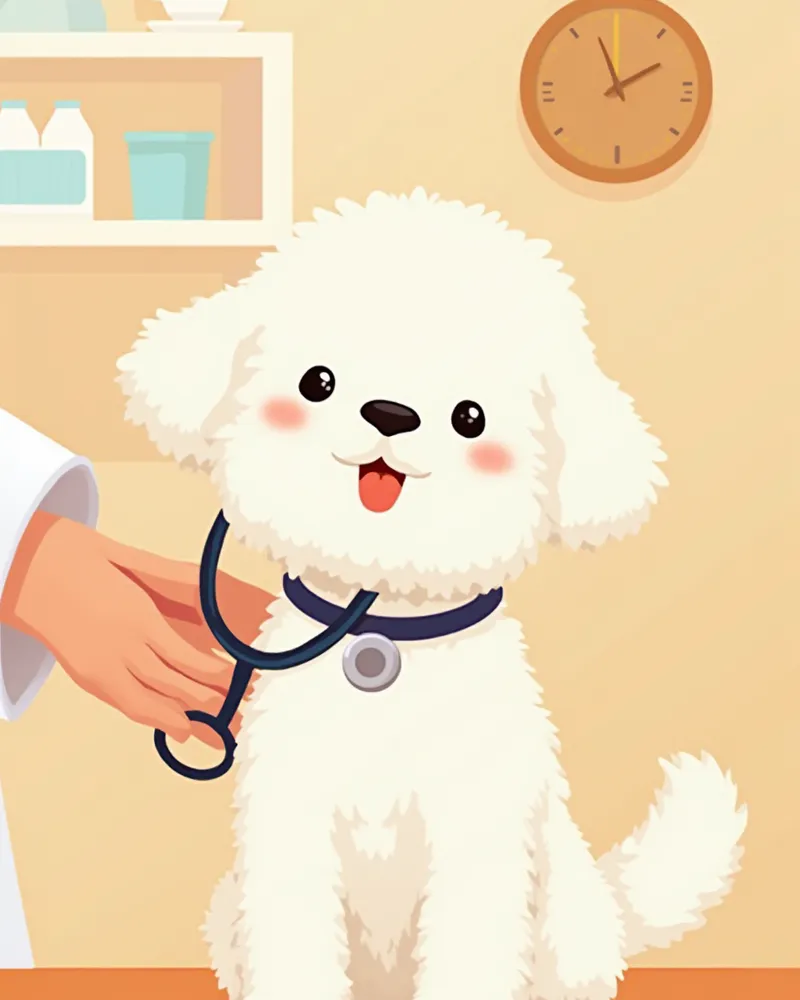
Daily Self-Checklist to Monitor at Home
Breed-Specific Precautions Every Bichon Owner Should Know
Bichons require particularly thorough pre-anesthetic assessments before any procedure requiring anesthesia. Veterinary textbooks emphasize that anesthesia carries significant risks for senior dogs, so we recommend basic tests—including a physical exam and blood work to check liver function—before scaling or surgery. Even senior dogs that appear clinically healthy benefit from pre-operative blood tests to detect early changes in major organs. Additionally, if your dog showed signs of separation or isolation-related anxiety during puppyhood or adulthood, we recommend evaluating their behavioral and mental health during regular check-ups. If you’re considering pet insurance, enrolling before your dog turns one year old offers the broadest coverage.
Nutritional Management to Support Bichon Care

Reviewed by a veterinarian

Dr. Tony — Punnawat Phongkittirak
VeterinarianA veterinarian who majored in veterinary medicine at Khon Kaen University, Thailand, and completed the IVSA program at North Carolina State University in the United States. Drawing on clinical experience at animal hospitals, he works in the pet healthcare field and is dedicated to building a digital care environment that connects pet parents with veterinarians.
Reviewed 2026-04-30
Frequently Asked Questions
At what age should a Bichon Frise be considered a senior dog?
Is a patellar examination really necessary for Bichons?
If the cost of a full checkup feels overwhelming, how should I prioritize which tests to do first?
Is there anything I should prepare in advance before the regular check-up?
Can vaccines and routine check-ups be done on the same day?
Share
Related Guides

Primary vs. Secondary Veterinary Hospitals: A Comparison

5 Easy-to-Raise Cat Breeds for First-Time Owners — Grooming Difficulty Comparison

Top 7 Short-Legged Dog Breeds

Samoyed Health Care (Skin & Heart)

Shiba Inu Health Care: Complete Guide to Allergies, Skin Diseases, and Patellar Luxation

Complete Guide to Beagle Health — From Ear Infection, Obesity, and Epilepsy Symptoms to Owner Care Points

Pug Health Care Guide: Key Points on Brachycephalic Respiratory Issues and Obesity

Chihuahua Health Management – Precautions and Prevention for Hydrocephalus and Patellar Luxation

Yorkshire Terrier Health Care Guide — Symptoms and Prevention of Tracheal Collapse and Patellar Luxation

Siamese Cat Health Care Guide — A Complete Overview of Respiratory and Dental Diseases
References
[1] BSAVA Manual of Canine and Feline Dermatology, 4th Edition, Chapter on Atopic Dermatitis
[2] Plumb's Veterinary Drug Handbook, 9th Edition
[3] Ettinger's Textbook of Veterinary Internal Medicine, 8th Edition
[4] Slatter's Fundamentals of Veterinary Ophthalmology, 6th Edition