
Scottish Fold Routine Check-up Schedule
Scottish Folds are genetically predisposed to osteochondrodysplasia, as well as heart and kidney diseases, so they require more frequent routine check-ups than other cats. Here’s a clear overview of recommended screening tests and intervals by age.
Why Routine Check-ups Are More Important for Scottish Folds
Top 3 Conditions to Watch for in Scottish Folds
Routine Check-up Intervals by Age at a Glance
| Item | Kitten stage (0–12 months) | Adult stage (1–7 years) | Senior stage (7 years+) |
|---|---|---|---|
| Screening interval | Once a month | 1–2 times/year | Every 6 months |
| Basic physical exam | True | True | True |
| Joint/gait assessment | True | True | True |
| Cardiac auscultation/echocardiography | Mainly auscultation | Echocardiography when recommended by the vet | Cardiac assessment every 6 months |
| Renal ultrasound | Once after 13 weeks of age | Once a year | Every 6 months |
| Blood/urine tests | Basic | Comprehensive once a year | Comprehensive every 6 months |
This is a recommended schedule specifically for Scottish Folds. It is a more frequent schedule than for typical cats.
Kitten Stage (0–12 Months) — Goal: Early Detection of Genetic Conditions
Seek Immediate Veterinary Care Regardless of Schedule If You See These Signs
Even if it’s not time for a regular check-up, please seek veterinary care immediately if you notice any of the following symptoms: • Avoiding jumping or climbing stairs • Limping on the hind legs or walking awkwardly • Breathing faster than usual, with mouth open (panting) • Sudden increase in water consumption or urine output • Straining to urinate or frequent urination • Showing pain or stiffness when the tail is touched
Adult Stage (1–7 Years) — 1–2 Comprehensive Check-ups Per Year
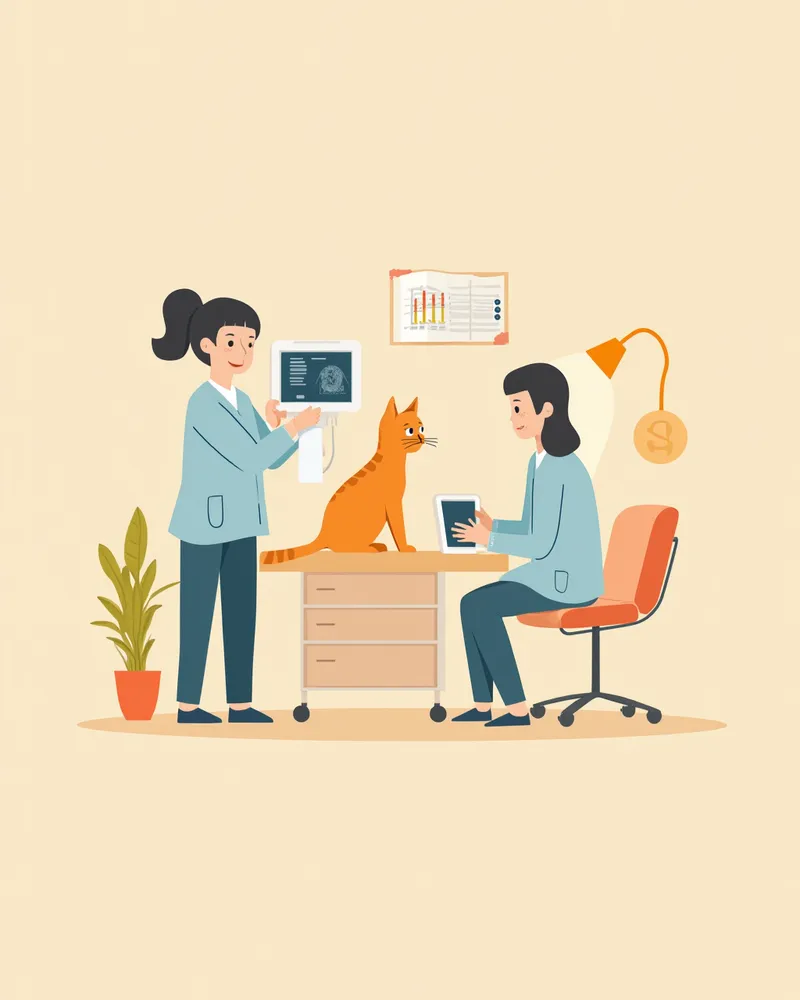
Senior Stage (7+ Years) — Shorten Interval to Every 6 Months
Scottish Fold-Specific Check-up Points — Checking the Tail and Paws
There are specific areas veterinarians always check during exams. Please help monitor these at home as well. • Tail flexibility: Check if the tail bends smoothly all the way to the tip. Stiffness may indicate osteochondrodysplasia. • Ankles and toes: Look for swelling or signs of pain when touched. • Gait: "Bunny hopping," where both hind legs move together like a rabbit, is a sign of joint pain.
Reviewed by a veterinarian

Dr. Tony — Punnawat Phongkittirak
VeterinarianA veterinarian who majored in veterinary medicine at Khon Kaen University, Thailand, and completed the IVSA program at North Carolina State University in the United States. Drawing on clinical experience at animal hospitals, he works in the pet healthcare field and is dedicated to building a digital care environment that connects pet parents with veterinarians.
Reviewed 2026-04-30
Frequently Asked Questions
Do Scottish Straights, with their upright ears, need the same check-up schedule as their folded-ear counterparts?
Do I really need to get an echocardiogram every year? The cost is a bit of a burden.
My dog has been diagnosed with osteochondrosis. Should I have more frequent check-ups?
Is a genetic test valid for life after being done just once?
Is there a way to reduce the cost of health check-ups?
Share
Related Guides

Primary vs. Secondary Veterinary Hospitals: A Comparison
5 Easy-to-Raise Cat Breeds for First-Time Owners — Grooming Difficulty Comparison
Top 7 Short-Legged Dog Breeds

Golden Retriever Health Management (Joints, Skin, Cancer)
Maltipoo Health Care Guide — Tear, Joint, and Skin Care

Key Points on Zinc-Responsive Dermatosis in Siberian Huskies and a Lifelong Age-Specific Health Care Guide

Shiba Inu Allergy Skin Precautions and Age-Specific Lifelong Health Management Guide
Siamese Asthma Precautions and Age-Specific Lifelong Health Management Guide — Key Management Points for Pet Owners

Precautions for Tracheal Collapse in Maltese and a Lifelong Health Care Guide by Age
Precautions for Polycystic Kidney Disease in Persian Cats and an Age-Specific Lifetime Health Management Guide
References
[1] Little S., The Cat: Clinical Medicine and Management, 2nd Edition, Chapter on Feline Genetic Diseases
[2] Schaer M., Clinical Medicine of the Dog and Cat, 4th Edition, Section: Osteochondrodysplasia
[3] Gunn-Moore D., Feline Hypertrophic Cardiomyopathy: Breed Predispositions, Journal of Feline Medicine and Surgery