
The Complete Guide to Dachshund IVDD Prevention Exercises and Environmental Management
Dachshunds are among the breeds prone to cartilage abnormalities, and they have the highest risk of developing IVDD. The key to prevention lies in four areas: blocking access to stairs and jumps, using a harness, managing weight, and performing core-strengthening exercises.
Why Are Dachshunds Most Vulnerable to IVDD?
Dachshund IVDD: The Numbers
Impact on the Spine — Comparison by Activity
| Item | Spinal/back strain | Recommendation |
|---|---|---|
| Leash walking on flat ground | Low | Recommended |
| Playing on carpet | Low | Recommended |
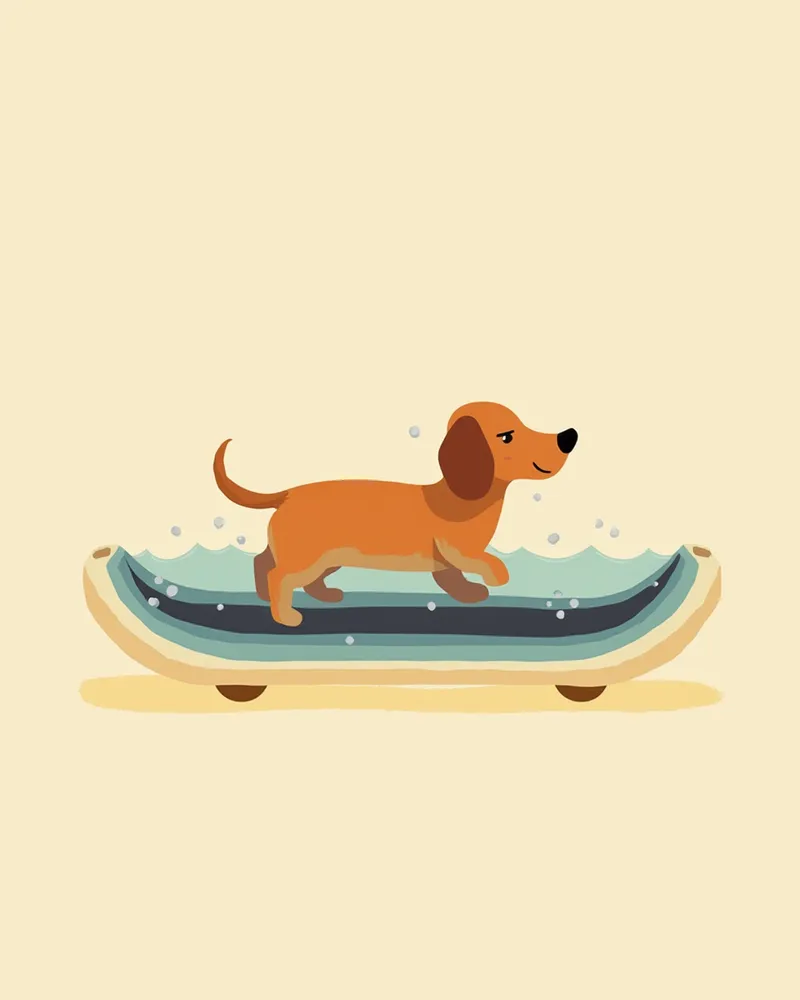
| Swimming/water walking | Very low | Strongly recommended |
| Jumping on/off sofa or bed | Very high | Prohibited |
| Going up and down stairs | High | Prohibit/block off |
| Standing on hind legs (begging for Churu) | Moderate to high | Limit |
| Walking with collar pulling | High (cervical strain) | Switch to a harness |
Source: compiled based on The Veterinary Workbook of Small Animal Clinical Cases, Case 46
Four Key Prevention Strategies — Start Applying Them at Home Today
Stop These Movements Immediately (Emergency Signs)
If your pet is dragging its hind legs, suddenly collapsing and unable to stand, or arching its back while crying out in pain, the disc may already be pressing on the spinal cord. Since the timing of treatment significantly impacts the likelihood of regaining mobility, you should go to an emergency animal hospital immediately, regardless of the time of day. During transport, roll up a towel and place it under the torso to support the spine and prevent bending, then secure the pet in a box or carrier to minimize movement.
For Exercise, 'Posture' Matters More Than 'Intensity'
Home Environment Checklist
The Impact of 1kg of Body Weight on the Spine
In breeds with long spines and concentrated weight-bearing stress, such as Dachshunds, excess weight increases the load on the intervertebral discs. When the abdomen begins to sag, the abdominal muscles can no longer adequately support the spine, causing the lumbar vertebrae to bear the weight directly. Limit treats to no more than 10% of your dog’s daily caloric intake, and record their weight and Body Condition Score (BCS) every three months to monitor changes. Since the risk of obesity increases after neutering, closely observe any weight fluctuations and consult your veterinarian to adjust the appropriate food portion.
Reviewed by a veterinarian

Dr. Tony — Punnawat Phongkittirak
VeterinarianA veterinarian who majored in veterinary medicine at Khon Kaen University, Thailand, and completed the IVSA program at North Carolina State University in the United States. Drawing on clinical experience at animal hospitals, he works in the pet healthcare field and is dedicated to building a digital care environment that connects pet parents with veterinarians.
Reviewed 2026-04-26
Frequently Asked Questions
Should Dachshunds never climb stairs at all?
Will giving IVDD-prevention supplements reduce the likelihood of disc problems?
Can excessive walking actually be bad for your dog's back?
Should I start preventive care from puppyhood, or is it okay to wait until symptoms appear?
What is the likelihood of recurrence in a dog that has already experienced IVDD?
Share
Related Guides
Top 5 Patellar Support Braces for Dogs — Stage-by-Stage Size Guide
Curcumin Efficacy and Anti-inflammatory/Joint Support
Top 5 Recommended Joint Supplements for Dogs in 2026
7 Genetic Conditions in Bichon Frises: Symptoms, Causes, and Lifelong Care Guide
The Ultimate Guide to Maltipoo Grooming and Coat Care
Shar-Pei Renal Amyloidosis Complete Guide — From Symptoms to Lifelong Management
The Ultimate Guide to Pomeranian Double-Coat Grooming | Key Pomeranian Grooming Tips
Jindo Dog Allergy Skin Precautions and Lifelong Health Care Guide by Age
7 Genetic Diseases Common in British Shorthairs — Early Warning Signs of Heart Disease
The Ultimate Guide to Border Collie Double-Coat Grooming
References
[1] The Veterinary Workbook of Small Animal Clinical Cases, Case 46 (Intervertebral Disc Disease in Chondrodystrophic Dogs)
[2] Clinical Medicine of the Dog and Cat, 4th Edition — Hansen Type I/II IVDD Pathophysiology
[3] Small Animal Cytologic Diagnosis Canine and Feline Disease, 2nd Edition — Table 14.13 IVDD Signalment
[4] Marioni-Henry K., Feline Spinal Cord Diseases, 2010 — IVDD 발생률 비교 연구