Like
Share
멍실장
닥스훈트 모질별 그루밍 (단모·장모·와이어)

Dachshund Grooming by Coat Type (Smooth, Longhaired, Wirehaired)

Skin & CoatBreed HealthMeongsiljang Veterinary Advisory Board

Dachshunds come in three coat types—smooth, long, and wire-haired—each requiring a completely different grooming approach. Here’s a concise guide to brushing frequency, bathing intervals, and trimming tips for each coat type.

Dachshund Grooming Varies Completely by Coat Type
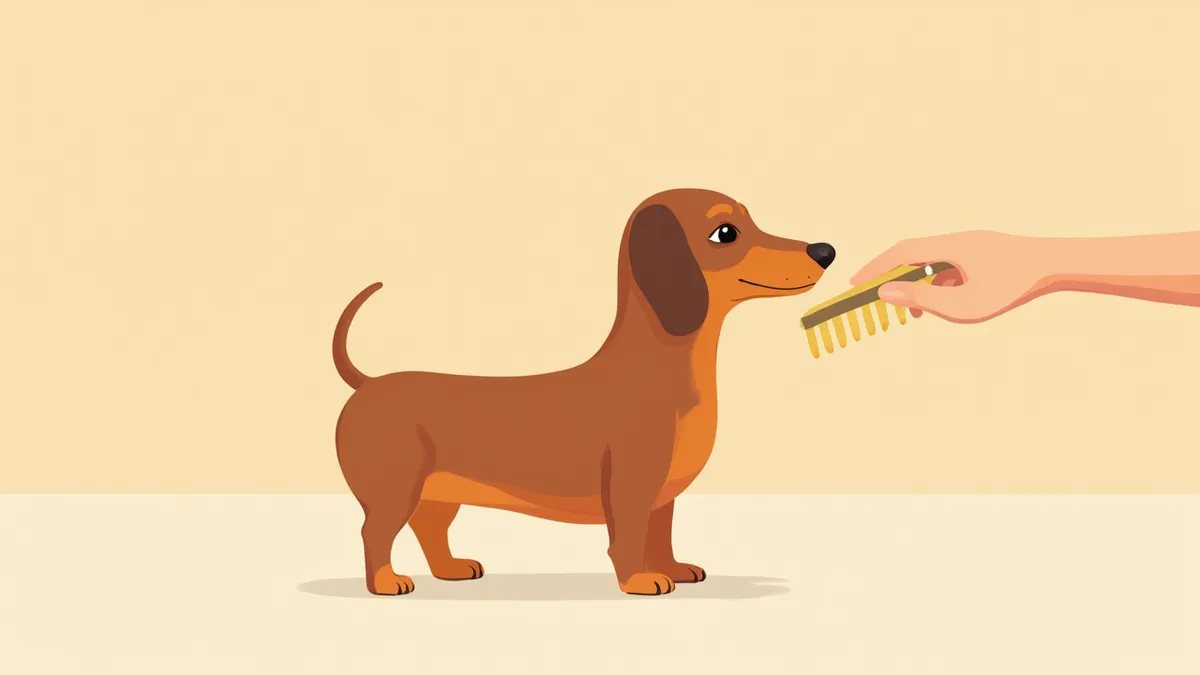
A dachshund being brushed by its owner.
Dachshunds come in three coat types: smooth, longhaired, and wirehaired, each requiring a completely different grooming approach. The key is to identify your dog’s coat type. Once you know which type your dog has, you can choose the right tools and establish an appropriate brushing schedule to prevent skin issues and tangles. Because Dachshunds have long backs and short legs, pay special attention to their belly and armpit areas.

What Coat Type Does My Dog Have?

Dachshunds come in three distinct coat types that are easily distinguished by appearance. - Smooth: Short, sleek, and glossy fur that lies close to the skin. - Longhaired: Soft, flowing long fur, with particularly longer hair on the ears, tail, and back of the legs. - Wirehaired: A double coat consisting of a rough, stiff outer layer and a soft undercoat, characterized by distinctive eyebrows and a beard. Each coat type is genetically distinct and differs in shedding amount, tendency to tangle, and skin sensitivity.

Coat-Specific Grooming Comparison at a Glance

ItemSmooth coatLong coatWire coat
Brushing frequency1–2 times a week3–4 times a week2–3 times a week
Bathing frequencyEvery 4–6 weeksEvery 3–4 weeksEvery 4–6 weeks
Main toolsRubber brush / chamois glovePin brush / combSlicker / stripping knife
Trimming neededAlmost noneTidy paws / tailStripping (every 2–3 months)
Matting riskLowHighMedium
SheddingHeavy (fine hairs)MediumLight

There are individual differences, so adjust while observing your dog's skin and coat condition

Smooth-Coated Dachshund Care
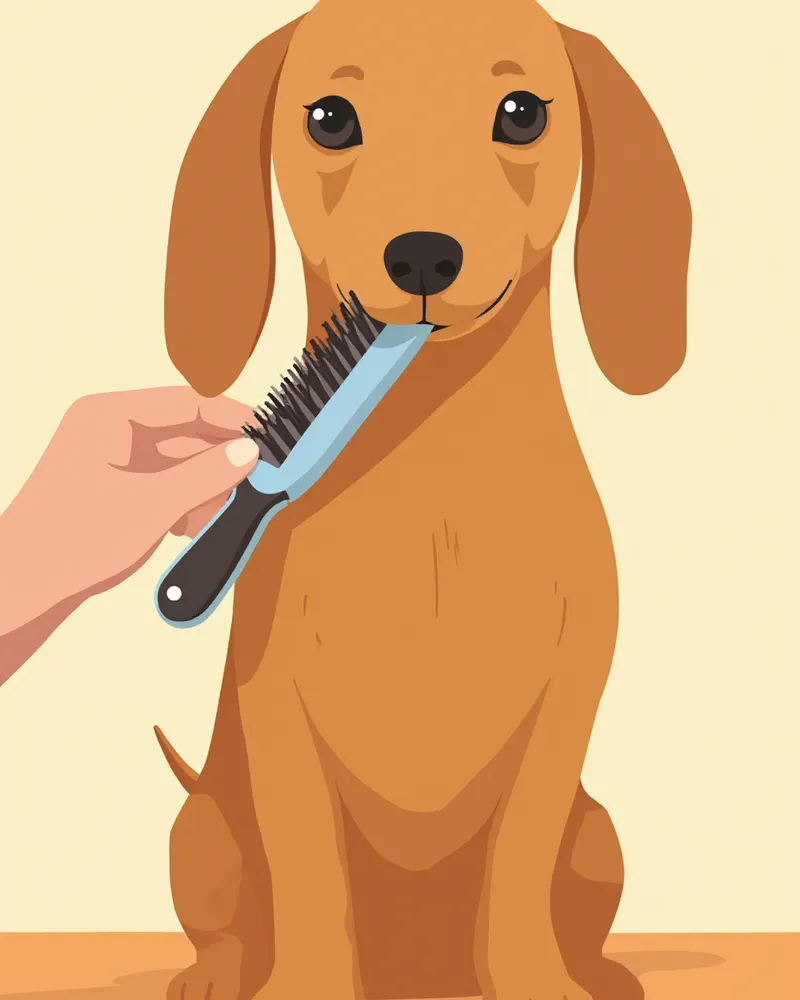
Many people assume that short-haired Dachshunds are low-maintenance because of their short coats, but they actually shed a surprising amount of fine undercoat. - Rubber brush: Gently lifts and removes dead hair; use 1–2 times per week. - Fine-bristle glove or microfiber cloth: Use for a final pass to add shine. - Bathing: Every 4–6 weeks, using lukewarm water and a hypoallergenic shampoo. For healthy skin, bathing isn’t about doing it more often—it’s about sticking to an appropriate schedule. Over-bathing can strip the skin’s natural oils and compromise its protective barrier, so it’s generally recommended to avoid washing too frequently. After walks, simply wiping the paws and drying the body with a towel is usually sufficient.
A short-haired Dachshund being brushed with a rubber brush.

Longhaired Dachshund Care

Long-haired Dachshunds require the most grooming effort among the three coat types. While their flowing, long fur is undeniably charming, neglecting it for just a few days can lead to tangles behind the ears, in the armpits, and on the inner hind legs. - Two-step brushing with a pin brush and comb: First, smooth the topcoat with a pin brush, then use a comb to detangle down to the undercoat. - Apply detangling spray before brushing to reduce static electricity and friction. - Regularly trim the hair on the paw pads, tail, and around the anus with scissors. Bathing a dog with existing tangles can cause the fur to mat tightly when wet, making it much harder to remove. Always brush thoroughly before bathing.

Wirehaired Dachshund Care

Wirehaired Dachshunds have a double coat consisting of a harsh outer layer and a soft undercoat. Trimming this coat with regular scissors or clippers can soften the hair, cause fading, and eliminate its characteristic wiry texture. - Stripping: Removing dead outer coat hairs by hand or with a stripping knife, performed every 2–3 months - Slicker brush: Brushing 2–3 times per week to prevent undercoat tangles - Eyebrows and beard: Wiping daily to remove food and tear stains It is best to have a professional groomer perform stripping initially. Once you have learned the technique, you can try doing it at home.
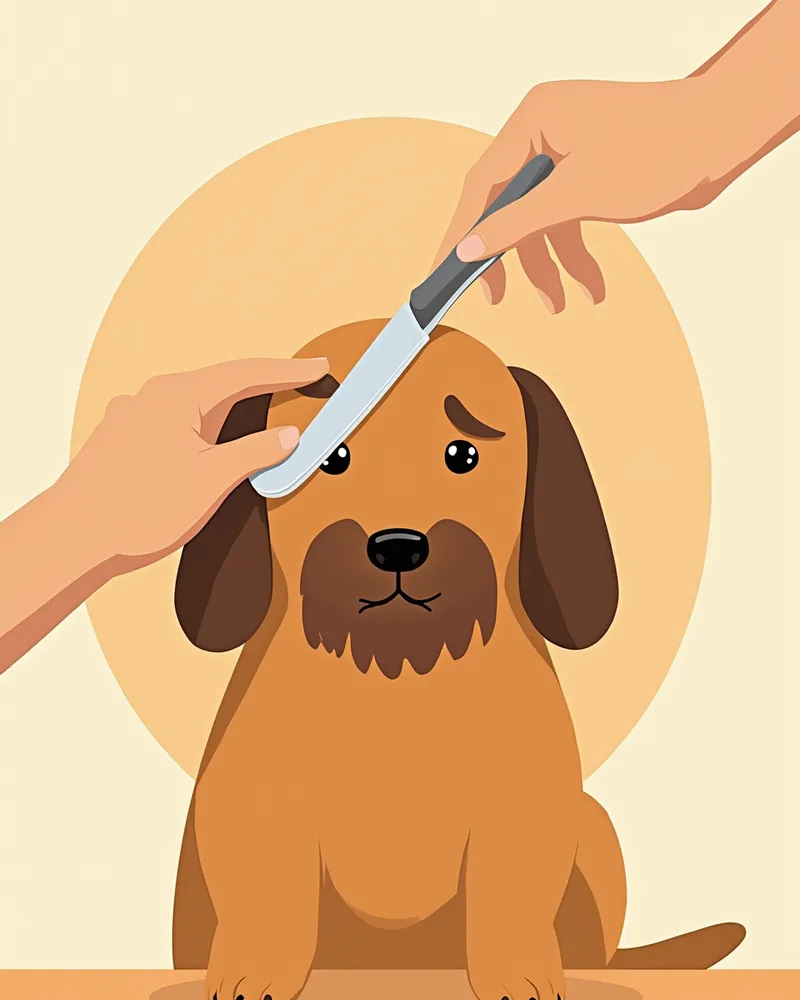
A Wirehaired Dachshund undergoing strip grooming.

Areas Never to Neglect During Dachshund Grooming

Due to their floppy ears, short legs, and long backs, Dachshunds have specific areas that require consistent attention, regardless of coat type. - Ears: The enclosed nature of their floppy ears limits airflow, increasing the risk of otitis externa. Clean the ears with an ear-cleaning solution once or twice a week. - Nails: Their short legs result in less natural wear, causing nails to grow quickly. Check them every two to three weeks. - Anal glands: Express them or have them checked at a grooming salon every four to six weeks. - Belly and armpits: These areas experience frequent friction due to the dog’s long back. Inspect them carefully during brushing. Pay particular attention to ear care, as neglect can lead to chronic otitis externa.

Common Skin Issues in Dachshunds
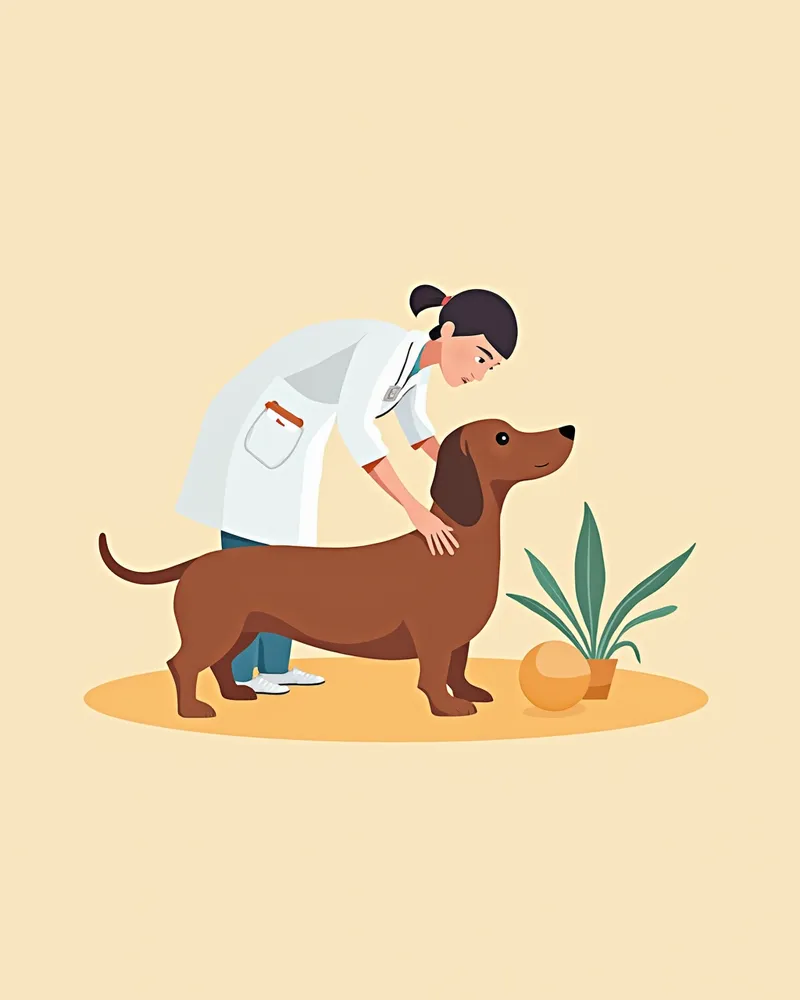
Dachshunds can develop skin issues just like other breeds, and their long backs and short legs make areas with skin folds and frequent friction—such as the armpits, belly, and groin—particularly prone to problems. Veterinary dermatology textbooks report the following conditions commonly affecting these folded areas: - Malassezia (yeast) dermatitis: Frequently occurs in folded areas like between the toes and armpits, characterized by redness, oily exudate, scaling, and a foul odor. - Allergic (atopic) dermatitis: Presents with itching, redness, and self-inflicted damage (hair loss) from repetitive licking. - Intertriginous hyperpigmentation and lichenification: Chronic atopy and friction in the armpits and groin can cause the skin to thicken and darken. - Seborrhea (oily skin and scaling) tendency: May be accompanied by oiliness, scaling, and odor. If you notice redness, dandruff, foul odor, or hair loss during grooming, these may indicate a skin disease rather than a simple cosmetic issue, so a veterinary examination is necessary.
A veterinarian examining the skin of a dachshund

Back-Supporting Grooming Postures Are Also Important

Dachshunds are a chondrodystrophic breed with a very high incidence of intervertebral disc disease (IVDD). Avoiding positions that strain the back during grooming is an important aspect of care. - When placing the dog on the grooming table, support both the chest and hindquarters with both hands while lifting. - Do not allow the dog to stand on its hind legs while brushing. - After bathing, prevent the dog from jumping on slippery bathroom floors. - Trim the hair between the paw pads to prevent slipping. If you are concerned about joint or disc health, learn more in the Dachshund IVDD Guide.

Reviewed by a veterinarian

Dr. Tony — Punnawat Phongkittirak

Dr. Tony — Punnawat Phongkittirak

Veterinarian

A veterinarian who majored in veterinary medicine at Khon Kaen University, Thailand, and completed the IVSA program at North Carolina State University in the United States. Drawing on clinical experience at animal hospitals, he works in the pet healthcare field and is dedicated to building a digital care environment that connects pet parents with veterinarians.

Frequently Asked Questions

Is it really not okay to trim a Wirehaired Dachshund's coat with scissors?
While it’s not strictly forbidden, using scissors to trim the hair can soften the tips, causing the coat to lose its natural crisp texture and fade in color. If your dog isn’t being shown and is kept as a household pet, scissoring is acceptable. However, it is widely accepted that stripping promotes healthier coat growth.
What should I do if my Dachshund’s long hair is severely tangled?
Generously spray detangling spray on dry fur, gently work it through with your hands, and then comb with a slicker brush. Cutting out tangles can leave bald patches, and pulling too hard may injure the skin. For severely matted fur, avoid forcing it and instead have it safely removed at a grooming salon.
Do short-haired dachshunds need to go to the groomer too?
While not strictly necessary, we recommend visiting a groomer every 4 to 6 weeks for anal gland expression, nail trimming, ear cleaning, and paw hair trimming. If you’re comfortable performing all of these tasks at home, you can maintain your pet’s hygiene without needing to visit a grooming salon.
How often should you bathe a Dachshund?
For healthy skin, bathing every 4–6 weeks is appropriate for short-haired and wire-haired dogs, while long-haired dogs should be bathed every 3–4 weeks. Bathing too frequently can strip away natural oils, weakening the skin barrier, whereas bathing too infrequently may lead to dandruff and unpleasant odors. If your dog has a skin condition, it’s best to follow the bathing schedule prescribed by your veterinarian using medicated shampoo.
My dachshund really hates grooming. What should I do?
The key is to keep sessions short and frequent, ensuring they’re positive experiences. Start with just one to two minutes of brushing, then end with a treat, and gradually increase the time over time. It’s also important to familiarize your pet with the tools beforehand, such as letting them sniff the brush. If you notice any signs of pain or discomfort, it could indicate disc or joint issues, so please consult your veterinarian for an evaluation.

Share

Related Guides

References

[1] Hnilica KA, Patterson AP, Small Animal Dermatology: A Color Atlas and Therapeutic Guide, 4th Ed

[2] Miller WH, Griffin CE, Campbell KL, Muller and Kirk's Small Animal Dermatology, 7th Ed

[3] Ettinger SJ, Feldman EC, Textbook of Veterinary Internal Medicine, 8th Ed - Dermatology Chapter

This information is based on veterinary literature and does not replace diagnosis or treatment. Please consult a veterinarian for specific health concerns.

Metapet Co., Ltd. | CEO: Park Sung-yong | Business Reg. No. 417-88-02562 | Seoul, South Korea | Customer Center

Dachshund Grooming by Coat Type: Smooth, Long & Wirehaired | Meongsiljang