
Like
Share
멍실장
웰시코기 건강 관리 — 디스크·비만 예방 가이드

Welsh Corgi Health Care — Guide to Preventing Disc Disease and Obesity

JointBreed HealthMeongsiljang Veterinary Advisory Board

Due to their long backs and short legs, Welsh Corgis are prone to intervertebral disc disease and obesity. We’ve compiled everything you need to know—from key health concerns and how to assess your dog’s body condition score, to weight management through diet and exercise.

What Health Issues Are Welsh Corgis Vulnerable To?

A healthy Welsh Corgi, known for its short legs and long back
The Welsh Corgi is a small-to-medium breed known for its long back and short legs, making it particularly susceptible to disc disease (intervertebral disc disease) and obesity. The most critical aspect of care is weight management. Exceeding the ideal weight places significantly more strain on the spine compared to other breeds, so maintaining both a healthy weight and spinal health is essential. There are two varieties, the Pembroke and the Cardigan, but both share similar health risks due to their elongated body structure.

Top 4 Diseases Welsh Corgis Should Watch Out For

If you’re a Welsh Corgi owner, it’s important to be aware of the following conditions.
Intervertebral Disc Disease (IVDD): Chondrodystrophic breeds with short legs, like the Welsh Corgi, are prone to early degeneration of the intervertebral discs, making them susceptible to disc disease. When a degenerated and weakened disc herniates into the spinal canal, it can compress the spinal cord and cause neurological symptoms. Repeated activities that jolt the spine, such as climbing stairs or jumping, can increase the risk.
Obesity: Canine obesity is a very common health issue, with an estimated 25–60% of adult dogs being overweight or obese. Welsh Corgis are a breed that requires consistent weight management. Obesity can exacerbate conditions by increasing the burden on joints and discs.
Hip Dysplasia: This condition occurs when the hip joint does not fit together properly, which can lead to pain and gait abnormalities.
Degenerative Myelopathy: This is a neurological disease known for causing a gradual decline in nerve function, primarily in the hind legs, during the senior years. If you notice your dog’s gait becoming increasingly unstable, it’s advisable to have them undergo a neurological examination.

Disc Disease — The Biggest Health Risk for Welsh Corgis
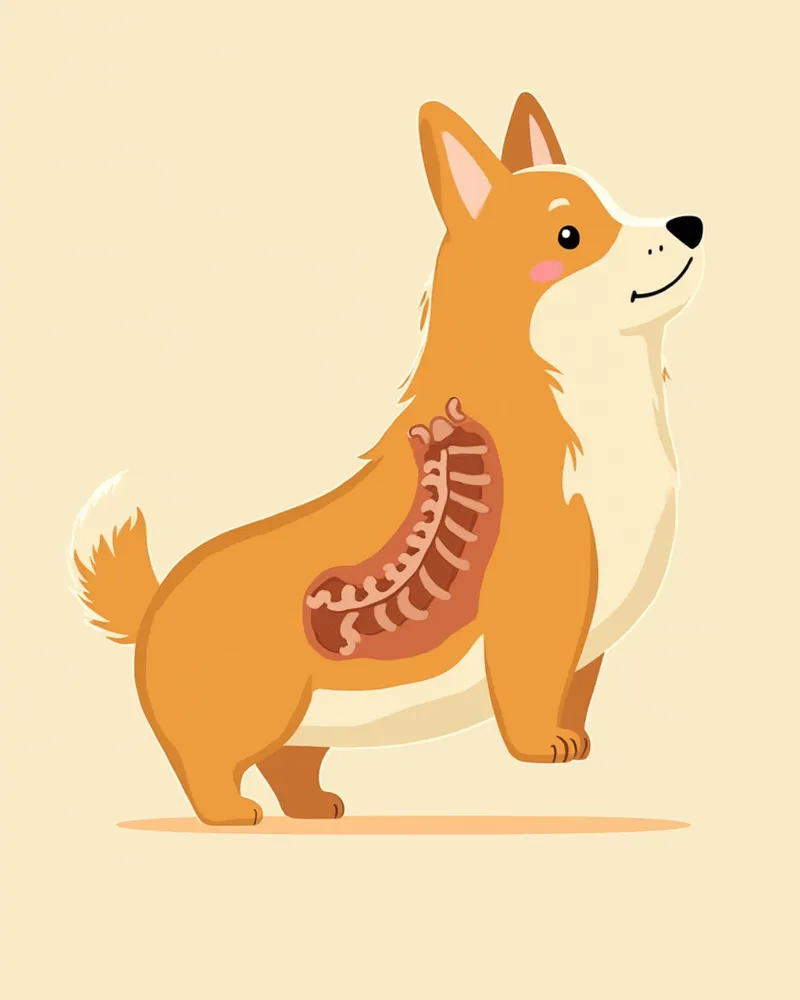
Intervertebral disc disease is the condition that Welsh Corgi owners need to watch out for most. Breeds like the Welsh Corgi, with their short legs and long backs, are classified as chondrodystrophic breeds, which are predisposed to early degeneration of the intervertebral discs. When a disc weakens, it can bulge or herniate between the vertebrae, pressing on the spinal nerves. Symptoms can range from mild pain in the early stages to severe hindlimb paralysis in advanced cases.
Why prevention is crucial: Once a disc is damaged, it rarely heals completely. Simply reducing stair use and preventing your dog from jumping on and off sofas or beds can significantly lower the risk.
An educational illustration showing the location of intervertebral discs in the spine of a Welsh Corgi

Visit a Veterinary Clinic Immediately If You Notice These Symptoms

If you notice any of the following symptoms, please visit a veterinary clinic as soon as possible: • Dragging the hind legs or being unable to place them properly • Showing severe pain when the back or lower back is touched • Suddenly refusing to move and curling up • Losing control over urination or defecation Disc disease can lead to rapid progression of nerve damage, so starting treatment early has a significant impact on recovery. If symptoms appear, it's best to go to the vet as quickly as possible rather than waiting to see if things improve.

Obesity Risk and How to Check Body Condition Score
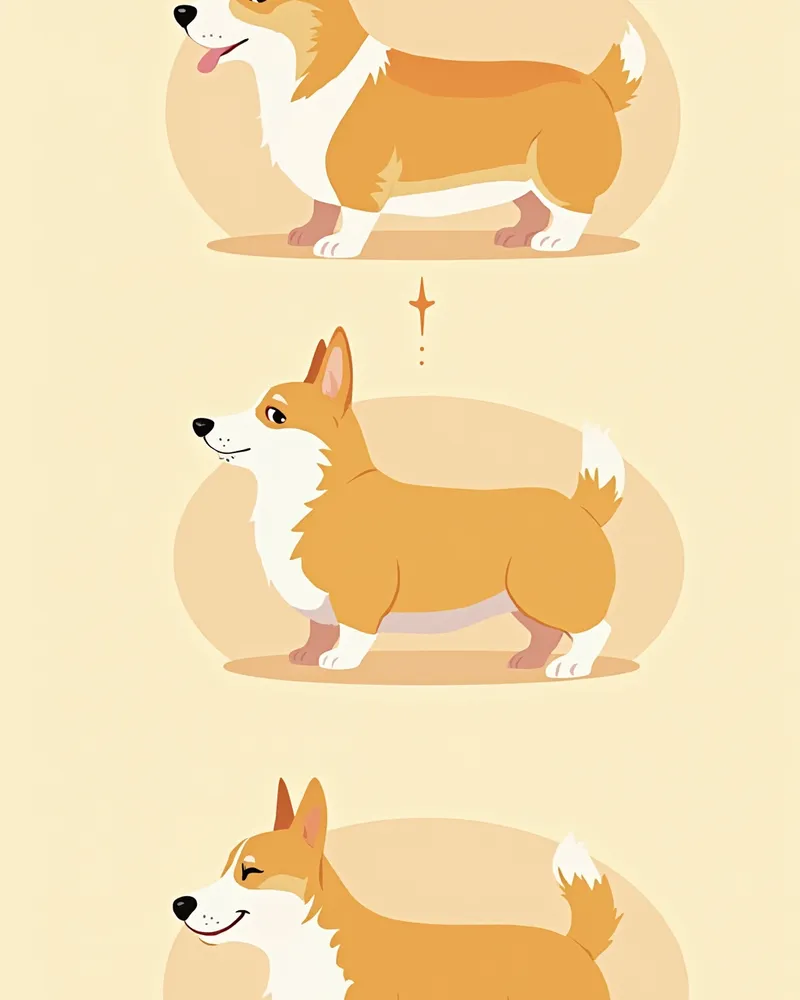
Corgis have a strong appetite and spend most of their time indoors, making them prone to rapid weight gain. Obesity increases the load on the spine, which can worsen disc disease, and it can also exacerbate existing joint conditions. You can assess your dog’s condition using the Body Condition Score (BCS) scale, which ranges from 1 to 9.
Ideal weight (4–5 points): The ribs can be felt with a slight covering of fat, and a visible waistline is present when viewed from above.
Mildly overweight (6 points): The ribs are covered by a thin layer of fat but are still easily felt. A waistline is present but not prominent.
Moderately overweight (7 points): The ribs are difficult to feel due to a thick layer of fat, and the waistline is no longer visible. For every point above the ideal range, the dog’s weight is approximately 10–15% higher than ideal.
Obese (8–9 points): The ribs cannot be felt at all, and the abdomen is distended. At this stage, it is important to consult a veterinarian to develop a weight-loss plan.
A body condition scoring guide comparing normal-weight and overweight Welsh Corgis

Weight Management — Dietary Control Is Key

The first step in weight management for Welsh Corgis is precise dietary control.
Measuring Food Portions: The recommended amounts on dog food bags are based on average activity levels. If your Corgi spends a lot of time indoors and has a lower activity level, it may be appropriate to feed slightly less than the recommended amount. Determine the exact portion size by consulting with your veterinarian, taking into account your dog’s body condition score and overall health status.
Limiting Treats: Keep treats to a minimum so they don’t exceed a small percentage of your dog’s total daily caloric intake, and avoid feeding human food.
Weight-Management Diets: If weight loss is necessary, consult your veterinarian about switching to a weight-management diet. Generally, during weight loss, the diet is adjusted to provide adequate protein to minimize muscle loss while reducing body fat.

Exercise and Daily Care — Protecting the Back Is Essential

Exercise is an essential part of keeping your Welsh Corgi healthy.
Recommended exercise: Regular daily walks on flat ground are ideal, as long as they’re not too strenuous. Swimming is also a great low-impact activity that helps burn calories without putting stress on the joints.
Movements to avoid: Climbing stairs, jumping off sofas or beds, and vigorous fetch games can place significant strain on the spine and discs. Installing ramps or step aids for stairs can greatly reduce back stress in everyday life.
Weight loss pace: Losing weight too quickly can lead to muscle loss. It’s important to consult with your veterinarian to set appropriate weight loss goals and gradually reduce weight over time.
A Welsh Corgi enjoying a walk on flat ground with its owner.

Check These in Addition to Disc Disease and Obesity

In addition to monitoring for disc disease and obesity, please regularly check the following in Welsh Corgis: • Eye health: They may develop progressive retinal atrophy. If your dog has trouble seeing in the dark or bumps into objects, schedule an ophthalmologic examination. • Von Willebrand’s disease: This is a hereditary disorder that impairs blood clotting. A blood test must be performed before any surgery to confirm status. • Regular check-ups: We recommend spinal and joint examinations every six months once your dog reaches five years of age.

Reviewed by a veterinarian

Dr. Tony — Punnawat Phongkittirak

Dr. Tony — Punnawat Phongkittirak

Veterinarian

A veterinarian who majored in veterinary medicine at Khon Kaen University, Thailand, and completed the IVSA program at North Carolina State University in the United States. Drawing on clinical experience at animal hospitals, he works in the pet healthcare field and is dedicated to building a digital care environment that connects pet parents with veterinarians.

Frequently Asked Questions

What is the ideal weight for a Welsh Corgi?
Welsh Corgis vary in skeletal size, so relying solely on weight can be misleading. A Body Condition Score (BCS), on a 9-point scale, is a more accurate indicator, with a healthy score being 4 or 5. A healthy body shape is indicated when you can lightly feel the ribs and see a waistline when viewed from above. Have your veterinarian assess your dog's body condition score.
Should I completely prevent my Corgi from using stairs?
While it’s not strictly necessary to ban these activities entirely, it’s best to minimize them whenever possible. Rapidly jumping up or down places significant strain on the discs. Installing a ramp or carrying your pet up and down stairs are excellent alternatives.
How much does disc surgery for a Welsh Corgi cost?
The cost of disc surgery varies significantly depending on the clinic, location, and stage of the disease. For the most accurate estimate, it’s best to consult directly with the veterinary clinic where your pet is being treated. If you have pet insurance, be sure to check your coverage details as well.
Is it okay to suddenly reduce my pet’s food if they’ve gained weight?
Suddenly reducing your pet’s food intake can lead to nutritional imbalances or muscle loss. It’s safer to consult with your veterinarian and gradually decrease portions over 2–4 weeks, or transition to a weight-management formula. Rapid weight loss can cause muscle wasting, so it’s important to reduce calories steadily and slowly.

Share

Related Guides

References

[1] Brisson BA. Intervertebral disc disease in dogs. Vet Clin North Am Small Anim Pract. 2010;40(5):829-858.

[2] Burkholder WJ. Use of body condition scores in clinical assessment of the provision of optimal nutrition. J Am Vet Med Assoc. 2000;217(5):650-654.

[3] German AJ. The growing problem of obesity in dogs and cats. J Nutr. 2006;136(7 Suppl):1940S-1946S.

[4] Mather T, Chalmers H, Bhatti S. Clinical Medicine of the Dog and Cat, 4th Ed, Chapter 26: Management of the Obese Dog or Cat. CRC Press, 2023.

[5] Fascetti AJ, Delaney SJ. Applied Veterinary Clinical Nutrition, 2nd Ed, Chapter 9: Nutritional Management of Body Weight. Wiley-Blackwell, 2023.

[6] Smolders LA et al. Intervertebral disc degeneration in the dog. Part 1: Anatomy and physiology of the intervertebral disc and characteristics of intervertebral disc degeneration. Vet J. 2013;195(3):282-291.

[7] Robertson ID. The association of exercise, diet and other factors with owner-perceived obesity in privately owned dogs from metropolitan Perth, WA. Preventive Veterinary Medicine. 2003;58(1-2):75-83.

This information is based on veterinary literature and does not replace diagnosis or treatment. Please consult a veterinarian for specific health concerns.

Metapet Co., Ltd. | CEO: Park Sung-yong | Business Reg. No. 417-88-02562 | Seoul, South Korea | Customer Center

Welsh Corgi Health: Preventing Disc Disease and Obesity | Meongsiljang