Like
Share
멍실장
포메라니안 기관허탈 단계별 완벽 가이드

The Complete Stage-by-Stage Guide to Tracheal Collapse in Pomeranians

RespiratoryBreed HealthMeongsiljang Veterinary Advisory Board

We’ve broken down tracheal collapse, a common condition in Pomeranians, into stages 1 through 4. We explain the symptoms, diagnosis, and key care points for each stage in a way that’s easy for pet owners to understand.

What Is Tracheal Collapse in Pomeranians?

A veterinarian gently examining the neck area of a Pomeranian.
Tracheal collapse is a progressive, degenerative cartilage disorder of the respiratory tract that commonly affects toy and small-breed dogs. Since Pomeranians belong to this group, they require particular vigilance for this condition. The disease occurs when the cartilaginous rings supporting the trachea—the airway through which air passes—become weakened and flatten. The most critical factor is the stage of the disease. Management strategies and prognosis vary significantly depending on whether the condition is in stage 1, 2, 3, or 4, so accurately determining your Pomeranian’s current stage is the essential first step. If your dog has begun coughing with a characteristic “goose-honking” sound, it is time to have their condition evaluated.

Why Are Pomeranians Prone to Tracheal Collapse?

Tracheal collapse is common in small and toy breeds like Pomeranians. Although the exact cause remains unclear, it is known to result from weakened and degenerated tracheal cartilage due to a deficiency in the structural components that support it. According to veterinary textbooks, tracheal collapse is a progressive degenerative cartilage disease frequently seen in toy and small-breed dogs. Symptoms such as coughing can worsen when additional triggers like obesity, excitement, stress, strenuous exercise, or hot and humid environments are involved. Clinical signs typically become more apparent in middle-aged dogs and older, usually after eight years of age, and the condition is reported slightly more often in females than in males.

Stage-by-Stage Comparison at a Glance (Stages 1–4)

Tracheal collapse is classified into four stages based on the degree of airway narrowing observed during endoscopy. As the stage increases, the tracheal lumen becomes progressively narrower, making it more difficult to manage with medication and care alone.

Comparison Chart of Tracheal Collapse Stages in Pomeranians

ItemGrade 1 (Mild)Grade 2 (Moderate)Grade 3 (Severe)Grade 4 (Most Severe)
Tracheal lumen narrowingLess than 25% reductionAbout 50% reductionAbout 75% reductionComplete obstruction (double lumen forms in some cases)
Main symptomsMild coughCoughing/panting during exerciseCoughing even at rest, possible cyanosisSevere respiratory distress/fainting
Treatment directionWeight/environment managementStart medicationMedication + intensified lifestyle managementConsider surgery (stent)
UrgencyLowModerateHighVery high

The grade is confirmed by the veterinarian via tracheal endoscopy. Even at the same grade, symptom severity varies by individual condition.

Stage-by-Stage Symptom Checklist

Check your Pomeranian’s daily behavior to see which stage they may be approaching.
Stage 1 signs: Occasional “honking” coughs only when excited or pulling on the leash
Stage 2 signs: Prolonged panting and more frequent coughing during walks or climbing stairs
Stage 3 signs: Coughing even at rest, and gums may turn bluish after exercise
Stage 4 signs: Labored breathing at rest, fainting or collapsing even after short walks
If two or more signs apply, it’s a good idea to have your dog evaluated for stage assessment.
A Pomeranian panting in the living room

Seek Emergency Care Immediately If You See These Signs

If you notice any of the following signs, your pet may be experiencing stage 3–4 worsening or an acute episode. Seek care at a 24-hour veterinary clinic immediately, even in the middle of the night. - Breathing with an open mouth and making wheezing or gasping sounds - Gums or tongue turning purple or blue - Sudden loss of consciousness or collapse after excitement - Coughing that does not stop for more than 30 minutes During transport, keep your pet calm, quiet, and cool by holding them gently to minimize stress.

Diagnosis and Treatment Directions by Stage
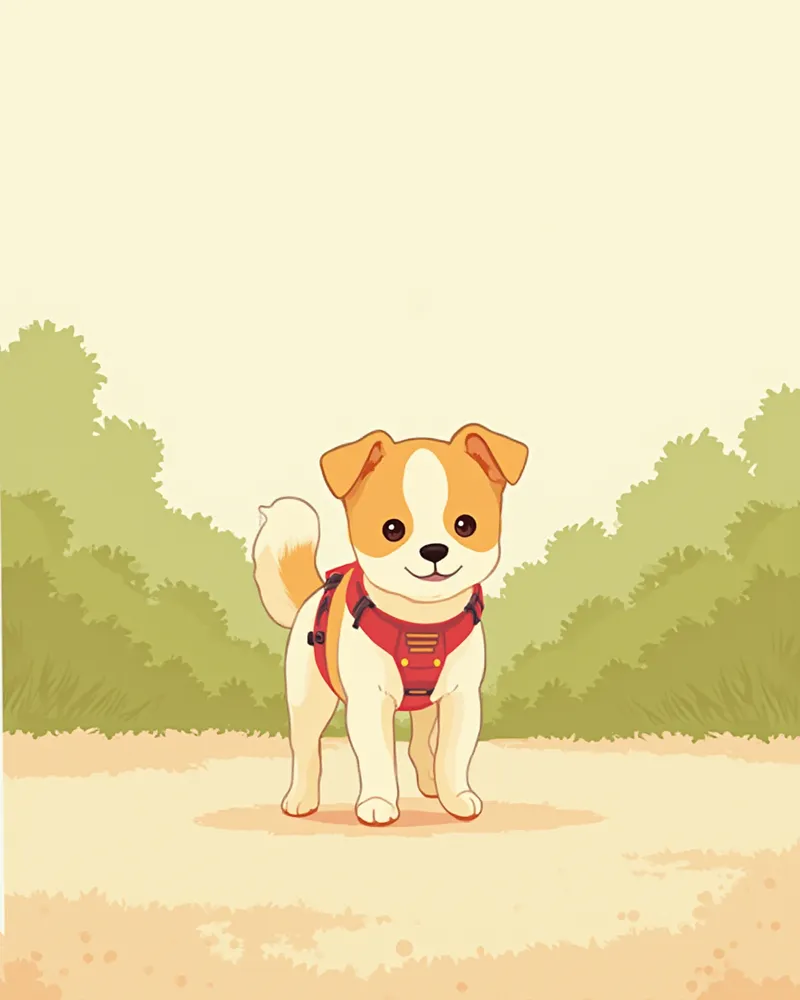
Stages 1 and 2 can often be suspected based on chest X-rays and auscultation alone. If stages 3 or 4 are suspected, or if surgery is being considered, a tracheal endoscopy is performed to confirm the exact stage and location (whether in the neck or chest). Treatment varies by stage. For stages 1 and 2, environmental management is key, including weight loss, using a harness instead of a collar, and avoiding irritants. From stage 3 onward, veterinarians prescribe cough suppressants, sedatives, and short-term steroids based on the pet’s weight. Exercise restriction is also a basic management principle, and activities in hot, humid conditions should be avoided. In stage 4, tracheal stent placement or external support surgery may be considered.
A small dog walking while wearing a harness

Daily Care Points for Pomeranian Owners

Even without considering the stage, simply managing daily care well can slow down the progression.
Weight Management: Obesity increases pressure on the airways. Maintain a weight where the ribs can be lightly felt.
Harness Use: Switch from a collar (choke chain) to a chest harness.
Environmental Temperature and Humidity: Avoid going out on hot or humid days, and maintain a cool and comfortable indoor environment.
Reducing Excitement: Separate your pet when guests visit and minimize stimuli that trigger barking.
Blocking Irritants: Minimize exposure to smoke, strong odors, and aerosol products that can irritate the airways.

Common Oversights by Pomeranian Owners

Stages 1 and 2 are often dismissed as “just occasional coughing,” but tracheal collapse is a progressive, degenerative disease that’s hard to reverse once it advances. That’s why it’s important to work with your veterinarian to monitor progression through regular chest X-rays and auscultation, and to seek prompt re-evaluation if the coughing becomes more frequent.

Reviewed by a veterinarian

Dr. Tony — Punnawat Phongkittirak

Dr. Tony — Punnawat Phongkittirak

Veterinarian

A veterinarian who majored in veterinary medicine at Khon Kaen University, Thailand, and completed the IVSA program at North Carolina State University in the United States. Drawing on clinical experience at animal hospitals, he works in the pet healthcare field and is dedicated to building a digital care environment that connects pet parents with veterinarians.

Frequently Asked Questions

Can tracheal collapse in Pomeranians be completely cured?
While a complete cure may be difficult, we can slow the progression of the disease and manage symptoms. If early management begins in stages 1 or 2, many pets can live comfortably without significant discomfort for the rest of their lives.
At what stage of the disease should surgery be considered?
For dogs in late stage 3 or stage 4 that do not respond to medication and environmental management, we may consider placing a tracheal stent or performing external tracheal support surgery. The veterinarian will determine whether surgery is appropriate based on the results of an endoscopic examination.
What should I do at home if my pet is coughing severely?
Help calm your pet and move them to a cool, quiet space. Gently support their chest to keep them comfortable, but if symptoms persist or their gum color changes, seek veterinary care immediately.
Is it okay to take my pet for a walk?
In the treatment of tracheal collapse, restricting exercise is one of the key management principles. The intensity of exercise should be adjusted under the guidance of a veterinarian, depending on the stage and condition of the disease. Exercise in hot and humid environments should be avoided due to the high risk of overheating. If exercise is permitted, use a harness, walk slowly during the cooler morning or evening hours, and stop immediately if the dog begins to pant excessively.
Is anesthesia risky for Pomeranians with tracheal collapse?
Because their airways are delicate, these dogs face a higher risk of anesthesia complications even during routine surgeries and dental procedures. For any procedure requiring anesthesia, have the severity of their tracheal collapse assessed beforehand and choose a veterinary clinic equipped with respiratory monitoring capabilities.

Share

Related Guides

References

[1] Clinical Medicine of the Dog and Cat, 4th Ed - Tracheal Collapse Chapter

[2] Canine and Feline Respiratory Medicine, 3rd Edition

[3] Small Animal Critical Care Medicine, 3rd Ed - Tracheal Collapse

[4] Tangner CH, Hobson HP. A retrospective study of 20 surgically managed cases of collapsed trachea, Vet Surg 11:146

This information is based on veterinary literature and does not replace diagnosis or treatment. Please consult a veterinarian for specific health concerns.

Metapet Co., Ltd. | CEO: Park Sung-yong | Business Reg. No. 417-88-02562 | Seoul, South Korea | Customer Center

Tracheal Collapse in Pomeranians: A Stage-by-Stage Guide | Meongsiljang