

7 Key Management Strategies for Feline Asthma and Product Selection Criteria Highlighted by Veterinarians
Feline asthma is a lower airway disease characterized by chronic bronchial inflammation that makes breathing difficult. We’ve gathered all the essential management strategies and selection criteria, from veterinarian-recommended inhaled steroids to environmental control, in one place.
What Is Feline Asthma? What Owners Need to Know First

Suspect Asthma If You Notice These Symptoms

Go to the Emergency Room Immediately If You See These Symptoms
If your cat is breathing with its mouth open, has blue-tinged gums or tongue, or is breathing very rapidly and irregularly, take it to a 24-hour emergency animal hospital immediately. This could indicate a life-threatening oxygen deficiency. During transport, keep your cat calm and quiet inside its carrier to avoid causing stress.
3 Criteria for Choosing a Management Plan

BEST ① Inhaled Corticosteroids — First Choice for Long-Term Management
BEST ② Rescue Bronchodilators — Emergency Relief for Acute Attacks
BEST ③ Cat-Specific Inhaler Spacer — Correct Usage Steps
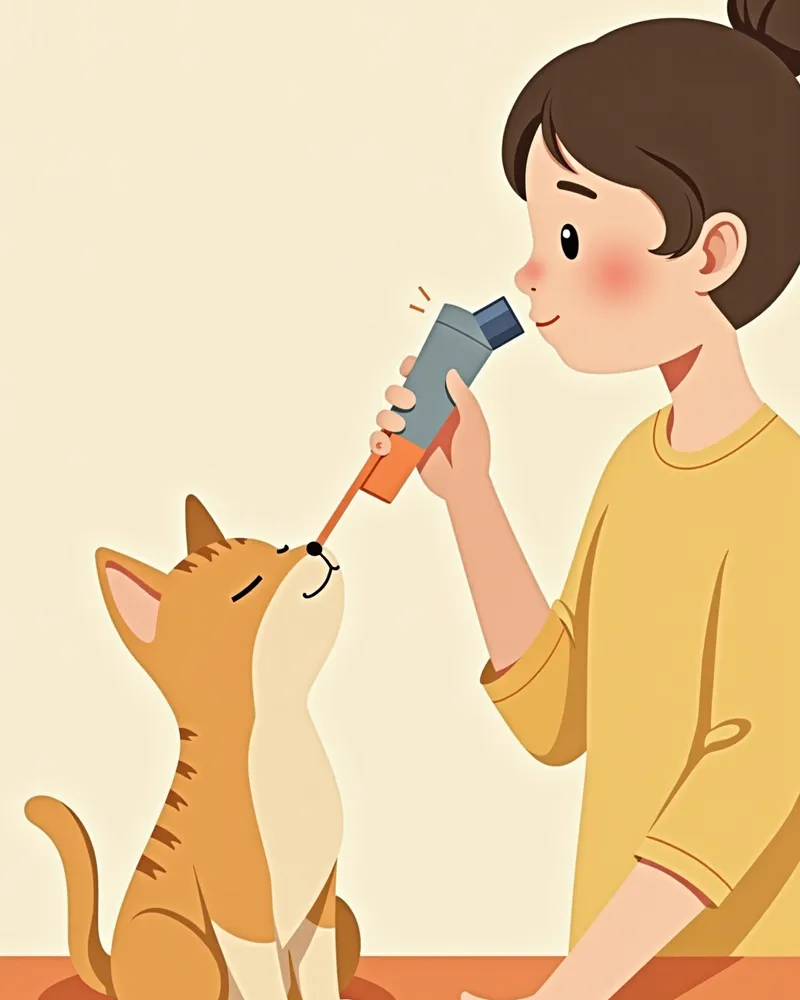
BEST ④ Environmental Management — Removing Triggers Is as Important as Medication
Comparison of Asthma Management Methods at a Glance
| Item | Inhaled steroid | Oral steroid | Rescue bronchodilator |
|---|---|---|---|
| Main use | Long-term inflammation control | Severe long-term management | Acute attack relief |
| Systemic side effects | Low | Moderate to high | Low |
| Veterinary prescription | True | True | True |
| Suitable situation | Routine management | When inhalation is difficult | Attack emergency |
| Owner training needed | Required (mask adaptation) | Not required | Required (mask adaptation) |
All medications must be used only after a veterinary prescription
Be Sure to Check This When Using Oral Steroids Long-Term
Oral steroids (prednisolone) are highly effective, but long-term use can lead to diabetes or heart failure. Veterinary emergency medicine textbooks specifically emphasize this risk. Regularly monitor blood sugar and heart function, and discuss with your veterinarian whether switching to an inhaled formulation is possible.
Reviewed by a veterinarian

Dr. Tony — Punnawat Phongkittirak
VeterinarianA veterinarian who majored in veterinary medicine at Khon Kaen University, Thailand, and completed the IVSA program at North Carolina State University in the United States. Drawing on clinical experience at animal hospitals, he works in the pet healthcare field and is dedicated to building a digital care environment that connects pet parents with veterinarians.
Reviewed 2026-06-01
Frequently Asked Questions
Can feline asthma be cured?
What should I do if my cat dislikes the inhaler mask?
How can you tell the difference between feline asthma and hairball coughing?
Are there any environments that are strictly off-limits for cats with asthma?
How often should I visit the clinic after my pet is diagnosed with asthma?
Share
Related Guides

Top Recommended Feline Bronchodilators and Selection Criteria: A Complete Guide

Best Recommendations and Selection Criteria for Monitoring Your Cat’s Respiratory Rate (RR) During Sleep for Heart Care

Best Recommendations and Selection Criteria for Monitoring Your Dog’s Respiratory Rate (RR) During Sleep for Heart Care

7 Warning Signs of Dehydration and Kidney Damage in Dogs That Veterinarians Warn About

7 Best Products for Managing Canine Chronic Kidney Disease (CKD) Recommended by Veterinarians and Selection Criteria

7 Best Products and Selection Criteria for At-Home Subcutaneous Fluid Administration in Cats Recommended by Veterinarians

5 Best Omega-3 Kidney Supplements for Cats Recommended by Veterinarians

Top 7 Prescription Renal Diets for Cats Recommended by Veterinarians and Selection Criteria

7 Best PKD Management Products for Cats Recommended by Veterinarians — From Symptoms to Care

7 Emergency Management Items for Feline Acute Kidney Failure Recommended by Veterinarians — From Causes to Treatment
References
[1] Padrid P et al., Textbook of Respiratory Disease in Dogs and Cats, Elsevier Saunders
[2] Norsworthy GD et al., The Veterinary Workbook of Small Animal Clinical Cases, Wiley-Blackwell
[3] Drobatz KJ et al., Feline Emergency and Critical Care Medicine, 2nd Ed, Wiley-Blackwell, 2010
[4] Valenciano AC, Cowell RL, Small Animal Cytologic Diagnosis Canine and Feline Disease, 2nd Ed, Elsevier, 2020