Like
Share
멍실장
말티즈 그루밍과 털 관리 가이드

Maltese Grooming and Coat Care Guide

Skin & CoatBreed HealthMeongsiljang Veterinary Advisory Board

Maltese dogs are a long-haired breed that requires daily brushing. We’ve put together the essential grooming tips every owner should know, including how to prevent tangles, care for tear stains, and manage grooming schedules.

What Is Maltese Grooming?

A Maltese sitting on a grooming table
Maltese dogs are a small breed with almost no undercoat, featuring a single layer of long hair that resembles human hair. Daily brushing is essential. Although they shed minimally, tangles can pull on the skin and lead to inflammation, so it’s crucial not to skip brushing—even for just five minutes a day. Tear stains and discoloration around the mouth are also key areas Maltese owners should check and care for daily.

Understanding the Characteristics of Maltese Hair

Maltese hair grows straight without curls, and unlike many other breeds, it has a single coat with no undercoat. While this means they shed very little, their hair grows continuously. Like human hair, it will keep getting longer if not trimmed and can tangle easily with even minor friction. Areas prone to frequent rubbing—such as behind the ears, under the armpits, and on the inner thighs—are especially susceptible to matting. Please pay extra attention to these spots when brushing.

Daily Grooming Checklist

Investing just 5 to 10 minutes a day in your Maltese can make a noticeable difference in their skin and coat health. - Brushing: Use a slicker brush and comb to gently detangle the entire coat, following the natural hair growth. - Eye area: Wipe away tear stains with gauze moistened in warm water. - Around the mouth: Remove any leftover food particles after meals using water or a pet-specific wipe. - Perianal area: Check for fecal matter and trim the hair short with scissors for cleanliness. - Paw pads: Inspect the hair between the toes and trim it to prevent slipping. - Inside the ears: Check for any odor or redness.
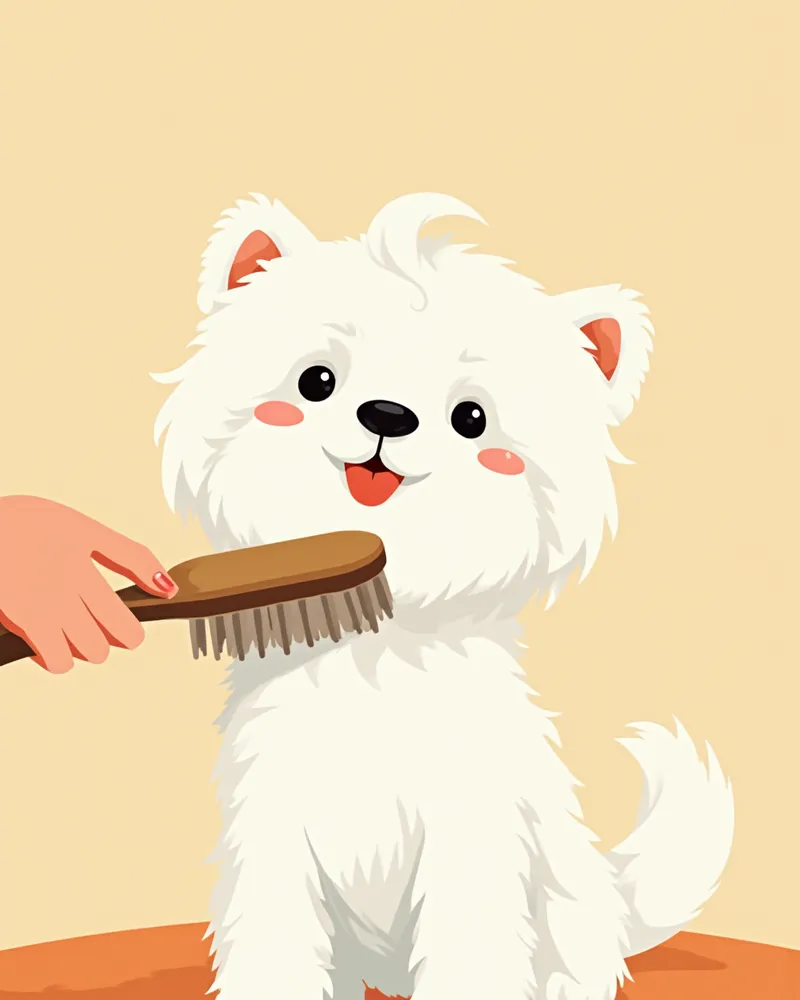
A Maltese being brushed with a slicker brush

Proper Brushing Order and Tools

For Maltese, the standard brushing routine involves two steps: first using a slicker brush, then a metal comb. Use the slicker brush to detangle larger knots, then run the metal comb through to check for any remaining tangles. If you find a knot, never pull on it; instead, hold the base of the knot with your fingers and gently work it out from the ends. If the knot is too tight, it’s safer to trim it with clippers rather than scissors. Forcing scissors through a tight knot can easily cut the skin.

Comparison of Brushing Tools

ItemSlicker BrushMetal CombPin Brush
PurposeDetangling & basic brushingFinishing & checking for knotsGrooming shine on long coats
Frequency of useDailyDaily2–3 times a week
CautionsDo not press hard against the skinKeep the fine-toothed side from touching the skinDo not use on tangled fur
Recommendation levelEssentialEssentialOptional

For a short-clipped Maltese grooming style, a slicker brush plus a comb is sufficient

Check Immediately If You See These Signs

If you notice any of the following signs during grooming, it may indicate a skin condition rather than a simple cosmetic issue. Please seek veterinary care if these symptoms persist for more than 24 hours. - Vocalizing or biting when being brushed - Repeatedly licking or scratching a specific area - Redness, discharge, or scabs on the skin beneath the fur - A sudden increase in dandruff or patchy hair loss - Foul odor from the ears or frequent head shaking

How to Manage Tear Stains in Maltese
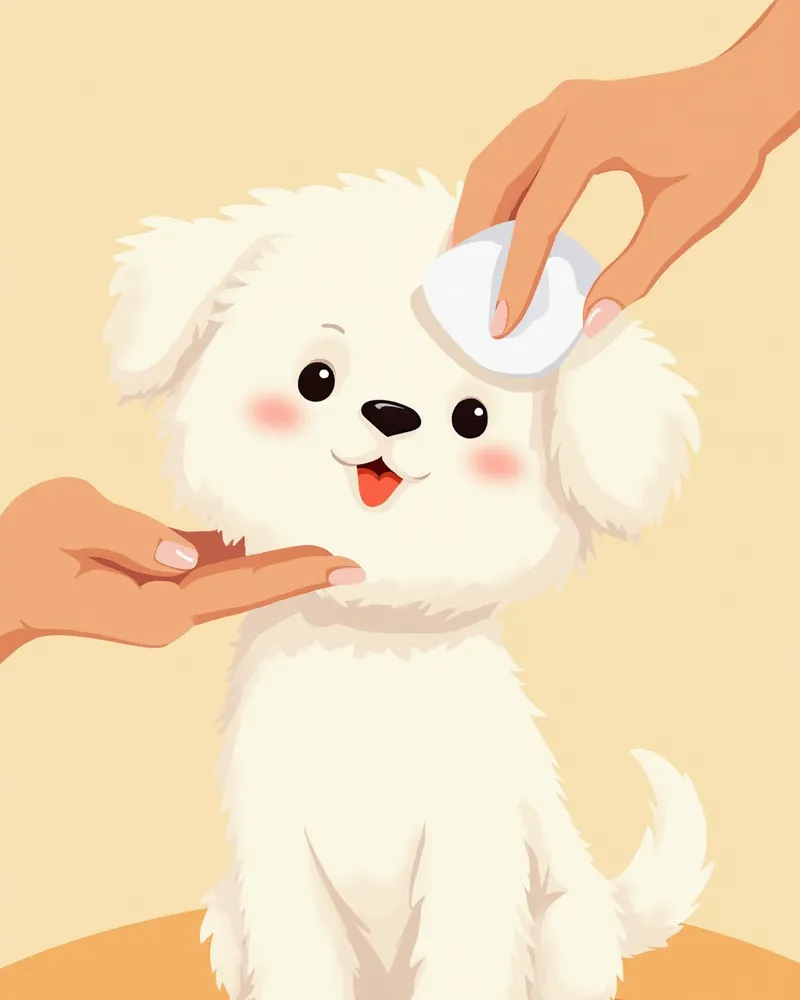
Tear staining is a common concern for Maltese owners. Because their coats are white, the porphyrin pigment in tears appears more noticeable, but this is a natural occurrence that varies in degree among all Maltese. Gently wipe the area under the eyes daily with warm water or a specialized cleaner, and keep the hair around the eyes trimmed short to prevent it from irritating the eyes. If you notice a sudden increase in tearing, yellowish discharge, or frequent eye rubbing, consult a veterinarian, as these symptoms may indicate conjunctivitis or entropion.
A close-up of a Maltese having its eye area gently wiped clean.

Bathing and Grooming Schedule

Because their white coats show dirt easily, many Maltese owners bathe their dogs frequently. However, what truly matters is not the frequency itself, but choosing a low-irritant, dog-specific shampoo suited to your dog’s skin, rinsing it thoroughly, and ensuring the coat is completely dried. Veterinary dermatology textbooks explain that regular bathing with cleansing, hypoallergenic shampoos can help remove skin irritants, allergens, and microbes, thereby reducing skin issues and itching. - Bathing frequency: Generally once every 2–3 weeks (using a low-irritant, dog-specific shampoo), adjusted according to skin condition - Drying: Completely dry the coat down to the roots using lukewarm air - Partial grooming: Clean the paw pads, anal area, and around the eyes every 2–3 weeks - Full grooming: Once every 6–8 weeks Leaving the coat damp can lead to fungal or bacterial dermatitis, so be sure to finish drying completely.

Common Skin Issues in Maltese

According to veterinary dermatology textbooks, Maltese are mentioned as a small breed, along with Lhasa Apsos, Pekingese, Pomeranians, and Poodles, that is more prone to certain immune-mediated skin reactions, such as vaccine- or injection-site vasculitis. Other common skin issues in dogs include atopic dermatitis, allergic dermatitis, Malassezia dermatitis, and secondary pyoderma (bacterial infection), which are not limited to specific breeds and can occur in many dog breeds. Therefore, the time spent directly observing and touching your dog’s skin during grooming is essentially a regular check-up. If you notice even minor changes, take photos to show your veterinarian during your next visit, as this can greatly assist with diagnosis.

Reviewed by a veterinarian

Dr. Tony — Punnawat Phongkittirak

Dr. Tony — Punnawat Phongkittirak

Veterinarian

A veterinarian who majored in veterinary medicine at Khon Kaen University, Thailand, and completed the IVSA program at North Carolina State University in the United States. Drawing on clinical experience at animal hospitals, he works in the pet healthcare field and is dedicated to building a digital care environment that connects pet parents with veterinarians.

Frequently Asked Questions

Do Maltese dogs really not shed?
Although they have very little undercoat and shed less than many other breeds, skipping brushing allows loose hair to tangle with the rest of the coat and form mats. Don’t reduce brushing just because they shed less.
Can tear stains be completely eliminated?
It’s difficult to completely eliminate tear stains structurally. However, by trimming the hair around the eyes, wiping them daily, reviewing your pet’s diet, and conducting tests to check for patency of the nasolacrimal duct, you can identify the underlying cause and significantly lighten the stains. If the discoloration suddenly darkens or is accompanied by signs of eye irritation, it’s best to consult a veterinary ophthalmologist to determine the cause before administering any medication on your own.
Is it okay to give my pet a shorter haircut in the summer?
That’s fine. However, if you trim it too short—less than 1 cm—the risk of sunburn and skin exposure increases. For summer, we recommend keeping the length at about 1.5 to 2 cm.
Can I use human shampoo on my pet?
No, you shouldn’t. Human and dog skin have different pH levels, so using human shampoo can disrupt your dog’s skin barrier and lead to dermatitis and itching. Please always use a shampoo specifically formulated for dogs.
Can I groom my pet at home?
Grooming your pet’s paw pads, anal area, and eye region can easily be done at home. However, for full-body grooming, it’s safer to visit a professional grooming salon every 6 to 8 weeks to avoid the risk of accidental cuts with scissors.

Share

Related Guides

References

[1] BSAVA Manual of Canine and Feline Dermatology, 4th Edition

[2] Small Animal Dermatology, 7th Edition (Muller and Kirk's)

[3] The Dog Care Handbook, Things I Wish My Vet Had Told Me

This information is based on veterinary literature and does not replace diagnosis or treatment. Please consult a veterinarian for specific health concerns.

Metapet Co., Ltd. | CEO: Park Sung-yong | Business Reg. No. 417-88-02562 | Seoul, South Korea | Customer Center

Maltese Grooming & Coat Care Guide: Tangles & Tear Stains | Meongsiljang