

Types of Feline Skin Diseases and How to Manage Symptoms
We’ve compiled a guide to common feline skin diseases, including their types and symptoms, along with situation-specific care tips and criteria for visiting the vet, all based on veterinary textbooks.
Suspect Feline Skin Disease If You See These Symptoms

Feline Skin Disease Types at a Glance
| Type | Representative Conditions | Key Characteristics |
|---|---|---|
| Allergic | Atopy, food allergies, flea allergy, eosinophilic granuloma complex | Intense itching with frequent recurrence; may present with ulcers or nodules |
| Infectious | Fungal (dermatophytosis), bacterial pyoderma | Hair loss, crusts, and pus |
| Parasitic | Ear mites, demodex mites | Itching concentrated in specific areas |
| Autoimmune | Pemphigus | Ulcers and lesions on the lips and nose |
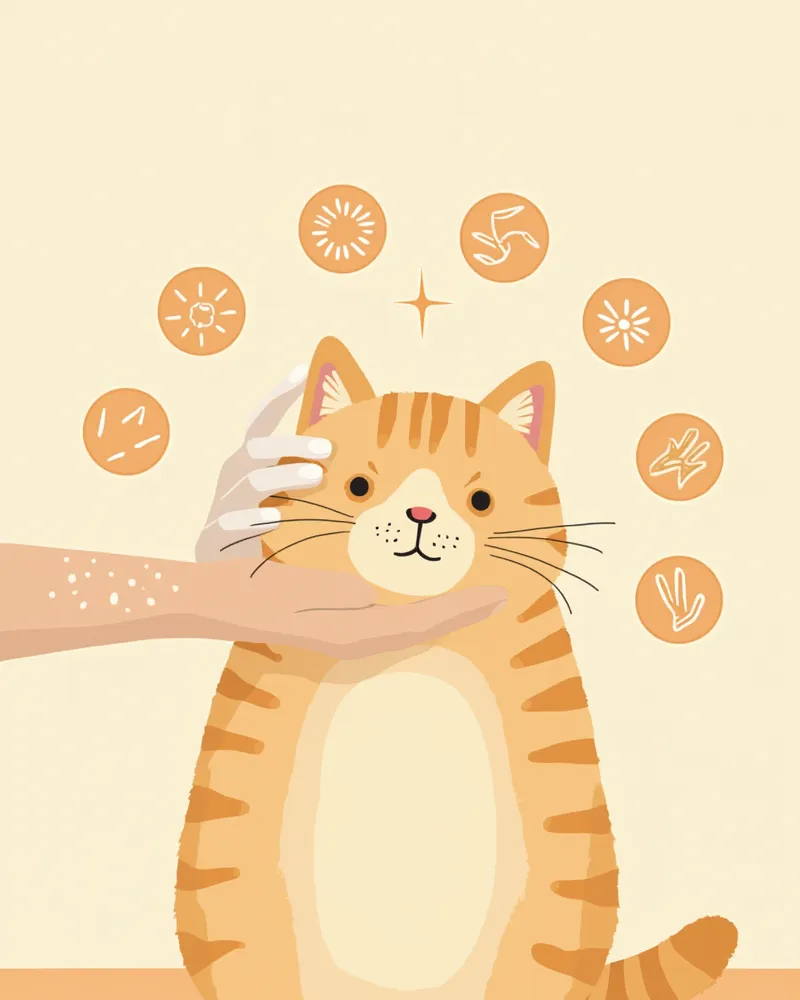
Does Your Cat Have These Symptoms?
Visit the Vet Immediately If You See These Symptoms
If you notice any of the following symptoms, please visit an animal hospital without delay: • The skin is widely inflamed and oozing pus • The face or area around the eyes is severely swollen • The area of hair loss has rapidly expanded within a day • Your pet is not eating and appears lethargic • The skin wound feels hot to the touch and is extremely painful when touched In these cases, the issue may not be a simple skin condition but could indicate a systemic infection or a severe allergic reaction, requiring prompt veterinary care.
The Most Common Cause: Allergic Dermatitis
Fungal Infections and Pyoderma That Can Be Transmitted to Humans

Veterinary Diagnosis Methods and Treatment
Caution for Human Transmission: Managing Fungal Infections
Feline dermatophytosis can be transmitted to humans. Extra caution is especially important in households with young children or elderly individuals who have weakened immune systems. • Always wash your hands thoroughly after handling an infected cat. • Frequently wash the cat’s bedding and cushions during treatment. • In multi-cat households, it is safest to isolate the infected cat. • If you notice circular red spots on your skin, consult a dermatologist.
Prevention and Care You Can Do at Home

Reviewed by a veterinarian

Dr. Tony — Punnawat Phongkittirak
VeterinarianA veterinarian who majored in veterinary medicine at Khon Kaen University, Thailand, and completed the IVSA program at North Carolina State University in the United States. Drawing on clinical experience at animal hospitals, he works in the pet healthcare field and is dedicated to building a digital care environment that connects pet parents with veterinarians.
Reviewed 2026-04-14
Frequently Asked Questions
Can cat skin diseases be transmitted to humans?
My cat keeps scratching, but I don’t see anything on its skin. Is that normal?
Are there any medications I can apply at home for skin conditions?
How long does it take to treat a cat’s skin disease?
I have multiple cats, and one of them has developed a skin condition. What should I do?
Share
Related Guides

Top 5 Medicated Dog Shampoos — For Pyoderma and Bacterial Infections

Veterinarian-Recommended Top 5 Medicated Shampoos for Canine Yeast Dermatitis — Relieves Itching and Greasiness

Top 5 Medicated Cat Shampoos Recommended by Veterinarians — Fungal Dermatitis and Fungal Care

Emergency Response and Treatment for Frostbite in Dogs and Cats

Emergency Response for Injuries During Walks

Emergency Response for Bee Stings in Dogs and Cats

Emergency First Aid for Pet Electric Shock Accidents

Emergency First Aid for Bleeding in Pets

If Your Pet Suddenly Has a Seizure — Emergency Response and When to Go to the Vet

Causes of Hairballs in Cats and Management Strategies
References
[1] Daniel O. Morris & Anette Loeffler, Pyoderma, BSAVA Manual of Canine and Feline Dermatology 4th Ed, 2019
[2] Miller, W.H., Griffin, C.E., Campbell, K.L., Muller and Kirk's Small Animal Dermatology 7th Ed, Elsevier, 2013
[3] Little, S., The Cat: Clinical Medicine and Management, Elsevier, 2012