
Like
Share
멍실장
강아지 고양이 심정지 응급 대처와 CPR 완벽 가이드

If Your Pet Collapses Suddenly — Emergency CPR Response for Dogs and Cats

HeartSymptomsMeongsiljang Veterinary Advisory Board

Cardiac arrest in pets is a critical emergency where the heart stops beating and blood circulation ceases. Starting CPR within the 3-minute golden window and immediately transporting your pet to a veterinary hospital significantly increases their chances of survival.

What Is Pet Cardiac Arrest?

A pet owner checking the pulse of an unconscious dog
Pet cardiac arrest is a critical emergency in which the heart stops contracting effectively, causing systemic blood circulation and breathing to cease. According to veterinary emergency medicine textbooks, the survival rate from cardiac arrest to hospital discharge is only about 6–7%, making it a highly fatal condition; therefore, rapid response determines the outcome. Because the brain and heart quickly suffer irreversible damage when oxygen supply is cut off, if your pet is unconscious and you cannot detect breathing or a heartbeat, you should immediately begin CPR while simultaneously contacting a veterinary hospital.

Three Stages of Cardiac Arrest Urgency

Because cardiac arrest progresses so rapidly, recognizing the signs at each stage can help you respond more quickly. The table below outlines the stages from the warning signs just before cardiac arrest to complete cardiac arrest.

Signs and Responses by Cardiac Arrest Stage

ItemStage 1 (Warning Signs)Stage 2 (Imminent)Stage 3 (Complete Arrest)
ConsciousnessDazed·slow to respondAlmost no responseCompletely unresponsive
BreathingFast and shallowGasping·intermittentStopped or agonal breathing
Gum ColorPale·grayBluishBluish-gray·white
PulseWeak and fastVery weakNot palpable
ResponseGo to the hospital immediatelyCall the hospital·prepare for transportStart CPR + transport

In Stage 3, you must begin chest compressions immediately.

Cardiac Arrest Confirmation Checklist

Before starting CPR, check the following within 10 seconds: - Consciousness: No response when calling their name or pinching the paw pad - Breathing: No visible movement of the chest or abdomen - Pulse: No heartbeat felt when placing your hand under the left armpit (behind the elbow) - Mucous membranes: Gums appear bluish-gray or pale white - Pupils: Pupils remain dilated and do not constrict when exposed to light If three or more of these signs are present, begin CPR immediately.
Checking your dog’s gum color and pupil response

Criteria for Immediately Starting CPR

If your pet is unresponsive and lacks at least two of the following—consciousness, breathing, or a pulse—begin CPR immediately. Do not hesitate for more than 10 seconds; one caregiver should start chest compressions while another calls the veterinary clinic to arrange transport. If you’re alone, keep the clinic on speakerphone to follow their instructions while continuing chest compressions.

Chest Compressions — The Core of CPR
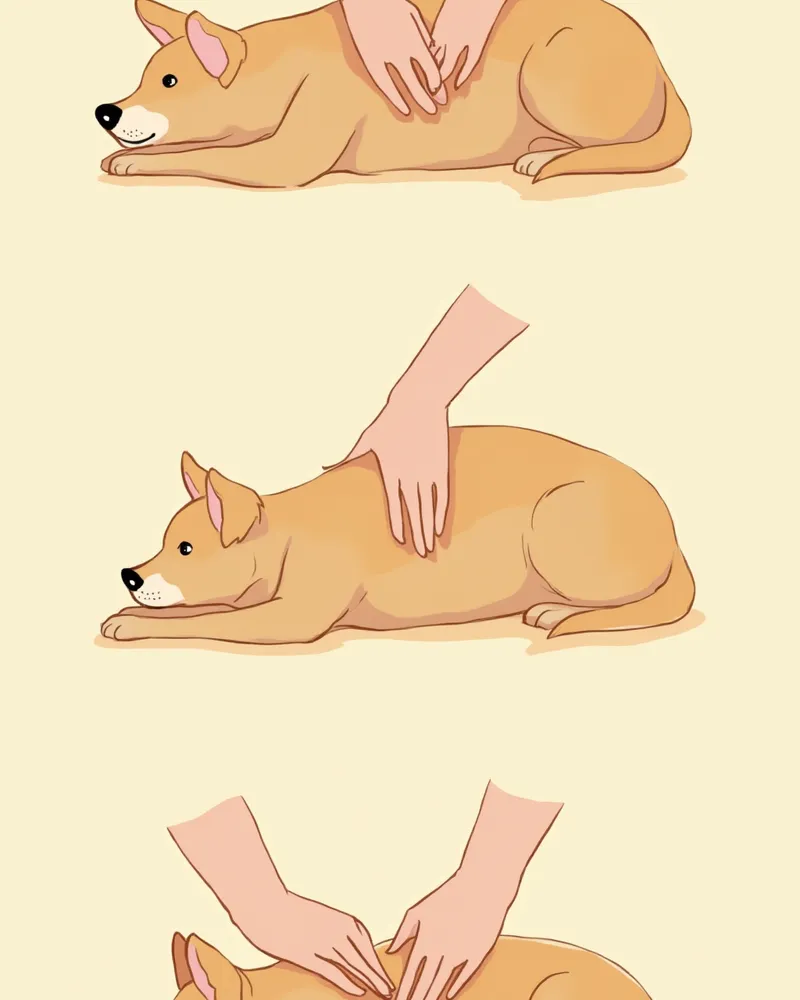
According to the veterinary emergency medicine textbook (RECOVER guidelines), the key to chest compressions is to perform them continuously at a rate of 100–120 compressions per minute and a depth of one-third to one-half the width of the chest. - Small and medium-sized dogs and cats (under 10 kg): Place the animal on its side, wrap one hand over the heart area (behind the left elbow), and compress using the thumb and fingers. - Medium to large dogs (10 kg or more): Place the animal on its side, interlock both hands over the widest part of the chest, and compress vertically. - Brachycephalic and barrel-chested breeds (e.g., Bulldogs, French Bulldogs): Place the animal in a dorsal recumbent position (on its back with the belly facing up) and compress vertically on the center of the sternum.
Proper hand placement and chest compression technique for canine CPR

Rescue Breaths and the 2-Minute Cycle

Give two rescue breaths after every 30 chest compressions. Close the pet’s mouth, cover the snout with both hands, and seal your mouth over the nostrils. Blow gently for one second, just enough to see the chest rise slightly. Blowing too hard can damage the lungs.
2-Minute Cycle Rule: Continue compressions and breaths for 2 minutes, then pause for 5–10 seconds to recheck the pulse and breathing. If there is no response, immediately begin the next cycle. Whenever possible, switch rescuers every 2 minutes to maintain high-quality compressions.

CPR Precautions for Cats and Small Dogs

According to the textbook on feline emergency medicine, it is recommended to compress a cat’s chest using circumferential compression, which involves wrapping your hand around the entire chest cavity. Use one hand to encircle the heart area, applying pressure with your thumb and the remaining fingers. For rescue breaths, deliver short, gentle breaths lasting less than one second. For small-breed dogs, whose chests are small, the one-hand encircling technique may be safer than forceful two-hand compression. For brachycephalic breeds (such as Bulldogs), lying them on their side reduces compression efficiency; therefore, it is recommended to place them in dorsal recumbency (on their back with the belly facing up) and apply vertical pressure to the center of the sternum.

Hospital Transport and Post-Cardiac Arrest Care

Even if a heartbeat returns after CPR, intensive hospital care is essential. According to veterinary internal medicine textbooks, post-cardiac arrest syndrome can occur after return of spontaneous circulation (ROSC), including ischemia-reperfusion injury, brain damage, and myocardial dysfunction, requiring continuous monitoring and specialized treatment. - During transport: Keep warm (wrap in a blanket), maintain airway patency, and continue chest compressions. - Hospital care: Oxygen therapy, intravenous fluids, antiarrhythmic medications, and monitoring of blood pressure and ECG. - After discharge: Restrict activity as directed by your veterinarian and schedule regular follow-up examinations. If heart disease is the underlying cause, also review our Heart Disease Prevention Guide.
A puppy wrapped in a blanket being transported to the animal hospital

Daily Care to Prevent Cardiac Arrest

Cardiac arrest is usually caused by an underlying condition (heart disease, respiratory disease, shock, electrocution, or poisoning). Routine care is the best prevention. - Regular cardiac check-ups: For dogs 7 years and older, perform cardiac ultrasound and X-rays every 6–12 months. - Record abnormal signs: Seek immediate veterinary care for coughing, fainting, excessive panting after exercise, or cyanosis. - Emergency contact list: Keep the phone number and directions to a 24-hour animal hospital posted on your refrigerator. - Remove hazards: Keep chocolate, xylitol, electrical cords, and small toys out of reach. - CPR simulation: Practicing hand placement and rhythm on a dummy beforehand helps you stay calm in a real emergency.

Reviewed by a veterinarian

Dr. Tony — Punnawat Phongkittirak

Dr. Tony — Punnawat Phongkittirak

Veterinarian

A veterinarian who majored in veterinary medicine at Khon Kaen University, Thailand, and completed the IVSA program at North Carolina State University in the United States. Drawing on clinical experience at animal hospitals, he works in the pet healthcare field and is dedicated to building a digital care environment that connects pet parents with veterinarians.

Frequently Asked Questions

How long should CPR be performed?
Continue without stopping until spontaneous circulation returns or you reach the hospital. Check the pulse and breathing for only 5–10 seconds every 2 minutes, then immediately resume CPR. If spontaneous circulation does not return after starting chest compressions, professional veterinary intervention is essential, so the best course of action is to transport your pet to the hospital as quickly as possible without interrupting compressions.
What should I do if a rib breaks due to chest compression?
Brain injury is far more life-threatening than a rib fracture. During cardiac arrest, inadequate compression depth is the bigger concern, so continue compressions even if you hear a crack. Rib fractures can be treated at the hospital.
How do you distinguish between cardiac arrest and fainting?
Fainting typically resolves on its own within a minute, with consciousness returning while breathing and pulse remain intact. In contrast, cardiac arrest is characterized by absent breathing or only agonal gasps, along with an undetectable pulse. If you cannot make a clear determination within 10 seconds, it is safer to begin CPR immediately.
Can CPR be effective after electrocution or drowning?
Yes, in fact, it’s even more important. Non-cardiac causes such as electric shock, drowning, and poisoning have a high chance of recovery if the underlying cause is addressed promptly. However, in cases of electric shock, ensure the power source is completely cut off before touching the affected pet to prevent the caregiver from also being electrocuted.
Can I use an AED (automated external defibrillator)?
Certain arrhythmias, such as ventricular fibrillation, require defibrillation, which should be performed by a veterinarian using veterinary-specific equipment. The best course of action for pet owners is to continue chest compressions and rescue breathing while transporting the animal to a veterinarian as quickly as possible.

Share

Related Guides

References

[1] Small Animal Critical Care Medicine, 3rd Ed (Silverstein & Hopper)

[2] Advanced Monitoring for Small Animal Emergency and Critical Care, 2nd Ed

[3] Feline Emergency and Critical Care Medicine, 2nd Ed

[4] RECOVER Initiative Clinical CPR Guidelines (2012, 2024 update)

[5] Clinical Medicine of the Dog and Cat, 4th Ed

This information is based on veterinary literature and does not replace diagnosis or treatment. Please consult a veterinarian for specific health concerns.

Metapet Co., Ltd. | CEO: Park Sung-yong | Business Reg. No. 417-88-02562 | Seoul, South Korea | Customer Center

Sudden Collapse in Dogs & Cats: Emergency CPR Guide | Meongsiljang