Like
Share
멍실장
강아지 입냄새 — 덴탈 케어 제품 비교

Dog Bad Breath — Dental Care Product Comparison

Oral HealthSymptomsMeongsiljang Veterinary Advisory Board

We’ll explore the causes of bad breath in dogs and compare four dental care products—dog toothpaste, dental chews, oral sprays, and water additives—to help you find the best option for your furry friend.

Why Does Dog Bad Breath Occur?
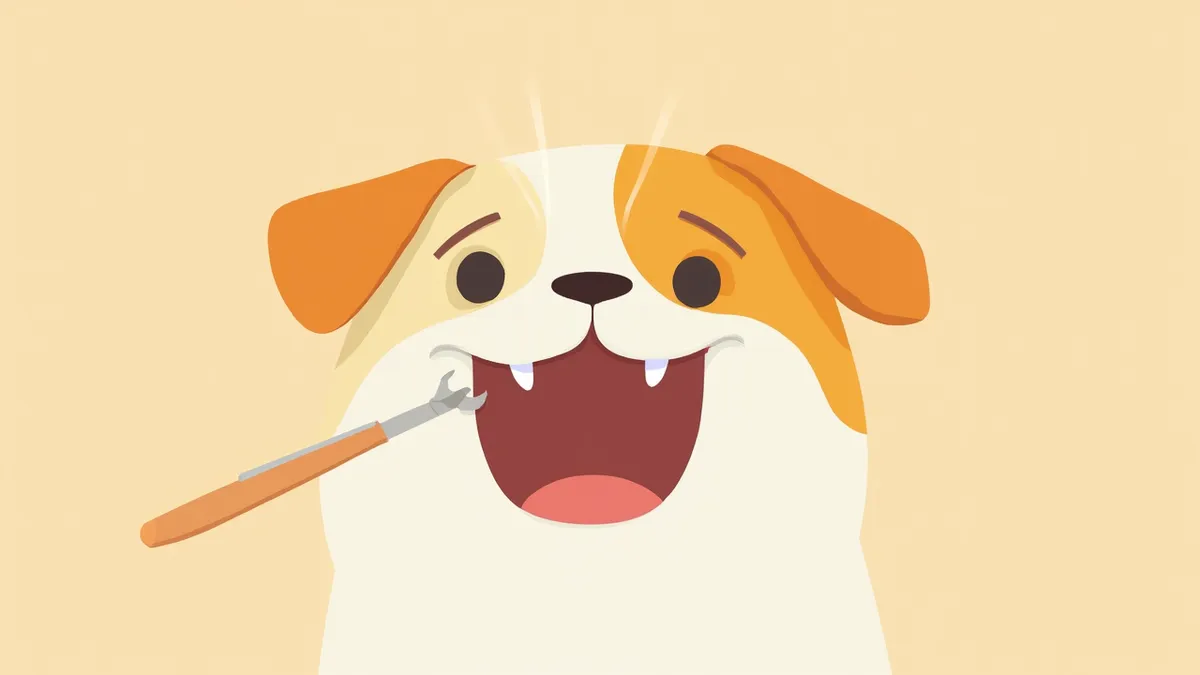
A veterinarian examining a puppy's mouth.
Dog breath is an unpleasant odor coming from the mouth or nose, most often caused by periodontal disease or bacterial overgrowth in the oral cavity. The key point is that it’s not just a smell issue—it’s a sign of dental and gum health. If the odor suddenly worsens, comes from only one side, or is accompanied by drooling or difficulty chewing food, your dog should be examined by a veterinarian for an oral check-up as soon as possible.

5 Common Causes of Bad Breath

Veterinary internal medicine textbooks identify periodontal disease as the most common cause of bad breath in dogs. As tartar builds up along the gumline, bacteria multiply on necrotic tissue and leftover food debris, producing foul-smelling compounds. Bad breath can also stem from retained food particles, oral tumors, gastrointestinal disorders (such as foreign bodies, obstructions, or inflammatory bowel disease), liver disease, and kidney disease. In particular, impaired kidney function can lead to uremia, resulting in a pungent, ammonia-like odor. The specific character of the bad breath can provide clues to its underlying cause.

These Bad Breath Odors Are Warning Signs
Rotten, putrid odor: May indicate advanced periodontal disease or an oral abscess.
Sweet, fruity scent: Could signal diabetic ketoacidosis.
Ammonia or urine-like odor: Warrants suspicion of decreased kidney function.
Odor coming from only one side: May suggest an abscess on one molar or an oral tumor.
Sudden worsening of odor: May indicate a foreign object lodged between the gums or a broken tooth.
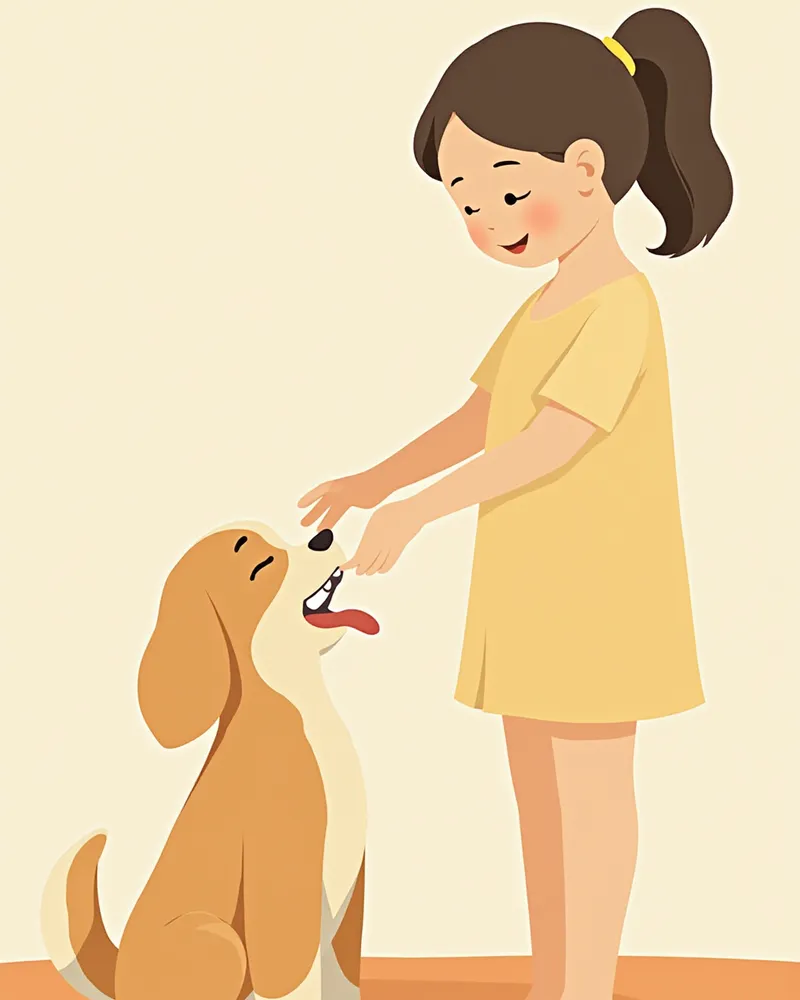
A guardian checking their dog's mouth at home

When to Go to the Vet Immediately

If your pet’s gums are red and swollen, bleeding, or if they growl in pain when you touch their mouth, or if they chew on only one side or suddenly lose their appetite, their periodontal disease may be quite advanced. Additionally, if one side of their face is swollen or there is pus under their eye, it's likely a molar root abscess, so it’s best to have them examined by a veterinarian within 24 hours.

What Types of Dental Care Products Are There?
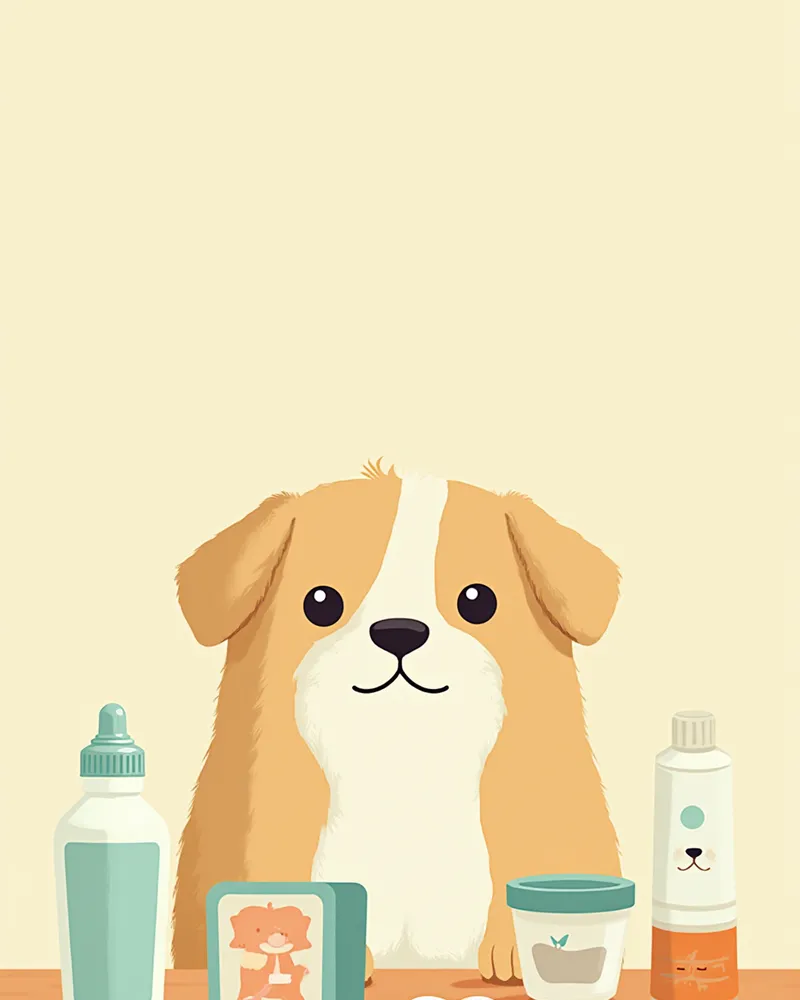
Dental care products for dogs can be broadly categorized into four types. First, toothbrushes and toothpaste are the most effective basic care tools; regular brushing is known to reduce tartar and gingivitis (inflammation of the gums). Second, dental chews serve as an auxiliary aid that can help scrape away some tartar while chewing. Third, oral sprays are supplements that temporarily reduce bacteria in the mouth. Fourth, water additives are convenient products mixed into drinking water for daily use. However, dental chews, sprays, and water additives often lack sufficient scientific evidence to support their individual efficacy. Therefore, the most effective approach is to use brushing as the foundation and employ the other products as supplementary aids.
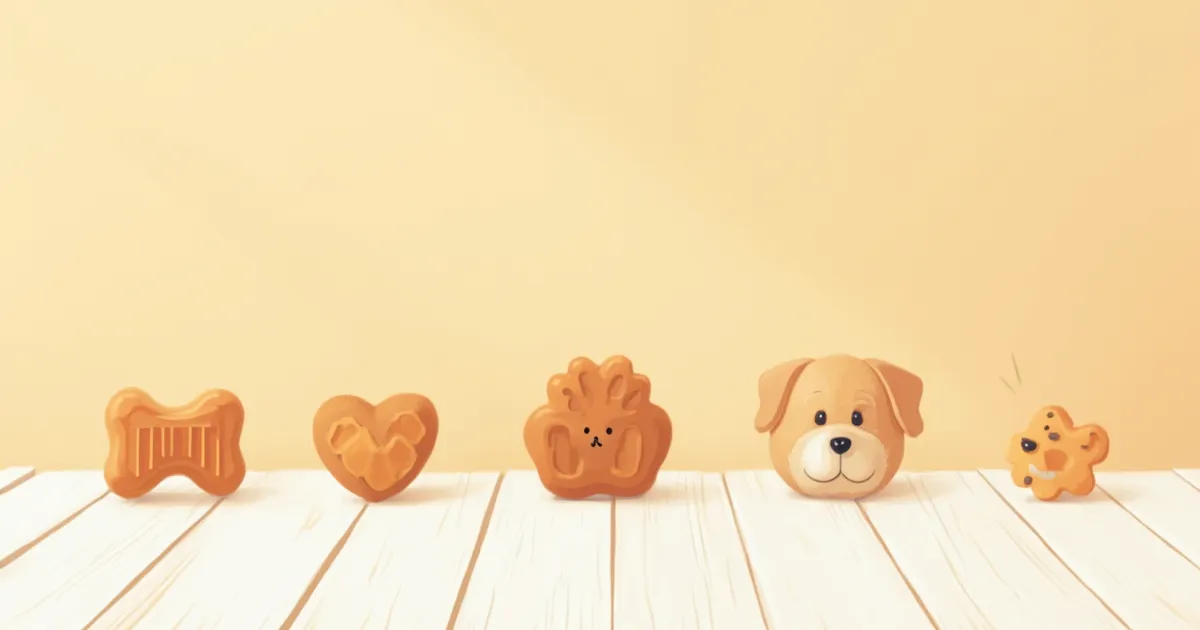
A lineup of dog dental care products neatly arranged side by side

Comparison of 4 Dental Care Products

ItemToothbrush/ToothpasteDental ChewOral SprayWater Additive
Tartar Removal EffectVery highModerateLowLow
Bad Breath Reduction EffectHighModerateHigh (temporary)Moderate
Ease of UseLowVery highHighVery high
SafetyVery safeCaution neededCheck ingredientsCheck ingredients
Recommended Frequency of UseOnce daily3–4 times a week1–2 times dailyDaily
Can Be Used AloneTrueFalseFalseFalse

Brushing alone shows sufficient effect when used on its own. The rest are best used as supplements to brushing.

Key Ingredients to Check in Dental Products

Safe

효소(Glucose Oxidase, Lactoperoxidase)

구강 내 세균 억제, 치태 형성 감소

Dosage: 치약 라벨 기준

수의치과학 교과서 권장

Safe

염화세틸피리디늄(CPC)

광범위 항균, 구취 원인균 억제

Dosage: 스프레이·워터 애디티브에 소량

치주 질환 보조 관리

High risk

자일리톨(Xylitol)

사람용 치약에 사용되는 감미료

Dosage: 강아지에게 절대 금지

저혈당·간 부전 유발

Caution

에센셜 오일(티트리 등)

일부 제품에서 향료로 사용

Dosage: 고농도 시 주의

농도 따라 독성 가능

Never Use Human Toothpaste

Human toothpaste contains ingredients that are toxic to dogs, such as xylitol, fluoride, and sodium lauryl sulfate (SLS). Even a small ingestion of xylitol can cause a rapid drop in blood sugar or liver damage. Since dogs cannot spit out toothpaste and will inevitably swallow it, you must always use products specifically formulated for dogs. Additionally, dental chews that are too hard pose a risk of tooth fractures, so it is safest to choose products recommended by veterinarians.

Starting a Dental Care Routine at Home
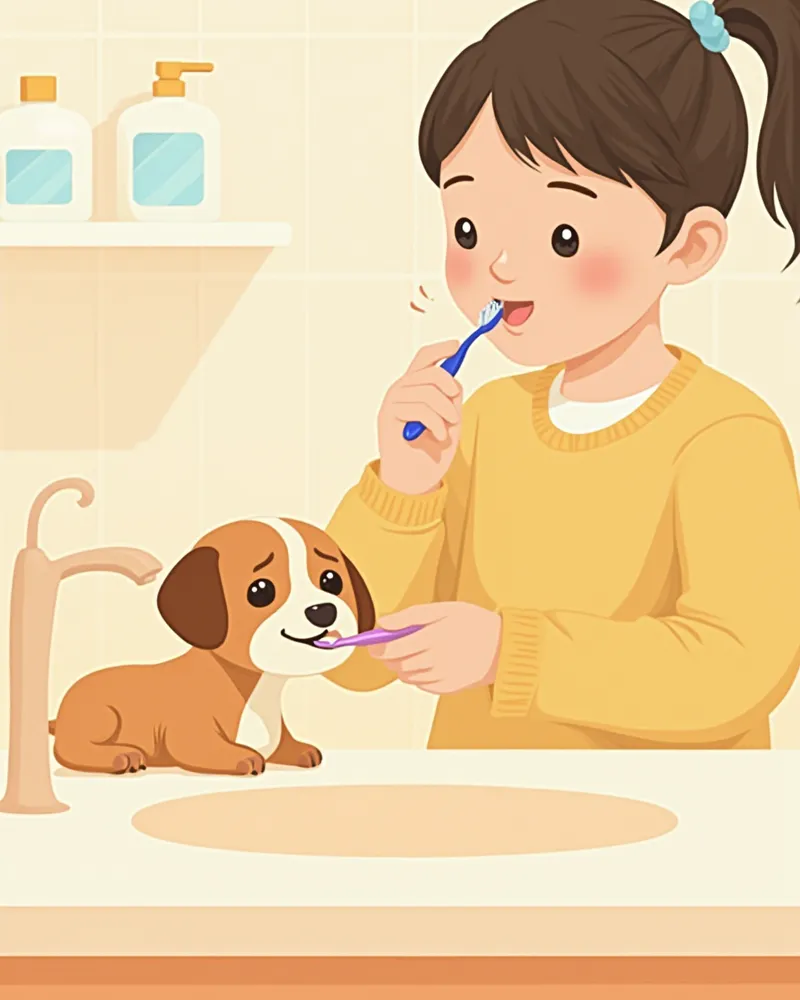
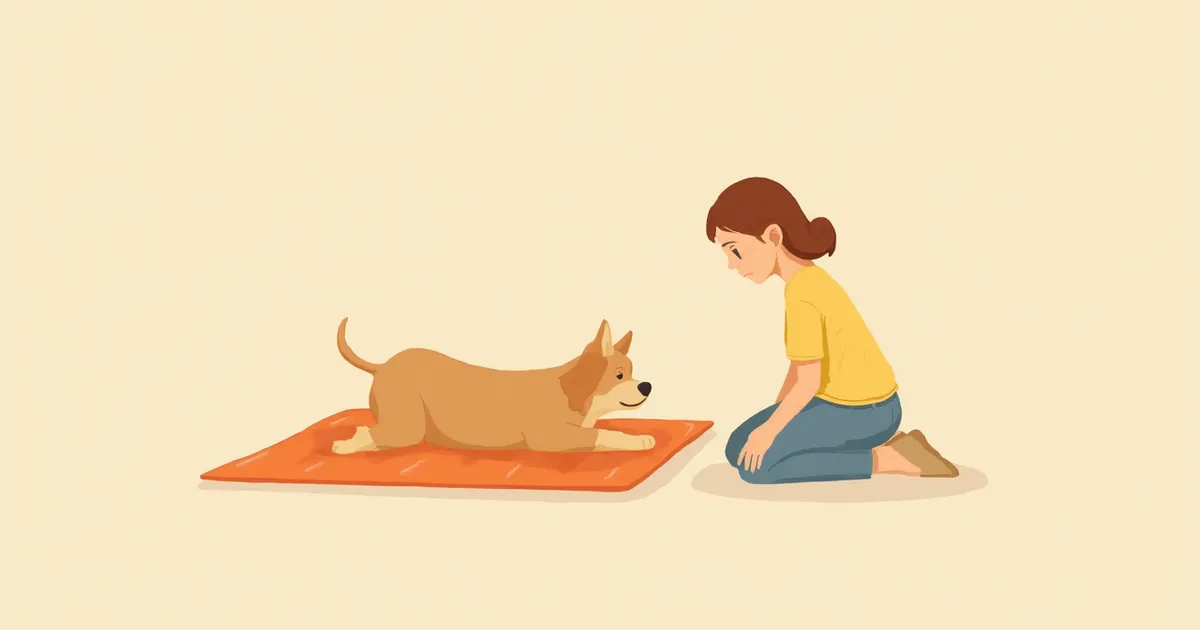
Stage 1: Adaptation Period (1–2 Weeks): Apply dog toothpaste to your finger and gently massage around your dog’s lips and gums to help them get used to the sensation.
Stage 2: Partial Brushing (2–4 Weeks): Begin brushing the outer surfaces of the canine teeth using a dog-specific toothbrush.
Stage 3: Full Brushing: Gently brush along the gumline for 1–2 minutes daily, covering the outer surfaces of the molars.
Supplementary Care: After brushing, add water additives to their drinking water or use dental chews during snack time.
For senior dogs who find brushing difficult, start by wiping their teeth with gauze to reduce stress.
A pet owner brushing their dog’s teeth

When Should Scaling Be Done?

Dental disease becomes more common with age, especially in small-breed dogs (under 5 kg) and brachycephalic breeds, so regular oral exams are recommended to monitor progression. When tartar builds up thickly along the gumline and on the molars, it cannot be removed with home care; professional scaling under anesthesia, including probing and dental radiographs, is the most accurate and effective approach. The ideal timing for the first scaling varies considerably depending on breed and home-care routine, so it’s best to decide in consultation with your veterinarian rather than relying on a fixed age. Because scaling requires general anesthesia, if you’re concerned about anesthetic risk, pre-anesthetic blood work and other assessments to rule out systemic disease can help ensure safety.

Reviewed by a veterinarian

Dr. Tony — Punnawat Phongkittirak

Dr. Tony — Punnawat Phongkittirak

Veterinarian

A veterinarian who majored in veterinary medicine at Khon Kaen University, Thailand, and completed the IVSA program at North Carolina State University in the United States. Drawing on clinical experience at animal hospitals, he works in the pet healthcare field and is dedicated to building a digital care environment that connects pet parents with veterinarians.

Frequently Asked Questions

Can giving dental chews every day replace brushing my pet's teeth?
No, dental chews can only partially remove tartar from the areas where your pet chews. They can’t effectively clean plaque from hard-to-reach spots like the inside of the canine teeth or deep along the gumline, so they can’t replace brushing. Use them only as a supplementary aid.
My dog really hates brushing his teeth—what should I do?
Don’t try to do everything at once. Instead, gradually acclimate your dog over the course of one to two weeks. Start by applying a small amount of dog toothpaste with a flavor your dog enjoys, such as chicken or beef, to your finger and letting them lick it off. Pair this with praise and treats to create positive associations.
Do water additives work?
While it offers a supportive effect by partially inhibiting oral bacteria, it does not break down tartar itself. It can be a useful supplement on days when brushing is difficult. Be sure to check that the product does not contain xylitol before purchasing.
My dog is senior, and I’m worried about the risks of anesthesia for dental scaling. Are there any alternative options?
Recently, it’s common to assess anesthesia risk through pre-anesthetic blood and heart tests before proceeding safely. Non-anesthetic scaling is not recommended by the American Veterinary Dental College because it cannot properly clean below the gumline and may even damage the teeth.
Why does bad breath disappear and then come back?
Mouth sprays or water additives may temporarily reduce bacteria and mask bad breath, but if tartar remains, bacteria will multiply again. Without removing the underlying cause—tartar—bad breath will keep recurring.

Share

Related Guides

References

[1] Notes on Canine Internal Medicine, 4th Ed — Halitosis

[2] Clinical Medicine of the Dog and Cat, 4th Ed — Periodontal Disease

[3] The Veterinary Workbook of Small Animal Clinical Cases — Case 21

[4] The Dog Care Handbook — Dental Care Chapter

This information is based on veterinary literature and does not replace diagnosis or treatment. Please consult a veterinarian for specific health concerns.

Metapet Co., Ltd. | CEO: Park Sung-yong | Business Reg. No. 417-88-02562 | Seoul, South Korea | Customer Center

Dog Bad Breath — Dental Care Product Comparison Guide | Meongsiljang