Like
Share
멍실장
고양이 가려움·과도한 그루밍 — 원인별 의심 질환 가이드

Why Is My Cat Grooming So Much? — Causes of Overgrooming and Hidden Disease Signals

Skin & CoatSymptomsMeongsiljang Veterinary Advisory Board

Excessive grooming, such as frequent scratching or obsessive licking of a specific area, can be a sign of various skin conditions in cats, including flea allergy, atopy, food allergies, and fungal infections. Here’s a summary of patterns by body part, emergency criteria, and treatment approaches based on the underlying cause.

Feline Itching and Excessive Grooming

A tabby cat licking the inside of its thigh
Feline itching can be caused by fleas, allergies, fungal infections, or bacterial infections, leading to symptoms such as repetitive scratching or obsessive licking of a specific area. What truly matters is how long and where your cat is grooming. If your cat focuses on licking one spot for more than 24 hours, or if you notice hair loss and red, flaky skin, it’s likely a sign of itching rather than normal self-care. Cats are skilled at hiding pain and discomfort, so excessive grooming is often the only clue that something is wrong.

Urgency Levels — When to Visit the Vet

We’ve divided grooming and itching severity into four levels. Quickly check the table to see which level matches your pet’s condition. As the level increases, veterinary care takes priority over home care.

Grooming and Itching Severity Scale

ItemStage 1 NormalStage 2 ObserveStage 3 Checkup recommendedStage 4 Immediate care
Grooming timeBriefly 2–3 times a dayOne area for 5 minutes or moreRepeated fixation on a specific areaTo the point of disrupting sleep·eating
Skin conditionClean·no rednessMild erythemaHair loss·flaking·scabsBleeding·ulcers·discharge
Behavioral changesNoneIncreased scratching frequencyIrritable·decreased appetiteHiding·crying·aggression
Recommended actionObservePhoto record within a weekHospital within 1–3 daysHospital same day

However, if there is a sudden generalized seizure, severe swelling, or difficulty breathing, you must go to the emergency room immediately regardless of the stage.

Suspected Conditions by Body Part — Licking Location Is a Clue

You can narrow down the cause of feline itching by looking at the pattern of affected areas. However, since most itchy skin conditions produce similar lesions, it’s difficult to make a definitive diagnosis based on location alone. Keeping a record of the areas your cat licks through photos or videos can significantly reduce consultation time.
Lower back and upper tail: Itching distributed along the tail and lower back (caudal-dorsal area) is most commonly seen in flea allergy dermatitis. In obese or senior cats, self-trauma may occur at the tip of the tail or on the paws instead of areas they can directly reach.
Face and around the ears: Facial distribution is common in food-responsive dermatitis (food allergies), atopic dermatitis, and Notoedres mange mite (Notoedres) infections. Ringworm (dermatophytosis) and demodex mites are also differential diagnoses.
Belly and inner thighs: Symmetrical hair loss is often observed here, mostly due to self-induced alopecia from excessive licking caused by itching. Allergies and parasites are common causes, while psychogenic (behavioral) overgrooming is rare and should only be considered after ruling out all medical causes.
Paws and between toes: Conditions such as eosinophilic granuloma complex, allergies, and ringworm should be considered as differentials. Rather than making a diagnosis based solely on location, it's safer to confirm through diagnostic testing.
Illustration of common itchy areas in cats by body part

Go to the Vet Immediately If These Symptoms Occur

If any of the following apply, seek immediate veterinary care rather than attempting home treatment: 1) wounds with bleeding or discharge from scratching; 2) swelling of the face or eyelids; 3) labored breathing or drooling; 4) refusal to eat for more than 24 hours; 5) seizures or difficulty standing. Prompt diagnosis is especially important for fungal infections, as they can be transmitted to humans.

Five Main Causes — Based on Veterinary Dermatology Textbooks
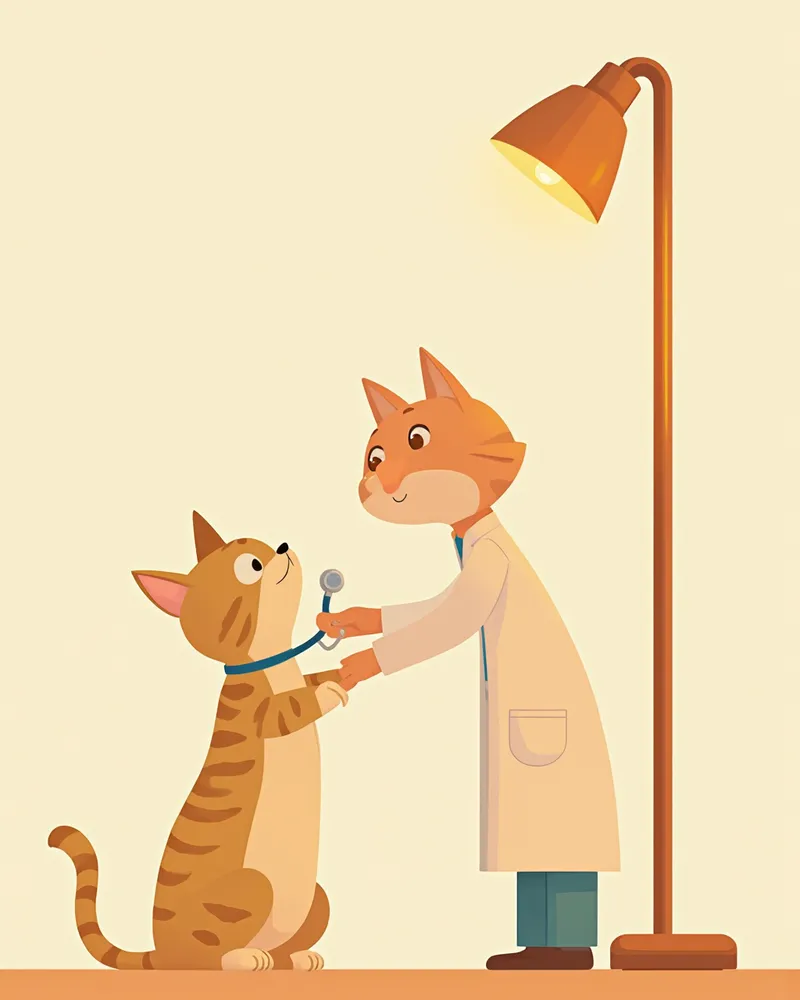
According to the BSAVA Manual of Canine and Feline Dermatology, feline pruritus is commonly caused by ectoparasites, allergies, infections, and immune-mediated diseases. The primary causes include:
Flea Allergy Dermatitis: A hypersensitivity reaction to flea saliva, most commonly presenting as pruritus on the tail and dorsal (caudal-dorsal) regions.
Atopic Dermatitis (Feline Environmental Allergy): Pruritus triggered by environmental allergens such as house dust mites and pollen.
Food (Hypersensitivity) Allergy: An immune response to specific proteins, characterized by pruritus on the head and neck.
Fungal Infection (Dermatophytosis): Presents with localized or multiple patches of alopecia accompanied by scaling and crusting; the degree of pruritus varies, and fungal culture is required for definitive diagnosis.
Parasites (Notoedres and Demodex): Notoedres cati (notoedric mange) causes pruritus, alopecia, and scaling around the face, while Demodex gatoi (demodicosis) affects the eyes, head, and neck. These can be differentiated via skin scraping.
A veterinarian examining a cat's skin with a Wood's lamp

Diagnostic Process — What Tests Are Performed at the Vet?

The specific tests required vary depending on the suspected cause. Knowing what to expect in advance helps you plan for both costs and scheduling.
Flea comb test: A preliminary check for flea dirt (black specks). This is a cost-effective option.
Wood’s lamp examination and fungal culture: Performed if ringworm (dermatophytosis) is suspected. Results typically take 2 to 3 weeks.
Skin scraping: Used to identify parasites such as mites. Results are available the same day.
Elimination diet trial: The gold standard for diagnosing food allergies. Your pet will be fed only a hydrolyzed diet for 8 to 12 weeks.
Allergen testing (intradermal or serological): Conducted when atopic dermatitis is suspected to help pinpoint the specific triggering allergens.

Home Care Guidelines

There are important care guidelines for pet owners to follow both before and after a veterinary diagnosis.
Environmental Management: Wash bedding and rugs weekly at 60°C or higher to eliminate mite and flea eggs.
Stress Reduction: Sudden environmental changes can worsen psychogenic grooming. Provide hiding spots and vertical spaces to help your cat feel secure.
Elizabethan Collar: Use only for short periods when self-trauma is severe. Long-term use can increase stress.
Record Keeping: Keep a diary for 1–2 weeks noting the timing, location, and severity of itching, as well as diet. This significantly improves diagnostic accuracy.
No Self-Medication: Never administer human antihistamines or steroid creams without veterinary guidance, as they can be toxic to cats.
A cat resting on clean bedding

Cat-Specific Precautions

Cats often mask itching through grooming, so owners may not recognize excessive licking as a sign of pruritus. A classic example is symmetrical hair loss on the belly and inner thighs—areas that are less visible to owners. This symmetrical alopecia is most commonly self-induced due to scratching or licking from itchiness. Therefore, rather than immediately suspecting endocrine (hormonal) disorders, it’s more important to first rule out common causes of itching such as allergies or parasites. Symmetrical hair loss in cats is very rarely caused by endocrine abnormalities. Additionally, if an overweight or senior cat suddenly stops grooming, it may be struggling to open its mouth due to conditions like arthritis or stomatitis, which warrants a separate veterinary evaluation.

Preventing Recurrence — Lifelong Care Guidelines

Many allergic skin conditions in cats are chronic and closer to long-term management than a complete cure. Establish a lifelong care routine based on these four pillars:
Monthly external parasite prevention: Even indoor cats can be exposed to fleas through their owner’s clothes and shoes.
Annual skin check-ups: Get a dermatological exam at least once a year for early detection, even if no symptoms are present.
Dietary consistency: Once an allergy is diagnosed, stick to the verified prescription diet and minimize exposure to treats and human food.
Stress monitoring: Watch your cat’s grooming habits more closely for 2–4 weeks after major changes, such as moving or introducing a new pet.

Reviewed by a veterinarian

Dr. Tony — Punnawat Phongkittirak

Dr. Tony — Punnawat Phongkittirak

Veterinarian

A veterinarian who majored in veterinary medicine at Khon Kaen University, Thailand, and completed the IVSA program at North Carolina State University in the United States. Drawing on clinical experience at animal hospitals, he works in the pet healthcare field and is dedicated to building a digital care environment that connects pet parents with veterinarians.

Frequently Asked Questions

My cat is obsessively licking just one spot. Is it okay to just keep an eye on it for a few days?
If your cat is intensely licking the same area for more than 24 hours or you notice hair loss, we recommend visiting the vet within 1 to 3 days. Cats can easily develop compulsive grooming habits, so it’s important to identify the underlying cause early on.
Can my indoor-only pet still develop a flea allergy?
Yes, it’s possible. Fleas can be brought in on your clothes and shoes, by other pets, or through balconies and windows. We recommend monthly external parasite prevention for indoor cats as well.
Will food allergies improve immediately just by switching to a different pet food?
No, that’s not quite right. To make a diagnosis, your pet needs to undergo an elimination diet trial, which involves feeding only a hydrolyzed protein diet for 8 to 12 weeks. If you give any treats or other foods during this period, the results will be invalidated.
Can I give my pet human antihistamines?
Absolutely not. Some ingredients can cause severe toxicity in cats. All medications should only be used at the prescribed dosage and under the guidance of a veterinarian.
How can you tell if excessive grooming is stress-related?
A diagnosis is made only after all medical causes have been ruled out through tests such as skin exams, parasite screenings, and allergy testing. It is important that pet owners do not assume the issue is due to stress without first ruling out physical health problems.

Share

Related Guides

References

[1] Little, S. (Ed.). The Cat: Clinical Medicine and Management, 2nd Edition. Elsevier.

[2] Drobatz, K. J., Hopper, K., Rozanski, E., & Silverstein, D. C. (Eds.). Feline Emergency and Critical Care Medicine, 2nd Edition. Wiley-Blackwell.

[3] Jackson, H. A., & Marsella, R. (Eds.). BSAVA Manual of Canine and Feline Dermatology, 4th Edition. BSAVA.

This information is based on veterinary literature and does not replace diagnosis or treatment. Please consult a veterinarian for specific health concerns.

Metapet Co., Ltd. | CEO: Park Sung-yong | Business Reg. No. 417-88-02562 | Seoul, South Korea | Customer Center

Why Is My Cat Overgrooming? Causes & Hidden Disease Signs | Meongsiljang