Like
Share
멍실장
반려동물 감전 사고 응급 대처

Emergency First Aid for Pet Electric Shock Accidents

ImmunitySymptomsMeongsiljang Veterinary Advisory Board

Here’s a guide on immediate first aid and when to seek veterinary care if your pet chews on an electrical cord or suffers an electric shock. We also include safety tips for pet owners, such as avoiding direct contact with bare hands.

What Is Pet Electric Shock?
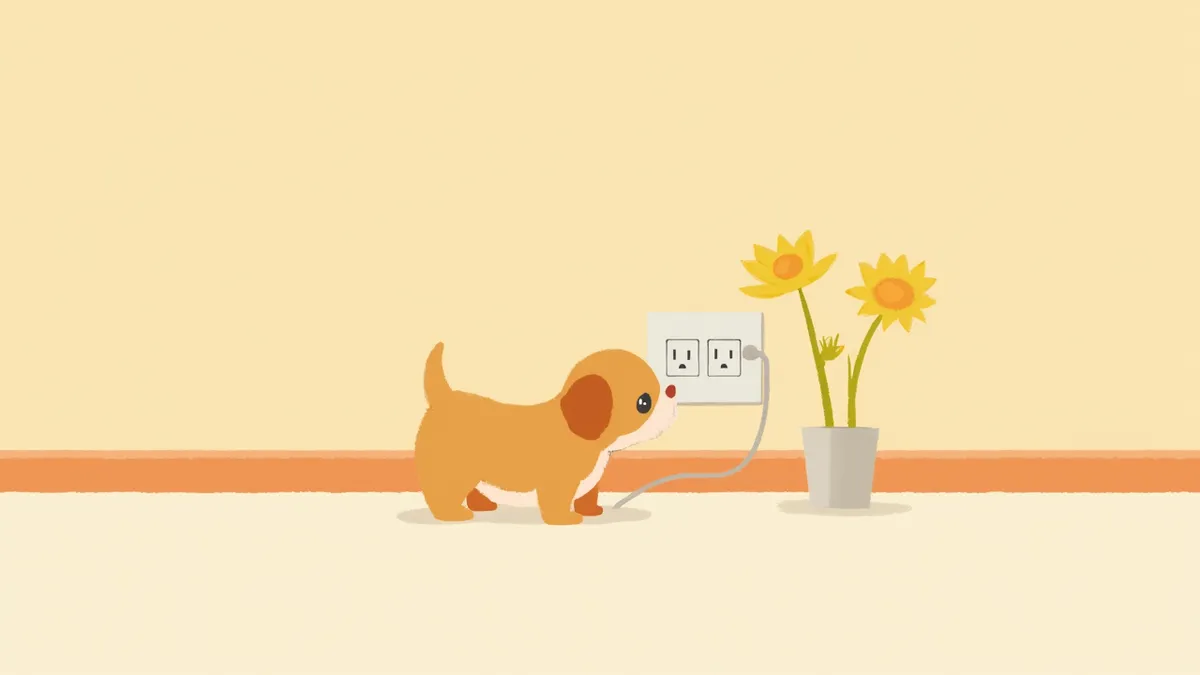
A puppy in front of an electrical outlet and a worried pet owner
Electric shock in pets is an emergency that can cause burns, arrhythmias, and pulmonary edema when an electric current passes through the body due to chewing on electrical cords or coming into contact with outlets or leaking electrical appliances. The first and most critical step is to cut off the power source. Never touch your pet with bare hands, as you risk being electrocuted as well. Always turn off the circuit breaker first, then check your pet’s breathing and consciousness before immediately transporting them to a 24-hour animal hospital. Even if your pet appears fine on the surface, pulmonary edema—fluid accumulation in the lungs—can develop hours later, making veterinary examination essential.

Electric Shock Severity Levels

ItemMildModerateSevere
ConsciousnessFineDazed or tremblingUnconscious, convulsing
Mouth conditionRed marksBlisters, ulcersBlackened burns
BreathingNormalRapid, wheezingLabored, cyanosis
ResponseObserve + hospital examinationGo to hospital immediatelyGo straight to ER + oxygen

Even if it looks mild, pulmonary edema can appear late, several hours after electrocution, so a hospital examination is essential

Main Symptoms After Electric Shock

If you notice any of the following signs from immediately after the electric shock up to several days later, take your pet to the vet right away.
Oral burns: Red or black marks, blisters, or ulcers may appear on the tongue and gums.
Coughing and difficulty breathing: Hours after the shock, fluid can accumulate in the lungs, causing wheezing or rapid, labored breathing.
Muscle spasms and tremors: The electrical current can stimulate muscles, causing them to tremble or become rigid.
Arrhythmia: An irregular heartbeat can cause your pet to collapse.
Drooling and loss of appetite: Pain in the mouth may prevent your pet from eating, leading to excessive drooling.
Red eyes and abnormal pupils: Cataracts may develop later as a result.
A guardian carefully examining their puppy's mouth

When to Go Straight to the Emergency Room

If any of the following symptoms are present, do not delay even for a moment and immediately transport your pet to a 24-hour emergency animal hospital. - Unconscious or sluggish in response to being called - Blue or pale gums and mouth (cyanosis) - Panting or coughing with frothy sputum - Persistent seizures or convulsions - Blackened, charred wounds visible in the mouth - Inability to urinate or collapse During transport, keep your pet’s head slightly lowered and wrap them in a blanket to maintain body temperature.

For Owners First: 3 Steps to Handle an Electric Shock Scene

If you catch your pet chewing on a cord, don’t panic and grab them right away—you could get electrocuted too. Stay calm and follow these steps in order.
Step 1: Cut the power: First, flip the main breaker (circuit breaker box) in your home. This is more reliable than just unplugging the cord from the outlet.
Step 2: Separate with a non-conductive object: Use a wooden broom, dry towel, rubber gloves, or similar non-conductive item to gently pull your pet away from the wire. Never use wet objects.
Step 3: Check consciousness and breathing: Call your pet’s name and observe if their chest is rising and falling. If they’re not breathing, head to the vet immediately while calling ahead to describe the situation.

Do’s and Don’ts on the Way to the Hospital

Improper handling during emergency transport can worsen your pet’s condition. Do: Wrap your pet in a blanket to maintain body temperature, place them in a comfortable position (on their side), gently wipe away any blood or foam from the mouth, and secure them safely in a carrier. Do not: Give water or milk (risk of aspiration pneumonia), put your fingers in their mouth (risk of biting), wash burn areas with cold water (risk of hypothermia), overattempt artificial respiration (can worsen pulmonary edema), or delay at home (every minute counts).
A pet owner carefully carrying a puppy wrapped in a blanket

What Tests and Treatments Are Done at the Hospital?

With electric shock injuries, the internal damage is often far more serious than what’s visible on the surface. At the clinic, we perform the following tests to identify hidden injuries:
Chest X-rays and CT scans: To check for pulmonary edema (fluid accumulation in the lungs)—repeat imaging may be necessary for up to 24 hours after the incident.
Electrocardiogram (ECG): To detect arrhythmias, with 24-hour monitoring if needed.
Blood tests: To assess markers of muscle and organ damage.
Oral endoscopy: To evaluate the depth of burns inside the mouth.
Treatment is tailored to the patient’s condition and may include oxygen therapy, intravenous fluids, antiarrhythmic medications, and disinfection and suturing of burn wounds. Medication dosages are determined by the veterinarian based on the pet’s weight and symptoms.

Cats, Small Dogs, and Puppies/Kittens Are at Higher Risk

Even at the same voltage, smaller animals suffer more severe injuries due to higher current density. - Puppies and kittens: Their curiosity often leads them to chew on cords, resulting in a high incidence of oral burns. - Brachycephalic breeds (Pugs, Bulldogs, Persians): Their naturally compromised respiratory systems lead to slower recovery from pulmonary edema. - Underlying heart disease: The risk increases significantly if arrhythmias develop. For these pets, we recommend hospitalization for at least 24 hours of observation, even if symptoms appear mild.

Electric Shock Prevention Checklist
Once an accident happens, the scars and aftereffects can last a long time. Check your home from your child’s eye level.
Cord protection covers: Prevent chewing with silicone cord covers available at stationery stores and pet shops.
Outlet safety caps: Cover unused outlets.
Organize power strips: Put cords lying on the floor into cable organizers.
Caution with wet paws: Do not allow access to appliances right after bathing.
Satisfy chewing urges: Fulfill the urge to chew with dental chews and nose work toys.
Turn off power when leaving: Turn off heaters and electric blankets when you go out.
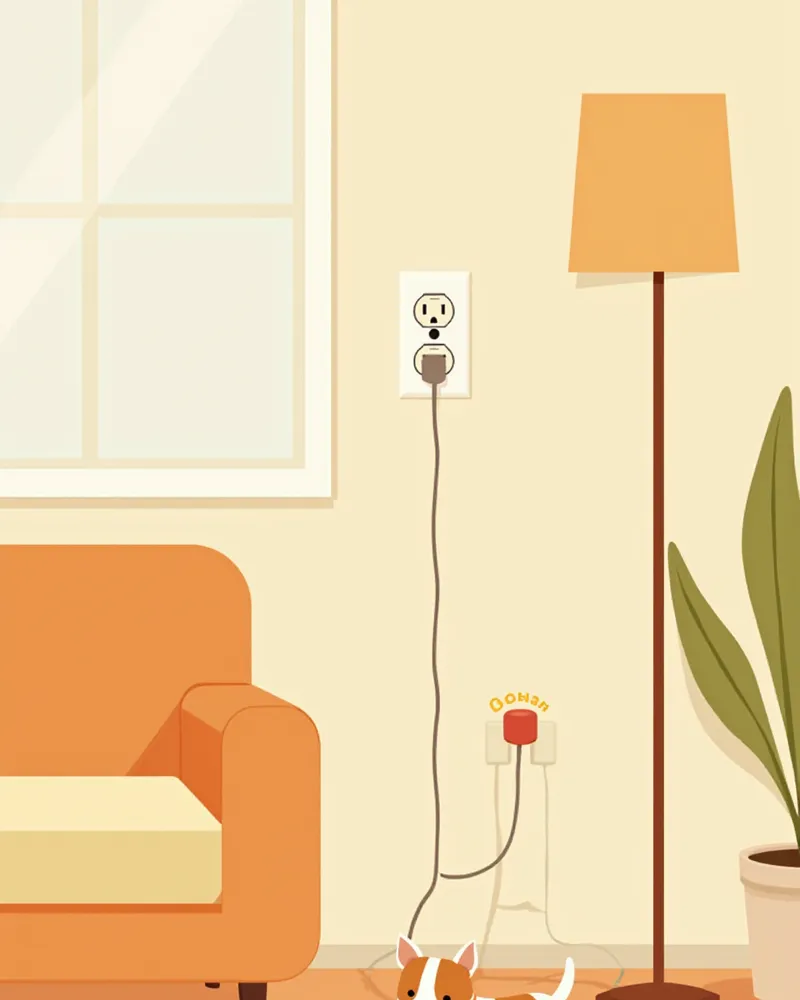
A pet-friendly living room, neatly organized with cord covers and outlet safety caps.

Reviewed by a veterinarian

Dr. Tony — Punnawat Phongkittirak

Dr. Tony — Punnawat Phongkittirak

Veterinarian

A veterinarian who majored in veterinary medicine at Khon Kaen University, Thailand, and completed the IVSA program at North Carolina State University in the United States. Drawing on clinical experience at animal hospitals, he works in the pet healthcare field and is dedicated to building a digital care environment that connects pet parents with veterinarians.

Frequently Asked Questions

My pet lightly chewed on a cord, and it looks fine on the outside. Is it okay to just monitor the situation?
No, even if your pet appears fine on the outside, a veterinary examination is essential. Pulmonary edema can develop several hours after electrocution, and arrhythmias may also occur later. Since the timing of symptom onset varies from animal to animal, it is safest to monitor your pet’s condition for at least one day.
White blisters have appeared in my pet’s mouth—will they heal on their own?
Mouth burns can progress to ulcers and tissue death within a few days, so a veterinary evaluation is necessary. If your pet stops eating due to pain, their strength can decline rapidly. Pain relief and antiseptic treatment are essential to speed up recovery.
My pet touched an appliance that fell into water. Could it be an electric shock or a burn?
Both conditions should be suspected. First, turn off the power, then remove the child from the water and check their breathing, consciousness, and mouth. Since aspiration pneumonia and electrocution-induced pulmonary edema can occur simultaneously, hospitalization for observation is the safest course of action.
My pet developed cataracts a few days after an electric shock. Could these be related?
It is known that cataract-like changes can develop in the eyes some time after an electric shock. However, since the exact frequency and underlying mechanism are difficult to determine, it is best to have an ophthalmic examination to identify the cause if your pet's vision appears cloudy.
Should I take my pet to the vet even for a small static shock?
A little static shock from walking on a carpet on a dry day is usually harmless. However, any shock from an electrical outlet, appliance, or lightning strike requires immediate veterinary examination. The higher the voltage, the greater the risk of muscle and heart damage.

Share

Related Guides

References

[1] Small Animal Critical Care Medicine, 3rd Ed — Electrical Injury Chapter

[2] Plumb's Veterinary Drug Handbook — Emergency Protocols

[3] Kirk's Current Veterinary Therapy XV — Pulmonary Edema Management

This information is based on veterinary literature and does not replace diagnosis or treatment. Please consult a veterinarian for specific health concerns.

Metapet Co., Ltd. | CEO: Park Sung-yong | Business Reg. No. 417-88-02562 | Seoul, South Korea | Customer Center

Pet Electric Shock: Emergency First Aid Guide | Meongsiljang