Like
Share
멍실장
고양이 혈뇨 원인과 응급 대처

Causes of Hematuria in Cats and Emergency Response

UrinarySymptomsMeongsiljang Veterinary Advisory Board

Blood in your cat’s urine is a sign of a urinary tract issue. We’ve outlined how to assess the urgency and provide preventive care, covering everything from the most common cause, idiopathic cystitis, to the emergency condition of urethral obstruction.

Did Your Cat Pass Red Urine?
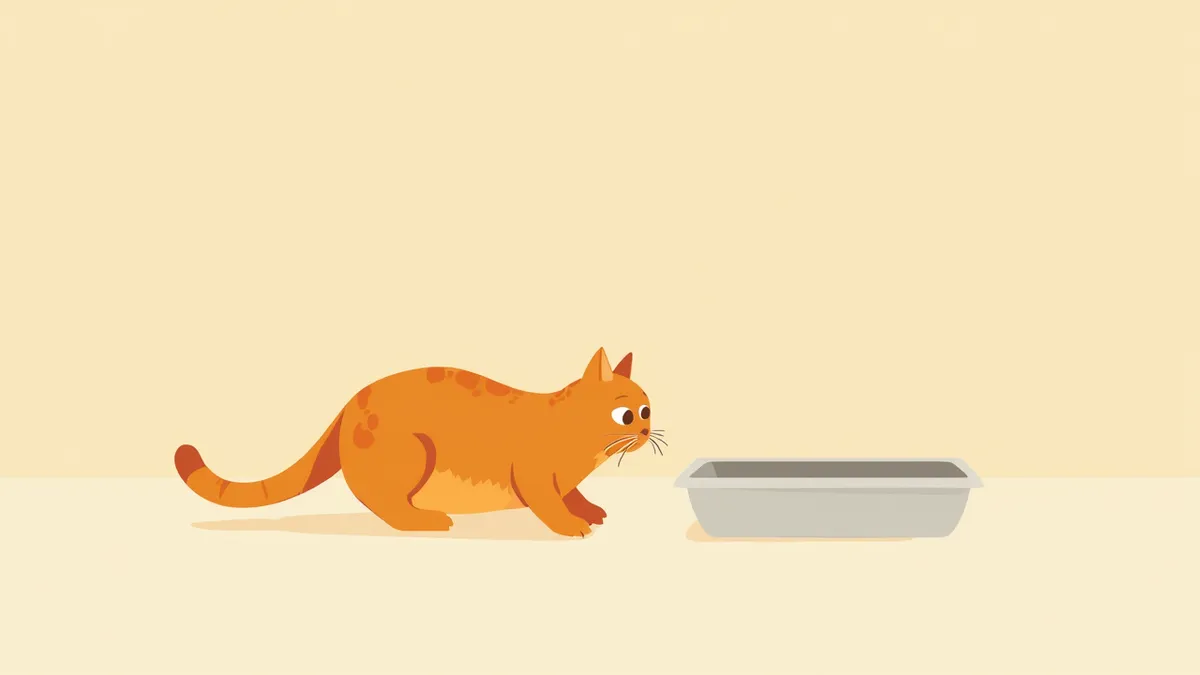
Illustration of a cat showing discomfort near the litter box
The most common cause of hematuria in cats is feline idiopathic cystitis. According to veterinary textbooks, idiopathic cystitis is known as the leading cause of feline lower urinary tract disease (FLUTD). Blood in the urine or pink to red urine is a sign of a urinary tract problem. In particular, if a male cat is straining in the litter box but unable to urinate, it may indicate a life-threatening urethral obstruction. In such cases, delayed treatment can lead to acute kidney failure and severe electrolyte imbalances, endangering the cat's life, so immediate veterinary care is essential.

Urgency Assessment Table: Do You Need to Go to the Vet Now?

The urgency of a cat’s hematuria (blood in the urine) depends entirely on accompanying symptoms. Use the table below to assess your cat’s condition.
Urgency LevelSymptomsAction
Immediate Veterinary CareNo urine output + vomiting and lethargySuspected urethral obstruction; seek emergency care immediately
Same-Day Veterinary VisitHematuria + frequent trips to the litter box + vocalizing during urinationVisit the clinic on the same day
Visit Within 1–2 DaysUrine slightly pink; normal appetite and energy levelsVisit the clinic within 1–2 days

Checklist for Symptoms Accompanying Hematuria

Check if your cat is showing any of the following symptoms alongside hematuria. According to veterinary internal medicine textbooks, these are common signs in cats with urinary tract diseases. Frequent urination (pollakiuria): Your cat visits the litter box often but produces only a very small amount of urine. If they’re going to the litter box noticeably more often than usual, it could be a sign of a urinary issue. Painful urination (dysuria): Your cat cries out or strains excessively while urinating. Inappropriate elimination: A cat that normally uses the litter box properly suddenly starts urinating on bedding or the floor. Excessive genital licking: Due to discomfort in the urinary tract, your cat may over-groom the genital area. Changes in urine color: The urine appears pink, red, brown, or otherwise different from its normal color.
An illustration of a cat showing discomfort in the litter box, along with a symptom checklist.

Urethral Obstruction in Male Cats Is an Emergency

If your male cat is straining in the litter box with no urine coming out, suspect a urethral obstruction. According to veterinary textbooks, this is a life-threatening emergency and the most common cause of acute kidney injury (acute renal failure) in cats. The longer treatment is delayed, the faster kidney function deteriorates, putting your cat’s overall health at serious risk. If vomiting, lethargy, or complete loss of appetite accompany these symptoms, take your cat to a 24-hour emergency animal hospital immediately. Male cats are at much higher risk for obstruction because their urethra is narrower than that of females.

The Most Common Cause: Feline Idiopathic Cystitis

The most common cause of hematuria in cats is feline idiopathic cystitis. "Idiopathic" means that the exact cause cannot be identified. According to veterinary textbooks, idiopathic cystitis is the most frequent cause of feline lower urinary tract disease and is characterized as a sterile, hemorrhagic cystitis without bacterial involvement. Known risk factors include indoor living, lack of exercise, multi-cat households, inter-cat conflict, obesity, purebred status, and stress. Stress is particularly significant as a primary trigger; changes such as moving, the addition of new family members, or alterations in the litter box environment can provoke bladder inflammation. Because this is a sterile inflammation rather than a bacterial infection, it does not respond well to antibiotic treatment. The cornerstone of management is stress reduction and environmental enrichment. While the condition typically follows a self-limiting course with spontaneous improvement, it is characterized by frequent recurrences.

Urinary Tract Stones and Infections Can Also Be Causes
Another common cause of hematuria is urinary tract stones. According to veterinary textbooks, stones are confirmed in approximately 21% of cats exhibiting lower urinary tract signs, with struvite and calcium oxalate stones being the most prevalent types in felines.
Urinary Tract Stones: Stones within the bladder irritate the bladder wall, leading to hematuria, frequent urination, and difficulty urinating. If a stone migrates into the urethra, it can cause a complete obstruction, creating a medical emergency. While struvite stones can often be dissolved with prescription diets, calcium oxalate stones frequently require surgical removal.
Urinary Tract Infections: Urinary tract infections in cats often occur alongside urinary stones. Various bacterial species, including Escherichia coli (E. coli), can be responsible. When bacterial infection is suspected, a urine culture is performed to identify the causative organism, allowing for targeted treatment with appropriate antibiotics.
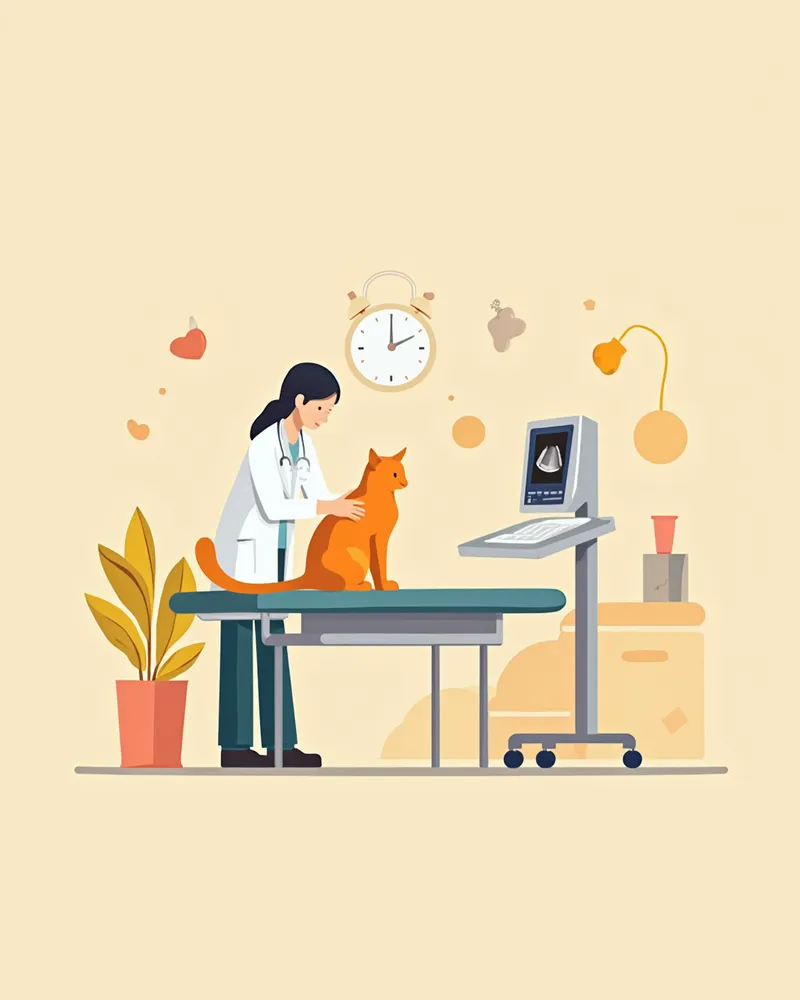
Illustration of a cat undergoing an ultrasound examination at a veterinary clinic

What Tests Will Be Performed at the Vet?

When you visit the veterinary clinic, the veterinarian will identify the cause through the following steps.
Urinalysis: This test checks for blood in the urine, the presence of bacteria, crystals, and urine concentration. It is the most fundamental and important diagnostic test.
Ultrasound examination: This allows us to check for stones or tumors within the bladder and assess bladder wall thickness. It is a quick and painless procedure.
X-ray: This provides an accurate view of the size and location of stones. Since some stones are not clearly visible on X-rays, this test is often performed alongside an ultrasound.
Urine culture: If a bacterial infection is suspected, this test is conducted to identify the specific causative bacteria and determine the appropriate antibiotic treatment.

A Condition with Frequent Recurrence: Consistent Management Is Key

Feline idiopathic cystitis is a condition with a high rate of recurrence. According to veterinary textbooks, even if clinical symptoms temporarily improve, relapses are common, and the disease can follow a chronic, recurrent course. To reduce the likelihood of recurrence, it is important to manage stress, ensure adequate water intake, and maintain a clean litter box environment. If hematuria (blood in the urine) recurs, there may be an underlying cause, so additional diagnostic testing is recommended.

Prevention and Management: Do This

The key to preventing hematuria in cats and reducing recurrences lies in environmental management.
Increase water intake: Supplementing with wet food or using a fountain-style water dispenser can encourage drinking. Diluted urine reduces bladder irritation.
Litter box environment: Provide one litter box per cat, plus one extra, and clean them daily. Place them in quiet, easily accessible locations.
Stress management: Minimize sudden environmental changes and provide hiding spots and cat trees for vertical exploration.
Prescription diet: Your veterinarian may recommend a therapeutic diet for urinary tract health. Since dietary needs vary depending on the type of urinary stones, always follow your veterinarian’s instructions.
Illustration of a healthy cat drinking water from a fountain-style water dispenser.

Reviewed by a veterinarian

Dr. Tony — Punnawat Phongkittirak

Dr. Tony — Punnawat Phongkittirak

Veterinarian

A veterinarian who majored in veterinary medicine at Khon Kaen University, Thailand, and completed the IVSA program at North Carolina State University in the United States. Drawing on clinical experience at animal hospitals, he works in the pet healthcare field and is dedicated to building a digital care environment that connects pet parents with veterinarians.

Frequently Asked Questions

Can a cat’s blood in the urine resolve on its own?
If the cause is idiopathic cystitis, the condition typically follows a self-limiting course and resolves on its own. However, it is dangerous to wait without visiting a clinic when the exact cause is unknown. If the underlying issue is a urethral obstruction or bladder stones, the condition can worsen without treatment. Therefore, if you notice blood in your pet’s urine, please seek veterinary care immediately.
Can female cats also develop urethral obstruction?
It’s very rare, but possible. Female cats have shorter and wider urethras than males, so blockages almost never occur. Urethral obstruction is an emergency that mostly affects male cats.
How can I tell if there’s blood in my pet’s urine?
If you notice pink or red stains in your cat’s litter, it could indicate hematuria (blood in the urine). Using white litter makes it easier to spot color changes. For an accurate diagnosis, have your veterinarian perform a urinalysis at the clinic.
Can stress really cause blood in the urine?
Yes, stress is a major trigger for feline idiopathic cystitis. Environmental changes such as moving to a new home, introducing a new pet or family member, changing the litter box location, or construction noise can cause bladder inflammation. Since cats are sensitive to environmental changes, maintaining a stable living environment is important.
Should I change my pet’s food if they have blood in their urine?
It depends on the underlying cause. If urinary tract stones are the issue, your veterinarian can recommend a prescription diet tailored to the specific type of stone. For idiopathic cystitis, incorporating wet food to increase fluid intake can be helpful. Always consult your veterinarian before making any changes to your pet’s diet.

Share

Related Guides

References

[1] Schaer, M. Clinical Medicine of the Dog and Cat, 4th Ed — Chapter 2.11: Pigmenturia, Chapter 2.5: Dysuria

[2] Englar, R.E. The Veterinary Workbook of Small Animal Clinical Cases — Case 18: The Cat with Hematuria

[3] Westropp, J.L. & Buffington, C.A.T. Feline Idiopathic Cystitis: Current Understanding of Pathophysiology and Management. Veterinary Clinics of North America: Small Animal Practice. 2004;34(4):1043-1055.

[4] Dorsch, R., Remer, C., Sauter-Louis, C. & Hartmann, K. Feline Lower Urinary Tract Disease in a German Cat Population. Tierärztliche Praxis Ausgabe K: Kleintiere/Heimtiere. 2014;42(4):231-239.

This information is based on veterinary literature and does not replace diagnosis or treatment. Please consult a veterinarian for specific health concerns.

Metapet Co., Ltd. | CEO: Park Sung-yong | Business Reg. No. 417-88-02562 | Seoul, South Korea | Customer Center

Blood in Cat Urine: Causes and Emergency Response Guide | Meongsiljang