Like
Share
멍실장
강아지 청소기공포 둔감화 훈련법

Desensitization Training for Dogs with Vacuum Cleaner Phobia

Brain & CognitionQ&AMeongsiljang Veterinary Advisory Board

Here’s a step-by-step desensitization training method for dogs who tremble and flee at the sound of a vacuum cleaner, along with the veterinary behavioral science behind it.

What Is Vacuum Cleaner Phobia in Dogs?
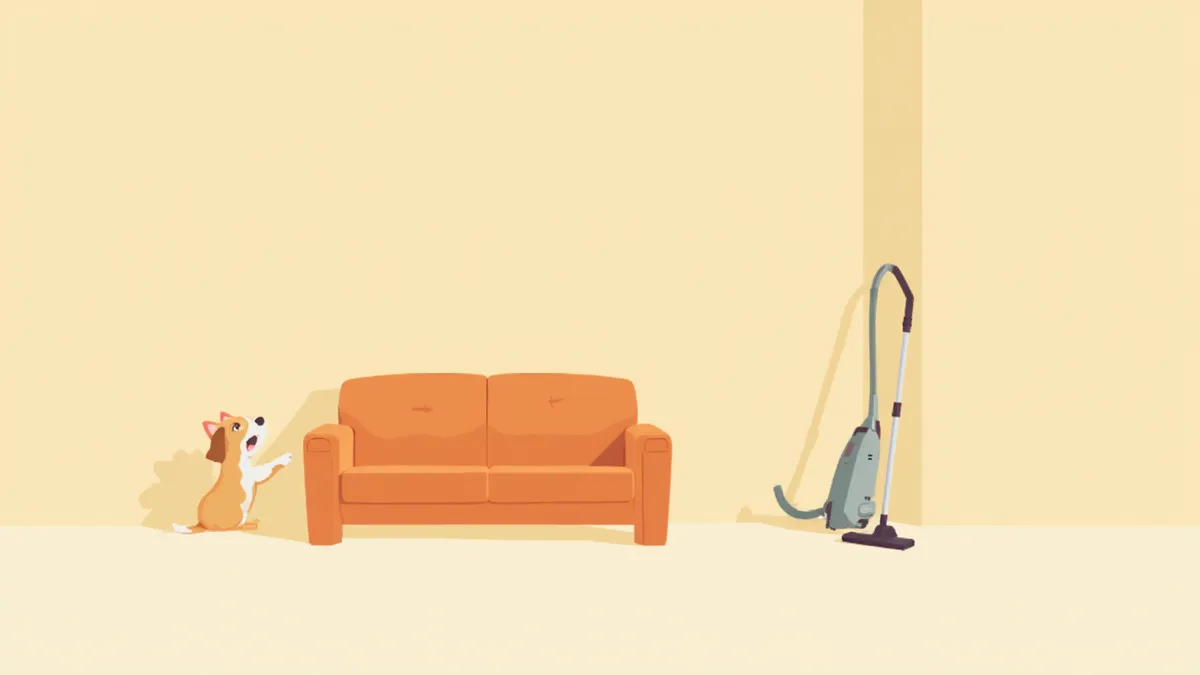
A puppy peeking out from behind the sofa, wary of the vacuum cleaner
Vacuum cleaner phobia in dogs is a type of noise phobia characterized by an excessive fear response to the loud noise and sudden movements of a vacuum cleaner. The key solution is training through systematic desensitization and counter-conditioning. If your dog consistently trembles, barks, hides, or tries to escape, this is not merely a personality trait but a learned fear response. Because phobias can worsen if left untreated, it is important to begin improvement early with structured training.

Why Are Dogs So Afraid of Vacuum Cleaners?

From a dog’s perspective, a vacuum cleaner is the ultimate trifecta of fear. First, the loud noise can be overwhelming for dogs, whose hearing is far more sensitive than ours. Second, its sudden, unpredictable movements can make it seem like a predator. Third, seeing their owner push it around can imprint the idea of an uncontrollable threat. Dogs that are sick or uncomfortable tend to show stronger fear responses and become more defensive than when they’re healthy. So if your dog suddenly becomes much more afraid of the noise, it’s important to check for pain or other medical causes.

Checking Fear Response Signals by Stage
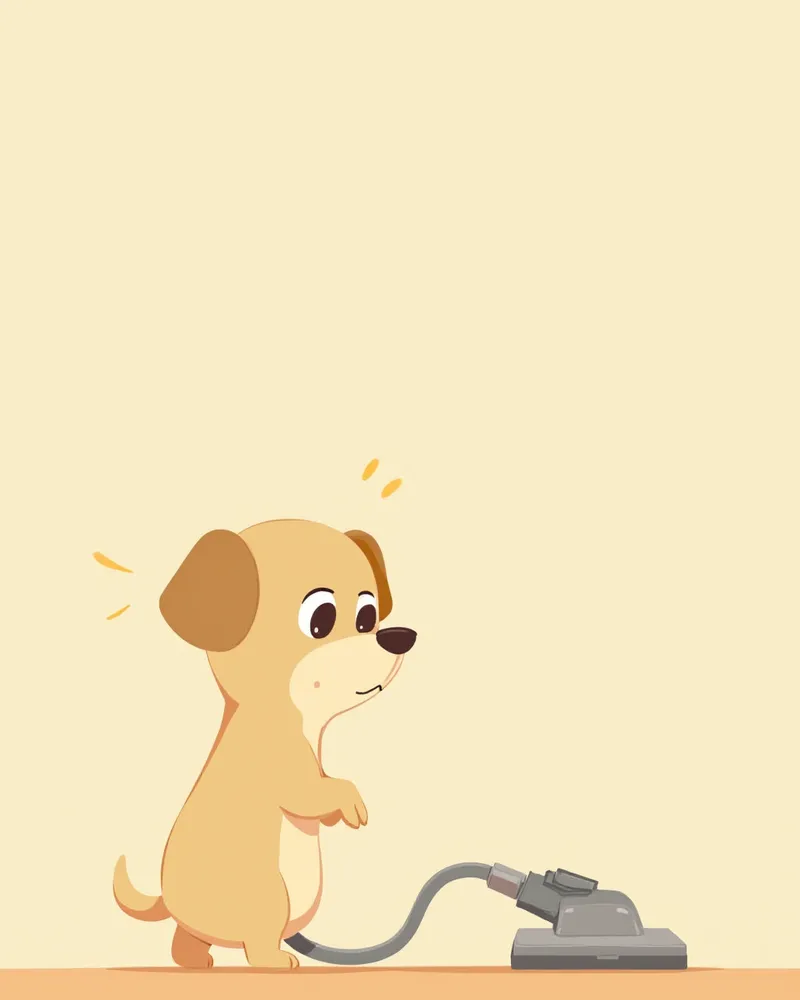
Determining your pet’s current stage is essential for setting the appropriate training intensity. Use the following signals to assess the urgency of the situation. Stage 1: Alert – Ears pinned back, eyes wide open, tail lowered Stage 2: Avoidance – Attempting to leave the room, moving to another area Stage 3: Panic – Trembling, drooling, barking, hiding and refusing to come out Stage 4: Danger – Accidental elimination, escape attempts, aggression, self-harm behaviors If Stage 3 or higher symptoms recur, consult a veterinarian before beginning any training.
A tense puppy with its ears perked up and tail lowered.

Consult a Vet Before Training in These Cases

If any of the following apply, please consult a veterinarian (ideally a veterinary behaviorist) before starting desensitization training. - Sudden worsening of fear responses (possible pain or hearing issues) - Accompanied by house-soiling accidents or self-harming behavior - Newly developed noise phobia in senior dogs aged 7 years or older - Fear responses also triggered by other noises such as thunder or fireworks According to veterinary pharmacology textbooks, severe noise phobia may require concurrent use of anxiolytics or behavioral medications.

Desensitization vs. Flooding vs. Avoidance — Which Method Is Right?

ItemSystematic DesensitizationCounterconditioningFlooding (Prohibited)
PrincipleGradually getting used to it, starting from a mild stimulusFrightening stimulus = linking with something goodForced exposure to a strong stimulus
Duration4–6 weeks (based on daily practice)4–6 weeks alongside desensitizationDo not use
Dog's StressLowLowVery high
EffectivenessHigh (few relapses)Very highCounterproductive (worsens fear)
Recommendation✅ Standard✅ Use together❌ Absolutely prohibited

Flooding (forcing the dog to stay next to the vacuum cleaner) worsens the dog's fear and stress, so it must never be used.

4-Week Step-by-Step Desensitization Training Plan
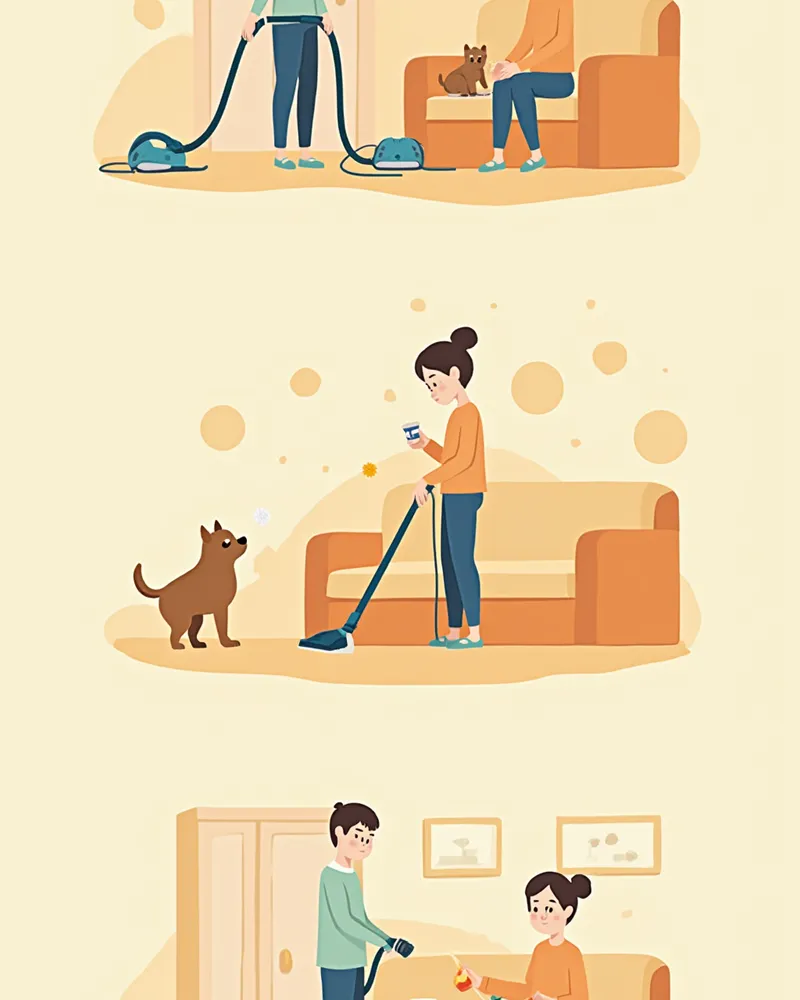
The key to training is to start with the minimum amount of stimulation that keeps your puppy comfortable. Week 1 (Visual Desensitization): Leave the turned-off vacuum cleaner in the living room. Give treats every time you pass by it. Repeat 3–5 times a day for 5 minutes each session. Week 2 (Movement Desensitization): Slowly push the turned-off vacuum cleaner while maintaining a distance of at least 3 meters. If your puppy looks at it without trembling, immediately reward with a treat. Week 3 (Low-Volume Desensitization): Turn on the vacuum cleaner in another room and close the door so only a faint sound reaches your puppy’s room. Distract your puppy with treats and toys. Week 4 (Close-Range Adaptation): Turn on the vacuum cleaner in the same room for short intervals: start with 10 seconds, then 30 seconds, then 1 minute. Always pair this with treats and play.
A dog and its owner gradually desensitizing the dog to the vacuum cleaner by holding treats in their hand and progressing through the training step by step.

Key Points to Increase Training Success Rates

The reason success rates vary even with the same training lies in these details.
Use high-value treats: Instead of regular snacks, use special training treats (such as boiled chicken breast or cheese).
Stay below the threshold: If your dog starts trembling or tries to hide, immediately reduce the intensity of the stimulus.
Manage your reactions: Rather than overly comforting your dog, staying calm and acting as usual provides a more stable environment for them.
Consistency: Whenever possible, conduct training regularly at the same time each day.
Separate cleaning routines: During the training period, perform actual cleaning only when your dog is in a different room.

3 Things You Should Not Do

Well-intentioned actions can sometimes intensify your pet’s fear. 1. Avoid forced exposure: Do not carry your pet in front of the vacuum cleaner or force them to sniff it. 2. Do not scold: If you scold your pet for barking or hiding, they will learn to associate the vacuum cleaner with being punished. 3. Do not rush the process: Spend at least one week on each step. Trying to speed things up often means you’ll have to start over from the beginning. According to veterinary behavior textbooks, desensitization is most effective when carried out “as slowly as it feels boring.”

Auxiliary Tools and Environmental Setup
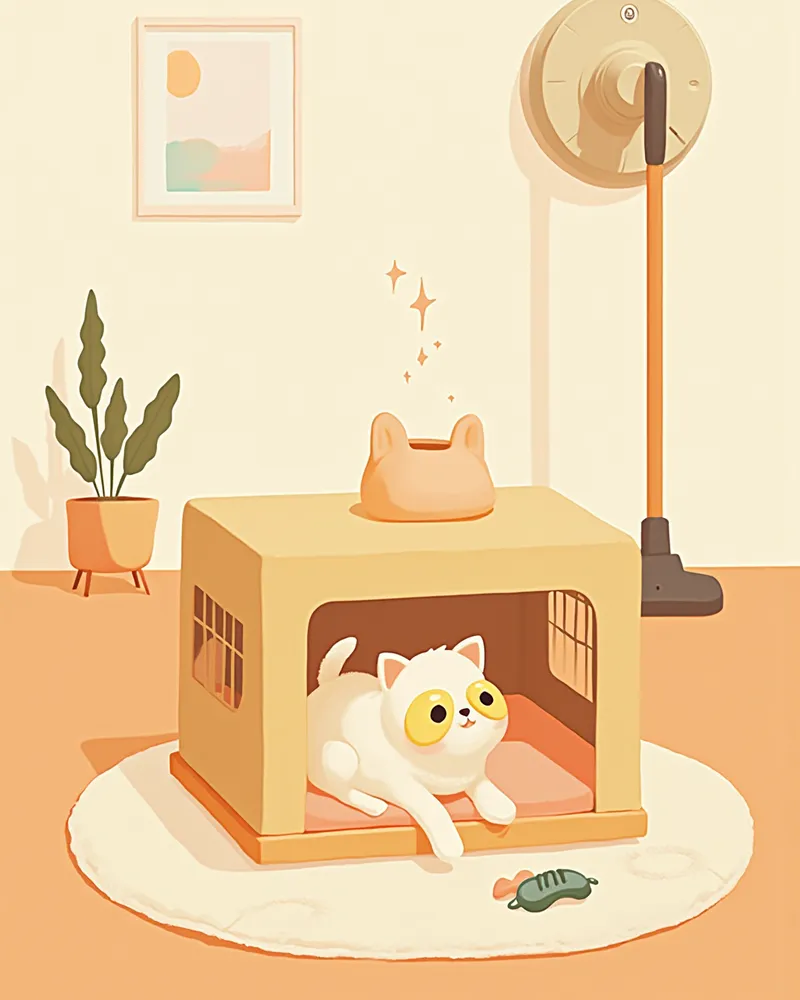
These are helpful tools to enhance training effectiveness.
Create a safe space: When cleaning, place your dog’s favorite blanket and toys in a dedicated room or crate.
White noise: Playing TV or radio sounds before starting training can help mask the vacuum cleaner noise, making it less startling.
Pheromone diffuser (Adaptil): This product contains dog appeasing pheromone (DAP) to help reduce anxiety. It is not a medication and is safe to use.
Consider replacing your vacuum: Switching to a low-noise robot vacuum can reduce noise stimulation, potentially making training easier.
In severe cases, behavioral therapy may be combined with veterinarian-prescribed anti-anxiety medications (such as approved psychotropics like selegiline). These medications are used as situational aids or for long-term management and must only be used under veterinary prescription.
A dedicated safe space for your dog, complete with a blanket and toys, along with a quiet robot vacuum cleaner

Reviewed by a veterinarian

Dr. Tony — Punnawat Phongkittirak

Dr. Tony — Punnawat Phongkittirak

Veterinarian

A veterinarian who majored in veterinary medicine at Khon Kaen University, Thailand, and completed the IVSA program at North Carolina State University in the United States. Drawing on clinical experience at animal hospitals, he works in the pet healthcare field and is dedicated to building a digital care environment that connects pet parents with veterinarians.

Frequently Asked Questions

How long does desensitization training take?
With consistent daily practice, you’ll typically see noticeable improvement within 4 to 6 weeks. However, it may take longer for adult dogs with learned fears compared to puppies. The key is to practice consistently for just 5 to 10 minutes each day.
My dog is actually becoming more scared during training. What should I do?
You increased the intensity too quickly. Go back two to three steps and stay at that level until your dog is completely comfortable. It’s okay to take a week off and then start again.
Does desensitization training work for senior dogs?
While effective, the process can be slow. Additionally, if an older dog suddenly develops severe noise phobia, underlying medical causes such as hearing loss, cognitive dysfunction, or pain must be ruled out first. We recommend a health checkup before beginning training.
When is medication necessary?
This applies when a stage 3 panic-like response persists, there is no response to desensitization training, or dangerous behaviors such as self-harm or escape attempts occur. In such cases, anti-anxiety medications prescribed by a veterinarian can be used alongside behavioral therapy, either as situational aids or for long-term maintenance. These medications must only be used under veterinary prescription.
Will switching to a robot vacuum cleaner solve the problem right away?
It’s not a complete solution. Since a robot vacuum is a moving object, pets may be wary of it at first. However, its low noise level makes desensitization training easier, and the fact that it operates automatically at set times increases predictability.

Share

Related Guides

References

[1] Lopes Fagundes, A.L., Hewison, L., McPeake, K.J., Zulch, H. and Mills, D.S. (2018) Noise sensitivities in dogs: An exploration of signs in dogs with and without musculoskeletal pain using qualitative content analysis. Frontiers in Veterinary Science 5, 17.

[2] Korpivaara, M., Laapas, K., Huhtinen, M. et al. (2017) Dexmedetomidine oromucosal gel for noise-associated acute anxiety and fear in dogs—a randomised, double-blind, placebo-controlled clinical study. Veterinary Record 180 (14): 356.

[3] Introduction to Animal Behavior and Veterinary Behavioral Medicine, Chapter 17 — Fear, Anxiety, and Noise Phobias

[4] Overall, K.L. (2013) Manual of Clinical Behavioral Medicine for Dogs and Cats, Elsevier — Desensitization and Counter-conditioning Protocols

This information is based on veterinary literature and does not replace diagnosis or treatment. Please consult a veterinarian for specific health concerns.

Metapet Co., Ltd. | CEO: Park Sung-yong | Business Reg. No. 417-88-02562 | Seoul, South Korea | Customer Center

Desensitization Training for Dogs with Vacuum Phobia | Meongsiljang