

Frequently Asked Questions (FAQ) on Cat Urethral Catheter Care — Key Points Every Pet Owner Must Know
Proper care after urethral catheter placement in cats is essential for preventing infection and promoting recovery. Here are the key points every pet owner should know.
Cat Urethral Catheter Care Is a Vital Procedure for Saving Lives
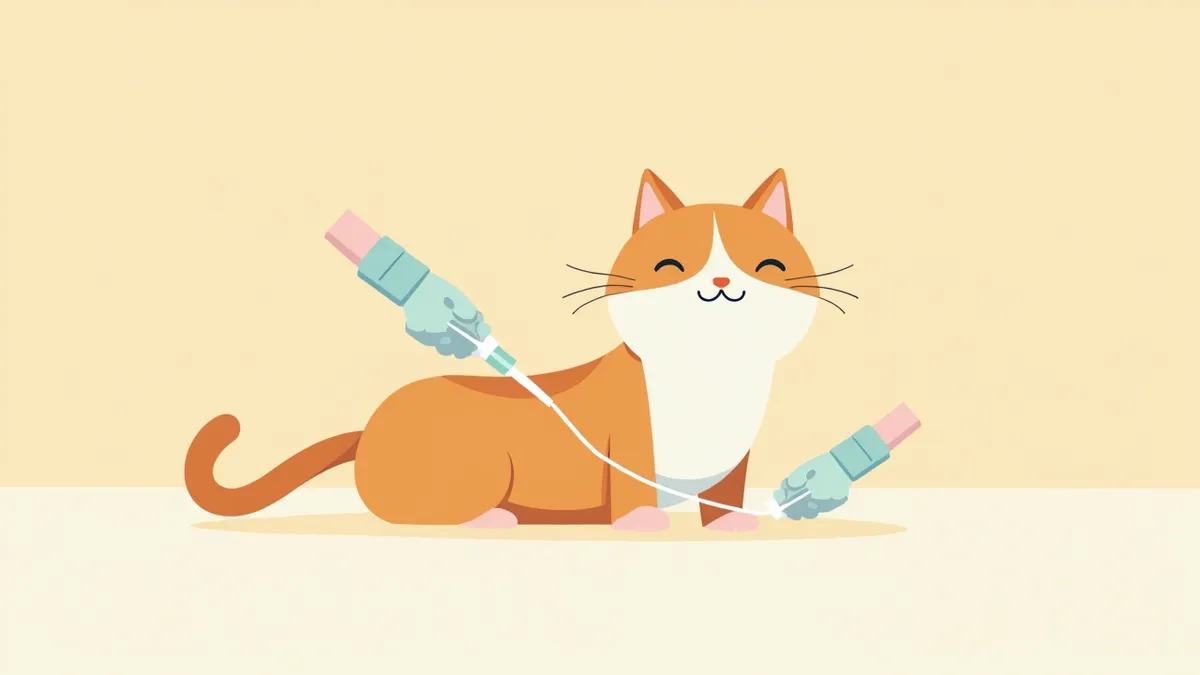
The Key Principle for Preventing Infection After Catheter Insertion Is Aseptic Technique

Five Key Signs Requiring Regular Monitoring
Emergency Signs Requiring Immediate Veterinary Visit
If your pet has severe blood in the urine, produces very little urine, or doesn’t urinate at all, you should seek veterinary care immediately. Anuria may indicate a recurrence of urinary tract obstruction or acute kidney injury, both of which require prompt treatment.
Step-by-Step Checklist for Catheter Care

Comparison of Catheter Care Methods: Intensive Home Care vs. Hospital Care
| Item | Intensive Home Care | Hospital Care |
|---|---|---|
| Infection risk | High | Low |
| Cost | Low | High |
| Frequency of regular checkups | Daily | Every 2–3 days |
| Caregiver burden | Very high | Low |
Hospital care reduces infection risk but is costly, while intensive home care places a greater burden on the caregiver.
Four Common Mistakes Pet Owners Often Make in Catheter Care
Precautions for Catheter Care
Never touch the skin around the catheter with your hands, as this can introduce bacteria. When securing the catheter, avoid tightening it too much; leave enough slack to allow for some movement.
Reviewed by a veterinarian

Dr. Tony — Punnawat Phongkittirak
VeterinarianA veterinarian who majored in veterinary medicine at Khon Kaen University, Thailand, and completed the IVSA program at North Carolina State University in the United States. Drawing on clinical experience at animal hospitals, he works in the pet healthcare field and is dedicated to building a digital care environment that connects pet parents with veterinarians.
Reviewed 2026-06-29
Frequently Asked Questions
How long can a catheter be kept in place?
What should I do if the catheter falls out?
What should I do if my cat cries or whimpers after catheter insertion?
When should the catheter be removed?
Can I flush the catheter at home?
Share
Related Guides

Top 5 Prescription Diets for Feline FLUTD — Comparison by Struvite and Calcium Oxalate Stones

Top 7 Prescription Diets for Feline Bladder and Urinary Tract Health Recommended by Veterinarians — Including Selection Criteria

Top 5 Cranberry Urinary Supplements for Dogs — Preventing Cystitis

Why Cats Get Stressed When a New Pet Arrives — Key Q&A

Why Does My Cat Keep Scratching? — Causes of Scratching and When to Intervene

Can My Dog Become an Assistance Dog? — Key Criteria for Qualification Assessment

How Many Days for a Food Transition? Step-by-Step Ratios and Schedules for 5, 7, and 10 Days

Safety Guide for Dog Fresh Food and Homemade Diets (From Nutritional Balance to Hygiene)

What Is a Veterinary Medical Consent Form? — A Guide to Owner Rights Before Surgery and Euthanasia

How to Choose a Pet Sitter? — A Checklist to Review Before Entrusting Your Pet
References
[1] Allaway D, Gilham MS, Colyer A, et al. Metabolic profiling reveals effects of age, sexual development and neutering in plasma of young male cats. PLoS One. 2016;11(12):e0168144.
[2] Advanced Monitoring for Small Animal Emergency and Critical Care, 2nd Edition. CDC 2009 guidelines for prevention of catheter-associated urinary tract infections.
[3] Small Animal Critical Care Medicine, 3rd Ed. Aseptic technique and catheter maintenance protocols for feline urinary catheterization.