
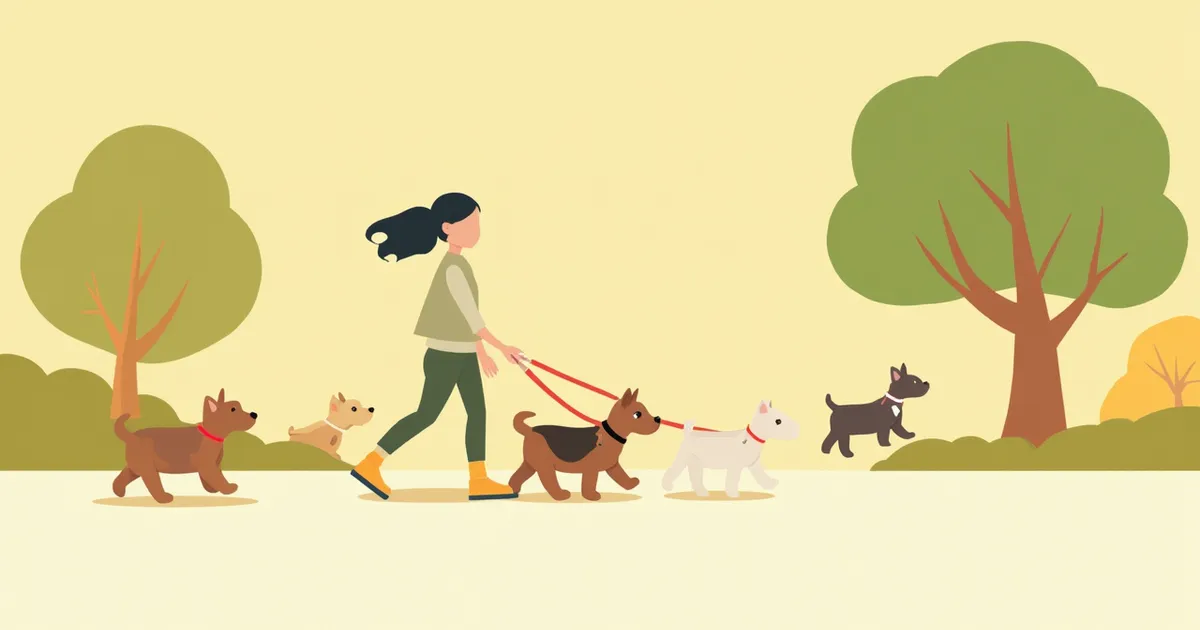
The Complete Guide to Multi-Dog Park Etiquette — From Dog Socialization to Accident Prevention
Here’s a guide to the etiquette and safety rules you should always follow when taking multiple dogs to the park. It’s a practical guide to ensure a comfortable walk for both other pet owners and your furry friends.
What Is Multi-Dog Park Etiquette?

Why Is Walking Multiple Dogs More Challenging?
Walking Multiple Dogs Alone: Key Comparisons to Consider
| Item | Recommended | Not Recommended | Absolutely Prohibited |
|---|---|---|---|
| Leash Length | 1.2–1.5 m fixed-length | Retractable lead of 2 m or more | No leash (off-leash) |
| Number of Dogs | 2 dogs | Up to 3 dogs (for experienced handlers) | 4 or more dogs alone |
| Time of Day | Early morning, late evening | Quiet park on a weekend afternoon | Crowded dog park at peak hours |
| Equipment | Coupler + harness | Separate standard collars | Coupler connected only to collars |
In particular, retractable leads (flexi leads) can extend suddenly and carry a high risk of accidents, so they are not recommended for multi-pet walks.
Basic Etiquette Rules to Always Follow in the Park

How to Respond When Another Dog Charges Toward You
If an off-leash dog charges toward your pets, stay calm, guide them behind you, and if possible, change direction to create distance while slowly backing away. Dogs on leashes, unable to flee, may become more aggressive, so maintaining a safe distance is crucial. Extend your palm toward the other dog and give a low, firm command like “Stop,” but avoid picking up your pets suddenly, as this movement and noise can heighten the charging dog’s excitement and focus. If a confrontation occurs, separate the dogs using water or loud noises, and seek immediate veterinary care for any bite wounds to ensure proper treatment and preventive measures.
Managing Conflicts Between Your Dogs

Multi-Dog Walk Preparation Checklist
Reviewed by a veterinarian

Dr. Tony — Punnawat Phongkittirak
VeterinarianA veterinarian who majored in veterinary medicine at Khon Kaen University, Thailand, and completed the IVSA program at North Carolina State University in the United States. Drawing on clinical experience at animal hospitals, he works in the pet healthcare field and is dedicated to building a digital care environment that connects pet parents with veterinarians.
Reviewed 2026-04-27
Frequently Asked Questions
Does using a coupler always make things more comfortable?
Is it okay to let my dog greet other dogs at the park?
Can I use the dog playground (Off-leash Zone) when walking multiple pets?
Only one of my dogs tries to poop during walks. What should I do?
Do I absolutely have to take my dog for a walk even on rainy or hot days?
Share
Related Guides

Primary vs. Secondary Veterinary Hospitals: A Comparison

5 Easy-to-Raise Cat Breeds for First-Time Owners — Grooming Difficulty Comparison

Top 7 Short-Legged Dog Breeds
Dog Liver Ultrasound: When and Why — Q&A from Exam to Result Interpretation

What to Feed Your Dog with Poor Liver Function — Key Q&A on Liver-Support Diets
Complete Guide to Prognostic Indicators for Canine Liver Disease — From Test Values to Recovery Signs

What is Canine Cirrhosis and Hepatic Fibrosis? — Can It Be Reversed? Key Progression and Management
Why Are Your Dog’s Liver Enzymes Elevated? — Differentiating Causes of ALT and ALP Elevation and Additional Testing Q&A

Complete Guide to Canine Bile Acids Test: Why It’s Done and How to Interpret Results

Why Does Feline Liver Fibrosis Occur? — Key Q&A on Stellate Cell Activation
References
[1] Bain M, Fan T. Behavioral problems in dogs: stress and social conflict, Veterinary Behavioral Medicine, 2012
[2] Landsberg G, Hunthausen W, Ackerman L. Behavior Problems of the Dog and Cat, 3rd ed., Saunders, 2013
[3] Horwitz DF, Mills DS. BSAVA Manual of Canine and Feline Behavioural Medicine, 2nd ed., 2009