
How to Care for Drainage Tubes in Dogs and Cats
We’ve compiled the essentials every pet owner should know about post-surgical drainage tubes, including the different types, how to care for and disinfect them at home, warning signs that require a vet visit, and when it’s time for removal.
What Is a Drainage Tube?
Types of Drainage Tubes
Open vs. Closed Drainage Tubes: A Comparison
| Item | Open type (Penrose) | Closed type (Jackson-Pratt) |
|---|---|---|
| Working principle | Natural drainage by gravity | Active drainage by negative pressure (suction) |
| Infection risk | Relatively high (open structure) | Low (sealed structure) |
| Drainage measurement | Difficult (observe gauze) | Accurate (reservoir graduations) |
| Main use situation | Small wounds and abscesses | Dead space management after major surgery |
| Management difficulty | Moderate | Moderate (requires emptying reservoir and maintaining negative pressure) |
The veterinarian selects the appropriate type based on wound size, location, and degree of contamination
Three Things to Check Daily at Home
Warning Signs That Require Immediate Veterinary Care
If any of the following occur, seek veterinary care immediately: • Severe swelling or redness around the drainage tube • Discharge of dark yellow or green fluid • A foul odor • A sudden significant increase or complete cessation of drainage • The pet has chewed on or dislodged the drainage tube • Lethargy and persistent abnormal fever Never attempt to reinsert a dislodged drainage tube yourself.
How to Disinfect the Area Around the Drainage Tube
Timing and Process for Drainage Tube Removal
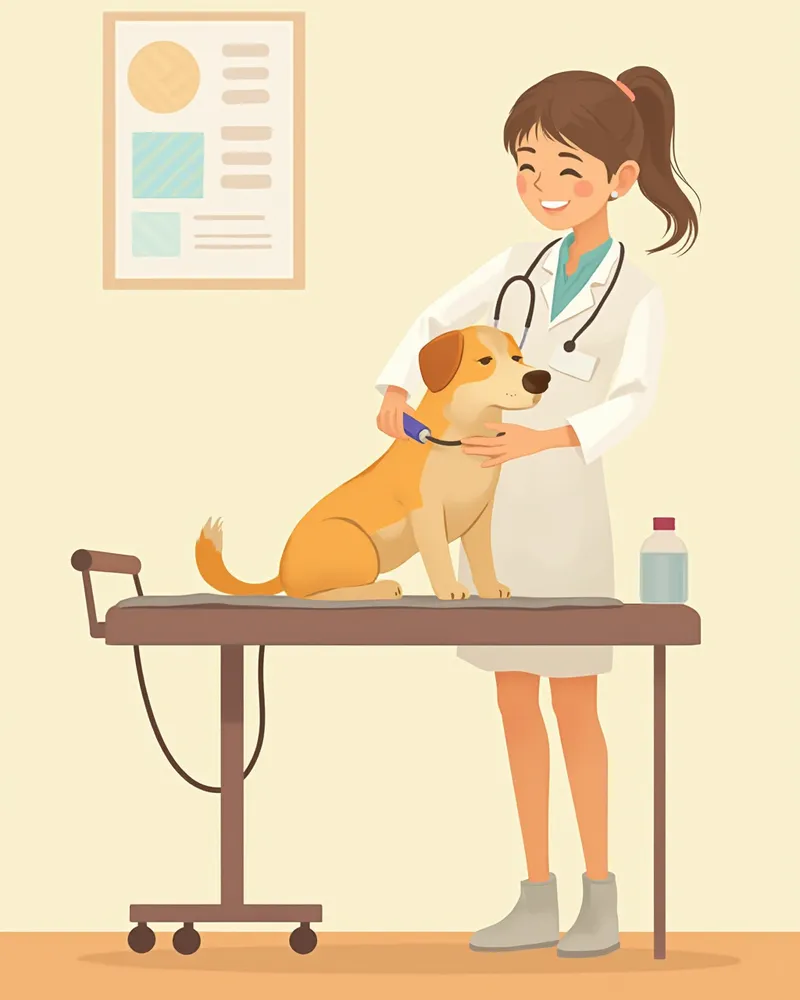
Elizabethan Collars and Activity Restrictions Are Essential
While the drainage tube is in place, it is essential to keep the Elizabethan collar (cone) on at all times. If your pet licks or chews at the tube, the risk of infection increases significantly, and the tube may become dislodged. Even if the collar seems uncomfortable, please keep it on until it is time for removal. Additionally, avoid running, jumping, and vigorous play until the drainage tube is removed. For walks, keep them short and use a harness instead of a collar to reduce pressure on the drainage site.
Reviewed by a veterinarian

Dr. Tony — Punnawat Phongkittirak
VeterinarianA veterinarian who majored in veterinary medicine at Khon Kaen University, Thailand, and completed the IVSA program at North Carolina State University in the United States. Drawing on clinical experience at animal hospitals, he works in the pet healthcare field and is dedicated to building a digital care environment that connects pet parents with veterinarians.
Reviewed 2026-04-19
Frequently Asked Questions
Is it okay if a little blood is coming out of the drainage tube?
What should I do if the drainage tube has come out?
Is it okay to bathe my pet while they still have a drainage tube in place?
Do cats also use drainage tubes?
Is wound care still necessary after the drainage tube is removed?
Share
Related Guides

Primary vs. Secondary Veterinary Hospitals: A Comparison

5 Easy-to-Raise Cat Breeds for First-Time Owners — Grooming Difficulty Comparison

Top 7 Short-Legged Dog Breeds

Feline Urethral Obstruction FAQ — Key Information Every Pet Owner Should Know

Frequently Asked Questions (FAQ) on Cat Urethral Catheter Care — Key Points Every Pet Owner Must Know

Feline Ureteral Stones: Frequently Asked Questions — Key Information for Pet Owners

Frequently Asked Questions About Feline Pyelonephritis — Key Information for Pet Owners

Frequently Asked Questions About Feline Frequent and Urgent Urination — Key Points for Pet Owners

Feline Neurogenic Bladder FAQ — Key Information Every Pet Owner Should Know
Frequently Asked Questions About Feline Bladder Ultrasound — Key Information Every Pet Owner Should Know
References
[1] Buote NJ, Techniques in Small Animal Wound Management, Wiley-Blackwell, 2024