

What to Do Immediately When You Find a Tick on Your Dog — Safe Removal and Emergency Response
This guide covers everything pet owners need to know for emergency tick removal: how to safely and calmly remove a tick found on your dog during a walk, what actions to absolutely avoid, and the warning signs to monitor after removal.
What Should You Do First When You Find a Tick on Your Dog?

What Kinds of Ticks Attach to Dogs?
Safe Tick Removal — Step-by-Step Checklist
| Item | What to do | Points of caution |
|---|---|---|
| Step 1 — Preparation | Prepare a dedicated tick removal tool, gloves, disinfectant, and a sealed container | No bare hands; ordinary tweezers risk breaking off the head |
| Step 2 — Locate | Part the fur to find where the tick's head is embedded in the skin | Recommend one assistant to keep the dog from moving |
| Step 3 — Removal | Grasp the part closest to the skin (the head end) and pull slowly straight out | Do not twist or yank |
| Step 4 — Disinfection | Disinfect the bite site and store the tick in a sealed container | Keeping it for 1–2 weeks allows it to be used for testing |
| Step 5 — Observation | Observe for 24 hours to 2 weeks for fever, decreased appetite, and lethargy | If abnormal signs appear, visit the clinic with the tick |
Reference: recommended procedure from the ectoparasite chapter of the BSAVA veterinary dermatology textbook
How to Safely Use Specialized Tick Removal Tools
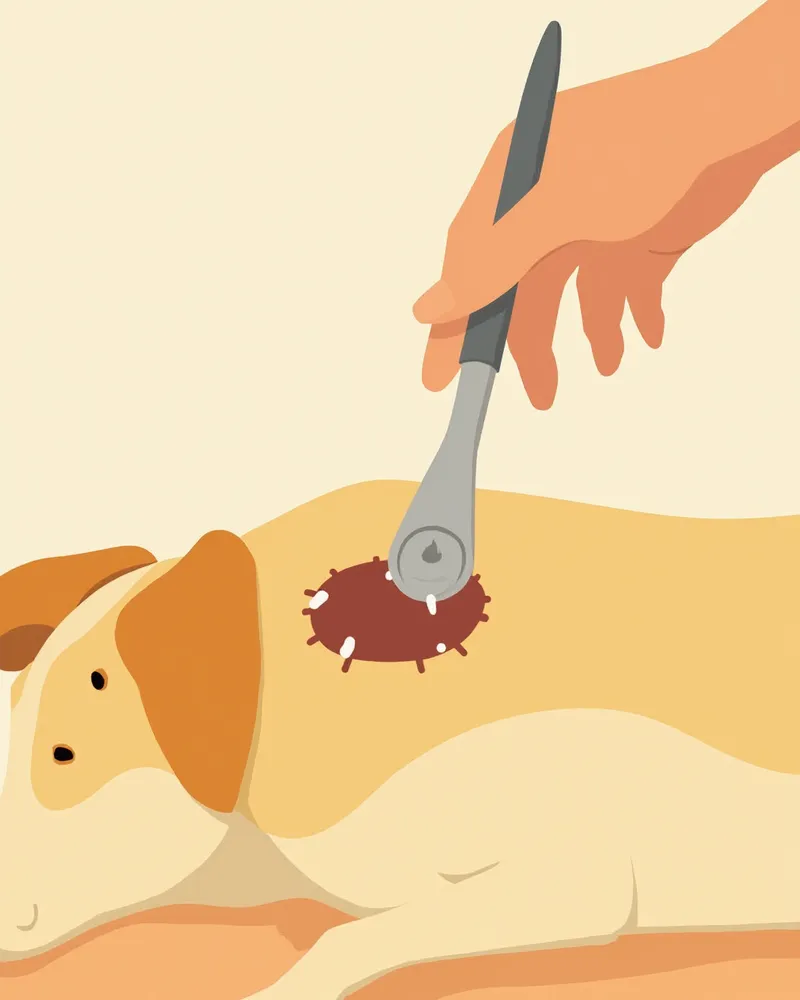
Tick Removal Methods to Absolutely Avoid
Most so-called home remedies are actually dangerous. Cauterizing with a lighter or match can burn your dog’s skin and may irritate the tick, increasing the risk that saliva or bodily fluids containing pathogens will be forced into the bite site. Smothering the tick with alcohol, petroleum jelly, or cooking oil only slowly irritates it and does not follow the textbook-recommended method of using a dedicated tool or forceps to gently and steadily pull the tick straight out. Pulling it off with bare hands can leave the mouthparts embedded in the skin, leading to inflammation, abscesses, and secondary infections. Crushing the tick with your fingernails is also prohibited.
Post-Removal Wound Care and Tick Storage
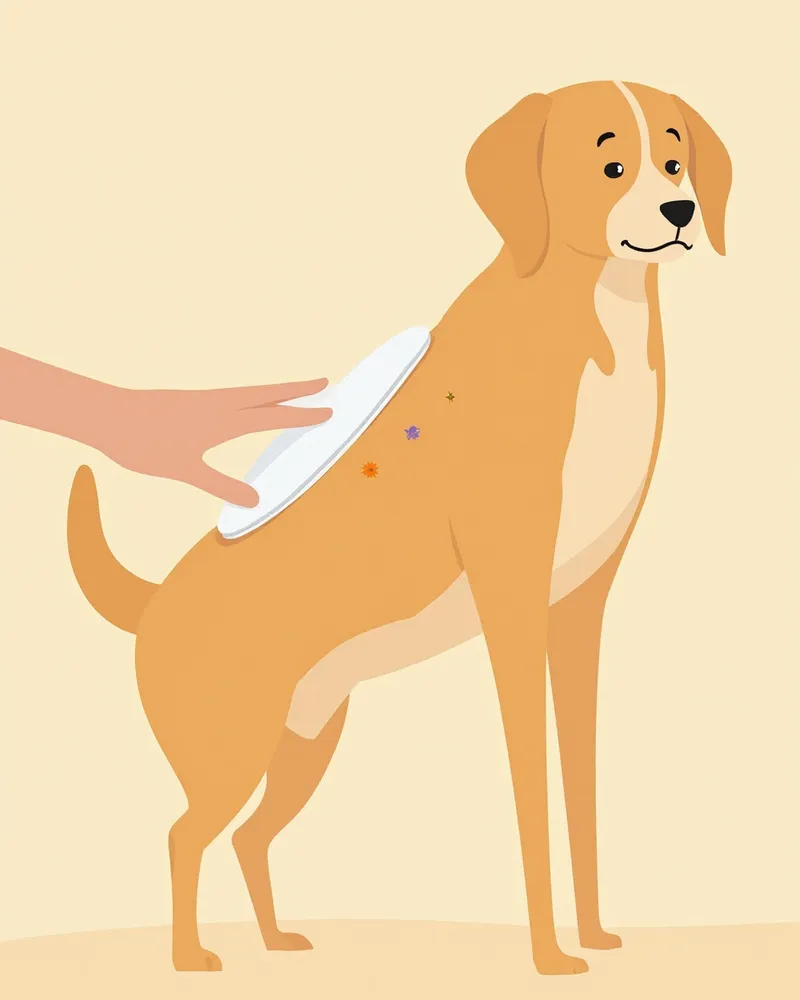
Tick-Borne Diseases — Key Warning Signs to Know
When to Visit the Vet Immediately
If the tick’s head remains embedded in the skin after removal, or if the bite site becomes increasingly swollen and starts oozing, stop attempting home treatment and visit a veterinarian. Additionally, if fever, lethargy, loss of appetite, jaundice, or blood in the urine appear within days to weeks (up to two months or more for Lyme disease) after removal, suspect tick-borne diseases such as babesiosis, Lyme disease, anaplasmosis, ehrlichiosis, or SFTS. Symptoms of anaplasmosis and ehrlichiosis typically emerge 1–3 weeks after infection, while Lyme disease symptoms may take 2–5 months to appear, so allow ample time for observation. Bringing the saved tick to the clinic can greatly assist with diagnosis.
Daily Prevention to Avoid Reinfestation

Reviewed by a veterinarian

Dr. Tony — Punnawat Phongkittirak
VeterinarianA veterinarian who majored in veterinary medicine at Khon Kaen University, Thailand, and completed the IVSA program at North Carolina State University in the United States. Drawing on clinical experience at animal hospitals, he works in the pet healthcare field and is dedicated to building a digital care environment that connects pet parents with veterinarians.
Reviewed 2026-05-05
Frequently Asked Questions
I was removing a tick and its head got stuck in my pet’s skin. What should I do?
Is it normal for the area bitten by a tick to become swollen?
Can ticks still attach to my pet even after applying preventive medication?
Can I remove ticks from my cat using the same method?
How many days should I monitor my pet after a tick bite?
Share
Related Guides

5 Flea and Tick Preventives for Cats Recommended by Veterinarians — Ingredient Safety Comparison

The Ultimate Guide to Differentiating Symptoms, Managing Internal Parasites in Dogs, and Choosing the Best Products

Best Practices and Selection Criteria for Dog Heartworm Antigen Testing
Types of Minimally Invasive Surgery (MIS)

What is Cryosurgery for Pets? — Is It an Option for Your Pet’s Tumor?

When is Total Hip Replacement Needed for Dogs, and What Is the Recovery Like?
Partial Hepatectomy Procedure

Ovariohysterectomy vs Ovariectomy: How Do They Differ for Dog Spaying?

How is a Dog’s Vasectomy Different from Neutering? — A Guide to Hormonal, Reproductive, and Health Differences

Penile Amputation (for Urinary Tract Obstruction)
References
[1] BSAVA Manual of Canine and Feline Dermatology, 4th Edition, Chapter on Ectoparasites
[2] Principles and Practices of Canine and Feline Clinical Parasitic Diseases, Chapter 7 & 13
[3] 수의피부과학 교과서 — 외부기생충 챕터