Like
Share
멍실장
강아지 갑상선암 자주 묻는 질문 Q&A — 보호자가 꼭 알아야 할 핵심

Suspected Canine Thyroid Cancer — Key Q&A on Symptoms, Diagnosis, and Survival Rates

EndocrineQ&AMeongsiljang Veterinary Advisory Board

Canine thyroid cancer is uncommon, but early detection is crucial. Here’s a summary of the symptoms, diagnostic methods, and treatment options that pet owners should know.

What Is Canine Thyroid Cancer?

Anatomical image of a malignant tumor in a dog's thyroid gland
Canine thyroid cancer is a condition in which a tumor develops in the front of the neck (ventral cervical region). Most thyroid tumors in dogs are nonfunctional, meaning they do not secrete hormones normally. - Thyroid cancer: Thyroid tumors in dogs are highly likely to be malignant when they occur (adenomas account for only about 9%), and functional tumors that overproduce hormones are rare, making up less than 25% of cases. - Risk factors: Thyroid tumors account for approximately 1.1–3.8% of all canine tumors and are primarily found in middle-aged to senior dogs. - Diagnostic challenges: Early stages often present no symptoms, making them easy to miss; signs may include a palpable lump in the neck or difficulty swallowing. - Treatment prerequisites: Early diagnosis significantly improves treatment success rates, making regular veterinary check-ups essential. - Prognosis: With appropriate treatment, survival time can be extended.

What Are the Main Causes of Thyroid Cancer?
Although the exact cause of thyroid cancer in dogs remains unknown, several risk factors have been identified: - Breed predisposition: In the United States, Beagles, Boxers, Golden Retrievers, and Huskies have been reported to have a higher risk of developing this condition. There is no significant difference in incidence between males and females. - Age factor: Thyroid cancer is commonly found in middle-aged and older dogs, with the frequency of diagnosis increasing with age. - Incidence rate: Thyroid tumors account for approximately 1.1% to 3.8% of all canine tumors, making them relatively rare. - Tumor characteristics: When thyroid tumors occur in dogs, they are more likely to be malignant than benign, so careful attention is required. - Prevention: While there is no clear method for prevention, early detection is possible through regular veterinary check-ups. - Important note: Early symptoms are often subtle and easy to overlook, so close observation is essential.
A diagram explaining the risk factors for canine thyroid cancer

What Are the Main Symptoms of Thyroid Cancer?

The most common sign of thyroid cancer in dogs is a palpable lump on the front of the neck (ventral cervical region), which is often the only finding detected during a physical examination. - Neck mass: As the tumor gradually grows, it can cause difficulty swallowing. - Functional abnormalities: Most canine thyroid tumors are non-functional, so symptoms of hormone excess are uncommon; however, some dogs may experience weight loss or increased thirst and urination. - Coughing and difficulty breathing: If the tumor compresses the airway, it can lead to persistent coughing or shortness of breath. - Systemic symptoms: Fatigue and decreased activity levels may also occur. Early detection is key to improving survival rates.
A dog struggling to swallow due to a lump in its neck

How Is Thyroid Cancer Diagnosed?

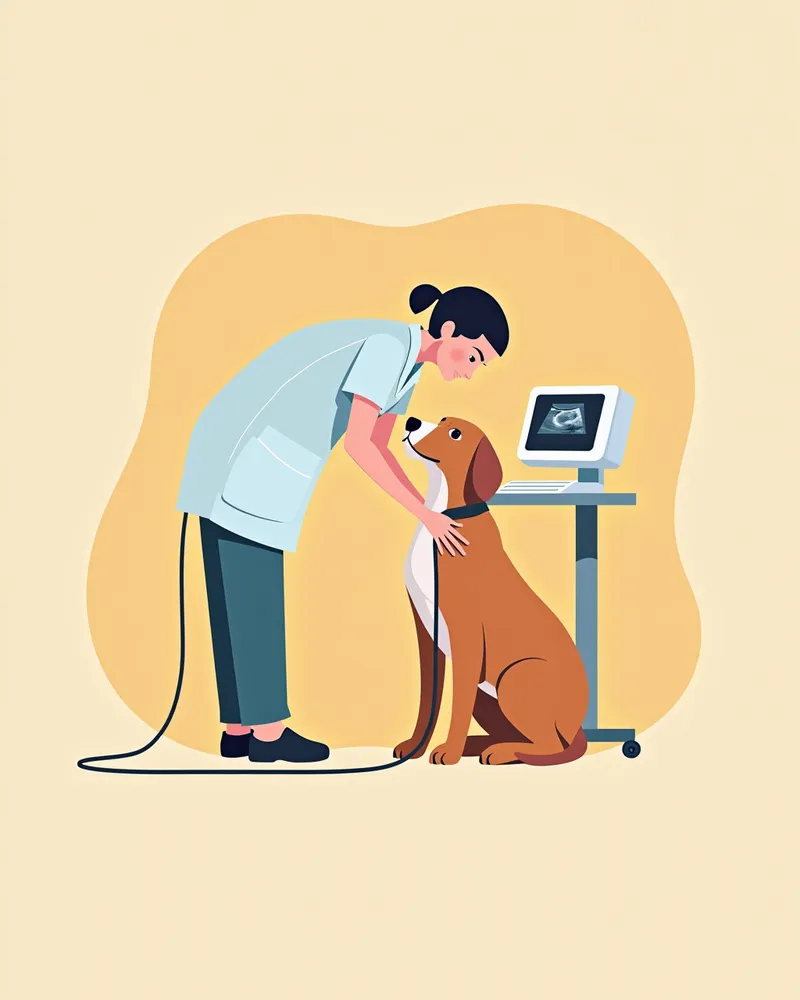
Diagnosing thyroid cancer involves a combination of tests. - Ultrasound: This provides a detailed assessment of the tumor’s size, location, and blood flow in the neck area. - Biopsy: This key procedure involves collecting cells from the tumor to determine if it is malignant. - Blood tests: These measure thyroid hormone levels (T4 and TSH) to evaluate any functional abnormalities. - Imaging studies: Chest X-rays or CT scans are used to check for metastasis to the lungs or lymph nodes. - Comprehensive evaluation: Results from these various tests are combined to establish an accurate diagnosis and treatment plan. Regular check-ups are essential.
A veterinarian performing an ultrasound examination on a puppy’s neck area.

What Are the Treatment Options for Thyroid Cancer?

Treatment for canine thyroid cancer depends on the size of the tumor and whether it has metastasized. - Surgical treatment: This is the most effective method for removing the tumor. Prognosis is favorable when the tumor is mobile and has not metastasized, with a median survival time of approximately 2–3 years following complete resection. - Radiation therapy: This is performed when surgery is difficult or the tumor is highly invasive. It may take several months for the tumor to shrink. - Monitoring: Regular follow-up examinations are crucial to check for recurrence and metastasis after treatment. - Chemotherapy: This may be considered as an adjunctive therapy alongside other treatments in cases where metastasis has occurred. - Multidisciplinary approach: Veterinarians collaborate with specialists in radiology and oncology to provide personalized treatment plans. Regular check-ups remain essential even after treatment is completed.
A puppy recovering after thyroid surgery

Comparison of Thyroid Cancer Treatment Methods

ItemEfficacySide effectsSuitability
Surgical removalHighPain, infection, parathyroid damage (hypocalcemia)A small, mobile tumor with no metastasis
Radiation therapyModerateDermatitis, esophageal inflammationWhen surgery is difficult or highly invasive
ChemotherapySupportiveHair loss, nausea, decreased immunityWhen metastasis is present
Monitoring (no treatment)LowTumor progression and metastasisWhen treatment is difficult (median survival about 3 months)

The treatment method is determined by the veterinarian based on the individual situation.

Signs Requiring Immediate Veterinary Visit

If you notice a lump in your dog's neck, difficulty swallowing, persistent coughing, or rapid breathing, seek veterinary care immediately. These symptoms may indicate that a tumor is pressing on the airway. Early treatment is key to improving survival rates.

Post-Treatment Care Points

Regular follow-up care after treatment is crucial for improving survival rates. - Blood tests: Check thyroid hormone levels every 3 to 6 months. - Ultrasound exams: Evaluate for tumor recurrence every 6 months. - Dietary management: Provide soft, easily digestible food; if swallowing is difficult, recommend mashed food. - Minimize stress: Maintain a calm and stable environment for comfortable living. - Medication adherence: Hormone suppressants must be taken consistently for a specified period. - Symptom monitoring: Visit the clinic immediately if symptoms such as coughing, difficulty breathing, or decreased appetite occur.
A puppy eating soft food after treatment

Reviewed by a veterinarian

Dr. Tony — Punnawat Phongkittirak

Dr. Tony — Punnawat Phongkittirak

Veterinarian

A veterinarian who majored in veterinary medicine at Khon Kaen University, Thailand, and completed the IVSA program at North Carolina State University in the United States. Drawing on clinical experience at animal hospitals, he works in the pet healthcare field and is dedicated to building a digital care environment that connects pet parents with veterinarians.

Frequently Asked Questions

Can a dog’s thyroid cancer be genetic?
Certain breeds are at higher risk for thyroid cancer, suggesting a possible genetic predisposition. In the United States, Beagles, Boxers, Golden Retrievers, and Huskies have been reported to have an elevated risk. Since there is no significant difference between sexes, owners of these predisposed breeds should monitor their pets closely.
Can thyroid cancer spread to other organs?
Yes, thyroid cancer can metastasize to the lungs and lymph nodes, among other sites. If metastasis is already confirmed before surgery, the treatment plan will need to be adjusted accordingly. Regular check-ups are essential for detecting metastasis at an early stage.
Can thyroid cancer be cured with medication alone?
Medication serves as a supportive measure to alleviate symptoms or prepare for surgery. Since complete recovery typically requires surgical or radiation therapy, relying on medication alone has limited effectiveness.
How long can my pet live after treatment?
The outcome depends on the success of treatment. If the tumor is well-defined and can be completely removed through surgery, the median survival time can reach approximately 2 to 3 years. However, if the tumor is invasive or has metastasized, the survival time may be shortened.
Can thyroid cancer be prevented?
While there’s no definitive prevention method yet, early detection is possible through regular health check-ups and neck examinations. As pets age, it becomes increasingly important to have them checked more frequently.

Share

Related Guides

References

[1] Peterson ME, Kintzer PP, Hurvitz AI. Methimazole treatment of 262 cats with hyperthyroidism. J Vet Intern Med. 1988;2:150.

[2] Fox P, Peterson M, Broussard J. Electrocardiographic and radiographic changes in cats with hyperthyroidism. J Am Anim Hosp Assoc. 1998;35:27.

[3] Textbook of Cardiovascular Medicine in Dogs and Cats. 2020. Blackwell Publishing.

This information is based on veterinary literature and does not replace diagnosis or treatment. Please consult a veterinarian for specific health concerns.

Metapet Co., Ltd. | CEO: Park Sung-yong | Business Reg. No. 417-88-02562 | Seoul, South Korea | Customer Center

Suspected Canine Thyroid Cancer: Symptoms & Survival Rates Q&A | Meongsiljang