

Dog Surgery Pre- and Post-Operative Care and Recovery Guide
From pre-surgical tests and fasting preparations to post-operative wound care and step-by-step home recovery methods, we’ve compiled the essential information every pet owner should know, based on veterinary anesthesia textbooks.
Essential Dog Surgery Pre- and Post-Operative Care

Preoperative Tests
Preoperative Preparation Checklist
| Item | Details | Timing |
|---|---|---|
| Fasting | Follow your veterinarian’s instructions for fasting duration (typically starting the night before) | Night before |
| Withholding water | Follow your veterinarian’s instructions for withholding water (typically starting the morning of surgery) | Morning of surgery |
| Current medications | Inform your veterinarian about any medications your pet is currently taking | Pre-surgery consultation |
| Bathing | Bathe your pet in advance, as they won’t be able to get wet for a while after surgery | 2–3 days before surgery |
| Elizabethan collar | Prepare it in advance so it can be used immediately after surgery | Before surgery |
What to Expect on Surgery Day
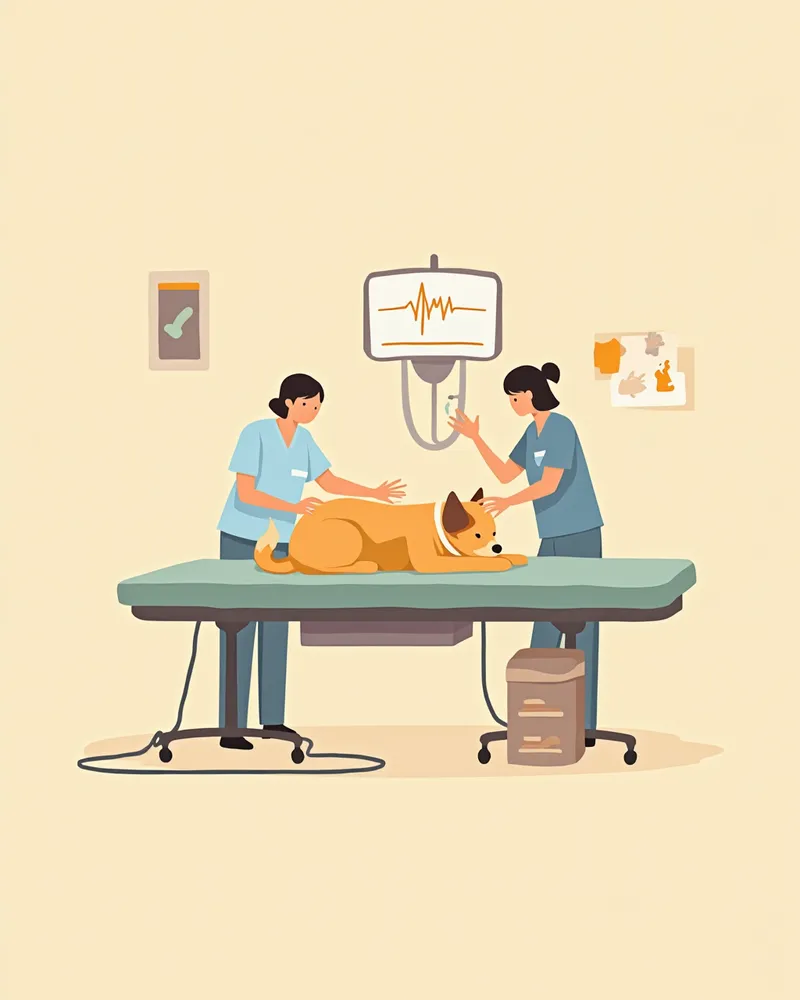
Please Inform Us in Advance of High Anesthesia Risk Cases
Brachycephalic breeds (such as Bulldogs, Pugs, and Shih Tzus) have narrow airways, which can lead to breathing difficulties during anesthesia. Therefore, it is safer to prepare for endotracheal intubation and oxygen administration in advance. Senior dogs have been reported to have a higher risk of complications and mortality before and after anesthesia, and dogs with heart, liver, or kidney disease require stabilization prior to anesthesia. If your pet has experienced symptoms such as coughing or shortness of breath, please inform us before surgery to ensure anesthetic safety. Preoperative tests will help identify these risk factors in advance, so please provide your veterinarian with a complete and accurate medical history.
Step-by-Step Postoperative Recovery Care
| Timeframe | Care Focus | Precautions |
|---|---|---|
| Day of surgery – Day 2 | Rest, maintain body temperature, offer small amounts of water | Lethargy and vomiting are normal post-anesthesia responses |
| Days 3–7 | Check the incision daily, keep the Elizabethan collar on | Absolutely prevent licking or scratching the incision |
| Days 7–14 | Suture removal (if applicable), gradually increase activity | Avoid strenuous exercise and bathing |
| Weeks 2–4 | Gradual return to normal activity | Confirm full recovery with a follow-up checkup |
Home Care Instructions

Environmental and Nutritional Management for Recovery

Contact Your Veterinarian Immediately If You Notice These Symptoms
Contact your veterinarian immediately if you notice any of the following symptoms after surgery: persistent bleeding or discharge of pus from the incision site, increasing swelling at the surgical site, complete refusal to eat for more than 24 hours post-surgery, repeated vomiting or diarrhea, or abnormally rapid or labored breathing. These may be signs of complications. While mild lethargy is normal after anesthesia, please consult your veterinarian if it does not improve over time.
Reviewed by a veterinarian

Dr. Tony — Punnawat Phongkittirak
VeterinarianA veterinarian who majored in veterinary medicine at Khon Kaen University, Thailand, and completed the IVSA program at North Carolina State University in the United States. Drawing on clinical experience at animal hospitals, he works in the pet healthcare field and is dedicated to building a digital care environment that connects pet parents with veterinarians.
Reviewed 2026-04-13
Frequently Asked Questions
When can I start feeding my pet after surgery?
My dog really hates wearing the e-collar. Is it okay to take it off?
When can my pet take a bath after surgery?
When can I start walking my pet after surgery?
Should I disinfect the surgical site?
Share
Related Guides

Top 7 Short-Legged Dog Breeds

Primary vs. Secondary Veterinary Hospitals: A Comparison

5 Easy-to-Raise Cat Breeds for First-Time Owners — Grooming Difficulty Comparison
Dog Neurogenic Bladder FAQ — Key Information for Pet Owners

Dog Difficulty Urinating (Stranguria) FAQ — Key Information for Pet Owners

Dog Calcium Oxalate Uroliths FAQ — Key Information Every Pet Owner Should Know
Dog Bladder Ultrasound Exam FAQ — Key Information Every Pet Owner Should Know

Dog Bladder Transitional Cell Carcinoma FAQ — Key Information Every Pet Owner Should Know

Dog Bladder Polyps & Growths FAQ — Key Information for Pet Owners

Dog Bacterial Cystitis FAQ — Key Information for Pet Owners
References
[1] Small Animal Anesthesia and Pain Management: A Color Handbook, 3rd Edition — Perioperative Patient Care
[2] Fossum TW. Small Animal Surgery, 3rd ed. — Chapter: Preoperative and Intraoperative Care of the Surgical Patient
[3] The Dog Care Handbook: Things I Wish My Vet Had Told Me — Surgery and Pain Management