Like
Share
멍실장
고양이 보디랭귀지 완벽 해독

What Is Your Cat Saying Through Body Language? — Reading Tail, Ear, and Vocal Signals

Brain & CognitionQ&AMeongsiljang Veterinary Advisory Board

We’ve compiled a guide to interpreting the signals your cat sends through its tail, ears, eyes, whiskers, and body posture in various situations. Learn to distinguish between signs of affection, caution, fear, and pain so you can communicate with your cat without misunderstanding.

What Is Cat Body Language?
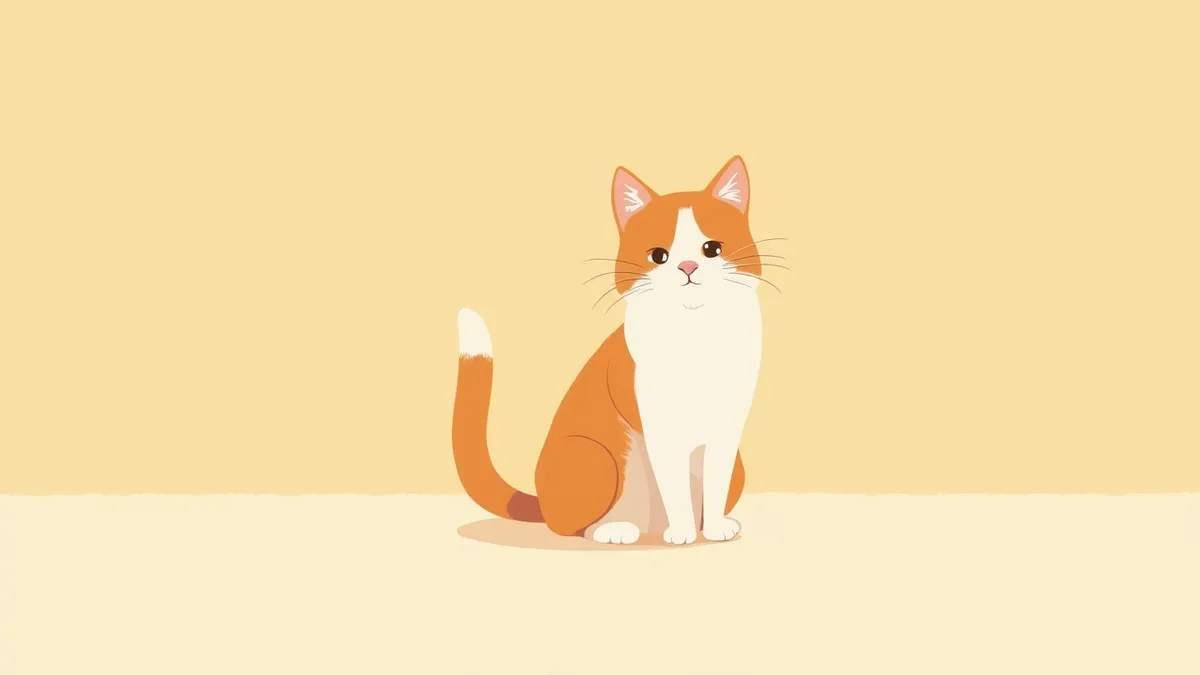
A cat positioned so that its tail, ears, and eyes are all visible
A cat’s body language is a form of nonverbal communication that reveals its emotions and intentions through the combination of its tail, ears, eyes, whiskers, and posture. The key is not to focus on just one body part, but to interpret the “whole picture.” For example, even if the tail is held upright, if the ears are flattened back and the pupils are dilated, it may signal caution rather than friendliness. In this article, we’ll break down the signals for each body part and then explain how to read them in combination.

Why Is Decoding Body Language Necessary?

Unlike dogs, cats tend to keep their emotions hidden. According to veterinary behavior textbooks, they have a strong instinct to mask signs of stress and pain, which means owners can easily miss subtle cues and delay discovering underlying health issues. It’s especially important to closely observe your cat’s body language during environmental changes, such as vet visits, moving to a new home, or introducing a new family member. Noticing even small changes is the first step in proactive health care.

Key Signals by Body Part at a Glance

ItemRelaxed & affectionateWary & anxiousFearful & about to attack
TailHeld straight up vertically, tip slightly curvedLowered horizontal to the ground, only the tip twitchingPuffed up with raised fur, or tucked between the legs
EarsNaturally perked forwardLaid to the sides, rotating toward surrounding soundsFlattened completely back
PupilsNarrow, elongated vertical pupilsDilated into an oval shapeFully round and widely dilated
WhiskersRelaxed, spread out to the sidesTense, losing their natural curve and stiffeningFlattened against the cheeks

Pupil size can vary with lighting and level of excitement. Always interpret it together with other body parts.

Emotional Signals Read Through the Tail
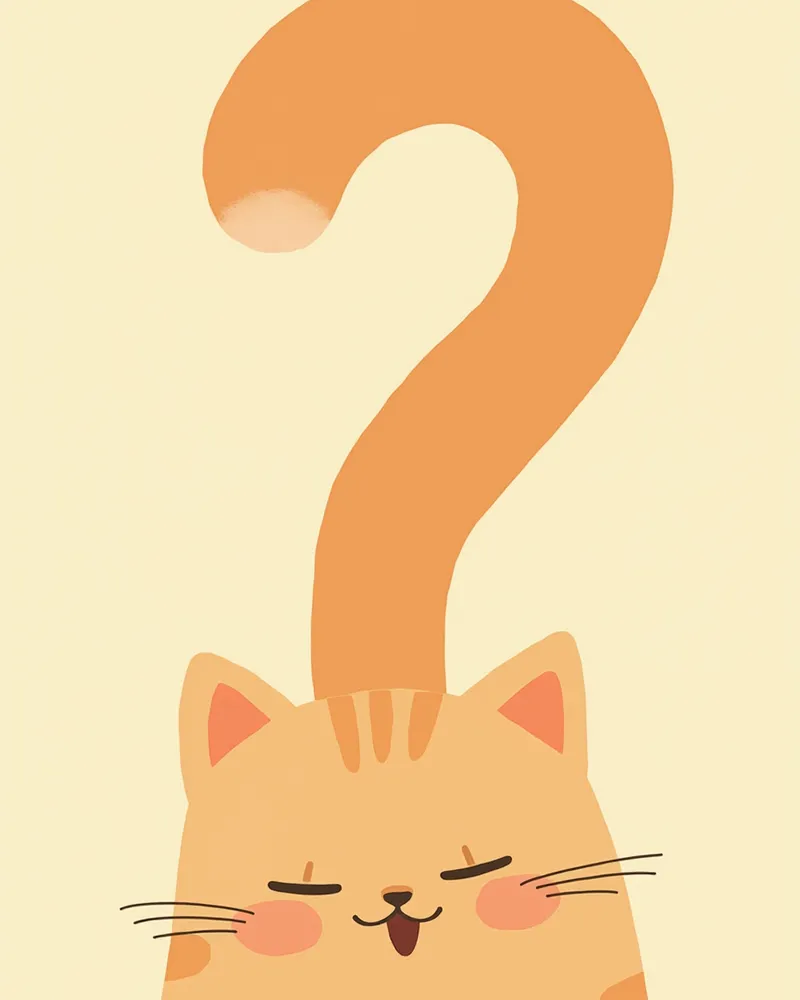
A cat’s tail is the most honest indicator of its emotions.
Upright tail (with a slight curve at the tip): A sign of welcome and friendliness, used as a greeting.
Question-mark tail: An invitation to play, showing curiosity.
Rapid side-to-side swishing: Irritation or stress; touching the cat may result in scratches.
Puffed-up tail: Extreme fear or the moments before a defensive attack.
Tucked between the legs: Severe anxiety and a cowed state.
Unlike dogs, the biggest misconception about cats is assuming that a side-to-side wag means they are happy.
A cat’s tail held upright in a question-mark shape

How to Interpret the Combination of Ears, Eyes, and Whiskers

Slow blinking: Often called a "cat kiss," this is one of the highest forms of affection. If you blink back at the same pace, it helps deepen your bond of trust.
Ears flattened sideways ("airplane ears"): This is an early signal of frustration, annoyance, or anger. It often appears alongside facial muscle tension and serves as a warning that your cat is uncomfortable.
Ears pinned back + round pupils + whiskers flattened against the face: This indicates your cat is about to attack. Immediately withdraw your hand and give them space.
Whiskers pulled forward: This means your cat is in hunting mode or actively investigating something that has captured their interest.

Keep Your Distance Immediately If You See These Signals

If your cat’s ears are pinned flat against its head, its pupils are fully dilated, its back is arched, and its tail fur is puffed up, it is on the verge of attacking. If these signs are accompanied by growling or hissing, do not attempt to touch or pick up the cat. Instead, quietly leave the room and give it ample time to calm down on its own. Forcing contact can result in serious injuries and prolong the cat’s anxiety.

Pain and Disease Signals That Are Easy to Miss
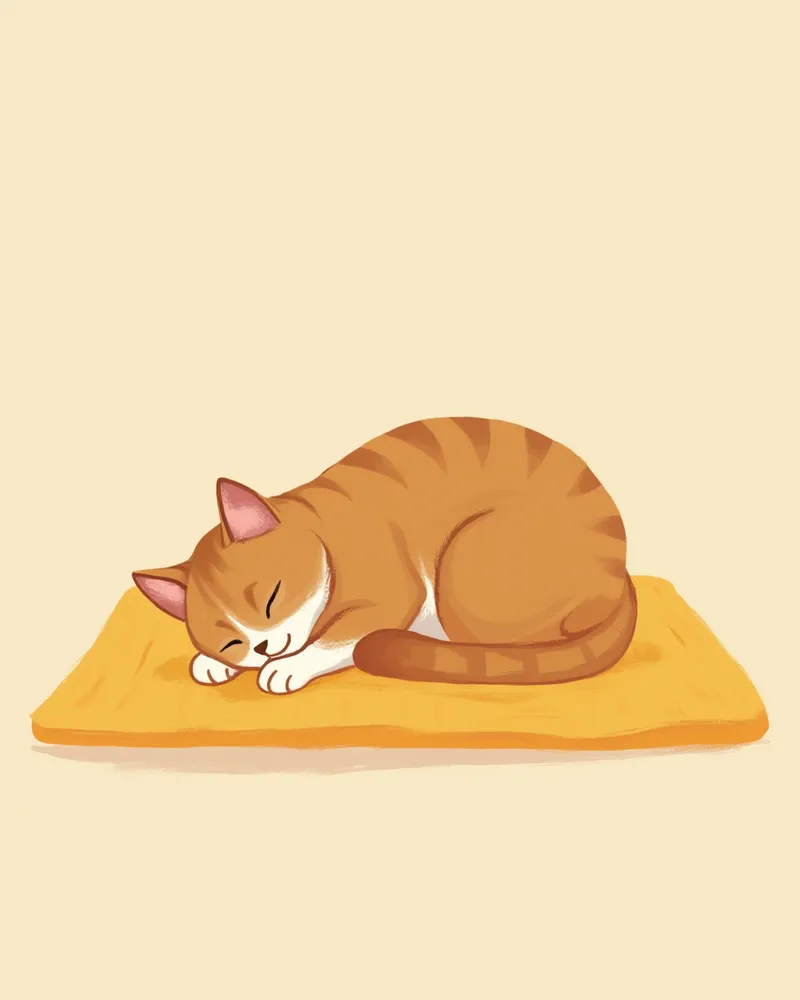
According to veterinary behavior textbooks, cats have a strong tendency to hide pain as a survival strategy. Therefore, if you observe the following body language persistently, it may indicate an underlying medical condition rather than a simple mood change.
Prolonged crouching posture: A curled-up or tucked position can be associated with pain or internal discomfort.
Drooping whiskers and a rigid facial expression: Pain often causes whiskers to droop, a sign recognized and utilized in validated pain assessment scales.
Increased hiding time: Spending more time hiding and showing lethargy may be early signs of stress or illness.
Decreased or excessive grooming: Changes in grooming patterns are behavioral signals related to pain or chronic stress.
If these signs are observed repeatedly or persistently in daily life, we recommend a veterinary examination to rule out other potential medical conditions.
A cat resting in a crouched position

How to Respond Appropriately

Relaxed state: Blink slowly to signal calmness, and gently stroke the cat’s head and under the chin.
Cautious state: Avoid direct eye contact; sit slightly to the side. Extend your hand for the cat to sniff, then wait for it to approach you.
Fearful state: Provide access to high perches and hiding spots, and use pheromone sprays (such as Feliway) as a supportive measure.
Play request: Satisfy the cat’s hunting instinct with a wand toy for short sessions of 5–10 minutes.

Always Consider Breed and Individual Differences

Even when expressing the same signal, the manner and intensity can vary significantly depending on the breed and individual cat. Some cats display their emotions quite clearly, while others show fewer facial changes, making it easier to miss signs of pain or discomfort. Moreover, each cat has its own unique "baseline posture" when comfortable, and emotional states can shift moment by moment, making it difficult to draw conclusions from a single snapshot. Therefore, keeping a photo or video record of your cat’s normal behavior helps establish a baseline, allowing you to detect even subtle changes more easily. A guardian who knows their cat’s baseline well is the best primary care provider.

Reviewed by a veterinarian

Dr. Tony — Punnawat Phongkittirak

Dr. Tony — Punnawat Phongkittirak

Veterinarian

A veterinarian who majored in veterinary medicine at Khon Kaen University, Thailand, and completed the IVSA program at North Carolina State University in the United States. Drawing on clinical experience at animal hospitals, he works in the pet healthcare field and is dedicated to building a digital care environment that connects pet parents with veterinarians.

Frequently Asked Questions

Is my cat wagging its tail vigorously from side to side because it’s happy to see me, like a dog?
No, that’s not right. When a cat flicks its tail quickly and forcefully from side to side, it’s a sign of irritation or stress. If you try to pet it in this state, it may scratch or bite you, so it’s best to give it some space for now.
My cat slowly blinks at me. What does it mean?
Known as a "cat kiss," this is the ultimate expression of affection and trust. If you respond by slowly blinking back at the same pace, it will deepen your bond with your feline friend.
Is it okay to pet my pet if they show their belly?
Not necessarily. While exposing the belly is a sign of trust, it doesn't always mean the pet wants to be touched. Sudden contact can trigger a defensive reaction, leading to a bite. It's safer to start by gently petting the head, chin, and cheeks.
My pet keeps hiding after the move. How long should I wait?
Each cat adjusts to a new environment at its own pace. While it’s normal for them to gradually expand their activity range, persistent hiding, reduced appetite, or cessation of grooming may signal chronic stress or an underlying medical condition, so consulting a veterinarian is recommended. Providing hiding spaces and using pheromone supplements can help ease the transition.
The signals from different body parts are all different. How should I interpret them?
It’s safest to judge based on the most defensive or negative signals. Even if the tail is held high, if the ears are pinned back and the pupils are dilated, you should consider the animal to be in a state of alertness or tension.

Share

Related Guides

References

[1] Little SE, ed. The Cat, Clinical Medicine and Management, 2nd Edition. Elsevier

[2] A Professional's Guide to Feline Behaviour: Understanding, Improving and Resolving Problems

[3] Stepita ME. Feline anxiety and fear-related disorders. In: August's Consultations in Feline Internal Medicine, 7th ed.

[4] Pereira JS, Fragoso S, Beck A, et al. Improving the feline veterinary consultation. J Feline Med Surg. 2016;18:959–964.

[5] Campoli V, Vettorato E. How to Recognise Pain in Cats. Companion Animal (BSAVA), 2018(12):12–17.

This information is based on veterinary literature and does not replace diagnosis or treatment. Please consult a veterinarian for specific health concerns.

Metapet Co., Ltd. | CEO: Park Sung-yong | Business Reg. No. 417-88-02562 | Seoul, South Korea | Customer Center

What Is Your Cat Saying? Reading Tail, Ear & Vocal Signals | Meongsiljang