
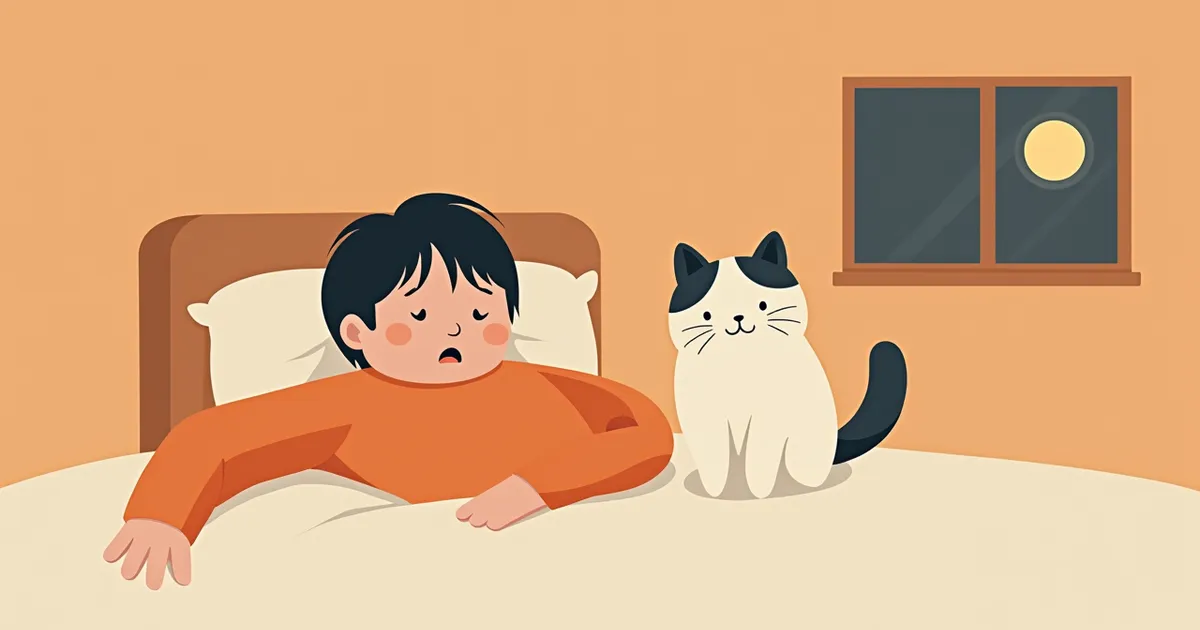
Why Does My Cat Wake Me Up at Dawn? — Causes of Sleep Disruption and the Right Time to Act
We’ve compiled a Q&A on why cats wake their owners at night and how to address the issue based on different behavioral types. Learn about the causes of sleep-disrupting behaviors like early-morning meowing, biting, and dropping objects, along with important precautions for senior cats.
What Are Cat Sleep-Disrupting Behaviors?
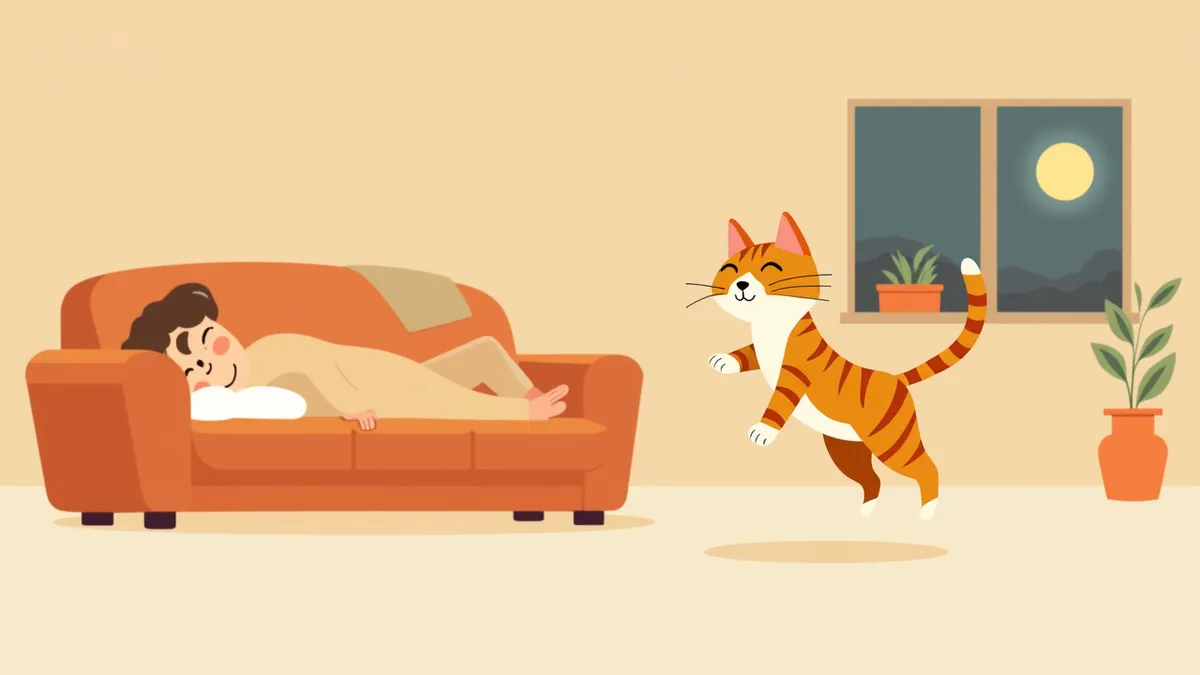
Main Reasons Cats Wake Their Owners at Night
Causes and Timeframes by Type of Sleep-Disrupting Behavior
| Item | Main Cause | Time It Mostly Occurs |
|---|---|---|
| Dawn Crying | Hunger, attention-seeking | 4–6 a.m. |
| Biting Feet and Hands | Hunting instinct | Middle of the night to dawn |
| Licking the Face and Climbing On | Affection, attention-seeking | Early dawn |
| Knocking Objects Down | Desire to explore and play | Middle of the night |
| Loud, Persistent Crying | Senior cat cognitive decline, hypertension, and other age-related diseases | Middle of the night to dawn |
If nighttime crying suddenly worsens in a senior cat (usually 11+ years, as early as 10 years), a veterinary checkup is recommended
For Senior Cats, Check for Medical Causes First

Cats Aged 7 and Older: Go to the Vet Immediately If You See These Symptoms
If your cat suddenly starts crying at night, seems disoriented, or meows without an apparent reason, especially with severe crying in the early morning, it could be a sign of cognitive dysfunction syndrome (feline dementia). If they are confused, pacing, and crying loudly, high blood pressure should also be checked. If there are changes in appetite or weight, testing for endocrine disorders like hyperthyroidism is necessary. In both cases, a veterinary diagnosis should come before any behavioral correction.
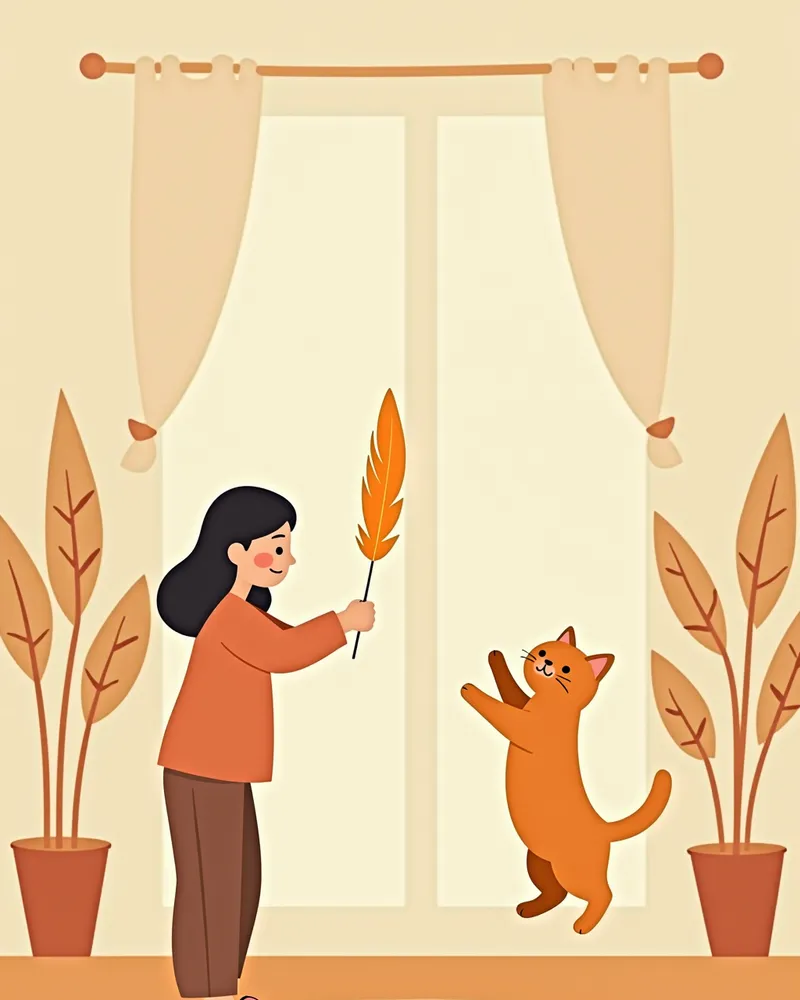
Reduce Nighttime Activity with a Pre-Bedtime Play Routine
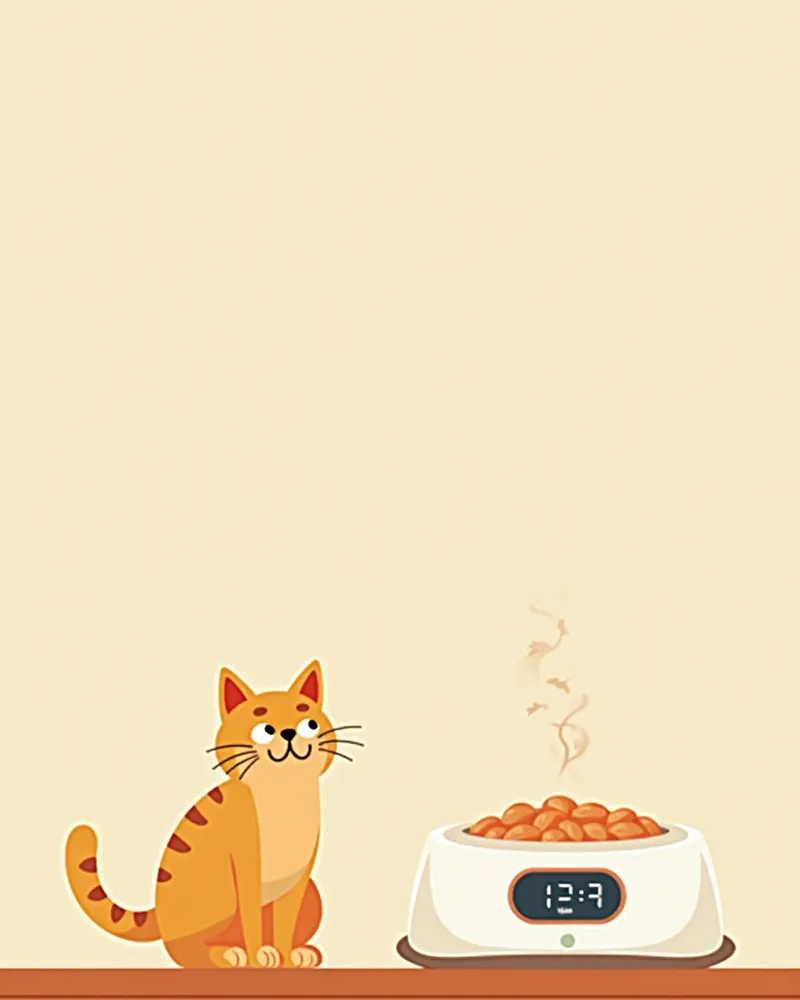
Solve Early-Morning Hunger with Automatic Feeders and Environmental Enrichment
Scolding or Comforting Can Have the Opposite Effect
Pushing or scolding a cat loudly doesn’t help them understand why they’re being reprimanded; it only increases their stress. On the other hand, comforting or responding to them reinforces the pattern that “crying gets attention.” To reduce unwanted behavior, completely ignore it, and instead reinforce calm, quiet moments with praise and treats.
Reviewed by a veterinarian

Dr. Tony — Punnawat Phongkittirak
VeterinarianA veterinarian who majored in veterinary medicine at Khon Kaen University, Thailand, and completed the IVSA program at North Carolina State University in the United States. Drawing on clinical experience at animal hospitals, he works in the pet healthcare field and is dedicated to building a digital care environment that connects pet parents with veterinarians.
Reviewed 2026-06-01
Frequently Asked Questions
My cat started meowing in the early hours of the morning, so I gave it food, but the behavior actually got worse. Why did that happen?
My dog keeps biting my feet while I’m sleeping. What should I do?
My cat is over seven years old and has suddenly started meowing loudly every night. Should I take him to the vet?
Even though I played with my pet enough during the day, they still disturb me at night. Why is that?
Do kittens also exhibit sleep-disrupting behaviors? When will they outgrow this?
Share
Related Guides

7 Behavioral Enrichment Strategies for Mental Stimulation Recommended by Veterinarians

Top 5 Calming Supplements for Dogs and Cats in 2026

L-Theanine Effects and Calming Support

Puppy Socialization: Timing and Methods

How to Correct Puppy Mouthing

A Complete Guide to the Causes and Correction of Dog Aggression

Causes of Dog Barking and Correction Methods
The Ultimate Guide to Cat Brushing and Coat Care
How to Trim Your Cat’s Nails and Recommended Frequency
Causes of Cat Spraying and Correction Methods
References
[1] Bowen, J. and Heath, S. (2005). Behaviour Problems in Small Animals: Practical Advice for the Veterinary Team. Elsevier Saunders.
[2] Amat, M., Camps, T. and Manteca, X. (2015). Stress in owned cats: Behavioural changes and welfare implications. Journal of Feline Medicine and Surgery, 18(8), pp. 577–586.
[3] A Professional's Guide to Feline Behaviour: Understanding, Improving and Resolving Problems. (2023). Wiley-Blackwell.