
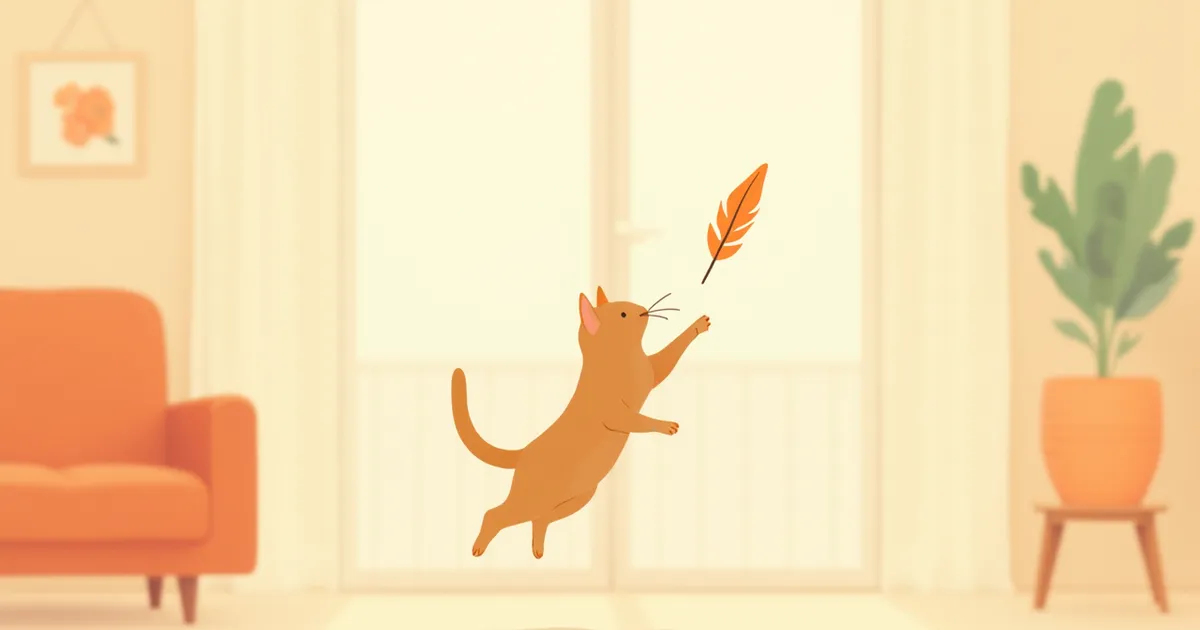
How much playtime is recommended for cats?
The ideal playtime for cats is 30 to 40 minutes a day, divided into 3 to 4 sessions of 10 minutes each. I'll share the appropriate playtime and methods based on age and personality.
How much playtime do cats need per day?
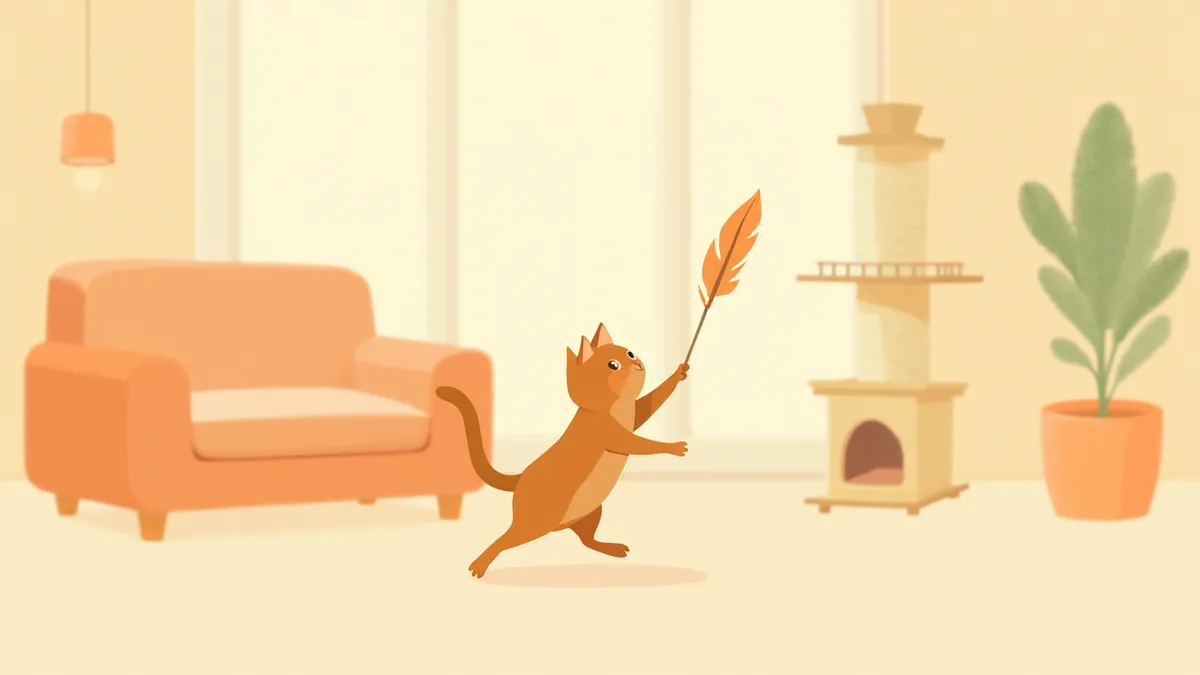
Why should play sessions be short and frequent?
Recommended daily playtime by age and personality
| Item | Kitten (up to 1 year) | Adult cat (1–7 years) | Mature·senior cat (7 years and older) |
|---|---|---|---|
| Total daily play time | 40–60 minutes | 30–40 minutes | 15–25 minutes |
| Length per session | 5–10 minutes | 10–15 minutes | 5–10 minutes |
| Sessions per day | 4–6 times | 3–4 times | 2–3 times |
| Recommended play intensity | High | Medium–high | Low |
If there is obesity, heart disease, or arthritis, consult your veterinarian and lower the intensity. ※ By AAFP criteria, ages 7–10 are considered mature/middle-aged, so cats in this age range should also have their intensity adjusted individually according to their health condition.
How to structure a good play session
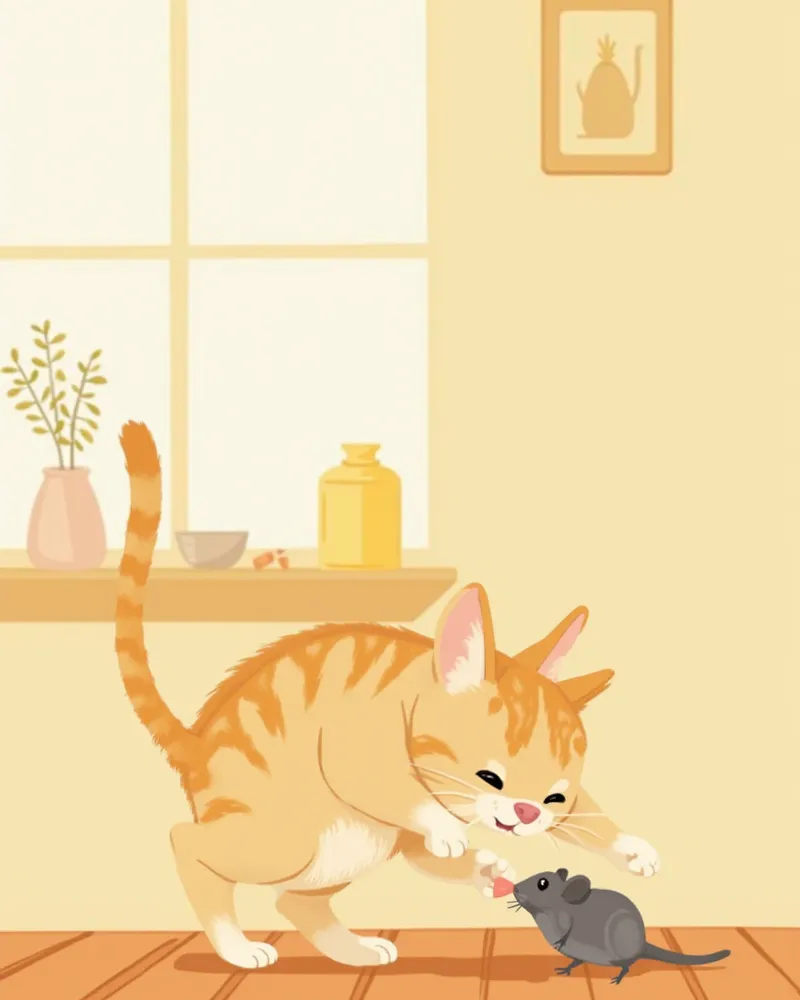
Avoid using laser pointers alone
Playing with a laser pointer alone can cause your cat to endlessly chase a light it can never actually catch. For hunting play to be satisfying, cats need to successfully "capture" their target to prevent frustration from building up. Since a laser dot can never be caught, the play session often ends without fulfilling their hunting instincts, which is why it's best to avoid using a laser pointer as the sole form of play. Always conclude the session by allowing your cat to physically catch a tangible toy or treat, giving them the rewarding experience of a successful "capture."
Signs of insufficient play

How to choose toys
Reduce play intensity in these cases
Cats with heart disease, hypertrophic cardiomyopathy (HCM), severe arthritis, or respiratory conditions may be at risk during vigorous play. If your cat pants, breathes with its mouth open, or suddenly collapses during play, stop immediately and consult your veterinarian. For senior cats or those with pre-existing conditions, short and slow play sessions are recommended.
Reviewed by a veterinarian

Dr. Tony — Punnawat Phongkittirak
VeterinarianA veterinarian who majored in veterinary medicine at Khon Kaen University, Thailand, and completed the IVSA program at North Carolina State University in the United States. Drawing on clinical experience at animal hospitals, he works in the pet healthcare field and is dedicated to building a digital care environment that connects pet parents with veterinarians.
Reviewed 2026-04-26
Frequently Asked Questions
My cat isn’t interested in playing. What should I do?
I have two pets. Is it okay for them to play together?
Is it better to play with your pet at night or in the morning?
Can I replace it with an automatic toy?
My cat is panting after playing. Is this normal?
Share
Related Guides
7 Behavioral Enrichment Strategies for Mental Stimulation Recommended by Veterinarians
Top 5 Calming Supplements for Dogs and Cats in 2026

L-Theanine Effects and Calming Support
Feline Skin Cancer (Squamous Cell Carcinoma) in White Cats — Sun Exposure and Prevention Guide
Did Your Dog Drink Alcohol? — Signs of Alcohol Poisoning and When to Go to the Vet
When to Let Go of Our Dog with End-Stage Cancer — Hospice Care and the Euthanasia Decision
End-Stage Kidney Failure in Cats — Symptoms and Euthanasia Decision Guide
Tick-Borne Disease Checklist — What to Check After Your Dog’s Walk
Cats and Essential Oil Diffusers — Why Inhalation Alone Causes Liver Damage
Guide to English Abbreviations for Diagnoses
References
[1] Little, S.E., The Cat: Clinical Medicine and Management, 2nd Edition, Elsevier, 2024
[2] Rodan, I. & Heath, S., Feline Behavioral Health and Welfare, Elsevier, 2016
[3] Kogan, L.R. & Grigg, E.K., Laser Light Pointers for Use in Companion Cat Play, Animals, 2021
[4] Halls, V., A Professional's Guide to Feline Behaviour, CABI, 2023