
Why Do Cats React to Mirrors? — Behavioral Psychology Pet Owners Should Know
We’ve compiled the reasons why cats exhibit a range of reactions—such as hissing, attacking, or ignoring—when they see their own reflection in a mirror, along with key behavioral insights for pet owners to understand.
What Is a Cat’s Mirror Reaction?
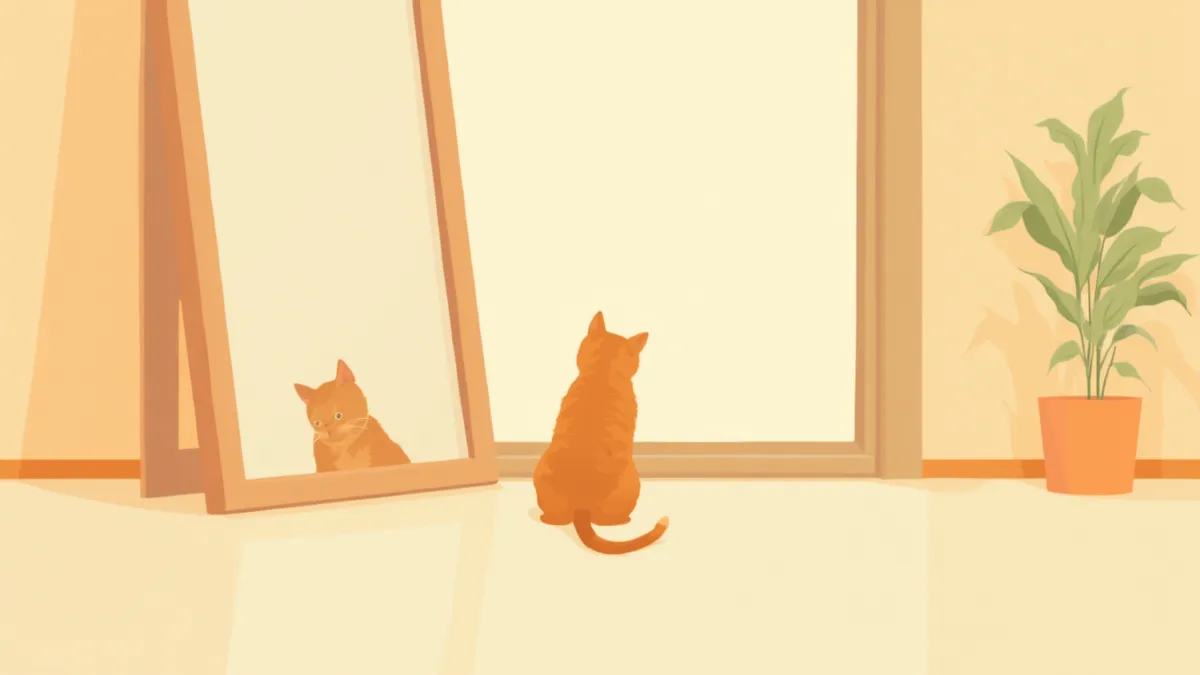
Why Cats Don’t Recognize Their Own Reflection in the Mirror
At-a-Glance Guide to the Meaning of Reactions in Front of a Mirror
Meaning and Response Strategies by Reaction Type
| Item | Hissing/aggressive type | Observing/wary type | Ignoring type | Checking-behind type |
|---|---|---|---|---|
| Main behavior | Raised fur, hissing, front-paw swatting | Tail lowered, staring quietly | Passing by the mirror | Going behind the mirror to check |
| Mental state | Mistakes it for an intruder | Wary/curious | Indifferent (normal) | Investigating the cause |
| Duration | Usually hours to days; be cautious if it recurs | Usually disappears within a short time | Persistent | Usually stops quickly |
| Owner response | Cover the mirror/block the view | Wait for natural adaptation | No intervention needed | Natural behavior, it's fine |
Most of these reactions fall within the normal range; if strong aggression recurs or persists, consider consulting a veterinarian.
Why Cats Exhibit Growling and Aggressive Reactions
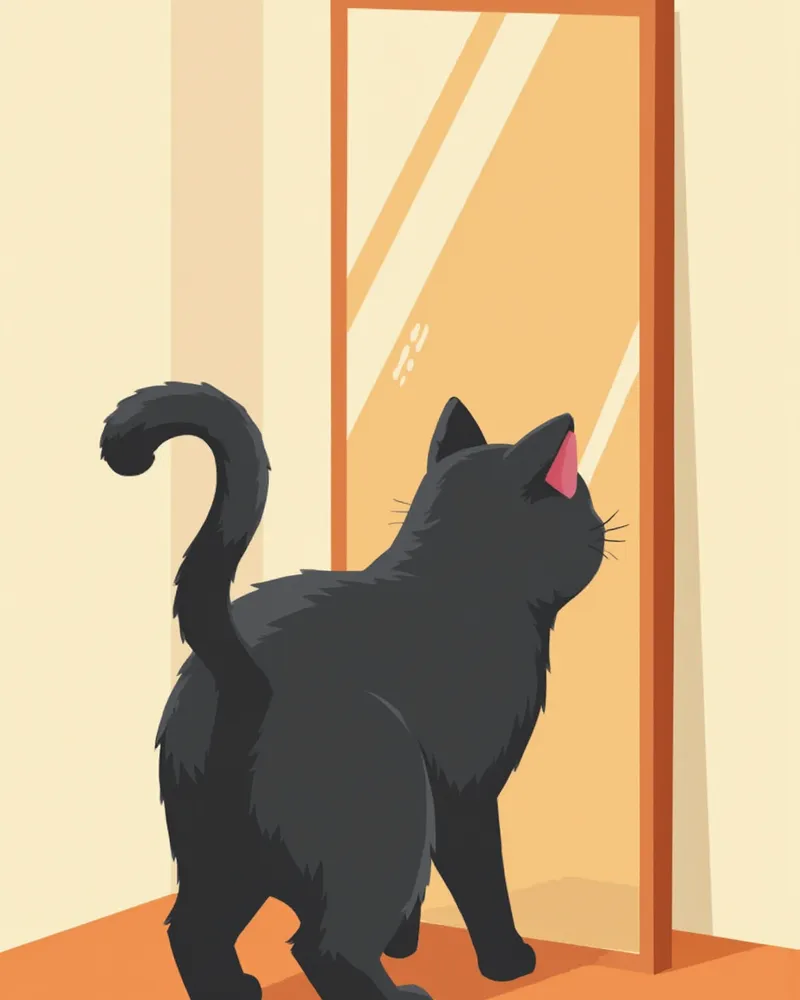
When to Be Cautious
If mirror-related reactions persist in the following ways, they can develop into stress-induced behavioral issues: - Repetitive and persistent intense aggression: This is a sign of chronic stress, where the cat remains easily aroused and does not quickly return to a normal baseline even after the trigger has been removed. - Changes in appetite or abnormal urination: Decreased or increased appetite, as well as inappropriate urination, are classic indicators of chronic stress cited in veterinary behavior textbooks. - Self-harm grooming: This involves excessive licking that leads to hair loss; compulsive overgrooming is a recognized sign of chronic stress. - Aggression toward other cats in multi-cat households: This is redirected aggression, where stress causes the cat to direct aggression toward previously familiar housemates or even their owners. If you notice these signs, completely cover the mirror first. If the symptoms persist, consult a veterinarian.
Environmental Management When Mirror Reactions Persist
Differences in Reactions Between Kittens and Adult Cats
Key Takeaways on Mirror Reactions
- Hissing and aggression are mostly normal reactions: These are temporary behaviors stemming from fear or caution in response to unfamiliar visual stimuli. - Ignoring the stimulus is also a natural response: Cats quickly adapt to non-scented stimuli, causing their interest to fade. - Repeated or persistent reactions warrant an environmental check: Identify and address potential sources of stress. - Treat mirror experiments as play only: Forcing repeated exposure can lead to chronic stress. - For sensitive cats, a mirror-free environment is best: Avoid forced exposure.
Reviewed by a veterinarian

Dr. Tony — Punnawat Phongkittirak
VeterinarianA veterinarian who majored in veterinary medicine at Khon Kaen University, Thailand, and completed the IVSA program at North Carolina State University in the United States. Drawing on clinical experience at animal hospitals, he works in the pet healthcare field and is dedicated to building a digital care environment that connects pet parents with veterinarians.
Reviewed 2026-04-26
Frequently Asked Questions
Does a cat hissing at its reflection in a mirror mean it is highly aggressive?
Does a cat that shows no mirror response lack intelligence?
Do they react similarly to glass windows or TV screens instead of mirrors?
Is it okay to show a mirror to a cat?
Can mirror stress lead to cystitis?
Share
Related Guides

Primary vs. Secondary Veterinary Hospitals: A Comparison

5 Easy-to-Raise Cat Breeds for First-Time Owners — Grooming Difficulty Comparison

Top 7 Short-Legged Dog Breeds
How Many Hours a Day Do Cats Sleep? — A Guide to Normal Sleep Times and Patterns
A Complete Guide to a Cat’s Daily Routine and Activity Patterns

Marbofloxacin, a Broad-Spectrum Antibiotic: What Infections Is It Used For?
What is Terbinafine? — The Key to Treating Fungal Infections in Dogs and Cats
Praziquantel Tapeworm Dewormer: Essential Usage Guidelines

Pimobendan (Vetmedin): The Key Medication for MVD – Is It Essential for Your Dog?
Atenolol Beta-Blocker Heart Medication: Is It Safe for Our Dog?
References
[1] Little S. The Cat: Clinical Medicine and Management, 2nd Edition. Elsevier, 2024
[2] Drobatz KJ et al. Feline Emergency and Critical Care Medicine, 2nd Ed. Wiley-Blackwell, 2019
[3] Gallup GG. Chimpanzees: Self-recognition. Science, 1970;167(3914):86-87