Like
Share
멍실장
고양이가 빈 상자를 좋아하는 이유, 스트레스랑 관련 있을까요?

Why Cats Love Empty Boxes: Could It Be Related to Stress?

ImmunityQ&AMeongsiljang Veterinary Advisory Board

Cats are drawn to empty boxes due to their instinct to avoid predators, regulate body temperature, and reduce stress. If your cat becomes overly fixated on boxes, it may be a sign of environmental stress.

Why Do Cats Love Empty Boxes?
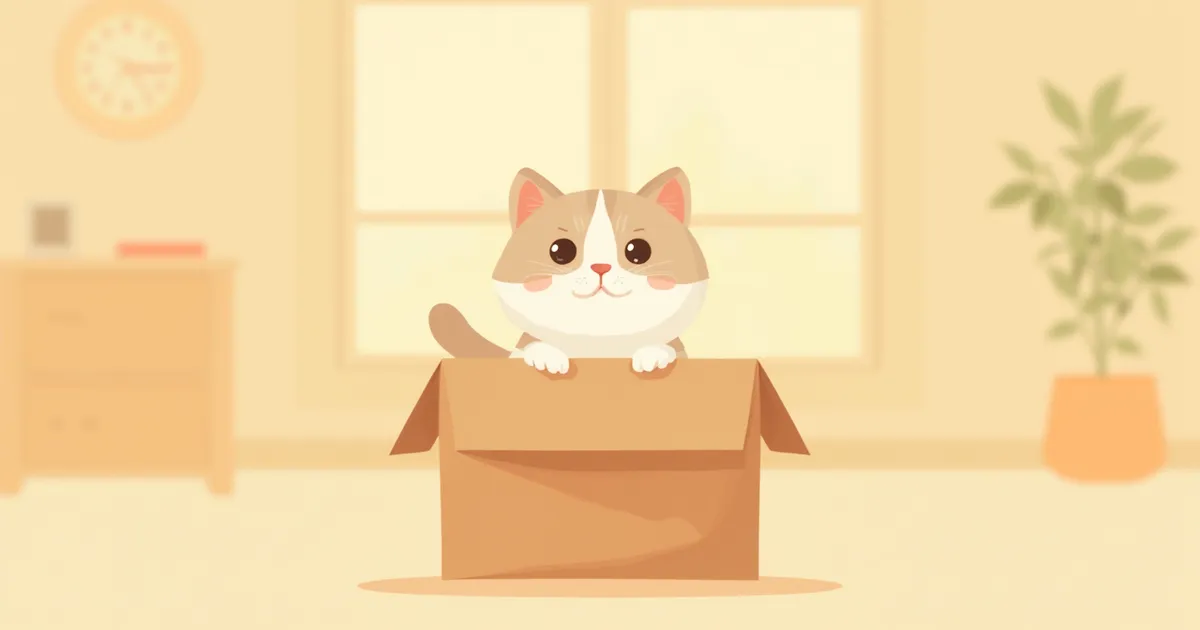
A cat sitting comfortably inside an empty box.
Cats love empty boxes because their instinct tells them that narrow, enclosed spaces are safe. The key is a sense of security. When faced with a new or unfamiliar environment, a cat’s first reaction is often fear. If there’s a place to hide, they’ll retreat to put distance between themselves and any perceived threats. Boxes limit their field of vision and block out surrounding dangers, which helps reduce their vigilance and fear responses, allowing them to appear much more relaxed. In fact, veterinary behavior studies have shown that providing hiding spots can significantly lower stress levels and anxiety-related behaviors in cats. So, an empty box isn’t just a toy—it serves as a “safe haven” where cats can feel secure on their own terms.

It’s Not Just a Habit, It’s a Survival Instinct

Cats in the wild used to hide in narrow, dark spaces like tree hollows or thickets to avoid predators and ambush prey. Domestic cats retain this instinct, so they naturally seek out and settle into structures that envelop their bodies. Empty boxes nearly perfectly meet these criteria: they are enclosed on all sides, have a narrow entrance, and provide overhead cover, making them ideal hiding spots. Particularly sensitive or timid cats tend to seek out boxes even more persistently.

Three Benefits of Empty Boxes for Cats

There isn’t just one reason why empty boxes are so appealing to cats. The table below outlines three key benefits.
BenefitHow It WorksBehavioral Change
Stress ReductionBlocking the line of sight reduces fear and vigilance responsesHiding and resting lead to calmness
Choice and ControlMore resources available for hiding when neededFaster adaptation to new environments
Observation FortressA narrow entrance allows safe monitoring of surroundingsIncreased exploration and play behavior
In particular, the stress-reducing effect has been objectively confirmed by veterinary behavioral research showing that cats provided with hiding spots (spaces to conceal themselves) exhibited lower stress levels than those without. Please also keep in mind that the more hiding resources you provide, spaced out appropriately, the safer your cat will feel.

The Insulating Effect Is Bigger Than You Think
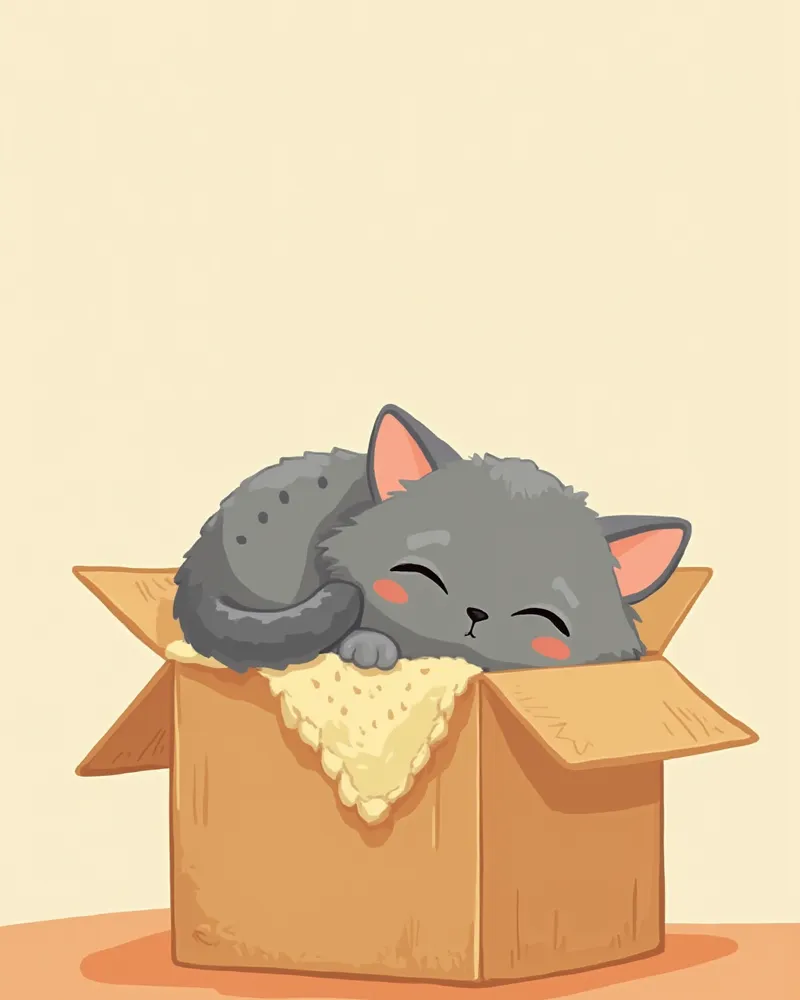
Boxes serve a surprisingly important role not just for warmth, but as “cozy retreats.” Corrugated cardboard boxes are enclosed on all sides and contain small air pockets, creating a restful space that feels warmer and more secure than the surrounding environment. Cats prefer to rest in warm, soft spots where they feel safe, so on cold days, they often use boxes as makeshift beds. This is especially true for senior cats, who benefit greatly from comfortable resting places and tend to seek out boxes regardless of the season. Placing a soft towel at the bottom of a new box can make it an even cozier sleeping spot, giving your cat a personal space where they can relax with peace of mind. Providing such a safe and comfortable retreat helps reduce environmental stress.
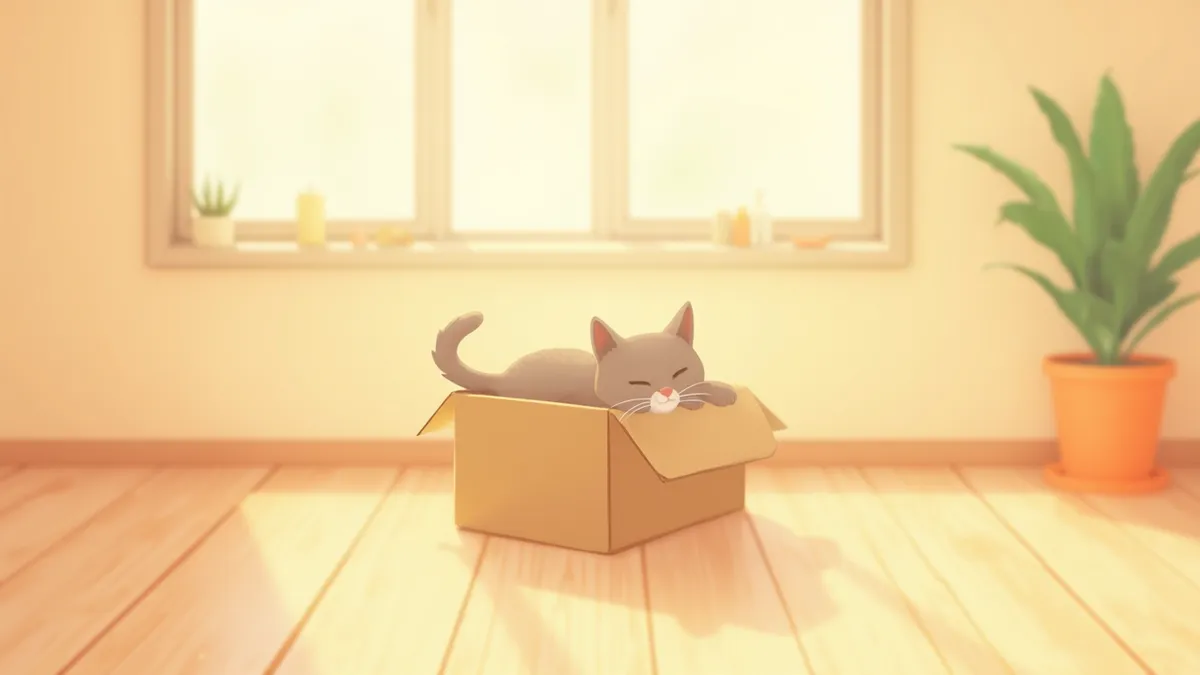
A cat sleeping in a box lined with a blanket

When Box Obsession Is a Sign of Stress

If your cat spends most of the day confined to a box or rarely comes out except for meals, water, or using the litter box, you should suspect environmental stress. Potential causes include the addition of a new family member, the presence of other pets, moving house, construction noise, or hierarchy disputes in multi-cat households. If these behaviors are accompanied by a decreased appetite, excessive grooming, or urination outside the litter box, it is likely not just a habit but a sign of chronic stress.

How to Use Boxes to Reduce Stress
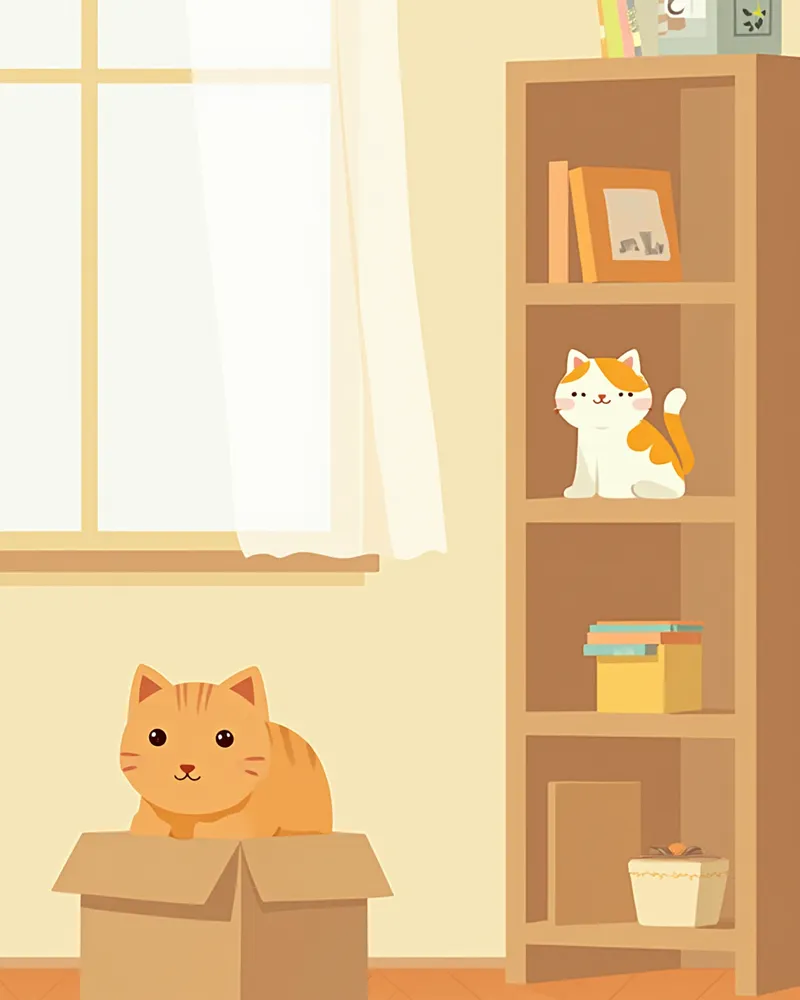
Empty boxes can actually be used as tools to enhance your cat’s well-being. The International Society of Feline Medicine (ISFM) includes “hiding spaces” as an essential environmental requirement in its guidelines for feline environmental needs.
Location: Place them in quiet spots, such as corners of the house or on top of tall furniture.
Quantity: In multi-cat households, provide at least one more box than the number of cats.
Size: The box should be snug enough that your cat fits comfortably when curled up.
Replacement: Replace the box with a new one regularly before it becomes too dirty.
Prohibited: Never force your cat out of the box or close the lid.
Cats sitting in two boxes of different heights

Provide “Hiding Spaces” Other Than Boxes Too

A single empty box may not be enough. Providing a variety of hiding spots—such as cat tunnels, fabric igloo houses, box-style compartments in cat trees, or even a dedicated section in a closet—allows your cat to choose based on their mood each day. It’s especially important to offer both vertical spaces (high perches) and horizontal spaces (boxes). High spots satisfy a cat’s desire to observe and feel in control, while boxes fulfill their need for security and rest, serving distinct purposes. The more sensitive your cat is, the more options you should provide.

These Types of Boxes Can Be Dangerous

Even when giving your pet an empty box, safety checks are essential. Staples, tape fragments, or shipping labels left behind can be chewed or swallowed, leading to gastrointestinal foreign body incidents. Avoid boxes with plastic coatings, those previously used for detergents or medications, and old boxes with a moldy odor. Additionally, leaving plastic bags near the box poses risks of entrapment or suffocation. For maximum safety, use only clean, dry, standard corrugated cardboard boxes.

Reviewed by a veterinarian

Dr. Tony — Punnawat Phongkittirak

Dr. Tony — Punnawat Phongkittirak

Veterinarian

A veterinarian who majored in veterinary medicine at Khon Kaen University, Thailand, and completed the IVSA program at North Carolina State University in the United States. Drawing on clinical experience at animal hospitals, he works in the pet healthcare field and is dedicated to building a digital care environment that connects pet parents with veterinarians.

Frequently Asked Questions

Is it okay for my cat to keep sleeping in a box?
If your pet is eating, drinking, using the litter box, and playing normally, there’s no need to worry. However, if they’re staying in their carrier most of the time and showing a noticeable drop in appetite and activity level, it could be a sign of stress or illness, so we recommend consulting with a veterinarian.
What size box is best?
Cats tend to prefer beds that fit snugly when they curl up. If the bed is too large, it lacks that cozy, embraced feeling, which can reduce their interest. Offering beds in various sizes allows you to identify your cat’s preference.
Why do they prefer a plain cardboard box over an expensive pet bed?
Many cat houses are designed with human preferences in mind rather than feline needs, resulting in entrances that are too large or materials that are too slippery. Corrugated cardboard, on the other hand, is ideal for cats: it provides a good surface for scratching, has a suitably rough texture, and carries a comforting scent that appeals to their natural preferences.
I have multiple cats. How many litter boxes should I have?
International guidelines recommend providing one more litter box than the number of cats you have. For example, if you have two cats, you should have at least three boxes. Place them in separate locations so that even lower-ranking cats can use them without feeling intimidated by others.
Is it okay if my pet scratches the inside of the box with its claws?
Scratching is a natural behavior, so there’s no cause for concern. In fact, the box can even serve as a scratching post. However, if your puppy frequently swallows the shredded pieces, it’s safer to provide a separate scratching post and replace the box regularly.

Share

Related Guides

References

[1] Vinke CM et al., Will a hiding box provide stress reduction for shelter cats?, Applied Animal Behaviour Science, 2014

[2] Rochlitz I, The Welfare of Cats, Springer, 2007

[3] Ellis SLH et al., AAFP and ISFM Feline Environmental Needs Guidelines, Journal of Feline Medicine and Surgery, 2013

This information is based on veterinary literature and does not replace diagnosis or treatment. Please consult a veterinarian for specific health concerns.

Metapet Co., Ltd. | CEO: Park Sung-yong | Business Reg. No. 417-88-02562 | Seoul, South Korea | Customer Center

Why Cats Love Empty Boxes: Hiding Instincts and Stress Signals | Meongsiljang