
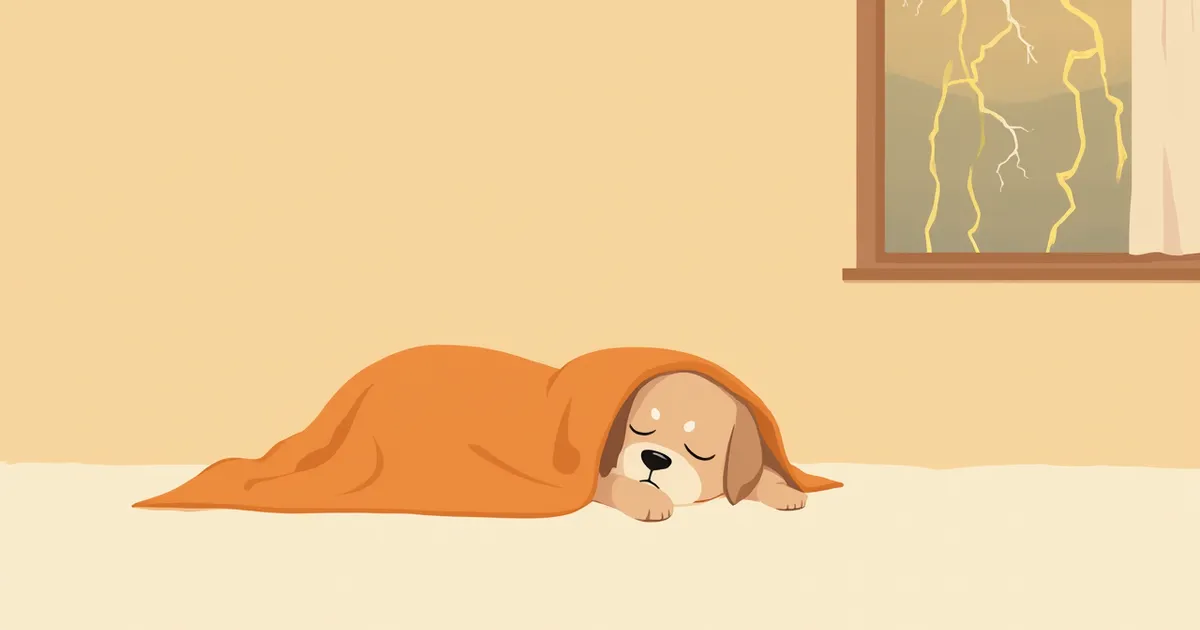
How to Manage Thunderstorm Phobia in Dogs?
We’ve put together a comprehensive guide covering the causes and symptoms of severe thunderstorm and lightning anxiety in dogs, step-by-step management strategies, and when it’s time to visit the vet.
What Is Thunderstorm Phobia in Dogs?
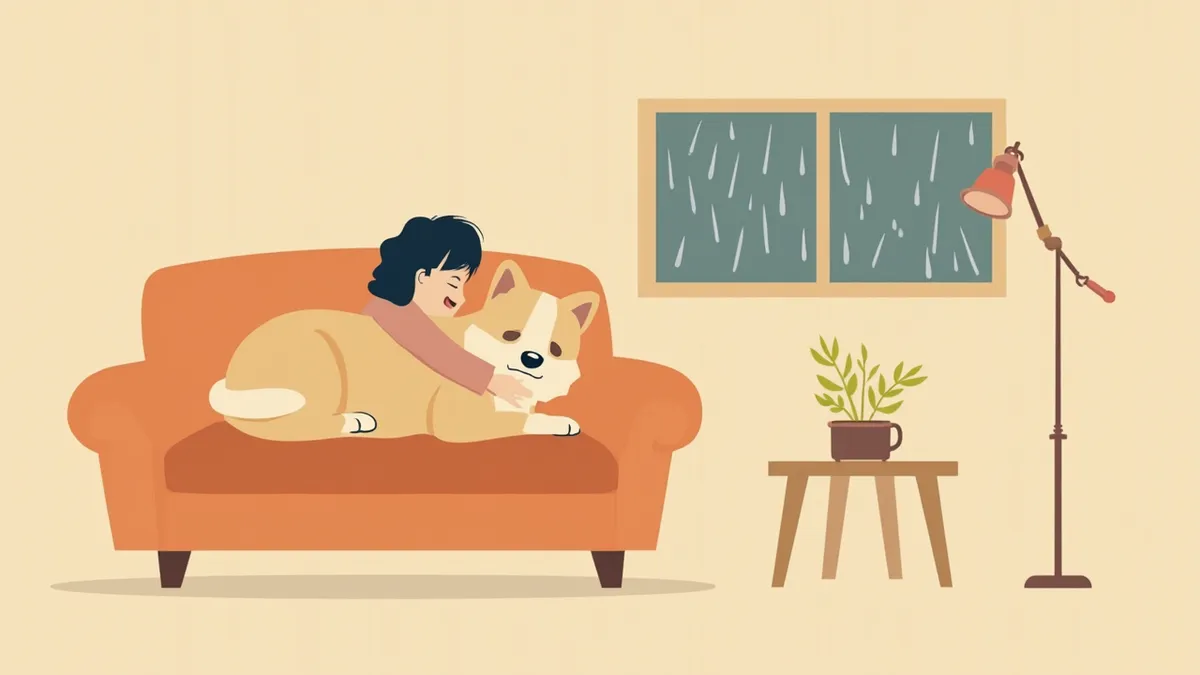
Why Are Dogs Afraid of Thunder?
Thunderstorm Phobia Symptom Checklist

Severity Stages of Phobia
| Item | Stage 1 (mild) | Stage 2 (moderate) | Stage 3 (severe) |
|---|---|---|---|
| Main symptoms | Ears pinned back, slight trembling | Hiding, panting, drooling | Destructive behavior, house-soiling, self-harm |
| Duration | Only during the thunder | More than 30 minutes after the thunder | All day to several days |
| Recommended action | Provide a safe space | Begin behavioral therapy | Consultation with a veterinarian/behavior specialist is essential |
| Prognosis | Improves with management | Requires consistent training | Medication + behavioral therapy combined |
The stages are based on owner observation; an accurate diagnosis is made by a veterinarian.
When to Visit the Vet Immediately
Emergency veterinary care is necessary if any of the following situations occur: - Attempting to escape through windows or doors during a panic attack - Biting or scratching itself to the point of bleeding - Refusing food or water for more than 24 hours - Stiffening up or collapsing as if having a seizure - Breathing abnormally fast and heavily for an extended period, unlike its usual pattern In particular, self-harm or escape attempts can lead to trauma or traffic accidents. Dogs showing severe noise phobia reactions are at higher risk of physical injury due to impulsive escape or self-harm behaviors while in a state of fear. At this stage, consultation with a veterinarian or an animal behavior specialist is essential.
Step-by-Step Management Strategies at Home

When Is Behavioral and Medication Treatment Necessary?
Common Mistakes to Avoid
These are well-intentioned actions by caregivers that can actually reinforce fear. - Excessive reassurance: Repeating “It’s okay, it’s okay” can inadvertently reward anxious behaviors. - Forced exposure: “Desensitization training” that deliberately exposes pets to loud noises can worsen fear responses. - Punishment: Scolding a pet for hiding or barking can intensify its fear response. - Crate confinement: It’s fine if the pet enters voluntarily, but forcing it into a crate is not. - Self-medicating with human drugs: Even melatonin requires caution regarding dosage and breed-specific considerations. Phobias are not behavioral issues that can be resolved through training; they are medical conditions requiring professional management.
Reviewed by a veterinarian

Dr. Tony — Punnawat Phongkittirak
VeterinarianA veterinarian who majored in veterinary medicine at Khon Kaen University, Thailand, and completed the IVSA program at North Carolina State University in the United States. Drawing on clinical experience at animal hospitals, he works in the pet healthcare field and is dedicated to building a digital care environment that connects pet parents with veterinarians.
Reviewed 2026-04-19
Frequently Asked Questions
Does thunderstorm phobia in dogs improve with age?
Do anxiety wraps (ThunderShirts) really work?
How do you conduct desensitization training using thunderstorm sound recordings?
The weather forecast is warning of an approaching storm. Is there anything we can do in advance to prepare?
Is it okay to hold and comfort my pet during a thunderstorm?
Share
Related Guides

7 Behavioral Enrichment Strategies for Mental Stimulation Recommended by Veterinarians

Top 5 Calming Supplements for Dogs and Cats in 2026

L-Theanine Effects and Calming Support
Why You Should Never Give Tylenol (Acetaminophen) to Dogs — A Complete Guide to Poisoning Symptoms and Emergency Response
Can Dogs Drink Coffee? — Caffeine Poisoning Symptoms and Weight-Based Dangerous Dosages
My Dog Ate Grapes or Raisins — Risk of Kidney Failure and the Emergency Golden Window

What Happens If a Dog Eats Onions? Symptoms and Emergency Response

Pet Wearable Technology: From Types to Selection Guide
Surgical Abbreviation Dictionary — Essential Abbreviations for Pet Owners
Lab Report Abbreviation Dictionary: How to Read Your Pet’s Test Results
References
[1] Cottam N., Dodman N.H., Ha J.C. (2013). The effectiveness of the anxiety wrap in the treatment of canine thunderstorm phobia: an open-label trial. J. Vet. Behav. 8: 154-161
[2] Korpivaara M., Laapas K., Huhtinen M. et al. (2017). Dexmedetomidine oromucosal gel for noise-associated acute anxiety and fear in dogs—a randomised, double-blind, placebo-controlled clinical study. Vet. Rec. 180(14): 356
[3] Landsberg G., Hunthausen W., Ackerman L. (2013). Behavior Problems of the Dog and Cat, 3rd ed., Saunders Elsevier