Like
Share
멍실장
강아지 클리커 훈련 기초

What is Clicker Training for Dogs? — How to Start Properly from Timing to Rewards

Brain & CognitionQ&AMeongsiljang Veterinary Advisory Board

We’ve put together a clear, step-by-step guide to clicker training for dogs—covering the basic principles, how to get started, and practical tips at each stage—so you can easily follow along and train your dog at home.

What is Clicker Training?
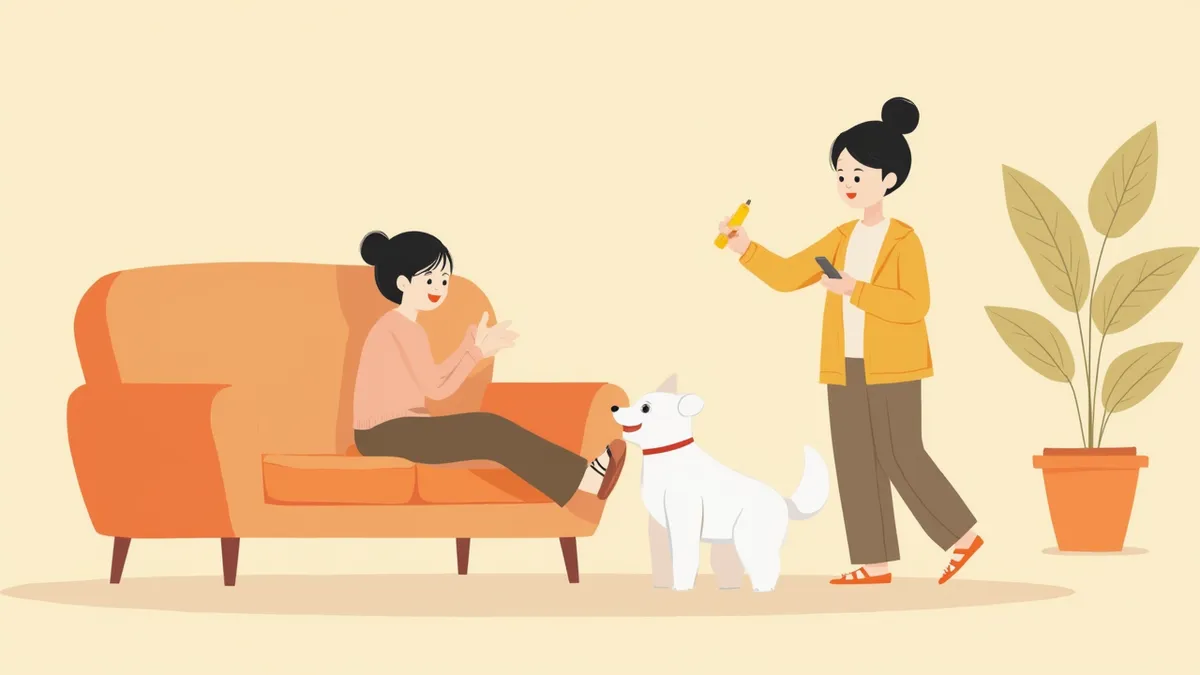
A pet owner training their dog with a clicker in the living room
Clicker training is a positive reinforcement method that uses a short "click" sound to mark the exact moment your dog performs the desired behavior, followed by a treat reward. The key is timing. The click sound is much faster and more consistent than verbal praise or treats alone, allowing your dog to clearly understand which behavior earned the reward. That’s why veterinary behavior textbooks recommend it as a foundational tool for home training.

Why is the "Click" Sound Effective?

The “click” sound is effective in clicker training because of its consistency and precise timing. At first, the click itself has no inherent meaning. However, by repeatedly pairing the click with an immediate treat, your dog’s brain forms an association: “click = something good is coming.” In veterinary behavior science, this is called classical conditioning. Once this association is established, the click becomes a clear signal that marks the exact moment of the desired behavior, helping your dog understand precisely which action earned the reward.

Supplies and Environment to Prepare Before Starting
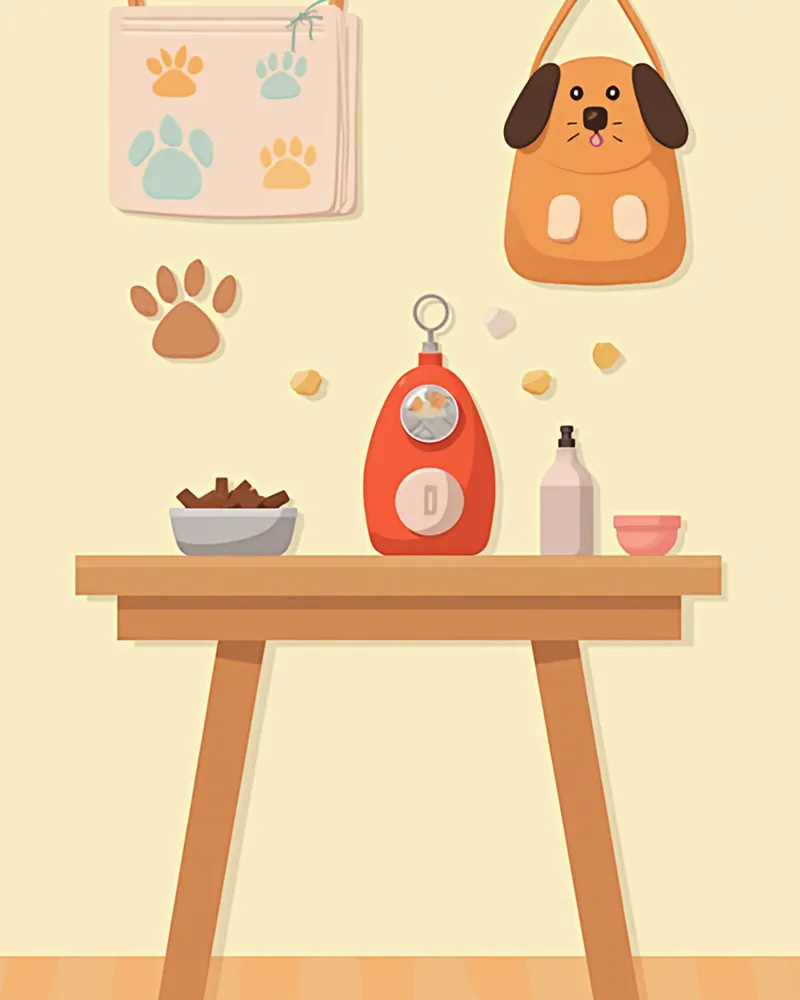
To start clicker training properly, having the right supplies and environment is key.
Clicker: Both button and box types work. For timid pets, we recommend a clicker with a sound-dampening feature if the standard click is too loud.
Treats: Use "special treats" (like chicken breast, cheese, or freeze-dried snacks) instead of regular kibble, cut into rice-grain-sized pieces.
Environment: A quiet, distraction-free space like a living room, away from TVs and other pets.
Timing: Keep sessions short—3 to 5 minutes, 2 to 3 times a day—ideally on an empty stomach just before mealtime.
Items needed for clicker training: flat lay photo

Comparison of Praise Training vs. Clicker Training

ItemVerbal praise onlyTreats onlyClicker training
Timing accuracyLowMediumHigh
ConsistencyVaries with tone of voiceMediumAlways the same
Learning speedSlowMediumFast
Initial costNoneOnly treat costClicker ₩5,000 + treats
Difficulty for beginner ownersEasyEasyMedium (practice needed)

General comparison based on veterinary behavioral medicine textbooks

Step 1: Charging the Clicker

The very first step is to "charge" the clicker, which means giving it meaning. The process is simple: when your dog is in a comfortable position, click the clicker ("click") and then give a treat within one second. Repeat this many times. However, do not click when your dog is performing a specific behavior like "sit"; instead, click at random times. The goal of this stage is not to teach a behavior, but to create the association that "click equals treat." When your dog begins to show anticipation right after hearing the click, it is a sign that the charging process is working well.

Step 2: Teaching the First Behavior (Sit)
Once charging is complete, it’s time to begin real training. Teaching “sit” is relatively easy.
Lure: Slowly raise a treat from in front of your dog’s nose toward the top of its head.
Capture the moment: Click the clicker at the exact instant the dog’s hindquarters touch the floor.
Reward: Deliver the treat within one second.
Repeat: Practice several times in short sessions, with brief rest breaks in between.
The key is to mark the moment the hindquarters make contact, not after they’ve already settled. If your timing is even slightly delayed, your dog may become confused about which behavior earned the reward.
A puppy being trained to sit, with its owner holding a clicker in hand

Mistakes to Definitely Avoid

These are the most common mistakes made by first-time pet owners. 1. Giving treats without clicking — this dilutes the meaning of the clicker. 2. Failing to give a treat after clicking — if the link between the click and the reward is repeatedly broken, the conditioning effect of the clicker weakens. 3. Clicking for unwanted behavior — for example, accidentally clicking when your dog barks will reinforce the barking. 4. Sessions that are too long — exceeding your dog’s attention span reduces learning efficiency. Keep sessions short, aiming for 3 to 5 minutes each.

Step 3: Adding the Verbal Cue

Once your dog reliably sits in response to the click, it’s time to introduce the verbal cue “sit.” Say “sit” just before their bottom touches the ground, then click and give a treat the moment they do. With enough repetition, they’ll sit at the word alone. Gradually phase out the clicker at this stage, replacing it with verbal praise. The clicker isn’t meant for lifelong training—it’s a tool used only during the initial teaching phase of new behaviors.

For Timid or Sound-Sensitive Dogs

Dogs that are sensitive to thunder or fireworks may also become stressed by the sound of a clicker. In such cases, you can try wrapping the clicker in a towel to muffle the first click, or use gentler alternatives such as a ballpoint pen that makes a soft clicking sound or a tongue click. If your dog lowers its tail, pins its ears back, or yawns frequently during training, stop immediately and do not continue that day. If anxiety persists, consult a veterinary behavior specialist.

Reviewed by a veterinarian

Dr. Tony — Punnawat Phongkittirak

Dr. Tony — Punnawat Phongkittirak

Veterinarian

A veterinarian who majored in veterinary medicine at Khon Kaen University, Thailand, and completed the IVSA program at North Carolina State University in the United States. Drawing on clinical experience at animal hospitals, he works in the pet healthcare field and is dedicated to building a digital care environment that connects pet parents with veterinarians.

Frequently Asked Questions

At what age can I start?
You can start positive reinforcement training with your puppy from an early age. Since their attention span is short, it’s best to keep sessions brief—about 2 to 3 minutes at a time. The ideal starting time may vary depending on your puppy’s individual condition and developmental stage, so we recommend consulting with your veterinarian.
Is clicker training possible for senior dogs?
Yes, it’s possible. As long as your dog retains some hearing, they can participate in positive reinforcement training regardless of age. Just be sure to avoid any movements that could strain their joints.
How long should I keep giving treats?
Once the desired behavior has stabilized, gradually reduce treats to an intermittent schedule. Start by giving a treat every time, then slowly decrease the frequency, eventually maintaining the behavior with verbal praise alone.
Can I just use "Good job" without a clicker?
However, their learning pace tends to be slower. Since human speech varies in tone and intonation and often comes with a delay, dogs can get confused about exactly which behavior they’re being praised for.
Can it be used for correcting behavioral issues (barking, biting)?
It’s not a direct correction tool. While you can use it to reward your dog the moment it stops barking, severe behavioral issues should first be addressed by consulting a veterinary behavior specialist.

Share

Related Guides

References

[1] Landsberg, Hunthausen, Ackerman, Behavior Problems of the Dog and Cat, 3rd ed., 2013

[2] Horwitz & Mills, BSAVA Manual of Canine and Feline Behavioural Medicine, 2nd ed., 2009

[3] Shaw & Martin, Veterinary Guide to Preventing Behavior Problems in Dogs and Cats, 2023

This information is based on veterinary literature and does not replace diagnosis or treatment. Please consult a veterinarian for specific health concerns.

Metapet Co., Ltd. | CEO: Park Sung-yong | Business Reg. No. 417-88-02562 | Seoul, South Korea | Customer Center

Clicker Training for Dogs: How to Start the Right Way | Meongsiljang