
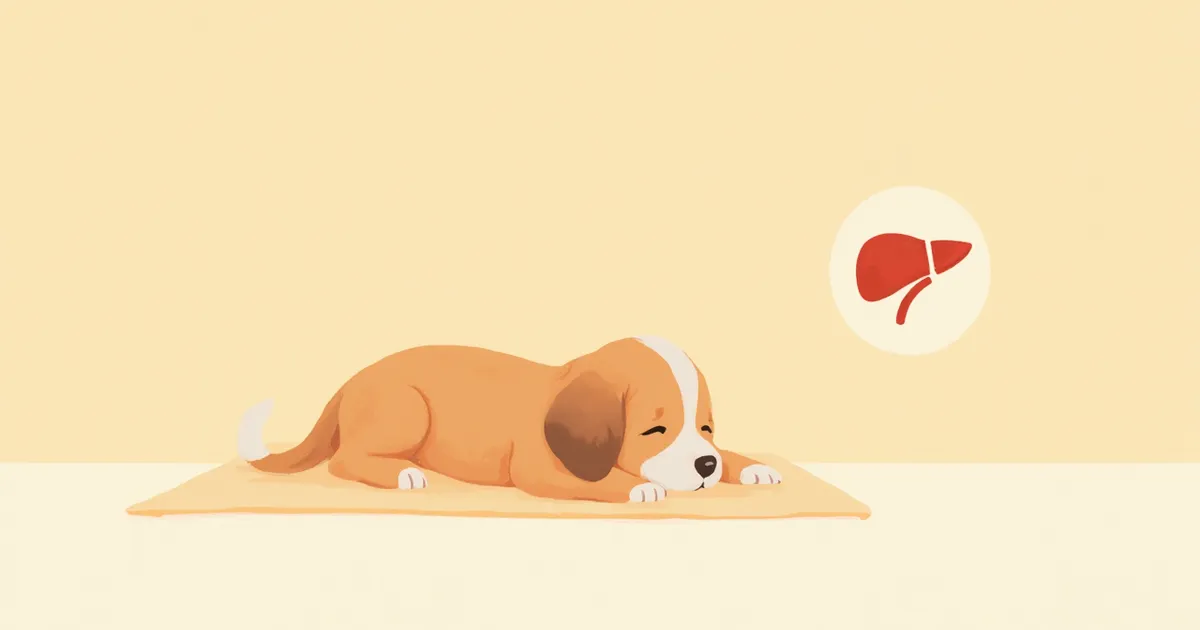
Portosystemic Shunts in Puppies — Diagnosis and Surgery in Young Dogs
We’ve compiled essential information for pet owners about portosystemic shunts (PSS) in young puppies, covering causes, symptoms, diagnostic methods, timing of surgery, and dietary and medical management.
What is a Portosystemic Shunt in Dogs?

Causes and Pathogenesis
Checklist of Main Symptoms in Young Puppies

Go to the 24-Hour Emergency Room Immediately for These Signs
If a seizure lasts longer than five minutes, if brief seizures recur two or more times within 24 hours, or if you notice decreased consciousness or coma, the risk of hepatic encephalopathy is very high. Sudden changes in consciousness immediately after eating are also a warning sign. In these cases, do not wait at home; go to a 24-hour veterinary hospital immediately. During transport, keep your pet warm, and be careful not to put your fingers in their mouth during a seizure.
How is it Diagnosed?
Comparison by Shunt Type
| Item | Congenital Single Extrahepatic Shunt | Congenital Single Intrahepatic Shunt | Acquired Multiple Shunts |
|---|---|---|---|
| Commonly Predisposed Breeds | Yorkshire Terrier, Maltese, Schnauzer | Large breeds such as Golden Retriever, Labrador | Breed-independent |
| Age of Onset | 3–6 months of age | 3–6 months of age | Middle-aged / senior |
| Surgical Feasibility | Recommended as first-line | Conditionally possible | Unsuitable for surgery |
| Prognosis | Good with surgery | Moderate with surgery | Primarily medical management |
Accurate classification is determined after CT angiography
Treatment — Surgery and Medical Management

Home Care Points to Keep in Mind
Breed Precautions for Small Dog Owners
Small breeds such as Yorkshire Terriers, Maltese, Miniature Schnauzers, Shih Tzus, and Poodles are predisposed to congenital extrahepatic portosystemic shunts. If a newly adopted puppy is smaller than its littermates, recovers slowly from anesthesia or sedation, or appears lethargic after meals, it is advisable to include a bile acids test alongside a routine health checkup. Because congenital shunts have a strong genetic component, early screening is especially important in these predisposed breeds. The timing of surgery and prognosis depend on the dog’s weight, overall condition, and the shunt’s location, so evaluation by a veterinary surgical specialist is recommended.
Reviewed by a veterinarian

Dr. Tony — Punnawat Phongkittirak
VeterinarianA veterinarian who majored in veterinary medicine at Khon Kaen University, Thailand, and completed the IVSA program at North Carolina State University in the United States. Drawing on clinical experience at animal hospitals, he works in the pet healthcare field and is dedicated to building a digital care environment that connects pet parents with veterinarians.
Reviewed 2026-05-11
Frequently Asked Questions
Will surgery cure the condition?
Is it possible to manage the condition for life with medication alone, without surgery?
How much does the surgery cost?
Does my pet need to eat prescription food for life after surgery?
Is there any way to prevent it?
Share
Related Guides

7 Key Symptoms and Management Essentials for Canine Cholecystitis Recommended by Veterinarians

Top 5 Milk Thistle (Silymarin) Liver Supplements for Dogs — A Comparison Guide Based on Silybin Content and Absorption Rates
Top Prescription Diets for Dogs with Liver Disease and Selection Criteria

If Your Dog Is Constantly Drinking Water and Panting — Causes, Diagnosis, and Treatment Timing for Adrenal Tumors
Dogs Drinking Excessive Water and Urinating Frequently — Causes of Polyuria and Polydipsia (PU/PD) and When to Visit the Vet

Feline Heart Disease Progressing Without Symptoms — The Critical Timing for Early Screening

Dog Separation Anxiety: Symptoms, Causes, Diagnosis, Treatment, and Management Tips

If You Find a Lump on Your Cat’s Skin — Causes and Drainage Treatment for Skin Abscesses
Why Is My Dog Scratching So Much? — Causes and Treatment Timing for Flea Allergy Dermatitis

Dog Chronic Kidney Disease: Symptoms, Causes, Diagnosis, Treatment, and Management Essentials
References
[1] Fossum TW. Small Animal Surgery, 5th Edition. Elsevier
[2] Ettinger SJ, Feldman EC. Textbook of Veterinary Internal Medicine, 8th Edition. Elsevier
[3] Tobias KM, Johnston SA. Veterinary Surgery: Small Animal, 2nd Edition. Elsevier
[4] Nelson RW, Couto CG. Small Animal Internal Medicine, 6th Edition. Elsevier