Like
Share
멍실장
강아지 고양이 CT 검사, 비용과 꼭 필요한 경우

Dog and Cat CT Scans: Costs and When They Are Necessary

Brain & CognitionQ&AMeongsiljang Veterinary Advisory Board

CT scans provide precise diagnoses for conditions that are difficult to detect with X-rays. We’ve outlined when they’re needed, the procedure, cost factors, and anesthesia precautions.

There Are Times When a Pet CT Scan Is Truly Necessary
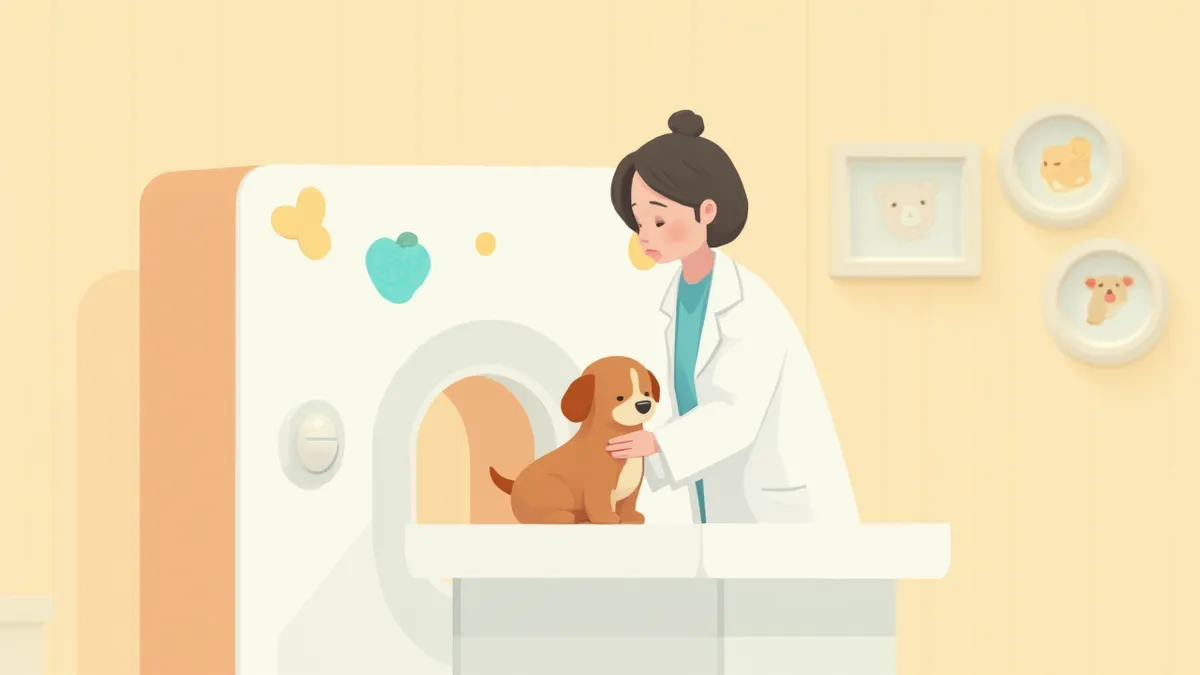
A dog sitting with its veterinarian in front of a CT scanner at the animal hospital.
A computed tomography (CT) scan is an advanced imaging test that provides detailed, three-dimensional views of areas that are difficult to assess with standard X-rays. Veterinarians often recommend CT scans when tumors, complex fractures, or internal organ abnormalities are suspected. Because costs vary significantly depending on the area being scanned, the anesthesia method, and the clinic, it’s best to contact your veterinary hospital in advance for an estimate. This article outlines when dogs and cats need CT scans, what the procedure involves, and the factors that influence the cost.

When a CT Scan Is Needed

This is a typical scenario in which a veterinarian would recommend a CT scan.
Suspected tumor: When a lump is palpable or an abnormal opacity appears on an X-ray, a CT scan can determine the tumor’s exact location and size, as well as whether it has metastasized.
Complex fractures: For fractures in anatomically complex areas such as joints or the skull, a CT scan is necessary to obtain precise details for surgical planning.
Chronic respiratory diseases: When chronic airway disease recurs, CT is useful for three-dimensional evaluation of internal structural abnormalities, including changes in airway wall thickness, mucus accumulation within the airways, and emphysematous changes. CT is particularly widely used in diagnosing lower respiratory tract (lung and bronchial) diseases in cats.
Lung and thoracic abnormalities: CT can clearly separate and visualize lung structures that overlap on X-rays.

CT, X-ray, and MRI at a Glance

ItemCTX-rayMRI
Scan timeRelatively short (fast image acquisition)Very shortTakes relatively long
Anesthesia requiredUsually requiredUsually not requiredEssential
Strengths3D imaging of bones and organsQuick whole-body checkDetailed observation of soft tissue
WeaknessesRadiation exposureOnly overlapping, flat imagesHigh cost and long time
Main usesTumors, fractures, organsLungs, heart size, bonesBrain, spinal cord, joint soft tissue

General comparison based on veterinary radiology textbooks (scan time varies by equipment and situation)

How a CT Scan Is Performed
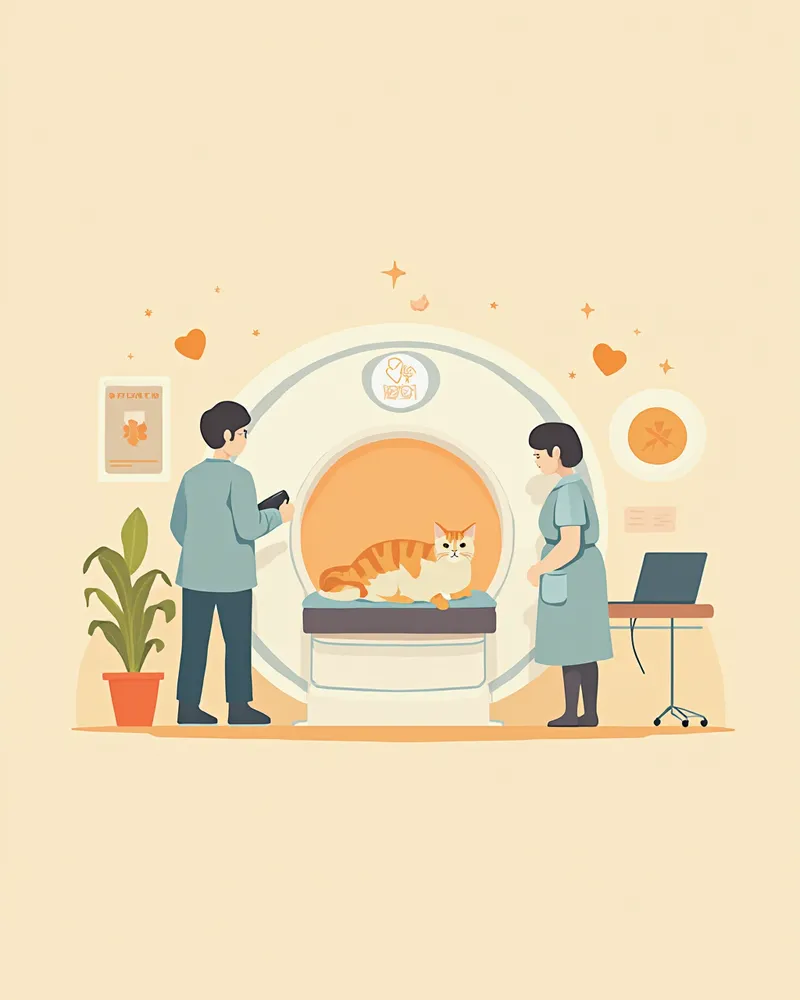
CT scans typically follow this sequence. First, your pet needs to fast for a specified period before the exam to ensure safe anesthesia. The exact fasting duration may vary by clinic, so please follow your veterinarian’s instructions. Upon arrival at the clinic, a pre-anesthetic evaluation, including blood tests, will be conducted to confirm that your pet is fit for anesthesia. Once preparations are complete, your pet will be sedated or placed under general anesthesia and positioned on the CT scanner table. Because CT imaging acquires images rapidly, the actual scanning process is relatively brief. If contrast media is used to enhance the visibility of blood vessels or lesions, it will be injected intravenously, followed by additional scans. After the scan, your pet will need time to recover from anesthesia. The clinic will monitor your pet’s recovery for a set period before discharge, with the observation time depending on the type of anesthesia used and your pet’s individual condition.
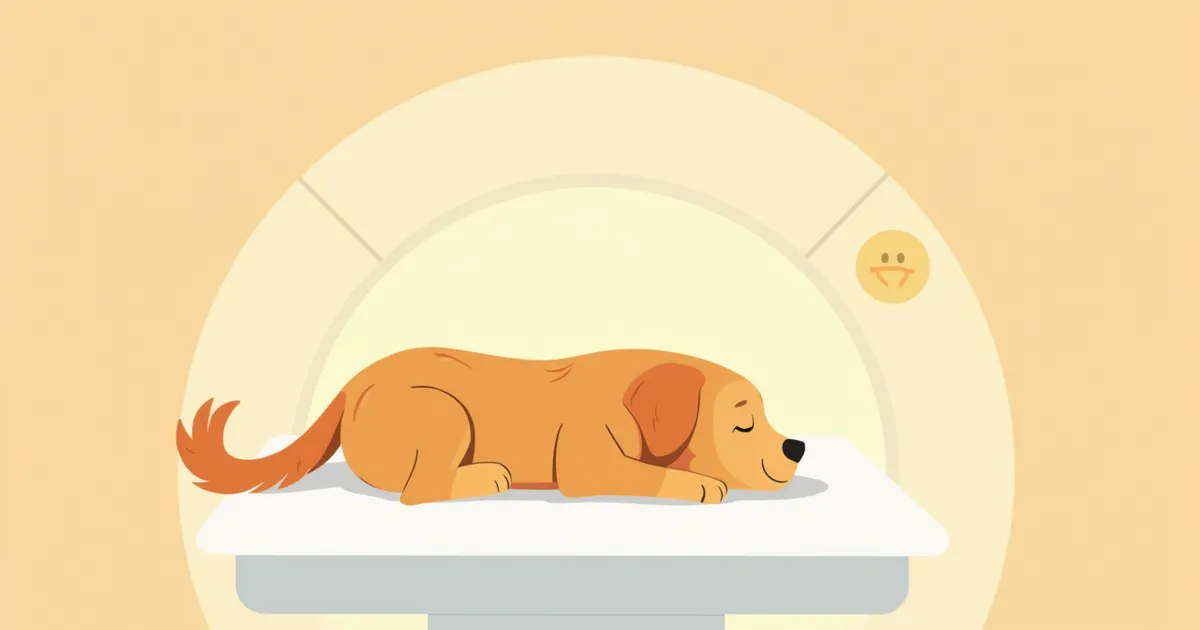
A cat lying on a CT scanner at a veterinary clinic

Please Note That This Test Requires Anesthesia

Since movement during a CT scan can compromise image quality, sedation or general anesthesia is typically required. Older pets and those with heart or kidney disease may be at higher risk for anesthesia-related complications. Be sure to discuss your pet’s overall health with your veterinarian before the procedure, and blood tests prior to anesthesia are essential.

CT Scan Costs Vary Depending on These Factors
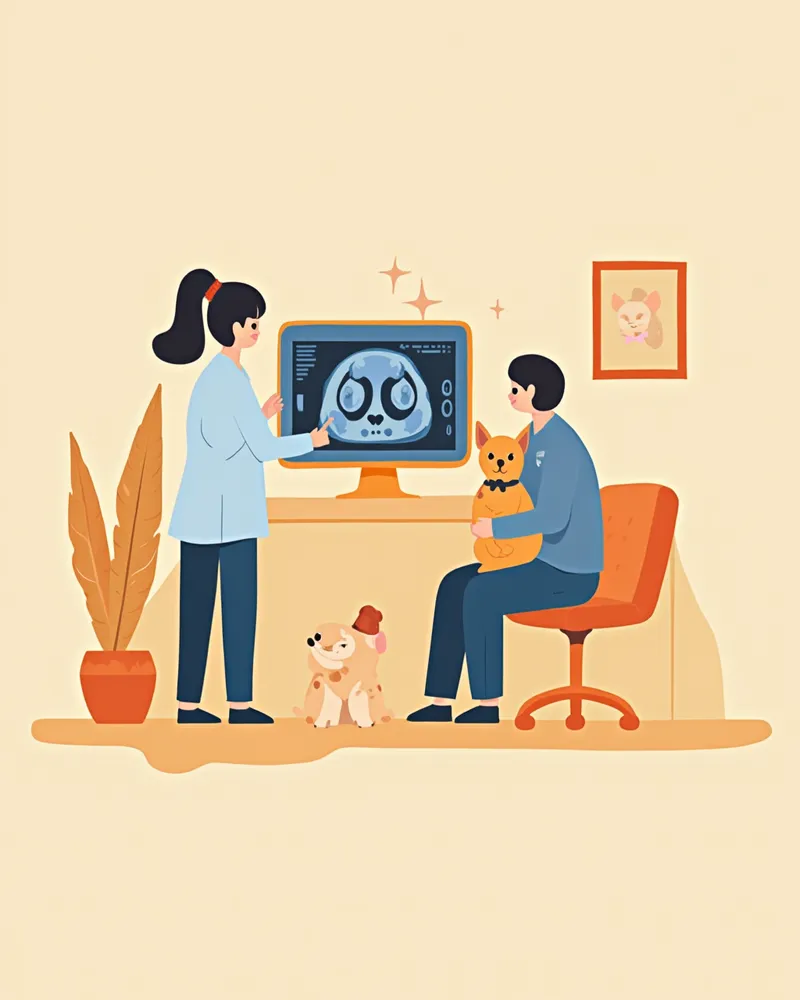
The cost of a CT scan varies depending on several factors. For an exact quote, please contact your veterinary clinic directly.
Scan area: Costs differ based on the area being scanned, such as the head, chest, abdomen, or whole body. A full-body scan is more expensive than a partial scan.
Use of contrast dye: If contrast dye is used to provide clearer images of blood vessels or tumors, there will be an additional charge.
Anesthesia method: There is a price difference between light sedation and general anesthesia.
Pre-scan tests: Basic pre-anesthesia tests, such as blood work and an electrocardiogram (ECG), may incur separate fees.
Clinic size and location: Costs vary depending on whether the facility is a university hospital, a secondary care animal hospital, or a local clinic, as well as its geographic location.
A scene where a veterinarian explains the CT results to the pet owner.

How to Prepare Before a CT Scan

Proper preparation before the exam helps ensure your pet’s safety during the procedure.
Fasting: Fasting for 8–12 hours before anesthesia is required. Please follow your clinic’s specific instructions for the exact timing.
Medication Review: Inform your veterinarian about any medications your pet is currently taking. You’ll need to confirm whether to administer them on the day of the exam.
Transport Carrier: Since your pet may be unsteady after anesthesia, be sure to bring a secure carrier for transport.
Consent Form: You’ll be asked to sign a consent form for anesthesia and the procedure. Please ask your veterinarian any questions you have before signing.

How to Care for Your Pet After the Scan

There are a few important precautions to keep in mind even after your pet has fully awakened from anesthesia.
Feeding: Once you get home, start by offering small amounts of water slowly. If there are no issues, you can then provide small portions of food. The exact amount and timing for feeding may vary depending on the type of anesthesia and your pet’s condition, so it’s safest to follow your veterinarian’s guidance.
Activity Restriction: Your pet may still be unsteady or slow to respond until they have fully recovered from anesthesia. Keep them away from stairs or elevated areas until they are completely back to normal, and it’s best to have someone closely monitor them during the recovery period.
Monitoring for Contrast Agent Reactions: Although rare, some pets may experience side effects from contrast agents. If you notice any unusual symptoms after returning home, contact your clinic immediately.
The puppy is resting comfortably in the transport crate after the examination.

Be Sure to Keep the CT Result Images

CT results are used to plan surgery, determine the extent of tumors, and assess treatment response. Keeping the images on a USB drive or CD is helpful if you need a second opinion or transfer to another clinic. Be sure to ask your veterinarian any questions you have when they explain the results.

Reviewed by a veterinarian

Dr. Tony — Punnawat Phongkittirak

Dr. Tony — Punnawat Phongkittirak

Veterinarian

A veterinarian who majored in veterinary medicine at Khon Kaen University, Thailand, and completed the IVSA program at North Carolina State University in the United States. Drawing on clinical experience at animal hospitals, he works in the pet healthcare field and is dedicated to building a digital care environment that connects pet parents with veterinarians.

Frequently Asked Questions

Is a CT scan painful for dogs?
Since the procedure is performed under anesthesia, your pet won’t feel any pain during the exam. After waking up from anesthesia, there may be some mild discomfort at the injection site, but it will resolve quickly.
Should I get a CT scan or an MRI?
CT scans are best for issues involving bones, lungs, and internal organs, while MRI is more suitable for problems affecting the brain, spinal cord, joints, and soft tissues. Your veterinarian will recommend the most appropriate imaging test based on your pet’s symptoms.
Can cats also undergo CT scans?
Yes, cats can undergo CT scans. According to veterinary internal medicine textbooks, CT is frequently used to diagnose lower respiratory tract (lung and bronchial) diseases, as it effectively evaluates various abnormalities such as changes in airway wall thickness, mucus accumulation, and emphysematous changes.
Do CT scan results come out right away?
While the imaging procedure itself is quick, analyzing the images takes time. The turnaround time for results may vary depending on the clinic’s workload and the method of interpretation, and it may take longer if the images are sent to a veterinary radiologist for review. For the exact timeline, please contact your clinic directly.
Is it possible to perform a CT scan without anesthesia?
Although it is very rare, some exceptionally calm pets may only require mild sedation, but anesthesia is generally necessary to obtain clear images. Movement can blur the images, potentially requiring the procedure to be repeated.

Share

Related Guides

References

[1] Schaer M., Clinical Medicine of the Dog and Cat, 4th Edition — Diagnostic Imaging

[2] Little SE., The Cat: Clinical Medicine and Management, 2nd Edition — Computed Tomography

[3] Silverstein DC, Hopper K., Small Animal Critical Care Medicine, 3rd Edition — Pulmonary Diagnostics

[4] Oyama MA et al., Textbook of Cardiovascular Medicine in Dogs and Cats — CT Angiography

This information is based on veterinary literature and does not replace diagnosis or treatment. Please consult a veterinarian for specific health concerns.

Metapet Co., Ltd. | CEO: Park Sung-yong | Business Reg. No. 417-88-02562 | Seoul, South Korea | Customer Center

Dog & Cat CT Scans: Costs and When They're Needed | Meongsiljang